Log in
Sign up for FREE
arrow_back
Library

Copy of 8Eb Oxidation beta (2/10/2025)

star
star
star
star
star
Last updated 7 months ago
11 questions
1
1
1
1
1
1
1
1
1
1
Question 1
1.

Question 2
2.

Question 3
3.

Question 4
4.

Question 5
5.

Question 6
6.

If 12 g of magnesium reacts with 16 g of oxygen, what is the mass of the magnesium oxide produced?

Question 7
7.

Question 8
8.

Question 9
9.

Question 10
10.

3
Question 11
11.

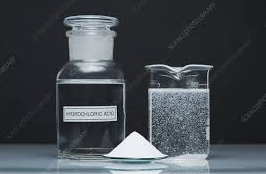
Hydrochloric acid is added to calcium carbonate in an open system.
The total mass of these reactants is 14.5 grams.

Explain what observations you would make after the reaction has happened.

Which statement best describes the law of conservation of mass?
A. Mass is created during a chemical reaction.
B. Mass is destroyed during a chemical reaction.
C. The total mass of reactants equals the total mass of products.
D. Mass is only conserved in physical changes.
During the reaction of calcium carbonate with hydrochloric acid, a gas is released. Why might the mass of the reaction mixture appear to decrease?
A. Some of the liquid evaporates.
B. The gas escapes into the air.
C. The products are heavier than the reactants.
D. A chemical bond breaks and releases mass.
In a reaction between magnesium and oxygen, the product is magnesium oxide. What happens to the total mass during the reaction?
A. The mass increases because oxygen from the air adds to the magnesium.
B. The mass decreases because some magnesium is lost.
C. The total mass stays the same because of the conservation of mass.
D. The mass decreases because oxygen escapes.
Why is it important to conduct reactions in a sealed container when demonstrating the conservation of mass?
A. To prevent reactants from escaping.
B. To prevent products from forming.
C. To stop energy loss.
D. To ensure the reaction happens faster.
In the reaction: CaCO₃ → CaO + CO₂, why does the mass of the solid appear to decrease?
A. The calcium carbonate melts.
B. The calcium carbonate evaporates.
C. Carbon dioxide gas escapes into the air.
D. The calcium oxide is lighter.
Which of the following could cause a mass increase in an open system during a reaction?
A. Formation of a gas that escapes.
B. A reactant reacts with oxygen from the air.
C. A solid dissolves in water.
D. Evaporation of a liquid reactant.
A student mixes vinegar and baking soda in an open beaker. Bubbles of carbon dioxide form. Why does the mass measured on a scale decrease?
A. The reaction produces less mass.
B. The carbon dioxide gas escapes into the air.
C. The baking soda disappears.
D. The vinegar evaporates.
A reaction between zinc and hydrochloric acid produces hydrogen gas and zinc chloride. If the gas escapes, what will the scale show about the mass of the reaction mixture?
A. The mass will increase.
B. The mass will stay the same.
C. The mass will decrease.
D. The scale cannot measure the mass.
When a candle burns, why does the mass of the candle decrease over time?
A. The wax evaporates into the air.
B. The carbon dioxide and water vapor produced escape into the air.
C. The wax is destroyed.
D. The oxygen reacts with the wax and creates less mass.