Sort the following as either an ELEMENT or a COMPOUND
Sort the following as either an ELEMENT or a COMPOUND
Oxygen =
O_2 Water =
H_2O Gold = Au
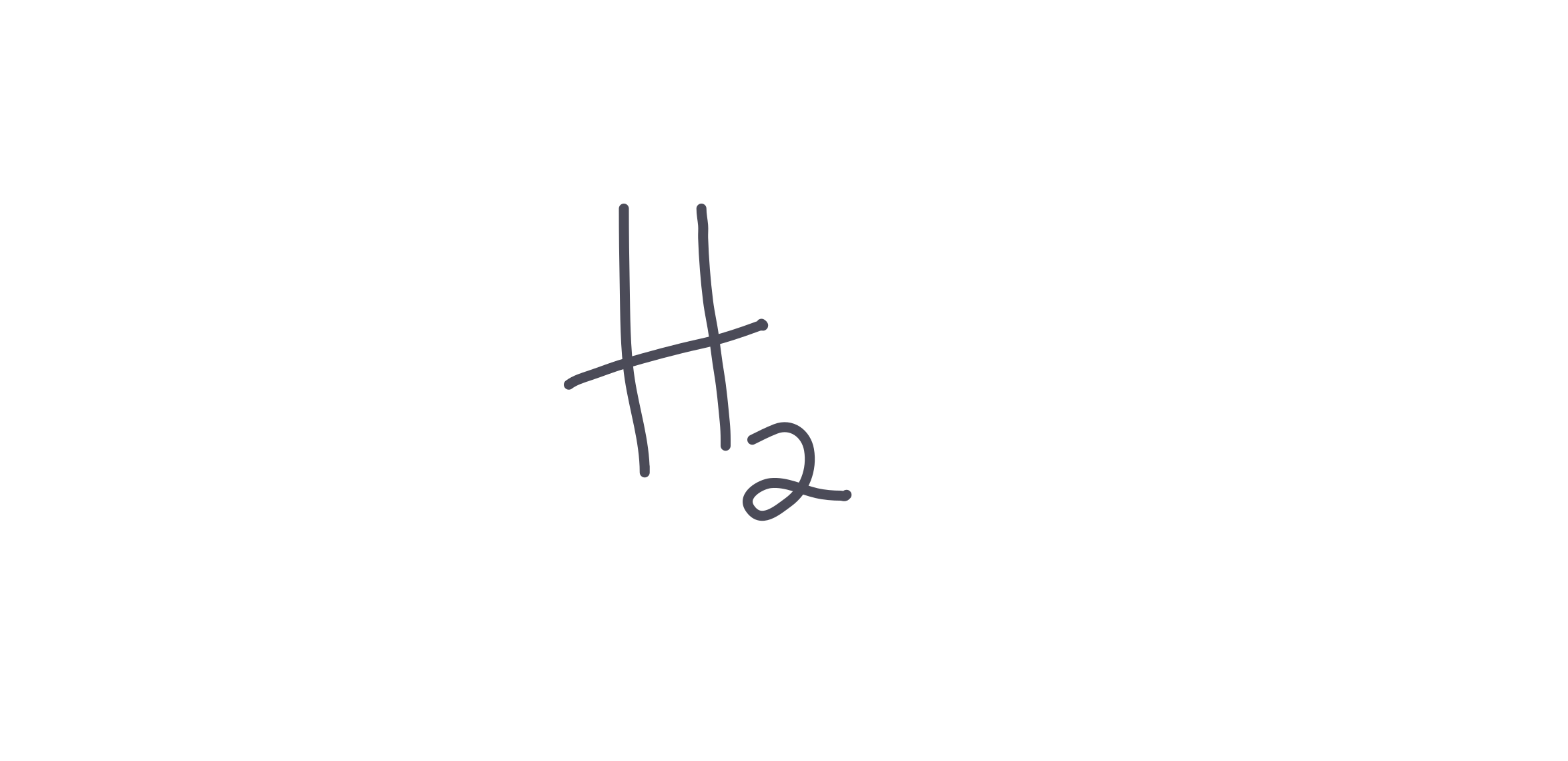
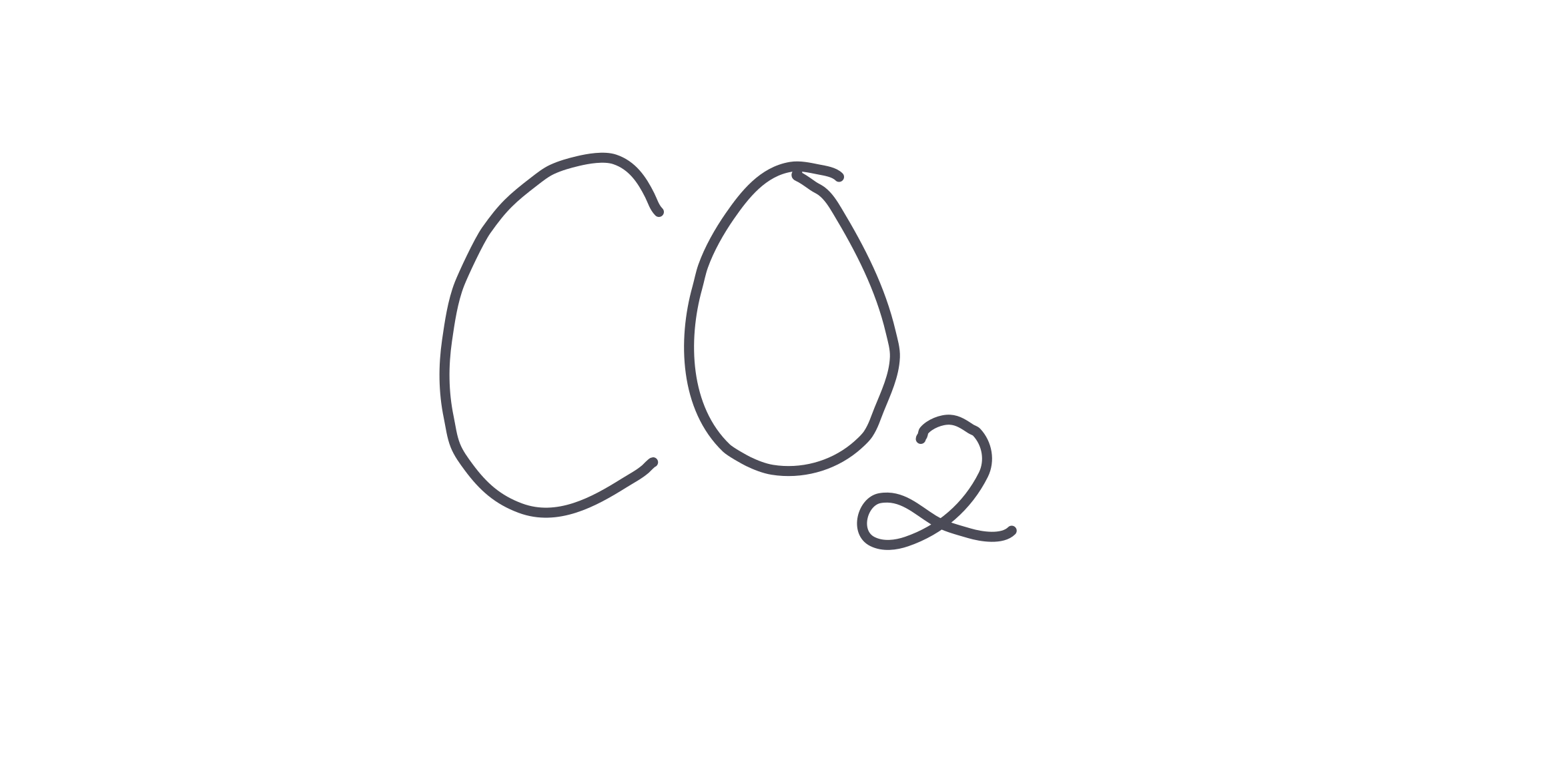
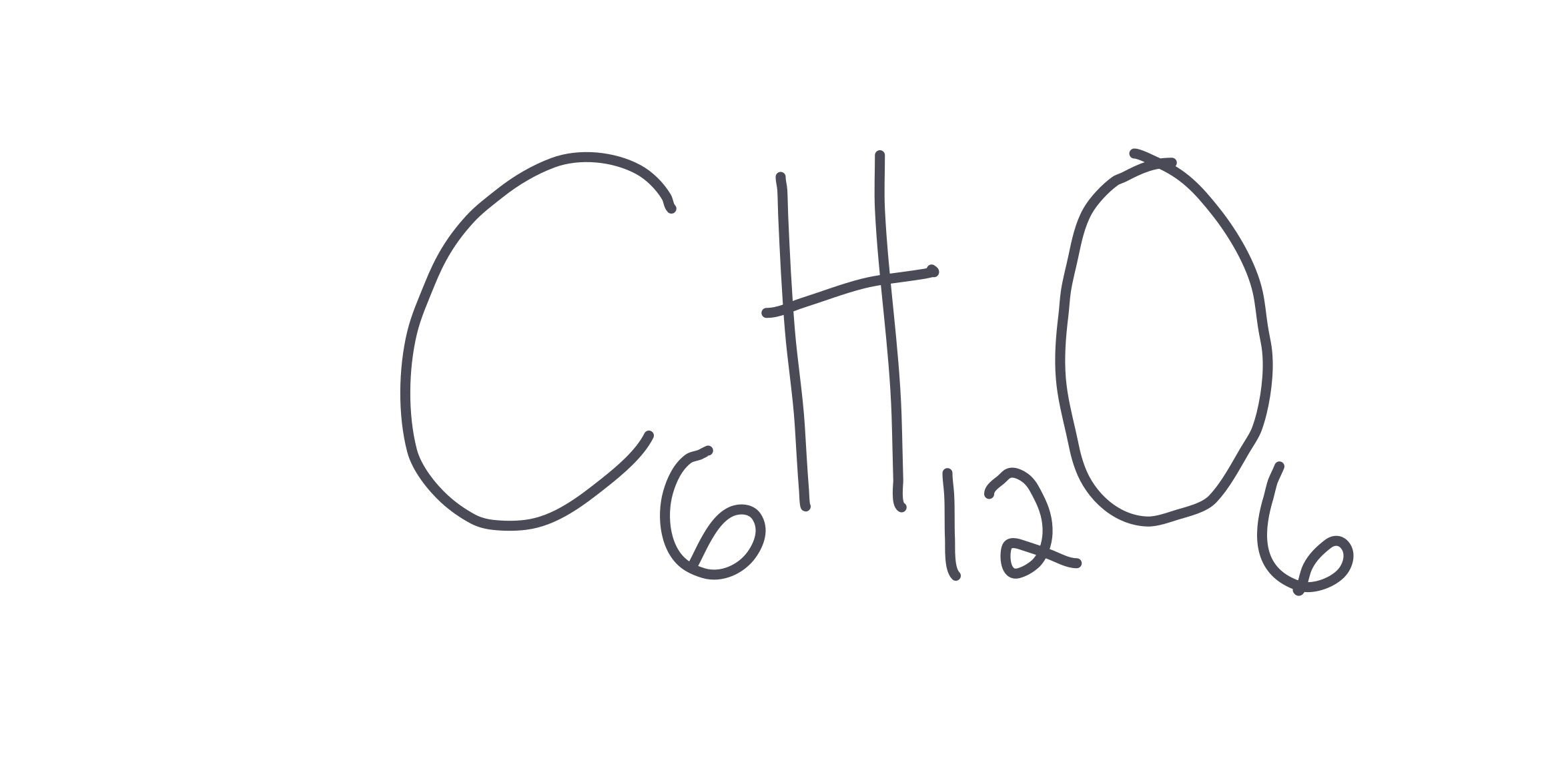
Sugar =
C_{12}H_{22}O_{11} 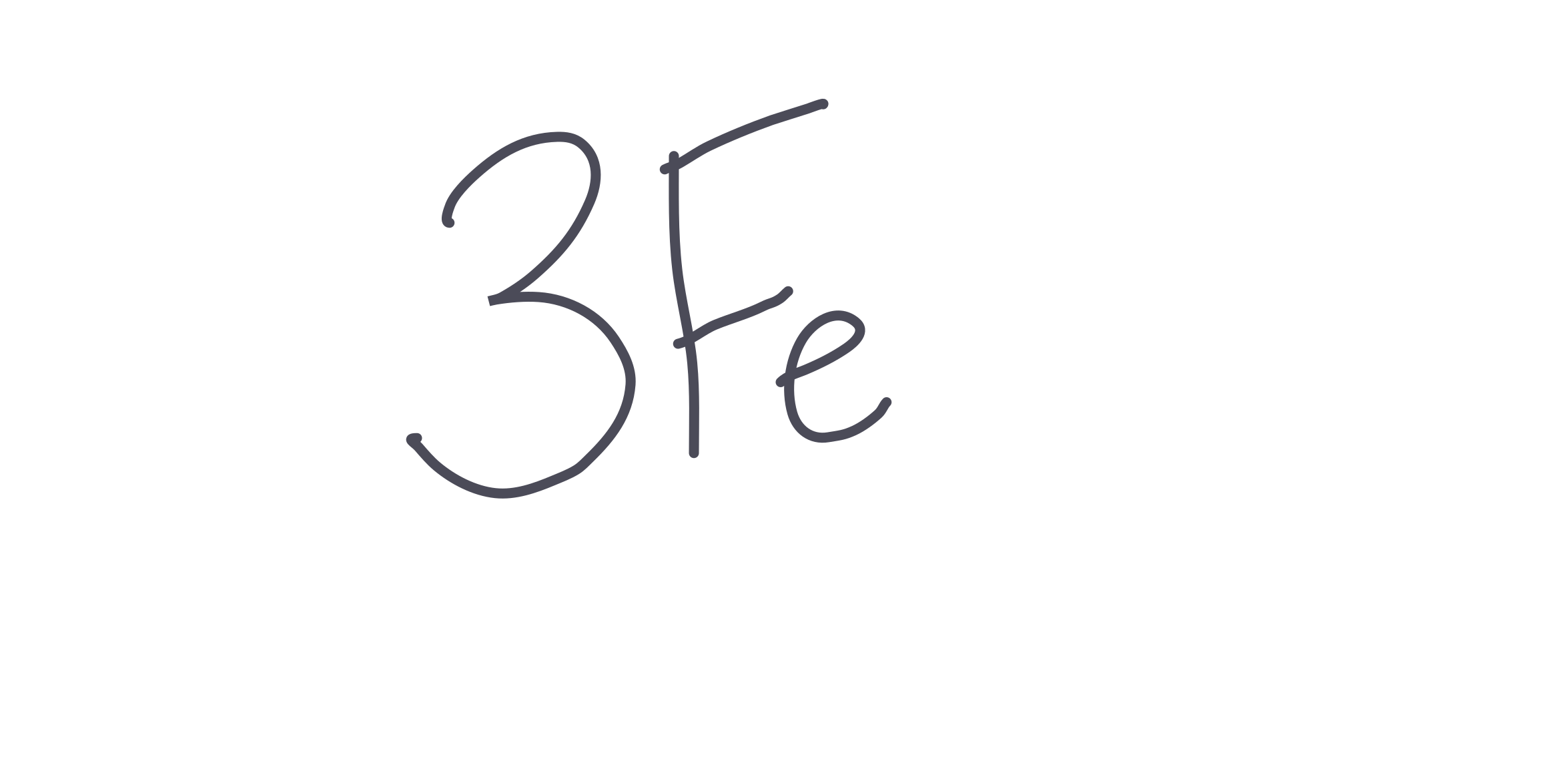
ELEMENTS
COMPOUNDS
match the vocabulary with their definitions
| Draggable item | arrow_right_alt | Corresponding Item |
|---|---|---|
atomic number | arrow_right_alt | an organized chart of all known elements, arranged by their properties and atomic structure |
molecule | arrow_right_alt | the smallest particle of an element that maintains all properties of that element |
Chemical symbols | arrow_right_alt | two or more atoms bonded together |
periodic table | arrow_right_alt | A substance made of one type of molecule, where that molecule is made up of two or more different types of atoms |
compound | arrow_right_alt | forces that hold atoms together in molecules |
atom | arrow_right_alt | a pure substance made up of only one type of atom |
element | arrow_right_alt | the number of protons in an atom's nucleus, which determines what element it is |
bond | arrow_right_alt | the one to two letter abbreviation for an element |
Sometimes you will see a number in front of a chemical formula. Like this -
that just tells me you have three of the same kind of molecule. If I have
Sort the following as either an ELEMENT or a COMPOUND
Oxygen =
Water =
Gold = Au
Sugar =
ELEMENTS
COMPOUNDS
Categorize the behaviors of different mixtures
particles in the liquid are too small to be filtered but large enough to scatter light
particles in the liquid are mixed at a molecular level. Single molecules or atoms are between molecules of the liquid
Particles in liquid won't settle, but the mixture is still heterogeneous
particles in the liquid do not scatter light
Particles in the liquid can be filtered out
particles in the liquid will settle over time
Suspension
Solution
colloid
Categorize the types of mixtures
OIl and vinegar salad dressing
milk
glue
muddy water
salt water
sugar water
Suspension
Solution
colloid
match the vocab word to a definition
| Draggable item | arrow_right_alt | Corresponding Item |
|---|---|---|
unsaturated | arrow_right_alt | a homogenous mixture where one substance is mixed with another at a molecular level. The mixture doesn't settle over time, it cannot be filtered out, and it does not scatter light. |
Solution | arrow_right_alt | The fluid that will dissolve a substance (the water in salt water) |
Saturated | arrow_right_alt | the substance being dissolved (the salt in salt water) |
solute | arrow_right_alt | how much solute is in the solution per unit of solvent |
precipitate | arrow_right_alt | when a solvent is holding the maximum amount of solute |
concentration | arrow_right_alt | When a solution has been heated, brought to saturation, and then allowed to cool without the solute coming out of solution. |
Solvent | arrow_right_alt | solute that comes out of solution |
Supersaturation | arrow_right_alt | a solution that can dissolve more solute |
Which best describes a chemical change?
Classify these actions as primarily physical change, chemical change.
Burning wood
Rusting iron
Dissolving sugar
Melting ice
cutting paper
baking a cake
glass blowing
fermenting grapes
Chemical Change
Physical Change
During an ionic bond _____________ are gained and lost.
A molecule that has a partial positive end and a partial negative end because of unequal sharing of electrons.
When a molecule is polar , which is true?
quick review - match the type of bond to what is being bonded
| Draggable item | arrow_right_alt | Corresponding Item |
|---|---|---|
covalent bonds | arrow_right_alt | protons and neutrons |
hydrogen bonds | arrow_right_alt | bonds between atoms because they have different charge. these form some molecules |
ionic bonds | arrow_right_alt | bonds between atoms because they are sharing electrons. these form some molecules |
nuclear bond | arrow_right_alt | bonds between different molecules, one frequently being water |
What keeps two strands of amylose together?
What breaks those molecules apart?
What bonds them back together?