LR257.4.3: Punnett Squares

Last updated 10 months ago
28 questions
Today, scientists use a special chart to help understand the patterns and chances of particular genetic outcomes.

These genetic outcomes are represented in an organism’s genotype and phenotype.

A genotype is an organism’s allele combinations for one or more genes. Geneticists, or scientists who study genetics, use letters to represent genotypes.

A capital letter symbolizes a dominant allele, and a lowercase letter symbolizes a recessive allele.
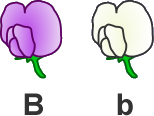

A capital B symbolizes the purple flower allele, which is dominant in pea plants. A lowercase b symbolizes the white flower allele, which is recessive in pea plants.


A phenotype is an organism’s observable traits. In other words, a phenotype is the physical representation of a genotype, such as purple flower color or a wrinkled pod in pea plants.
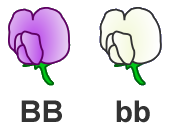
A BB genotype means a plant has two dominant alleles, so its phenotype is purple flowers. A bb genotype means a plant has two recessive alleles, so its phenotype is white flowers.
Required
1

A capital B represents the dominant allele and purple flower trait. A lowercase b represents the recessive allele and white flower trait. If an organism's genotype is Bb, what is its phenotype?

Required
1

In pea plants, tall stems are dominant (T) and short stems are recessive (t). Which of these could represent the genotype of a tall plant?

Required
1
Smooth pod is a dominant trait (S), and pinched pod is a recessive trait (s). An offspring has pinched pods. Drag the plant’s genotype to the pods below.
Other Answer Choices:
SS
ss
Ss
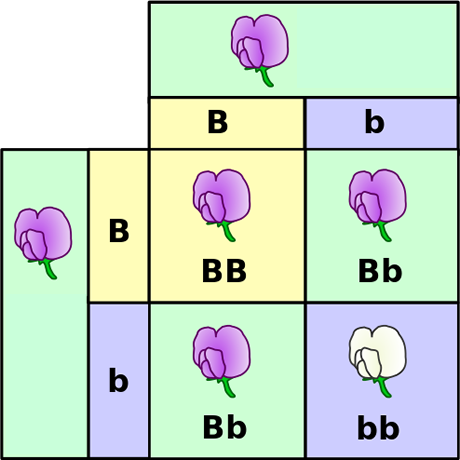
A Punnett square is a chart that shows the likelihood of all of the possible allele combinations that result from a genetic cross. Punnett Squares help show the probability that an offspring will receive a particular combination of alleles. Probability is the likelihood that particular outcomes will occur.

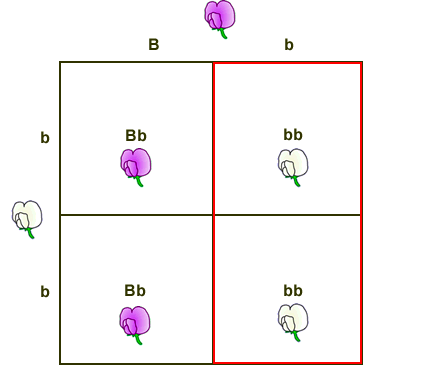
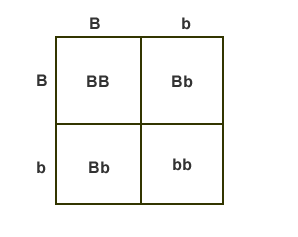
This Punnett square is used to predict the probability of a pea plant producing purple or white flowers.


The top purple flower has allele combination Bb and represents the male genotype. The side purple flower has allele combination Bb and represents the female genotype. Each box in the middle represents a possible allele combination when the two parents are paired. The offspring received one allele from each parent.
The steps of creating Punnett squares:


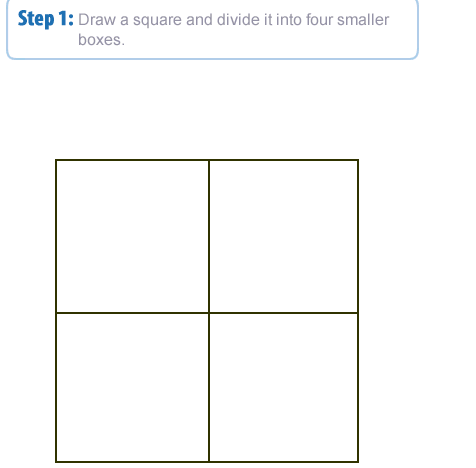
Draw a square and then divide it into four squares.


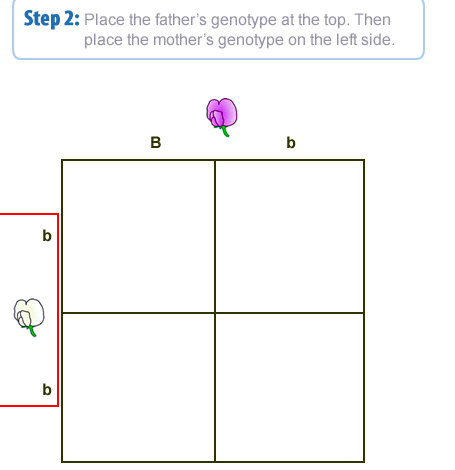
Place the male parent's genotype at the top of the Punnett square with one letter above each box. Place the female parent's genotype on the left side of the square, placing one letter in front of each box.


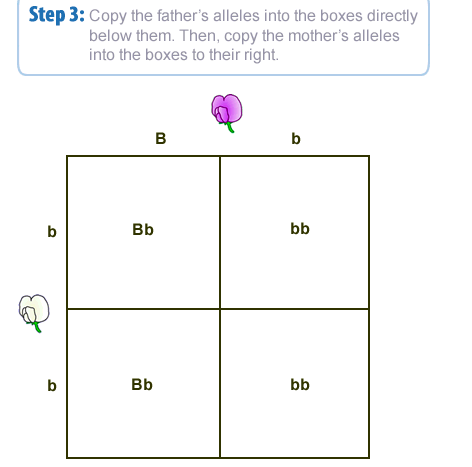
Copy the male parent's alleles into the boxes directly below them. Then, copy the female parent's alleles into the boxes to their right.


The Punnett square shows the probability of offspring these to parents could have. The genotypes would be 50% Bb and 50% bb. The phenotype would be 50% purple and 50% white.
Required
1
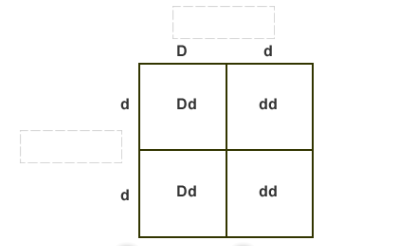
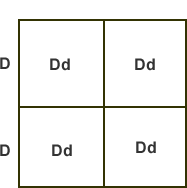
The Punnett square below shows the potential allele combinations for an offspring if one parent has dimples (D), the dominant trait, and the other parent does not (d). Label each parent’s genotype.
Other Answer Choices:
female parent
male parent
Required
1

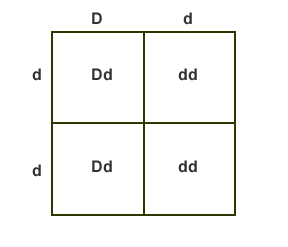
The Punnett square below shows the potential allele combinations for an offspring if one parent has dimples (D), the dominant trait, and the other parent does not (d). Select the genotype below that shows the no-dimples combination of alleles.

Required
1

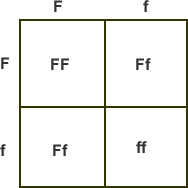
The Punnett Square below shows the potential allele combinations for an offspring whose parents have freckles. Freckles are a dominant trait (F). No freckles are recessive (f). What is the probability that the offspring will have freckles?

Required
1
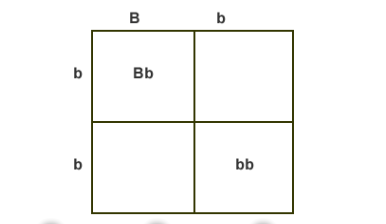
Jack’s genotype for eye color is Bb, meaning that he has brown eyes. Jill’s genotype for eye color is bb, meaning she has blue eyes. Fill in the Punnett square below to see the potential allele combinations for their offspring’s eye color.
Other Answer Choices:
BB
bb
Bb
Required
1

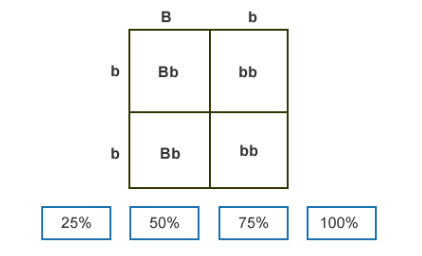
What is the probability of Jack and Jill’s offspring having blue eyes?

Check for Understanding:

1. A Punnett Square is a chart that shows all the possible genotypes and phenotypes of offspring that can result from a genetic cross.

2. A genotype is an organism's allele combinations for one or more genes.

3. A phenotype is an organism's observable traits.

4. Geneticists use letters to represent the alleles in a genotype.
Capital letters represent the dominant allele, such as B for brown eyes.
Lowercase letters represent the recessive allele, such as b for blue eyes.
Remember that an organism’s genotype is its allele combination. Phenotype, or physical appearance, is how the traits from the allele combination look in the organism. An organism’s genotype can be categorized into two groups.


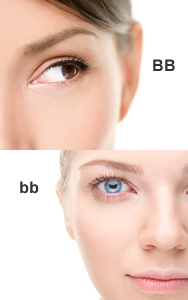
An organism that has two dominant or two recessive alleles is homozygous. Homozygous means having two identical alleles for a particular gene. For example, a person’s genotype for eye color is homozygous if it is BB (brown eyes) or bb (blue eyes).


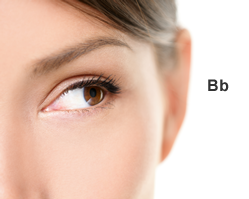
An organism that has one dominant allele and one recessive allele is heterozygous. Heterozygous means having two different alleles for a particular gene. For example, a person’s genotype for eye color is heterozygous if it is Bb. In this case, the person has brown eyes, since brown is the dominant allele. However, that person is still able to pass down the allele for blue eyes to its offspring.
Required
1

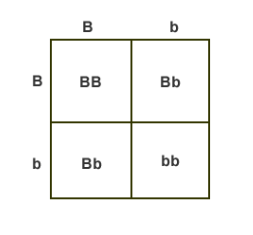
Two heterozygous parents with brown eyes are paired. This Punnett square shows possible genetic outcomes for brown or blue eye color. Which of these possible outcomes are homozygous?

Required
1

True or False: There is only one possible genotype for an organism that shows a dominant trait.

Required
1

If an organism shows a recessive trait, can you be certain of its genotype?

Required
1

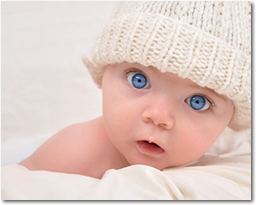
This picture shows baby Amy’s phenotype for eye color. If blue eye color is a recessive trait (b), which of these options represents her genotype?

Required
1

Baby Amy’s mother and father both had brown eyes (B) and heterozygous genotypes. What are the parents heterozygous genotypes?

Required
1

Short hair is dominant in cats (H). A female cat has a homozygous dominant genotype. A male cat has a heterozygous genotype. What are the parent's genotypes?

Check for Understanding:

1. Genotypes can be described as homozygous or heterozygous.

2. Homozygous means having two identical alleles for a particular gene.
An organism has two dominant alleles or two recessive alleles.

3. Heterozygous means having two different alleles for a particular gene.
An organism has one dominant and one recessive allele.
Required
1

A phenotype is __________.

Required
1

A genotype is __________.

Required
1

What is the definition of homozygous?

Required
1

What is the definition of heterozygous?

Required
1

What is a Punnett square?

1. A Punnett square is a chart that shows all the possible genotypes and phenotypes of an offspring that results from a genetic cross.
A genotype is an organism's allele combinations for one or more genes.
A phenotype is an organism's observable traits.

2. Geneticists use letters to represent the alleles in a genotype.
Capital letters represent the dominant allele, such as B for brown eyes.
Lowercase letters represent the recessive allele, such as b for blue eyes.

3. Genotypes can be described as homozygous or heterozygous.

4. Homozygous means having two identical alleles for a particular gene.
An organism has two dominant alleles or two recessive alleles.

5. Heterozygous means having two different alleles for a particular gene.
An organism has one dominant and one recessive allele.
Required
1

Janice’s mother and father both have green eyes. Janice also has green eyes, but she wonders if her next sibling will have green eyes, too. Which of these could show Janice the probability that her next sibling will have green eyes?

Required
1
An organism whose genotype is heterozygous will express the__________allele.
Required
1

Which potential allele combination represents an offspring that would have a homozygous genotype and dominant eye color trait?

Required
1

How is a Punnett square created? Drag the numbers to put the steps in the correct order.

  1. Draw a square and then divide it into four squares.
  2. Place the male parent's genotype at the top of the Punnett square with one letter above each box. Place the female parent's genotype on the left side of the square, placing one letter in front of each box.
  3. Copy the male parent's alleles into the boxes directly below them. Then, copy the female parent's alleles into the boxes to their right.
Required
1

Why do scientists use Punnett squares?

Required
1

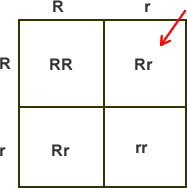
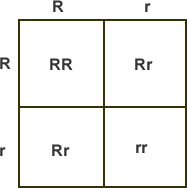
Having round seeds is dominant (R), while having wrinkled seeds is a recessive trait (r) in pea plants. The Punnett square below shows a cross between two pea plants and the potential allele combinations of their offspring. What is the phenotype (what you observe) for the allele combination in the top right corner?

Required
1

Rounded seeds are dominant (R). What is the probability that the offspring of this pea plant cross will have rounded seeds?

Required
1

The Punnett square below shows the probability that an offspring will have dimples. What is most likely the father’s genotype?

Required
1
In pea plants, tall stems are dominant to short stems. A pea plant only needs one __________allele in order to be a tall pea plant. However, it would need two __________ alleles to be a short pea plant.