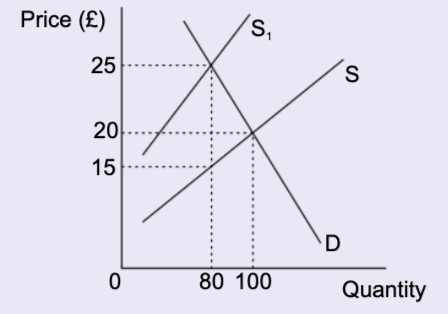
The diagram shows the impact of a specific indirect tax imposed on a demerit good. The revenue received by the government would equal:
1 point
1
Question 2
2.
Draw a diagram to show how the supply curve shifts when an ad valorem tax is introduced on a good or service.
1 point
1
Question 3
3.
Which of the following is the MAIN advantage of using indirect taxes on goods with negative externalities?
1 point
1
Question 4
4.
What is a potential drawback of using indirect taxes to reduce negative externalities?
1 point
1
Question 5
5.
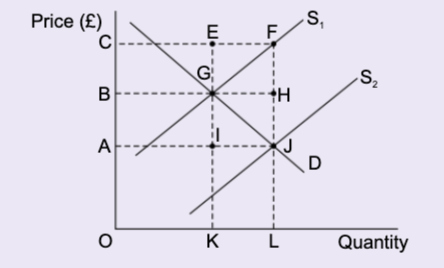
The diagram shows the impact of a subsidy on a merit good. Government expenditure on the subsidy would equal:
1 point
1
Question 6
6.
What is likely to be the most effective policy solution to overcome the market failure caused by the existence of positive externalities of production?
1 point
1
Question 7
7.
Draw a diagram to show how the setting of a maximum price for a good can result in excess demand.
4 points
4
Question 8
8.
Explain what a surplus and a deficit are on the current account of the balance of payments
1 point
1
Question 9
9.
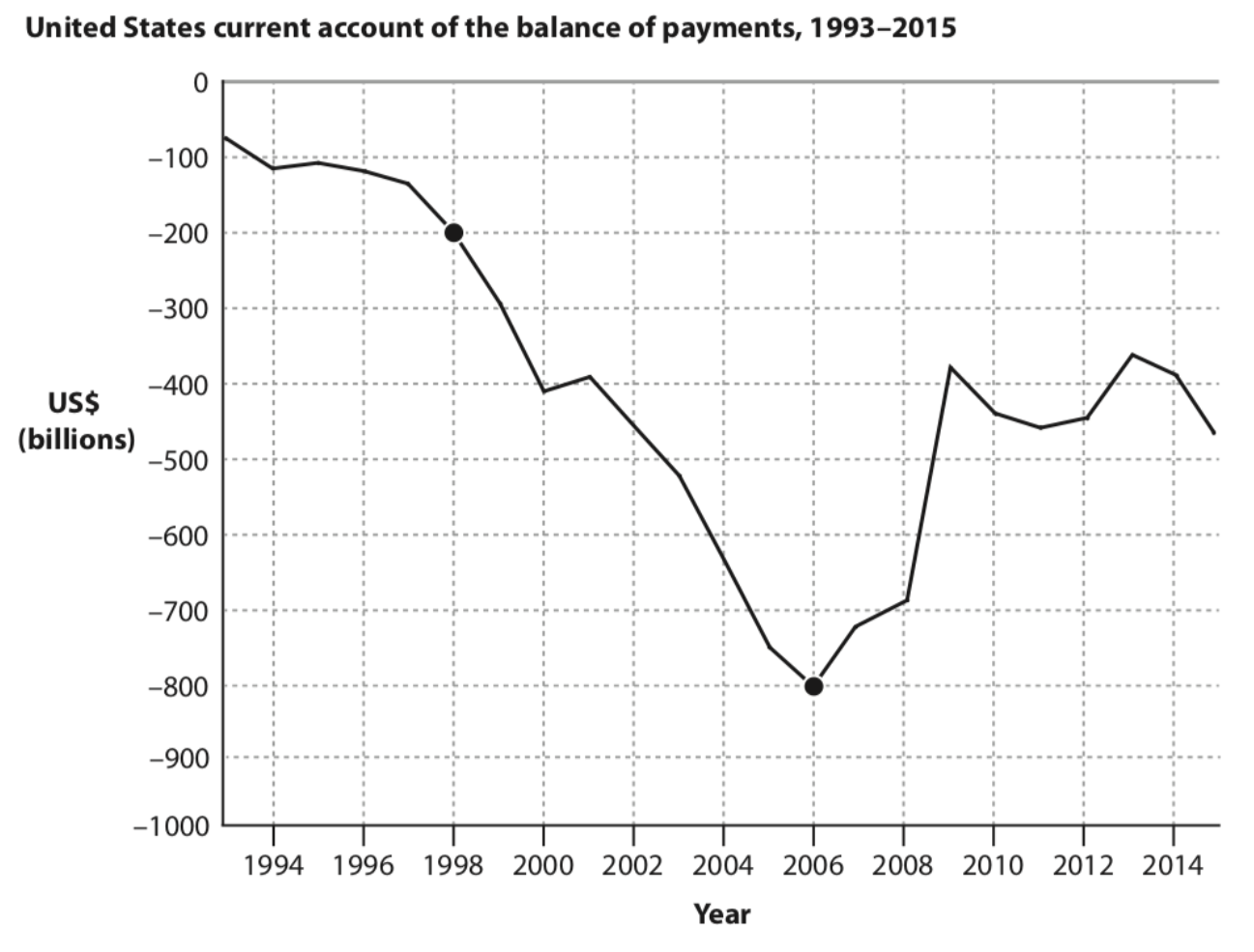
Calculate the percentage change in the United States current account deficit between 1998 and 2006.
1 point
1
Question 10
10.
What would a shift in the long run aggregate supply curve to the right be most likely to cause?
1 point
1
Question 11
11.
What is most likely to lead to a persistent surplus in a country's current account of its balance of payments?
1 point
1
Question 12
12.
Which policy is not likely to help reduce a deficit on the current account of a country's balance of payments?
4 points
4
Question 13
13.
List four methods a government might adopt to remove a persistent trade deficit
1 point
1
Question 14
14.
What is the impact of the Marshall-Lerner condition holding?
1 point
1
Question 15
15.
An economy's current account on the balance of payments is in surplus. The exchange rate is re-valued by the government.
Assuming the Marshall-Lerner condition holds, which diagram shows the impact on the current account balance?