Also known as a shooting star, a _____ is a large chunk of rock that BURNS UP in the planet's atmosphere.
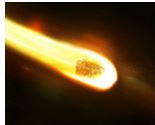
Also known as a shooting star, a _____ is a large chunk of rock that BURNS UP in the planet's atmosphere.
Which statement best describes terrestrial planets?
Which statement is true about gaseous planets?
A scientist discovers a large, rocky object that is covered in craters and is orbiting the planet Mars. This object is most likely a _______.
The Asteroid Belt can be found where in our solar system?
Where do comets come from?
Where is the Oort Cloud?
Also known as a shooting star, a _____ is a large chunk of rock that BURNS UP in the planet's atmosphere.
A large chunk of rock that passes through a planet's atmosphere and STRIKES THE SURFACE of a planet or moon is called a _________.
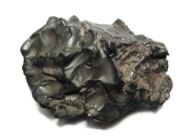
Which of the following objects has a main head made of ice, methane, ammonia, and dust?
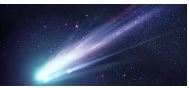
A comet's tail always points ___________.
What do planets orbit around?
What do moons orbit around?
Which correctly shows the planets in their correct order from closest to farthest from the sun?
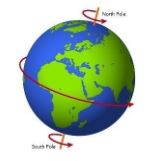
The Earth moves around its axis. What do we call this movement?
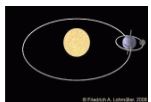
The planet below is orbiting the sun. What do we call this movement?
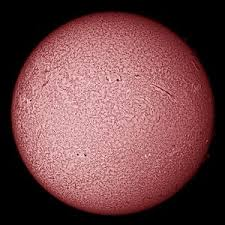
Which part of the Sun do we see?
Prominences and solar flares are related to sunspots because they are all caused by:
The intense magnetic field associated with sunspots may cause huge arching columns of gas called ___.
The reason most solar winds do not disrupt electricity on Earth is due to the Earth’s ___________.
What is the temperature of the Sun’s core?
In this image, what is the loop coming off the Sun’s surface called?
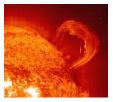
What fusion reaction is coming from the Sun?
What do we call the electrified particles that get into the Earth’s atmosphere (Ionosphere) and create ribbons of light?
Where do auroras occur?
What is the thin reddish transparent layer of the Sun called?
Let's pretend a new planet has been discovered. It appears to have several rings and revolves slower than most. How would we categorize this new planet?
Which of the following planets DO NOT have moons?
Which of the following is NOT one of the criteria for being considered a planet?
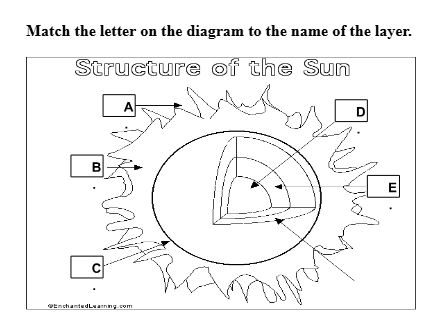
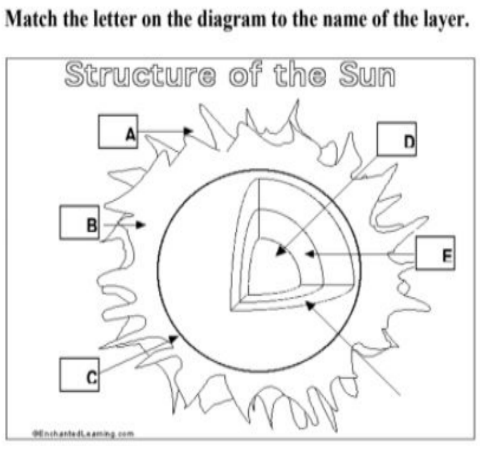
Which layer does letter A point to?
D
Which layer does letter B point to?
Which layer does letter C point to?
Which layer does letter D point to?
Which layer does letter E point to?