Log in
Sign up for FREE
arrow_back
Library
The Cell Cycle
By Jude Sanford
star
star
star
star
star
Share
share
Last updated about 1 year ago
41 questions
Add this activity
1
1
1
1
1
1
1
1
1
1
1
1
1
1
1
1
1
1
1
1
1
1
1
1
1
1
1
1
1
1
1
1
1
1
1
1
1
1
1
1
1
zoom_in
zoom_in
zoom_in
zoom_in
zoom_in
Question 1
1.
What process involves a cell dividing into two new cells?
Mitosis
Cell Respiration
Photosynthesis
Meiosis
Question 2
2.
What type of cells perform mitosis?
Neurons
Gametes
Bacterial cells
Somatic cells
Question 3
3.
How many cells are produced in mitosis?
One
Two
Three
Four
Question 4
4.
What phase comes after prophase in mitosis?
Interphase
Anaphase
Metaphase
Telophase
Question 5
5.
This is the phase where the cell spends most of its time growing in size.
Metaphase
Interphase-
Question 6
6.
What phase comes before mitosis in the cell cycle?
Interphase
Telophase
Cytokinesis
Prophase
Question 7
7.
What occurs during interphase?
Cell division
Nuclear envelope breakdown
Cell growth and DNA replication
Chromosome separation
Question 8
8.
What phase comes before mitosis in the cell cycle?
Metaphase
Cytokinesis
Interphase
Prophase
Question 9
9.
What is the main purpose of mitosis?
To exchange genetic material
To create two identical daughter cells
To divide DNA only
To grow tissues
Question 10
10.
How many stages are there in mitosis?
Five stages
Four stages
Three stages
Two stages
Question 11
11.
During which stage do chromosomes align at the center?
Metaphase
Anaphase
Telophase
Interphase
Question 12
12.
Which is the first stage of mitosis?
Prophase
Metaphase
Telophase
Anaphase
Question 13
13.
What stage follows prophase in mitosis?
Telophase
Interphase
Metaphase
Anaphase
Question 14
14.
Which stage involves sister chromatids being pulled apart?
Anaphase
Cytokinesis
Telophase
Prophase
Question 15
15.
What is the final stage of mitosis called?
Telophase
Metaphase
Interphase
Prophase
Question 16
16.
What occurs to the chromosomes during prophase of mitosis?
They condense
They disappear completely from view.
They divide into two identical sets.
They lengthen and become less organized.
Question 17
17.
What happens to the nuclear envelope/membrane in prophase?
It breaks down and disappears completely.
It remains unchanged during prophase.
It thickens and strengthens.
It forms new nuclei for daughter cells.
Question 18
18.
What structure forms the spindle fibers in prophase?
Centrioles begin to move to opposite poles.
Nuclear envelope forms the spindle fibers.
Chromatids group together at the center.
Centrosomes contract and shrink.
Question 19
19.
In prophase, what is the state of the chromosomes?
They are already separated into daughter cells.
They are not yet fully formed.
They are single and unpaired chromosomes.
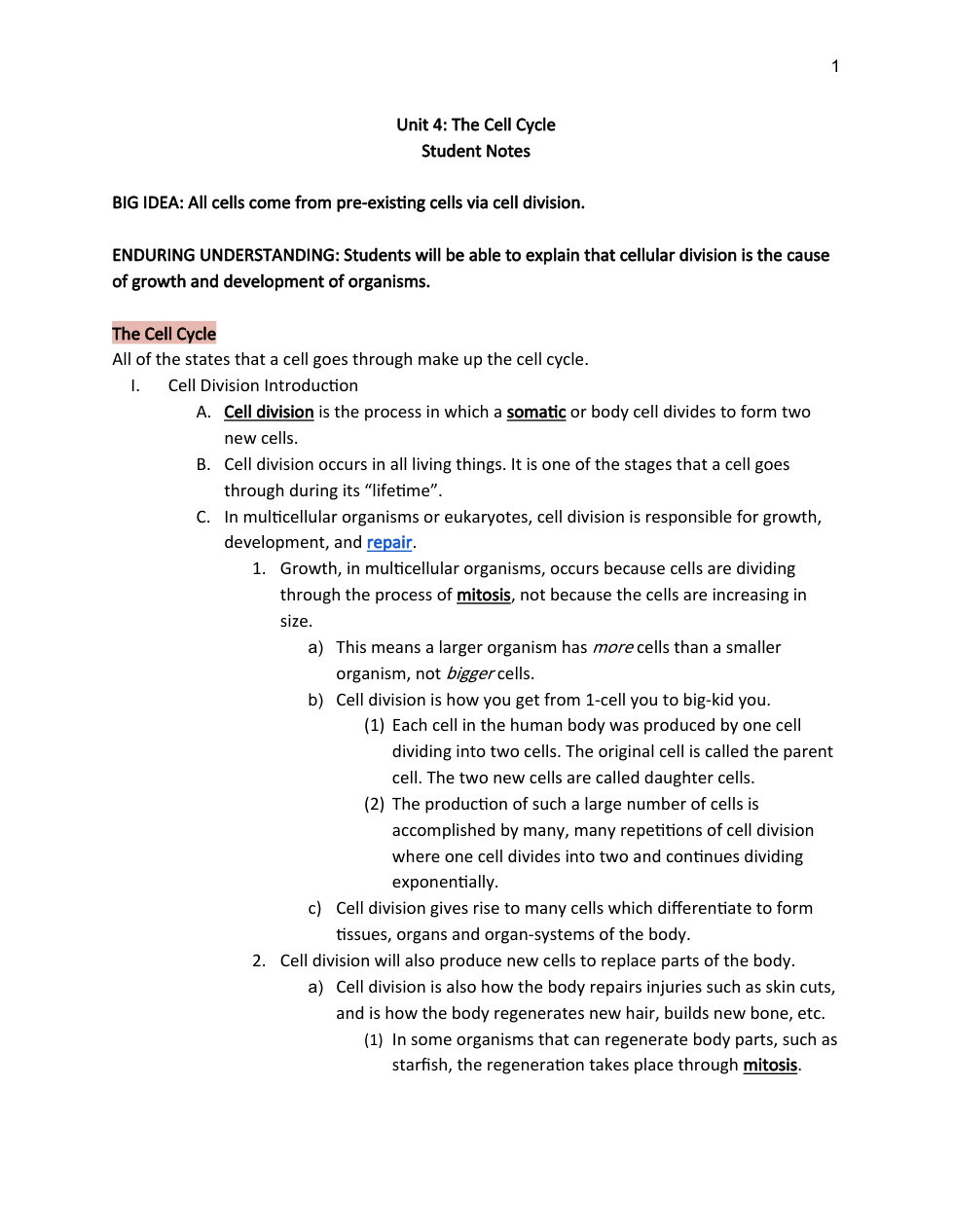
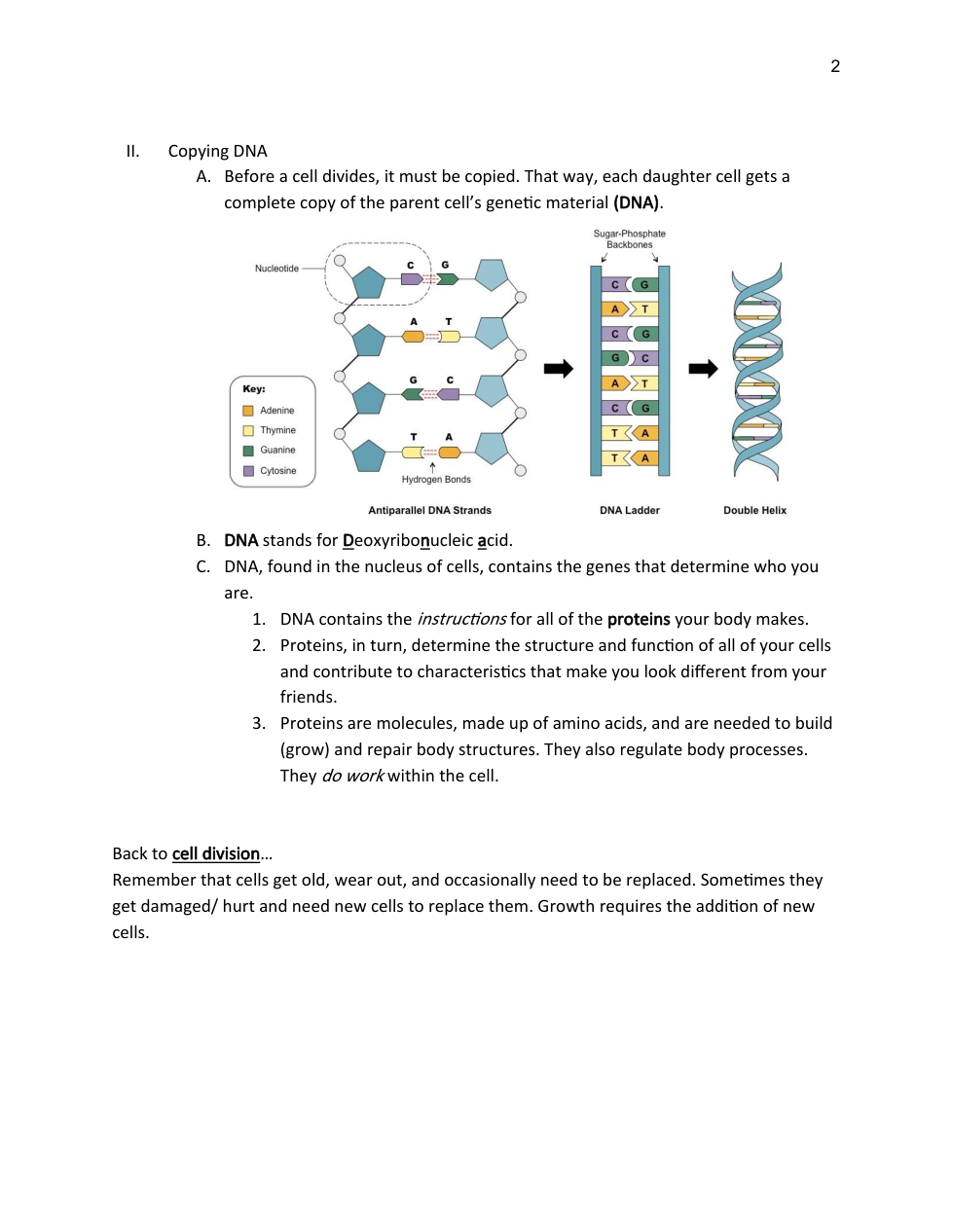
The chromatin condenses to form “X” shaped replicated chromosomes. (Two sister chromatids held together by one centromere
Question 20
20.
What occurs during metaphase of mitosis?
Nuclear membrane dissolves completely.
Chromosomes duplicate for the next phase.
Sister chromatids separate from each other.
Chromosomes align at the cell equator.
Question 21
21.
What is the key characteristic of metaphase?
Cell has not yet divided yet.
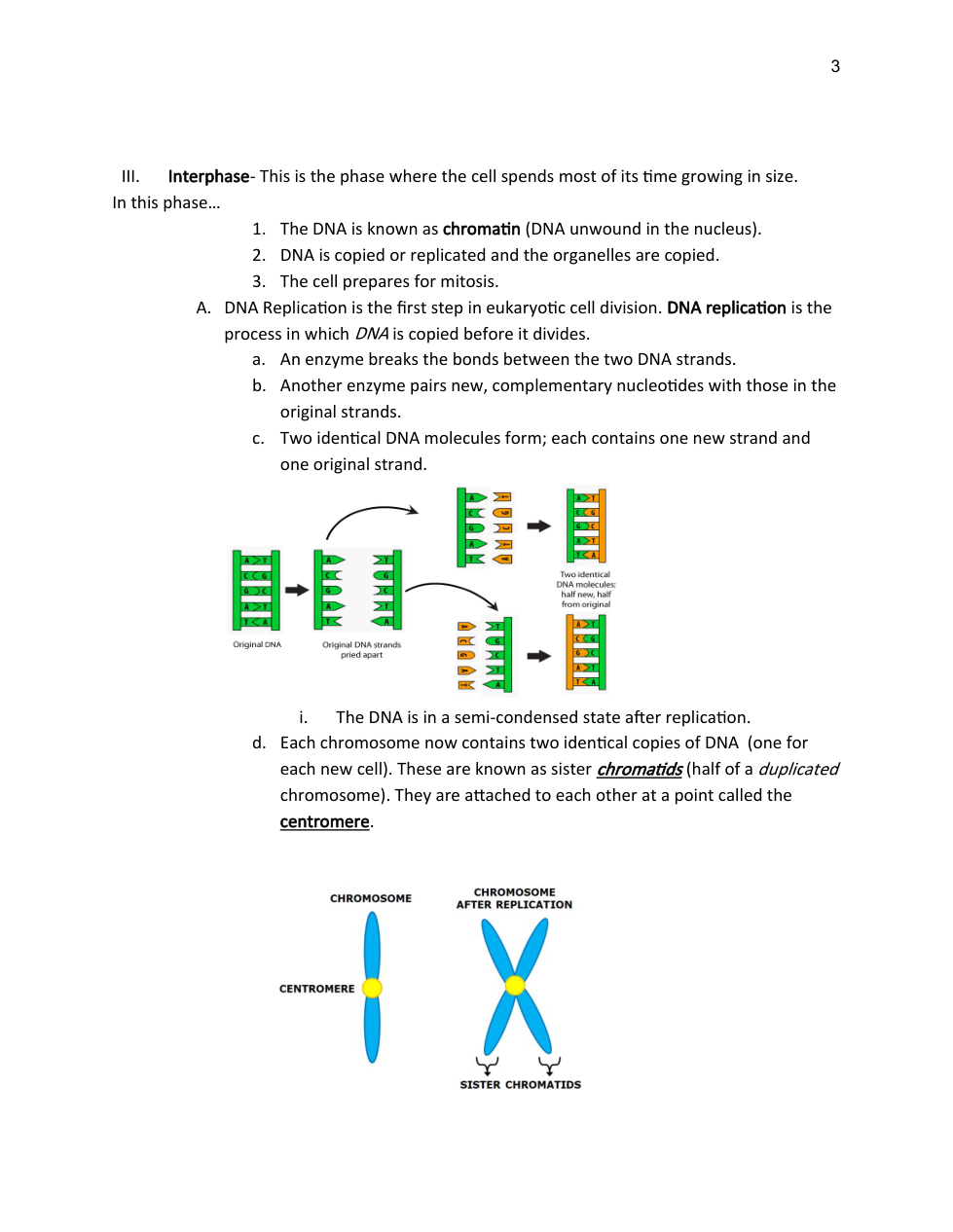
The nucleus has disappeared from the cytoplasm and chromosomes line up in the middle of the cell
Chromosomes are clustered in one corner.
Nuclear envelope forms around chromosomes.
Question 22
22.
What happens to chromatids during anaphase?
They become invisible to the eye.
They line up in the center.
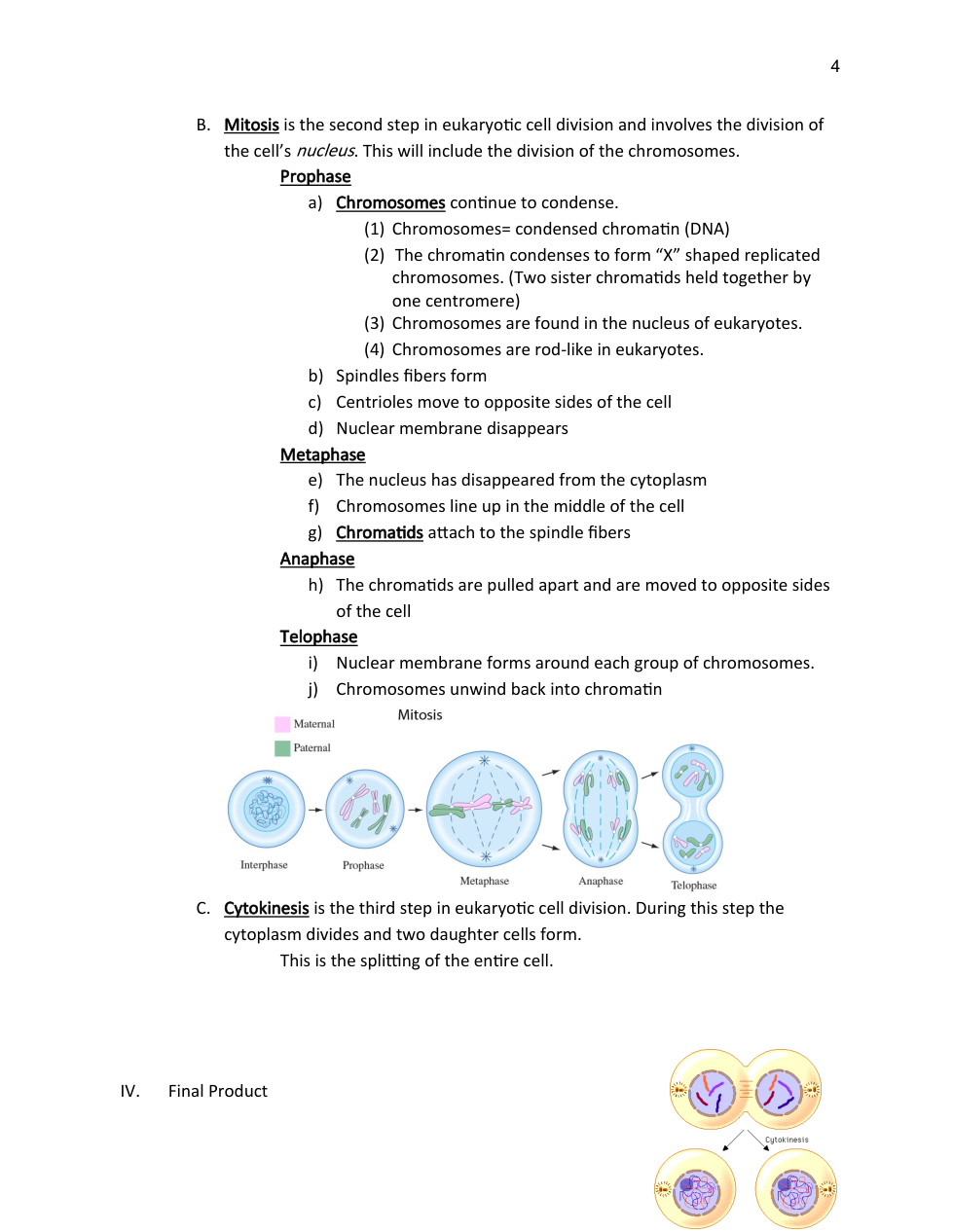
They are pulled apart to opposite poles.
They duplicate in the nucleus.
Question 23
23.
What phase comes before anaphase in the cell cycle?
Metaphase
Prophase
Interphase
Telophase
Question 24
24.
What reappears during telophase?
Nuclear envelope around each set of chromosomes forms.
Centrioles move to opposite poles of the cell.
Chromosomes are pulled apart at the centromeres.
Spindle fibers begin to break down and dissolve.
Question 25
25.
What is the main outcome of telophase?
Cells start to undergo apoptosis immediately.
Cell prepares for DNA synthesis phase to begin.
Chromosomes are fully separated into daughter cells.
Formation of two distinct nuclei before cell division completes.
Question 26
26.
What is the third step in eukaryotic cell division?
Mitosis
Replication
Cytokinesis
Interphase
Question 27
27.
What divides during the third step of cell division?
Cytoplasm
Nucleus
DNA
Cell membrane
Question 28
28.
What do two daughter cells form after completing which step?
Mitosis
Cytokinesis
Interphase
Anaphase
Question 29
29.
During which stage does the cytoplasm split into two?
Telophase
Metaphase
Prophase
Cytokinesis
Question 30
30.
At the end of the cell cycle, what is produced?
Four varied cell types.
Two different daughter cells.
One larger parent cell.
Two identical daughter cells.
Question 31
31.
Which phase occurs before cell division in the cycle?
Interphase.
Metaphase.
Prophase.
Cytokinesis.
Question 32
32.
What is the main purpose of the cell cycle?
To grow and replicate cells.
To change cell shape.
To remove waste products.
To produce energy only.
Question 33
33.
What happens during cytokinesis?
The cytoplasm divides between the two new cells.
DNA duplicates into two strands.
Cells grow larger than normal.
Nuclear membranes form again.
Question 34
34.
What does diploid mean in terms of chromosomes?
Two complete sets of chromosomes in a cell.
Half the number of chromosomes in a cell.
One complete set of chromosomes in a cell.
Three complete sets of chromosomes in a cell.
Question 35
35.
In humans, what is the diploid number?
22 chromosomes in a somatic cell.
23 chromosomes in a somatic cell.
46 chromosomes in a gamete.
46 chromosomes total in a somatic cell.
Question 36
36.
Which cells in humans are diploid?
Gametes, such as sperm and egg cells.
Nerve cells only.
Red blood cells only.
Somatic cells, like skin and muscle cells.
Question 37
37.
What process produces diploid cells in organisms?
Fertilization, which combines genetic material.
Binary fission in prokaryotes.
Meiosis, which creates haploid cells.
Mitosis, cell division that creates identical cells.
Question 38
38.
What is binary fission?
Growth of cells in size.
A method of sexual reproduction.
A type of asexual reproduction in single-celled organisms.
Cell division in multicellular organisms.
Question 39
39.
Which organism primarily uses binary fission?
All types of animals.
Bacteria and some single-celled organisms.
Plants and fungi.
Humans and other mammals.
Question 40
40.
What is a key step in binary fission?
Fusion of two cells together.
Replication of DNA before division occurs.
Formation of gametes.
Cell growth only without division.
Question 41
41.
What does binary fission produce?
Two different specialized cells.
Many cells from a single one.
Two identical daughter cells from one parent cell.
One new cell with extra DNA.