1
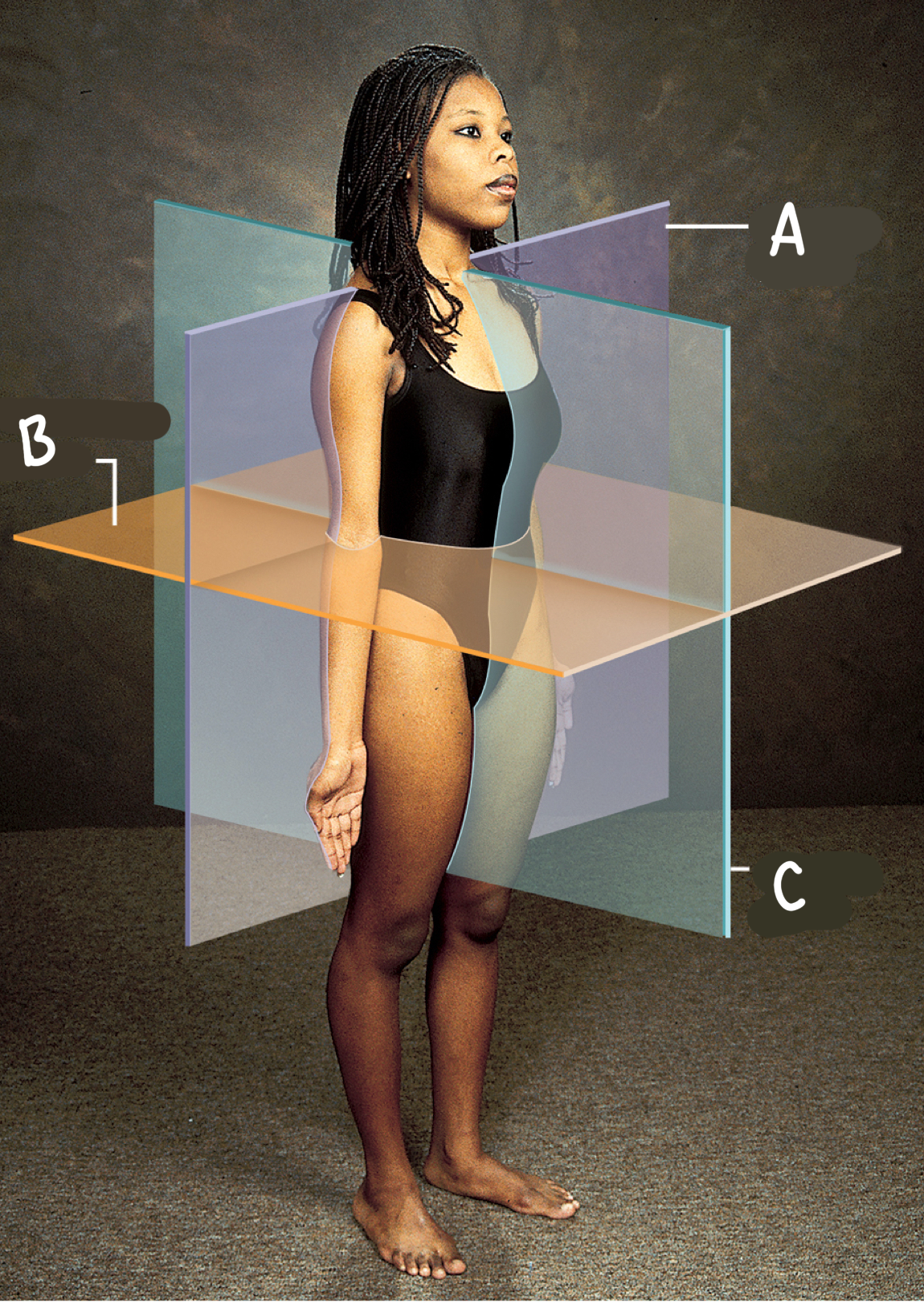
match the plane name with it's letter
match the plane name with it's letter
| Draggable item | arrow_right_alt | Corresponding Item |
|---|---|---|
b | arrow_right_alt | frontal plane |
c | arrow_right_alt | transverse plane |
a | arrow_right_alt | sagittal plane |
Definitions
| Draggable item | arrow_right_alt | Corresponding Item |
|---|---|---|
physiology | arrow_right_alt | study of the structural basis of body function |
anatomy | arrow_right_alt | study of the functional relevance of a structure |
Studying the Anatomical Sciences
| Draggable item | arrow_right_alt | Corresponding Item |
|---|---|---|
radiological anatomy | arrow_right_alt | bodily structure that can be observed without magnification |
regional anatomy | arrow_right_alt | external structures |
surface anatomy | arrow_right_alt | internal structures using x-ray |
histology | arrow_right_alt | one organ system at a time |
cytology | arrow_right_alt | multiple organs in a specific region |
gross anatomy | arrow_right_alt | microscopic anatomy, structure of tissue and organ |
systemic anatomy | arrow_right_alt | study of the structure and function of individual cells |
Methods of Anatomical Study
| Draggable item | arrow_right_alt | Corresponding Item |
|---|---|---|
percussion | arrow_right_alt | looking at surface appearance |
inspection | arrow_right_alt | feeling a structure |
dissection | arrow_right_alt | listening to normal sounds |
auscultation | arrow_right_alt | tapping and listening |
Palpation | arrow_right_alt | cutting and separating of tissues |
Medical Imaging: Radiology
| Draggable item | arrow_right_alt | Corresponding Item |
|---|---|---|
MRI | arrow_right_alt | cross section x-rays |
Sonograhy | arrow_right_alt | uses magents, not radiation. used for soft tissue visualization |
CT scan | arrow_right_alt | nuclear medicine (use of radioisotopes). Gamma ray detection. Used for finding active cell diviion/active sites in the body |
PET | arrow_right_alt | reflection of ultra sound waves. uses no radiation |
variation in human structure
| Draggable item | arrow_right_alt | Corresponding Item |
|---|---|---|
situs perversus | arrow_right_alt | normal arrangment |
situs solitus | arrow_right_alt | reversed position of organs |
situs inversus | arrow_right_alt | one organ atypically positioned |
Levels of Human Structure: SMALLEST to LARGEST
organs
organ systems
tissues
organism
organelles
molecules/macromolecules
cells
atoms
Organ Systems
Digestive
Female Reproductive
Urinary
Circulatory
Integumentary
Skeletal
Endocrine
Respiratory
Male Reproductive
Muscular
Lymphatic
Nervous
Protection, Support, Movement
Internal Communication and Integration
Fluid Transport
Intake and Output
Reproductive
Anatomical Position: Choose all that apply.
match the plane name with it's letter
| Draggable item | arrow_right_alt | Corresponding Item |
|---|---|---|
b | arrow_right_alt | frontal plane |
c | arrow_right_alt | transverse plane |
a | arrow_right_alt | sagittal plane |
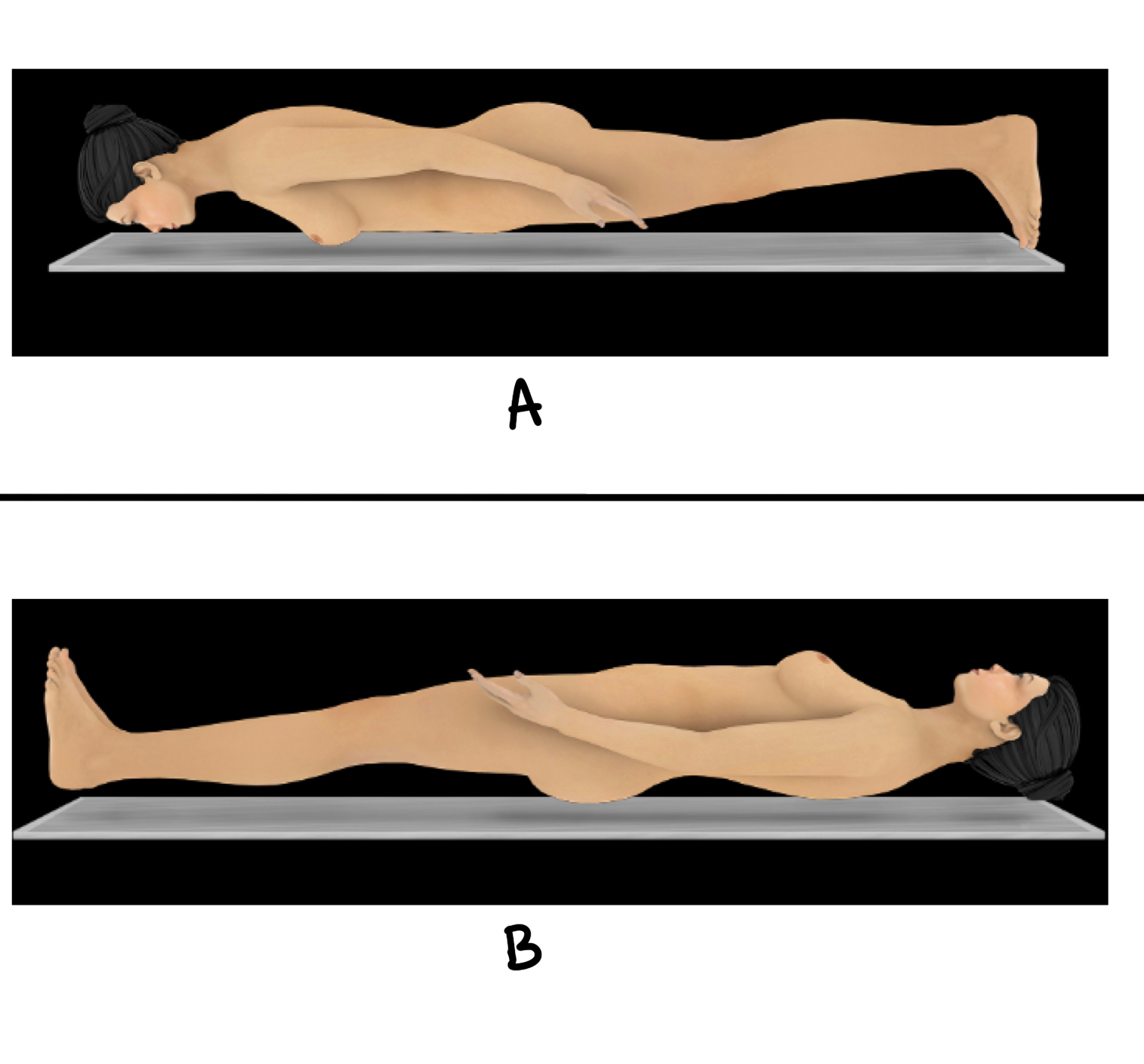
| Draggable item | arrow_right_alt | Corresponding Item |
|---|---|---|
b | arrow_right_alt | prone |
a | arrow_right_alt | supine |
What is the difference between the midsagittal plane and the parasagittal plane?
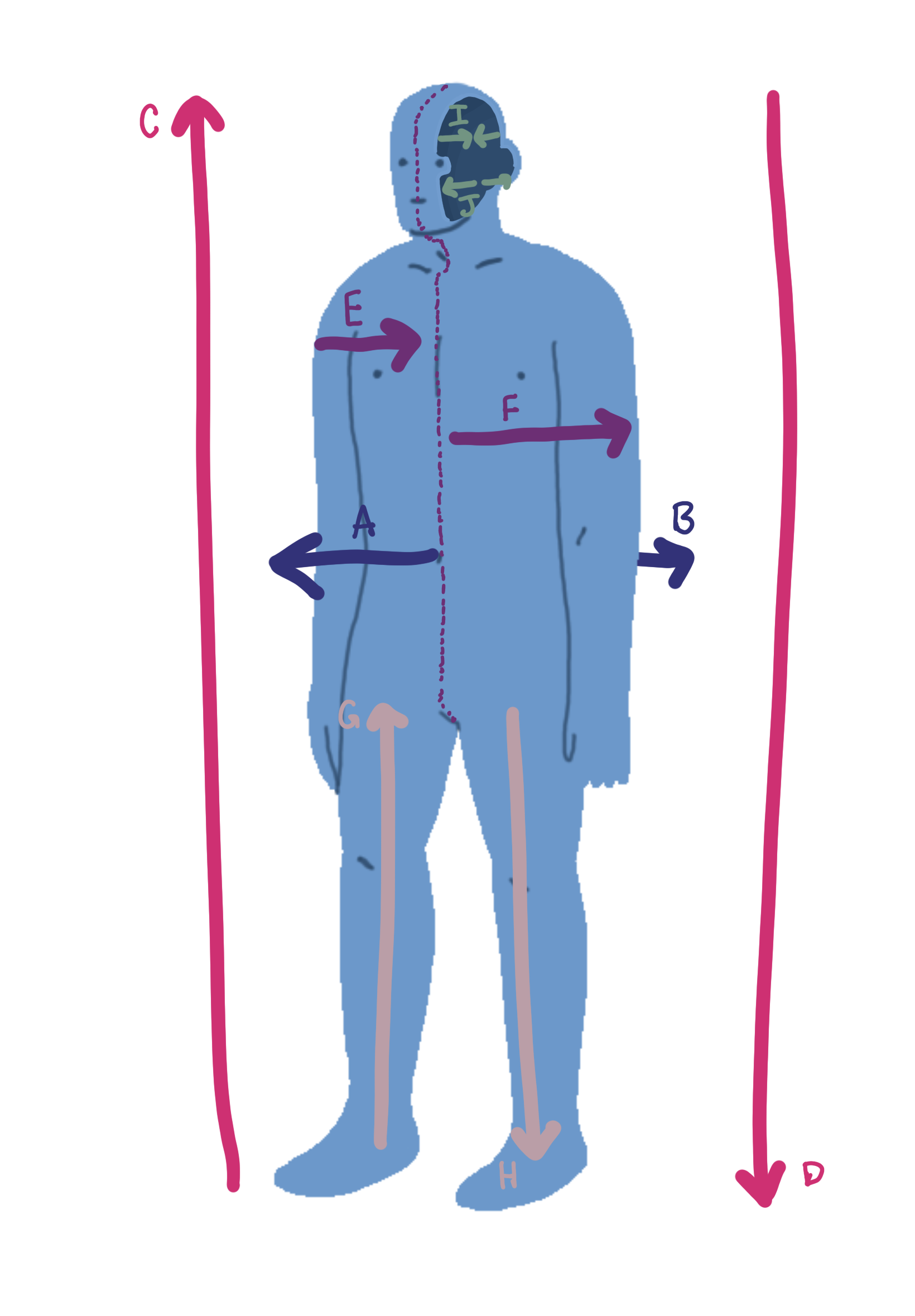
| Draggable item | arrow_right_alt | Corresponding Item |
|---|---|---|
G | arrow_right_alt | anterior |
J | arrow_right_alt | posterior |
F | arrow_right_alt | superior |
E | arrow_right_alt | inferior |
A | arrow_right_alt | medial |
I | arrow_right_alt | lateral |
H | arrow_right_alt | proximal |
B | arrow_right_alt | distal |
D | arrow_right_alt | deep |
C | arrow_right_alt | superficial |
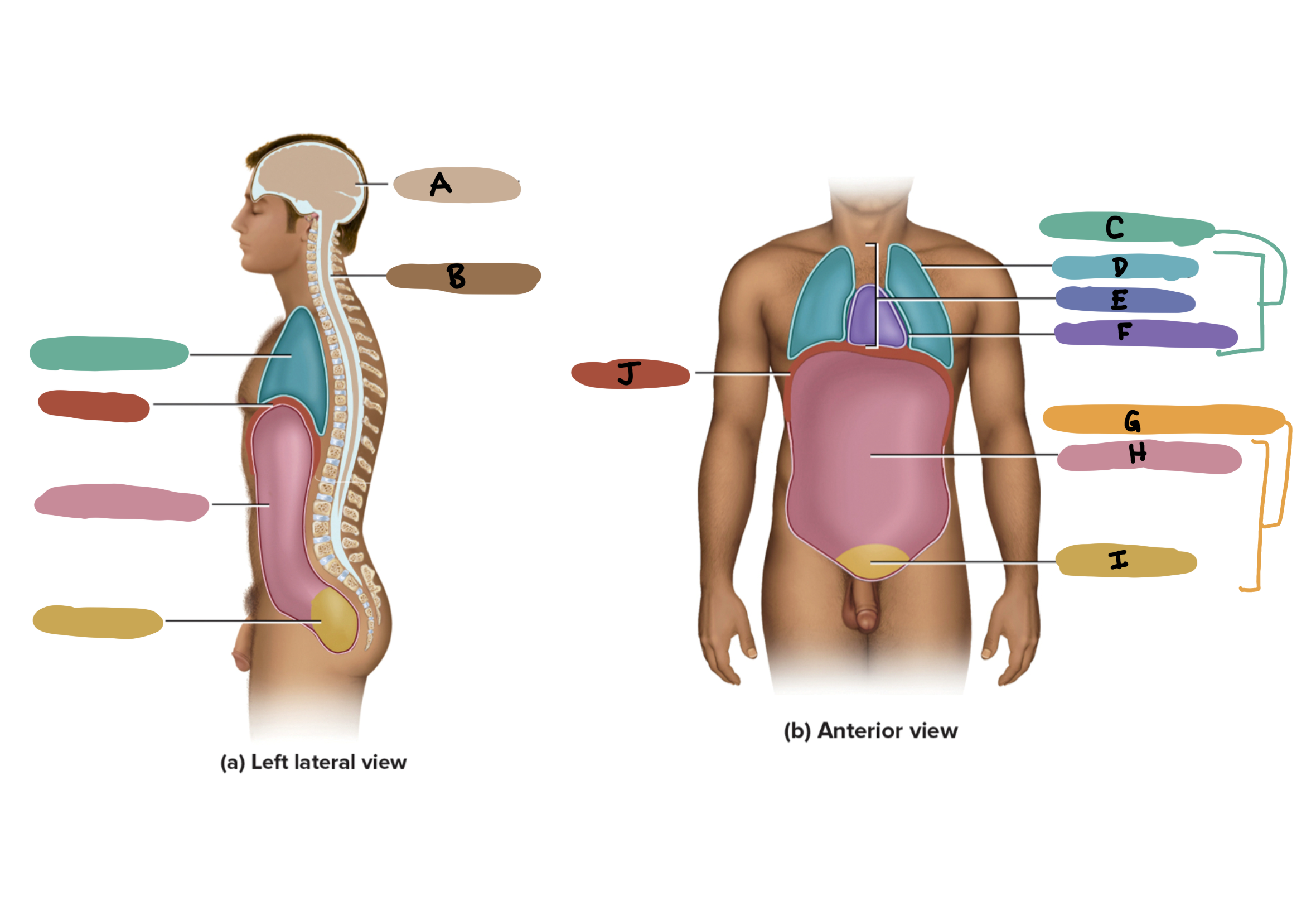
| Draggable item | arrow_right_alt | Corresponding Item |
|---|---|---|
F | arrow_right_alt | cranial cavity |
C | arrow_right_alt | vertebral cavity |
D | arrow_right_alt | thoracic cavity |
A | arrow_right_alt | pleural cavity |
B | arrow_right_alt | medistinum |
G | arrow_right_alt | pericardial cavity |
J | arrow_right_alt | abdominopelvic cavity |
I | arrow_right_alt | abdominal cavity |
E | arrow_right_alt | pelvic cavity |
H | arrow_right_alt | diaphragm |
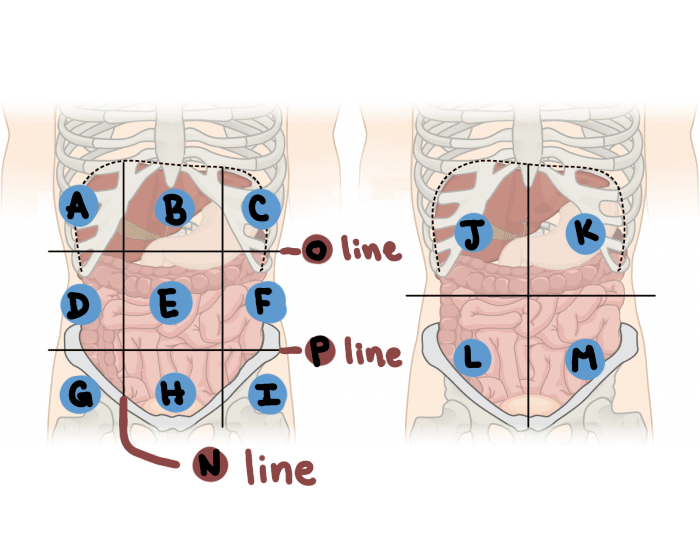
| Draggable item | arrow_right_alt | Corresponding Item |
|---|---|---|
D | arrow_right_alt | right hypochondriac region |
G | arrow_right_alt | epigastric region |
I | arrow_right_alt | left hypochondriac region |
L | arrow_right_alt | right lumbar region |
C | arrow_right_alt | umbilical region |
H | arrow_right_alt | left lumbar region |
N | arrow_right_alt | right inguinal region |
O | arrow_right_alt | hypogastric region |
K | arrow_right_alt | left inguinal region |
B | arrow_right_alt | right upper quadrant |
F | arrow_right_alt | left upper quadrant |
J | arrow_right_alt | right lower quadrant |
A | arrow_right_alt | left lower quadrant |
E | arrow_right_alt | midclavicular |
P | arrow_right_alt | subcostal |
M | arrow_right_alt | intertubercular |