Log in
Sign up for FREE
arrow_back
Library

Mouse Party

star
star
star
star
star
Last updated 10 months ago
24 questions
Note from the author:
GO to link and learn!! https://learn.genetics.utah.edu/content/addiction/mouse
Heroin
2
1
1
2
0
Ecstasy (MDMA)
1
1
4
1
Marijuana
2
1
Methemphetamine (Meth)
1
2
1
Alcohol
1
1
1
Cocaine
1
1
1
LSD (acid)
1
1
1
"Meth Mouse"
Question 1
1.
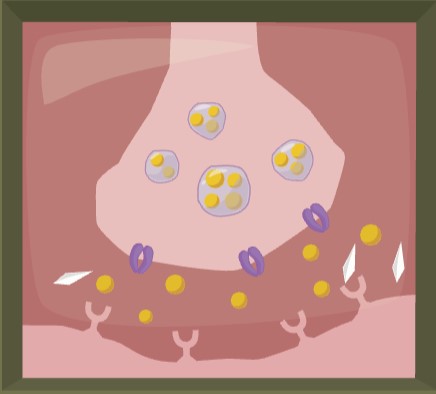
Before heroin enters the system, _______ neurotransmitters are active in the synapse. These neurotransimitters inhibit _______ from being released.
Question 2
2.
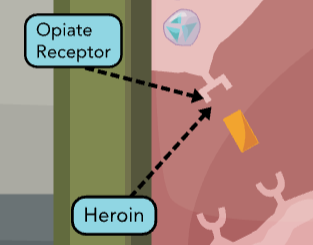
Heroin mimics our body's natural _______, turning off dopamine inhibition.
Question 3
3.

Which of the following molecules shuts down the release of inhibitory neurotransmitters? (Select 2).

Question 4
4.
Our body's opiates are natural _______. This is why _______, a drug related to heroin, is used as a painkiller.
Question 5
5.

Draw a picture showing what will happen after heroin binds to the opiate receptor. Include dopamine, dopamine receptors, and a label for the synapse.
Question 6
6.
Ecstasy mimics _______ in our bodies and is more readily taken up by receptors.
Question 7
7.
After entering the cell, ecstasy "confuses" the serotonin transporters causing them to __________
Question 8
8.
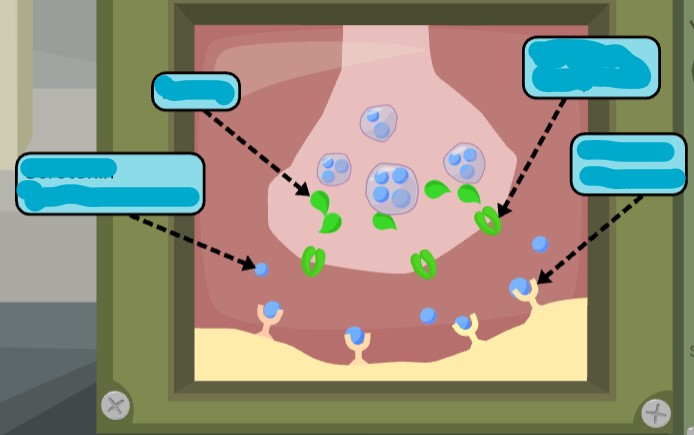
Drag the appropriate label to each of the boxes.
Other Answer Choices:
serotonin transporter
serotonin neurotransmitters
serotonin receptor
ecstasy (MDMA)
Question 9
9.
The reward pathway mentioned involves the release of _______ in the brain.
Question 10
10.
_______ mimics our body's own native cannabinoid called _______.
Question 11
11.

Briefly explain why one of the effects of long-term marijuana use is memory loss using what you have learned about anandamide.

Question 12
12.
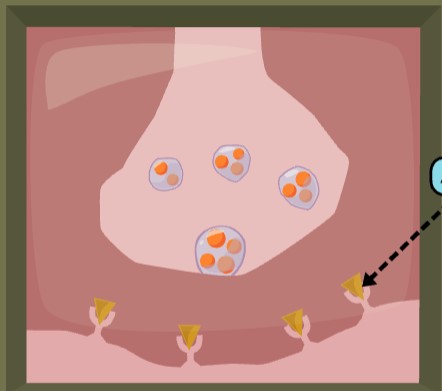
Meth mimics the shape of which of the body's natural neurotransmitters?
__________
Question 13
13.
Once meth has entered the cell, it forces dopamine out of its vesicles. This causes transporters to pump dopamine into the __________, where it __________.
Question 14
14.

Briefly explain why meth has a higher risk of addiction than any of the other drugs discussed prior.

Question 15
15.

Select all of the glutamate neurotransmitters in the picture below.

Question 16
16.
__________ neurotransmitters are responsible for inhibiting nerve cells from firing.
Question 17
17.

Alcohol is classified as a depressant. Explain in 2-3 sentences why this is using what you know about GABA inhibitory neurotransmitters and glutamate neurotransmitters.

Question 18
18.

Select each region that the cocaine molecules will bind to.

Question 19
19.

Both cocaine and heroin work directly on the brain's _________.

Question 20
20.
Cocaine inhibits the re-uptake of _______ in the brain causing overstimulation.
Question 21
21.
LSD acts almost exclusively on _______ neurons because of its resemblance to that neurotransmitter.
Question 22
22.

LSD ____________ serotonin receptors in the brain.

Question 23
23.
LSD and other hallucinogens excite a particular region of the brain known as the __________.
https://learn.genetics.utah.edu/content/addiction/methmouse/

Click on the link, and make sure you read "Long-term effects of meth use" under the "more information tab."
1
Question 24
24.
Prolonged exposure to the flood of neurotransmitters that meth induces causes __________.