Copy of plate tectonic explorer (2/18/2025)

Last updated 10 months ago
40 questions
Note from the author:
Simulation on plate boundaries
Getting started
Instructions
  1. Click the data type button, then choose earthquakes
  2. Click the start button on the simulation below.
  3. You will see a satellite image of Earth's continents and oceans. By hitting the "Start" button in the lower left of the simulation, you will see the locations of earthquakes for the last 42 years
  4. The earthquakes are represented in the simulation by circles of different sizes and colors, representing earthquake magnitude and depth, respectively (see key in upper right corner).
1

Looking at all earthquakes since 01/01/1980, choose the term below that best describes their general pattern.

Now, on the simulation,
1. Click the restart button
2. Click Data type
3. Choose Plate Boundaries and Earthquakes
4. Click the start button and run the simulation
1

What do you notice about the location earthquakes with respect to plate boundaries?

1

On the simulation, Click on data type and Add volcanoes, Now examine the locations of volcanoes, earthquakes and plate boundaries.

What do you notice about the location of volcanoes, earthquakes, and plate boundaries ?

On the simulation above,
1. Click Data type: Choose: plate boundaries, plate names, plate movement
2. Click all other options off
1

Using the key in the upper right of the simulation, What type of boundary is found along the west coast of the south American Plate?

1

Examine the Mid-Atlantic Ridge, Is the plate boundary moving at the same rate throughout all of its area?

1

Using the information on the simulation the Pacifici plate is....

1. Click Data type of the sim above
2. choose, Plate boundaries, Plate Names, Earthquakes and volcanoes
1

Examine the Nasca and South American Plate boundary, What is the major type of plate boundary found here?

1

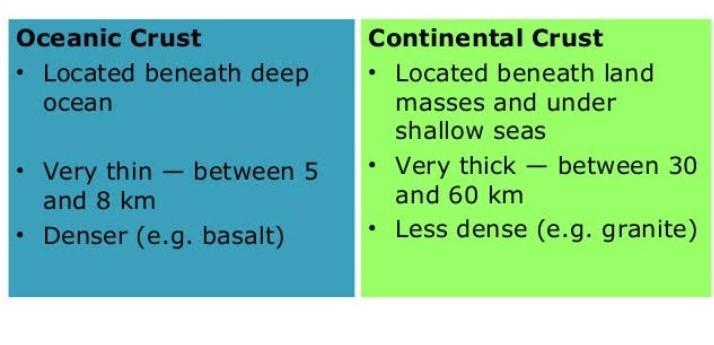
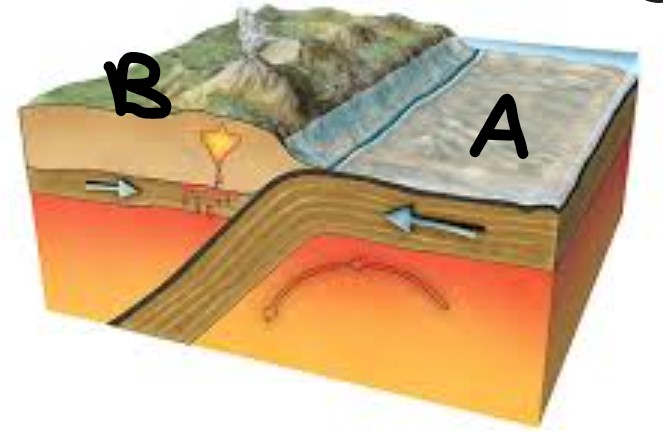
Examine this image, Then answer the following.
When one plate is more dense than the other at a convergent boundary, subduction occurs. Which plate is subducted in this case?

1

Examine the boundary between the Nazca and South American Plates, What land features do you sea here?

1

Click the play button and observe the Volcanic and earthquake activity for this plate boundary , How would you describe the seismic activity at this location

Plate interactions
  1. Go to this link in a new tab: LINK
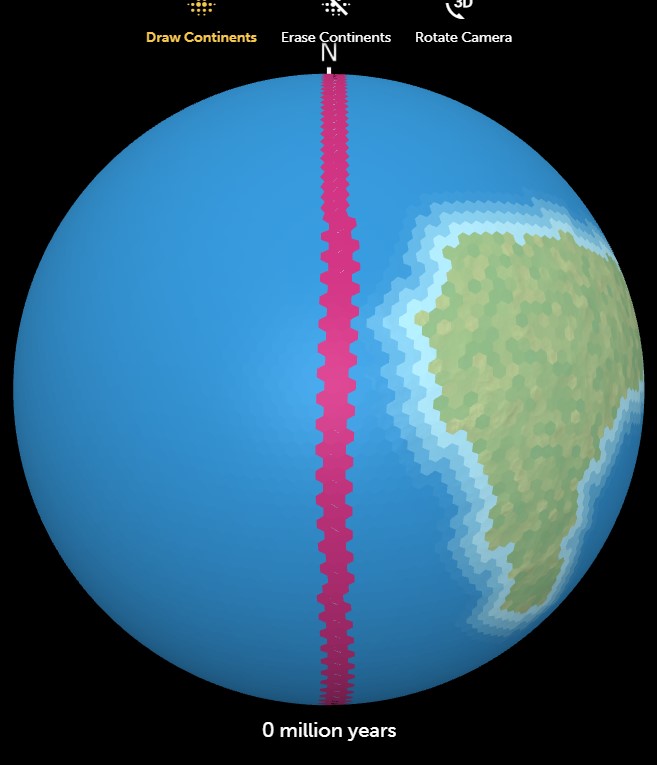
  2. An Earth-like planet has been preset with a tectonic boundary running from N-S. Plate 1 is on the left of the boundary and Plate 2 is on the right.
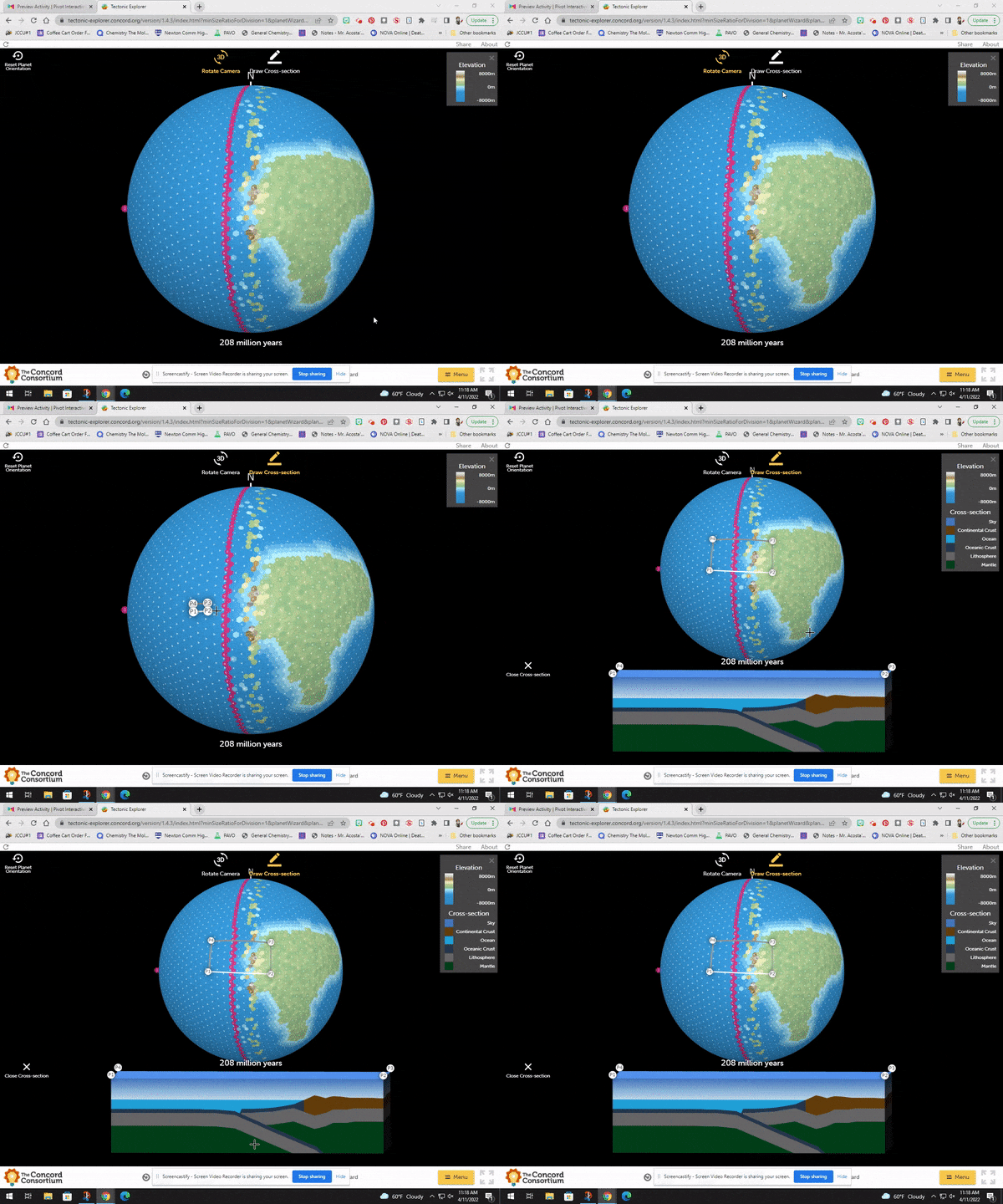
  3. To model the Nazca-South America convergence, we need to draw a continent on Plate 2. Click and drag your mouse to draw a continent similar in shape to South America on the right side of the boundary. (similar to the 1st image )
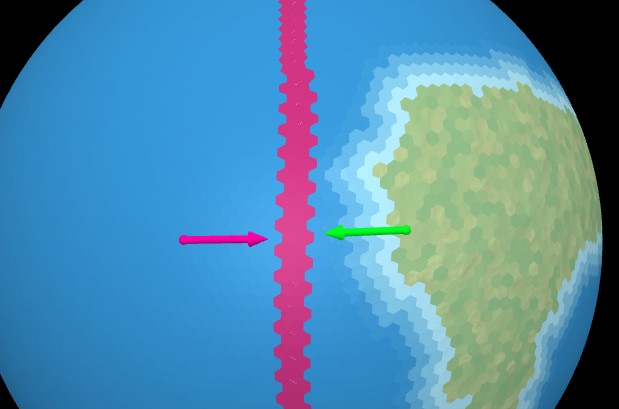
  4. Click "Next" to assign forces to your plates. Click on Plate 1, drag your mouse towards the plate boundary line and let go to create an arrow that indicates which direction the plate will move. Repeat with Plate 2, making sure to draw the arrow pointing towards the plate boundary to model convergence. (see image 2)
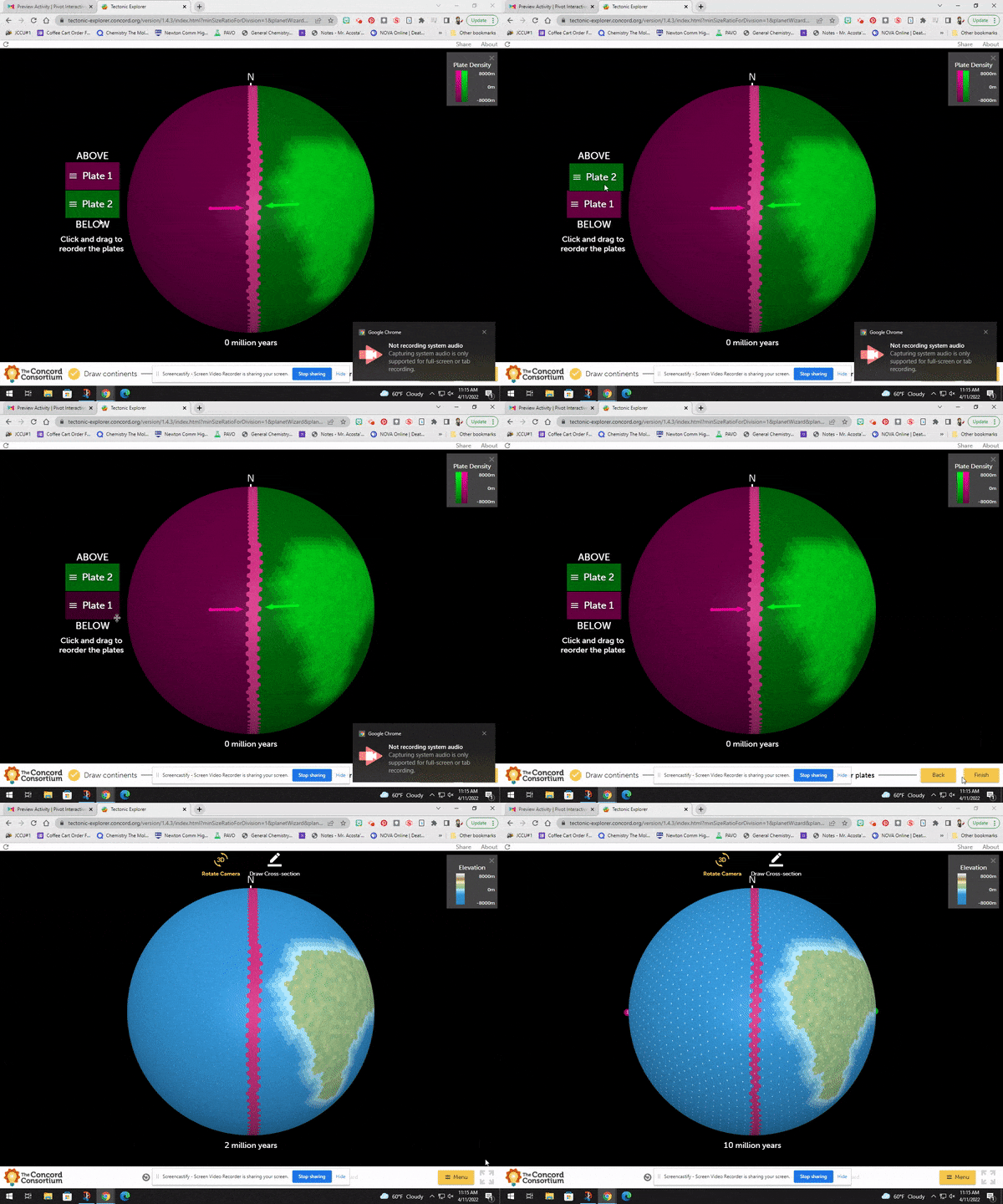
  5. Click "Next" to order plate density. Plate 1 is automatically set as less dense, or "above" Plate 2. To model the Nazca and South American Plate convergence, we need to reorder the plates. Click and drag Plate 2 above Plate 1. Click "Finish" to watch the plates collide. (see image 3) Note the time (in millions of years) at the bottom of the simulation.
  6. Pause the simulation around 200 million years. Click on "Draw Cross-section" at the top of the simulation. Click and drag to draw a rectangle perpendicular to the plate boundary that straddles both sides. (see image 4)
  7. A window will appear below the simulation with a cross-sectional view of the subsurface. Reference the key in the upper right corner of the simulation.
1

Examine the simulation you created, Which plate represenets the South American Plate?

1

Take a screen shot of your simulation showing the cross section then add it here

0

Which of the following features can be seen in your cross section?

Oceanic-Oceanic Boundary
Examine the simulation below of 2 oceanic plates at a boundary near Alaska
1

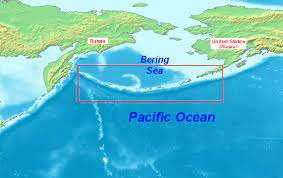
Immediately South of the Aleutian islands What land feature is present? Remember that dark blue represents the lowest elevations on a relief map, whereas browns represent the highest elevations.
(this image is just to help you locate the islands on the simulation)

1

What type of boundary is this plate interaction?

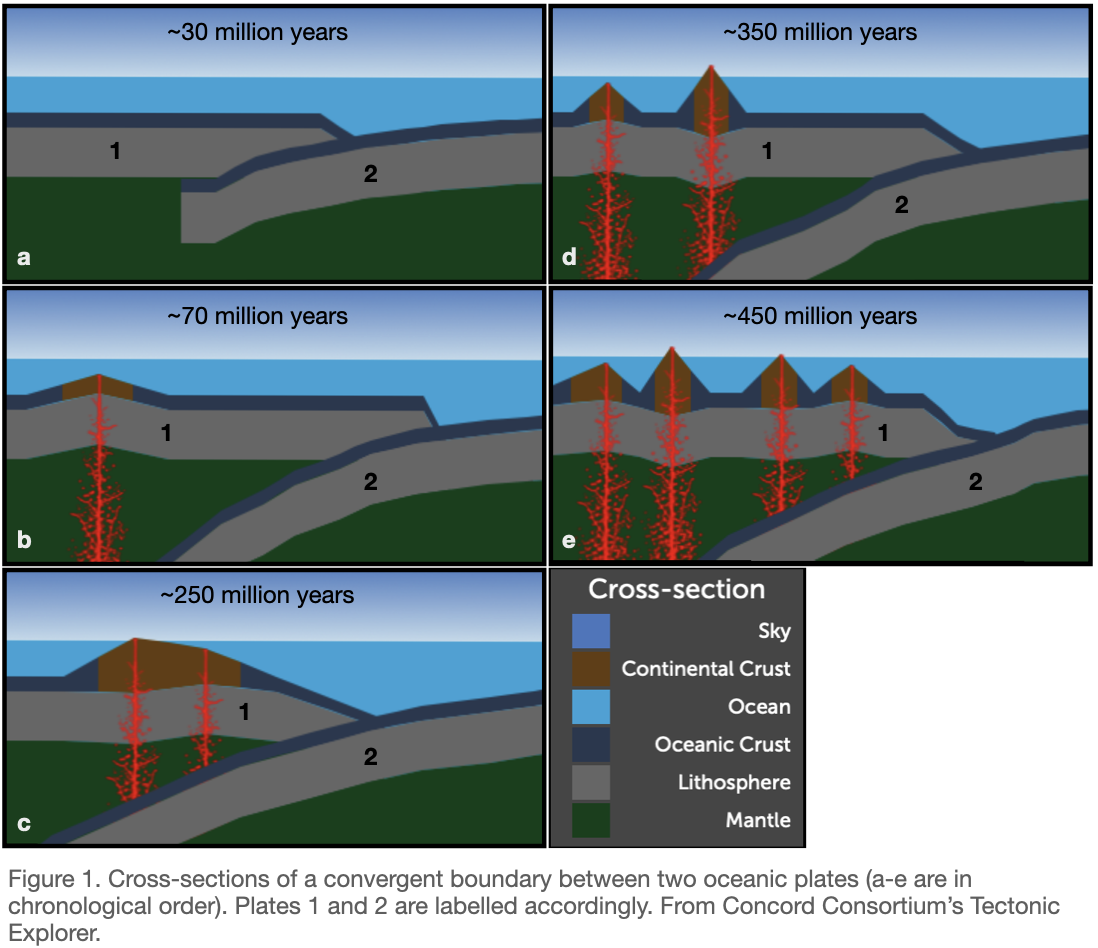
Examine these cross sections between two Oceanic plates. and answer the following
1

Which plate is being subducted?

1

Over time a specific type of feature forms and reaches above the ocean's surface, The aleutian islands in Alaska were formed by this method, what is the term for land features such as this?

Convergent Boundaries Continental
The simulation below is of the Himalayan mountains which formed due to a collision between tectonic plates
1

click on data type and choose, earthquakes and volcanoes. Click Start and allow the simulation to proceed. Which of the following features do you observe?

1

click on data type and choose, plate boundaries and names as well as earthquakes and volcanoes. Click Start and allow the simulation to proceed. Examine the location of the earthquakes relative to the plate boundary and choose the best description.

  1. Open a new tab with this link
  2. An Earth-like planet has been preset with a convergent tectonic boundary running from N-S. Plate 1 is on the left of the boundary and Plate 2 is on the right. The associated cross-section appears below the main window.
  3. Play the simulation. At about 160 million years, the continent on Plate 1 will collide with the continental Plate 2.
  4. Pay attention to what occurs in the subsurface as the continents collide. and answer the questions
1

What type of plate boundary is this ?

1

Which plate it becing suducted within the 1st 160 million years?

1

What happens after 160 million years when the oceanic plate has been completely subducted ?

1

What geologic feature is formed by this collision after 160 million years?

1

For Continental- Contiental crust covergent boundaries there is (are) no

Divergent Boundaries
The Mid-Atlantic Ridge, a submarine mountain range (and the longest mountain range on Earth), marks where the Eurasian and North American, and African and South American plates diverge.

  1. Now you will see a relief map of the Earth zoomed in on the Mid-Atlantic Ridge, an underwater mountain range formed at a divergent oceanic boundary.
  2. Click on "Data Type" at the bottom of the simulation. Under "Data Available," select "Earthquakes" and "Volcanic Eruptions."
1

Which of the following geologic events do you find at the mid-Atlantic ridge? (use the key in the upper right)

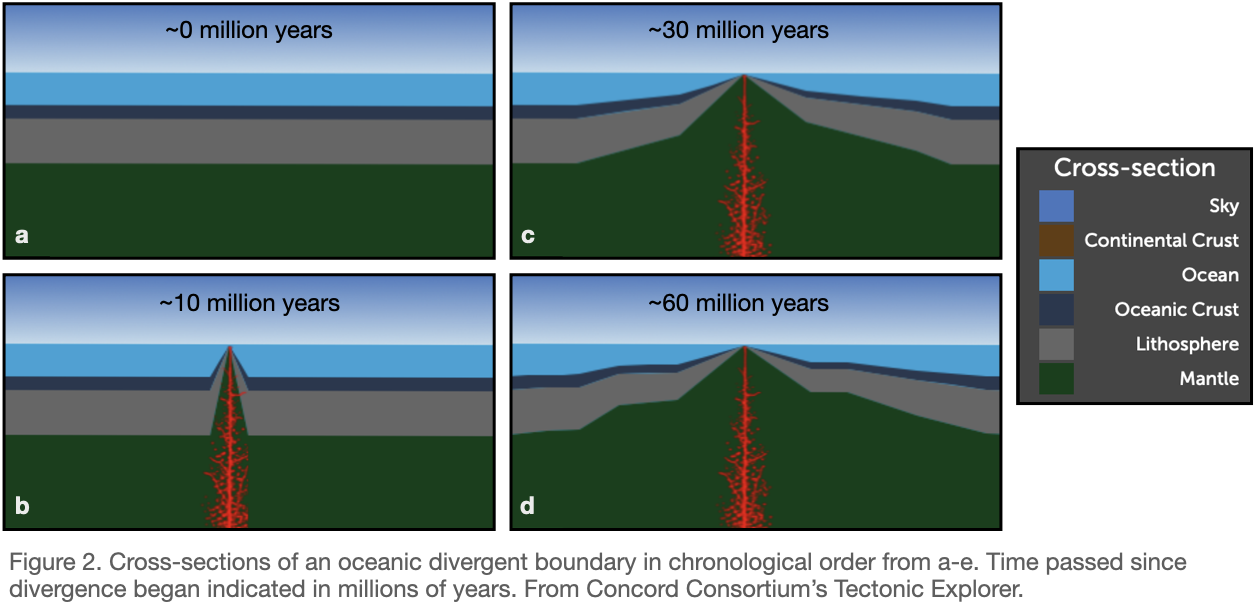
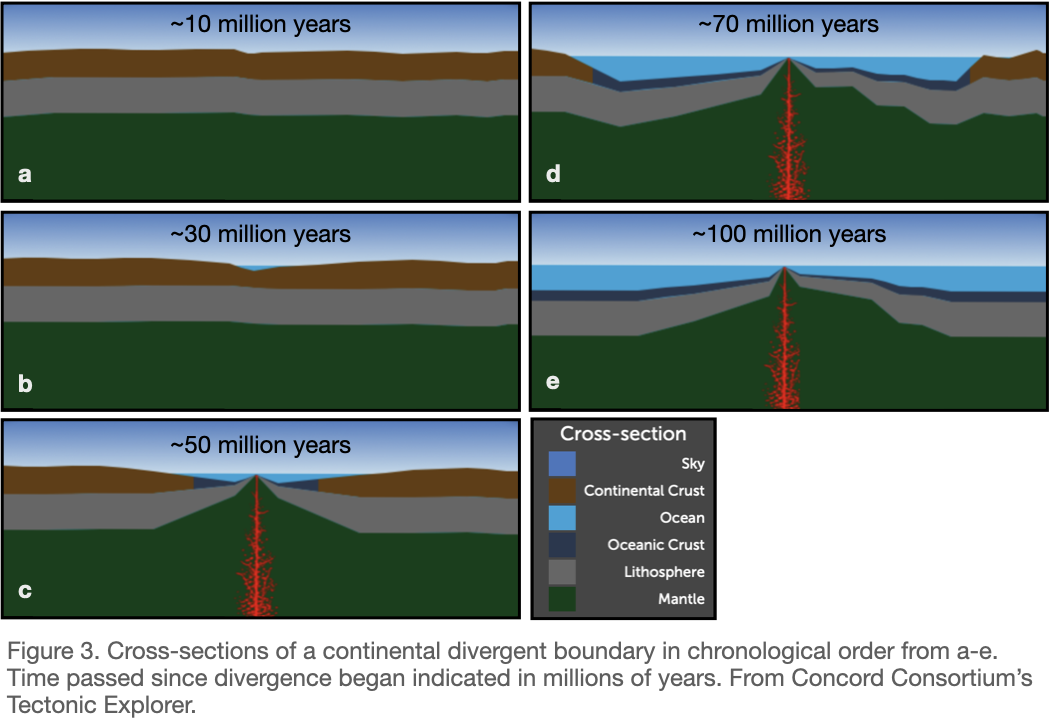
Examine the image above, This shows the divergent boundary over the course of 60 million years answer the following
1

What type of plates are involved in this interaction?

1

What is the name of the geologic feature that is formed here?

The Red Sea, a shallow sea formed in a continental rift valley, marks where the African and Arabian plates diverge. Let's explore the geologic phenomena associated with a divergent continental boundary with Concord Consortium's Seismic Explorer.
Instructions for Concord Consortium's Seismic Explorer Simulation
  1. Now you will see a relief map of the Earth zoomed in on the Red Sea, a sea formed in a continental rift from the divergence of the African and Arabian continental plates.
  2. Click on "Data Type" at the bottom of the simulation. Under "Data Available," select "Earthquakes" and "Volcanic Eruptions."
1

Examine the interactions of the Arabian and African plate at the Red sea what type of boundary is this?

1

Which geologic events tend to form here?

Examine the image above of this boundaries' movement over that last 100 million years
1

What type of crust is present at 10 million years?

1

As the interaction takes place, what type of crust is formed after 70 million years?

1

Examine the image for 30 million years, What type of feature is forming?

1

Using this information, Which of the following is most likely true about the Red Sea?

Transformb
Transform boundaries occur when two plates slide past one another horizontally . Such boundaries can connect other types of boundaries, transforming motion at that site.

Crust is neither destroyed nor created at transform boundaries. However, that does not mean that nothing of significance occurs at transform boundaries. In some cases, transform boundaries are marked by features like streams that have been split in two, with each half moving in a different direction


There are many transform boundaries along California's coast, which are responsible for the large number of earthquakes in the area. The most famous transform boundary in California is the San Andreas Fault, where the Pacific and North American plates slide past one another.
Let's look at another transform boundary along California's coast, near El Centro.
1

This simulation shows a map zoomed in on California, Choose Data type and choose earthquakes and volcanoes. Which events tend to occur at these boundaries?

Summary
1
  • earthquakes
  • subduction
  • trench
  • volcanoes
  • rift valley
  • ocean ridges
  • earthquakes
  • Volcanic Island Arcs
  • earthquakes
  • lateral movement
  • convergent
  • Divergent
  • Transform
1

Examine the image above, Which plate must be denser?

1

What feature is this ?

1

What process is represented by these arrows?

1

What type of crust is this?

1

What type of plate interaction is seen in this image?