Reform Movements in Texas

Last updated 10 months ago
8 questions
Note from the author:
This Formative lesson covers reform movements of the 19th and 20th centuries and their impact on Texas.
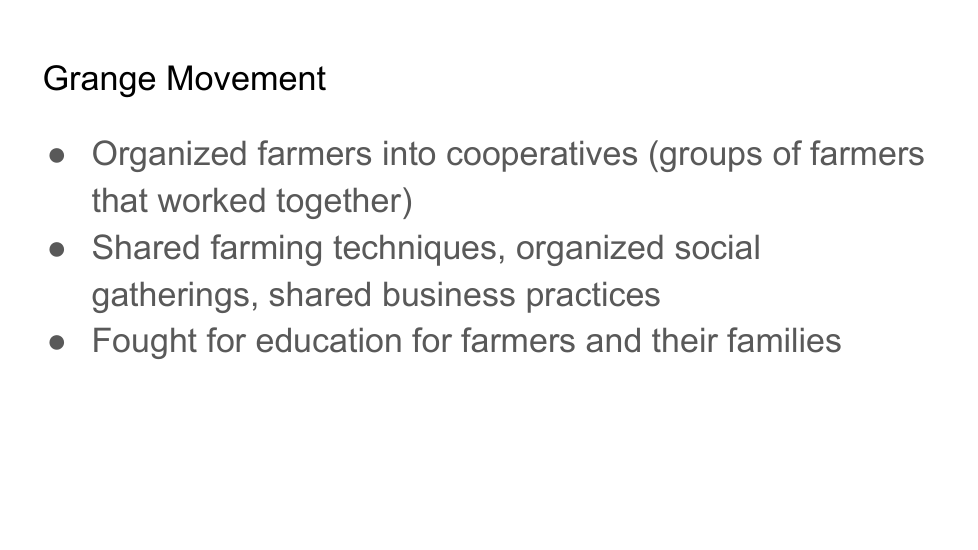
The Grange Movement, also known as the Patrons of Husbandry, began in the United States in the 1860s and reached Texas shortly after. Its main goals were to support farmers and improve their economic conditions, education, and social lives. During this time, many farmers struggled because of low crop prices, high transportation costs, and unfair lending practices from banks and railroads. The Grange offered a solution to these issues. One of the key reasons the Grange Movement was necessary was the isolation many farmers faced. Life on the plains could be lonely, and farmers often worked long hours without anyone to share ideas or experiences. The Grange provided a space for community and encouraged farmers to come together to discuss their problems. Meetings were held where members could share agricultural techniques and promote better farming methods, which helped improve crop yields. Additionally, the Grange aimed to advocate for farmers' rights. Members lobbied for legislation to regulate railroad rates and ensure fair access to markets. They believed that by uniting under one organization, they could have a stronger voice in political matters and fight against exploitation by powerful companies. In Texas, the Grange Movement not only assisted farmers in achieving economic stability but also fostered a sense of community and cooperation. Overall, the Grange played a crucial role in promoting agricultural interests and improving the lives of many Texas farmers during a challenging period in American history. Understanding this movement helps us learn how communities can come together to address problems and create positive change.
Required
1

What struggles did farmers face that the Grange hoped to address? Use the reading and identify two specific challenges.

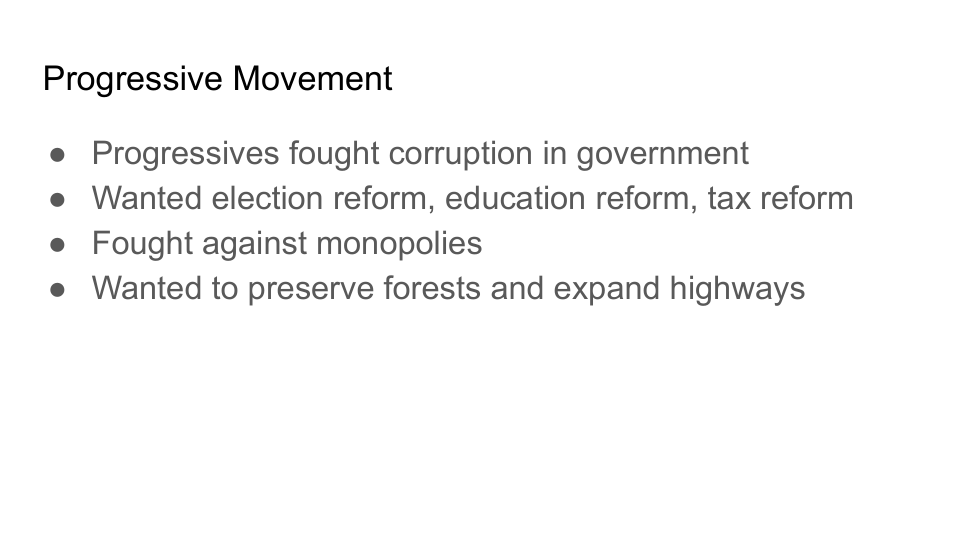
The Progressive Movement, which emerged in the early 20th century, aimed to address social, political, and economic issues across the United States, and Texas was no exception. During this time, Texans were focused on improving life for everyday people by promoting fair business practices, protecting the environment, and expanding infrastructure. One of the critical issues in Texas during this period was the need to protect the state’s natural resources, particularly its forests. As industries grew, timber was being harvested at an alarming rate, threatening the balance of the ecosystem. Progressives advocated for sustainable forestry practices and the development of state parks and forests, ensuring that future generations could enjoy the state's natural beauty. Governor James Hogg, who served from 1891 to 1895, played a significant role in the Progressive Movement in Texas. Hogg sought to break up corporate monopolies that controlled essential services like railroads. He believed that these monopolies harmed consumers by charging unfair prices. His efforts led to the establishment of the Texas Railroad Commission, which aimed to regulate the railroads and protect the interests of Texans. In addition to these reforms, the Progressive Movement also focused on expanding roadways. Good roads were essential for connecting communities, boosting trade, and improving transportation. Improvements in the infrastructure allowed for better access to rural areas, benefiting both farmers and businesses.
Required
1
Governor _______ fought railroad monopolies and established the Texas Railroad Commission to regulate prices.
Required
1

Why do you think expanding roadways into rural communities was an important goal for progressives?

Required
1

How were monopolies harming average Texans?

Required
1
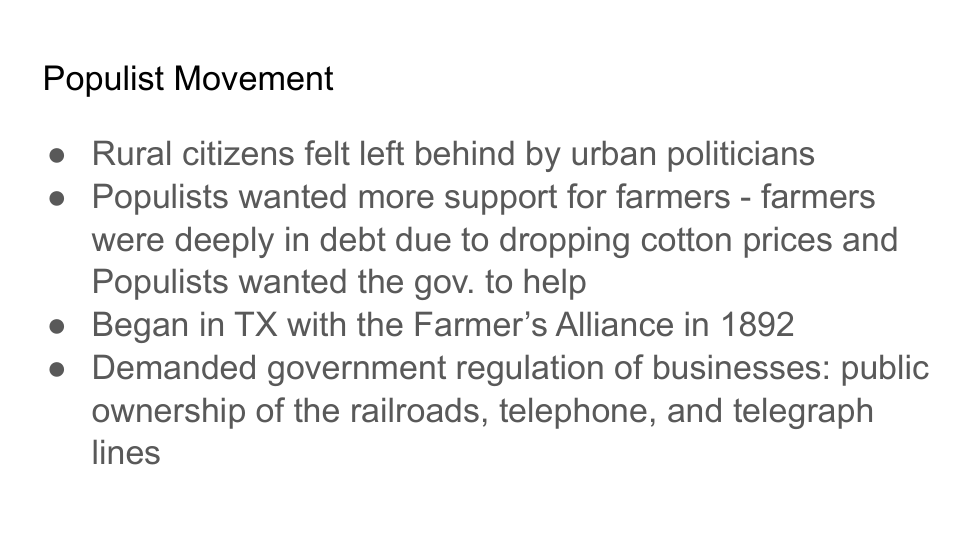
According to the video, the __________ policy of the populists would help farmers who were struggling with debt.
Required
1

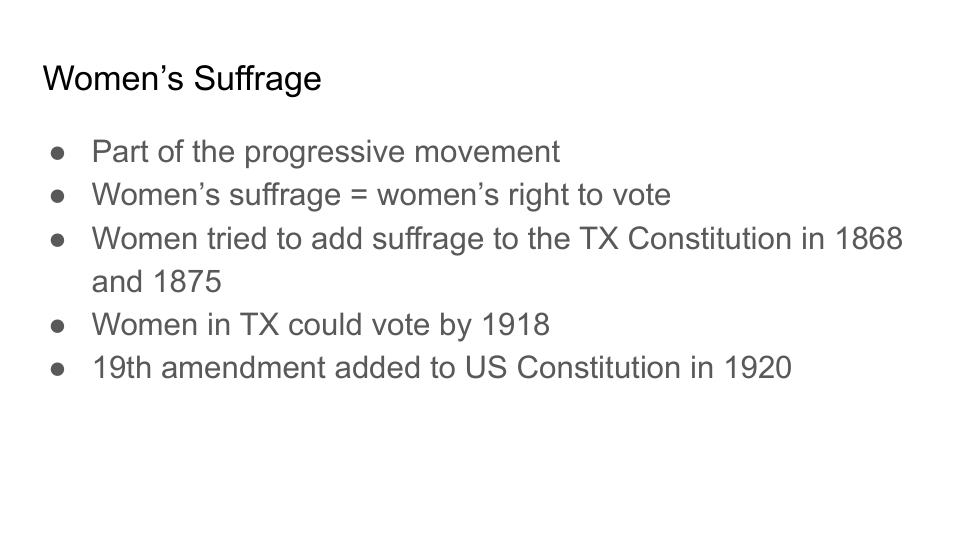
What is suffrage?

Required
1

Do you think all states would have enfranchised (given the right to vote to) women without an amendment to the Constitution? Justify your answer.

Required
0

Exit ticket: Which reform movement do you believe was the most important to the average Texan? Justify your answer using evidence from the notes, readings, and/or videos.