Video: Green Sea Turtle
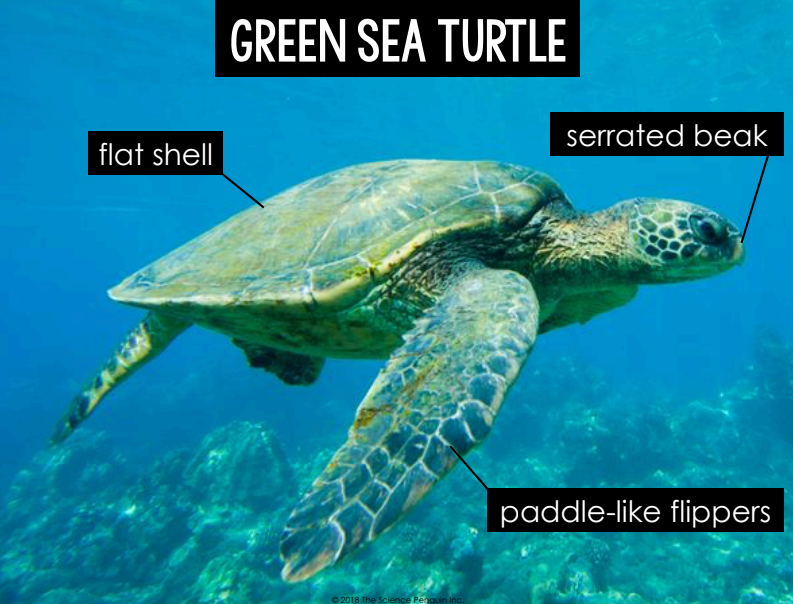
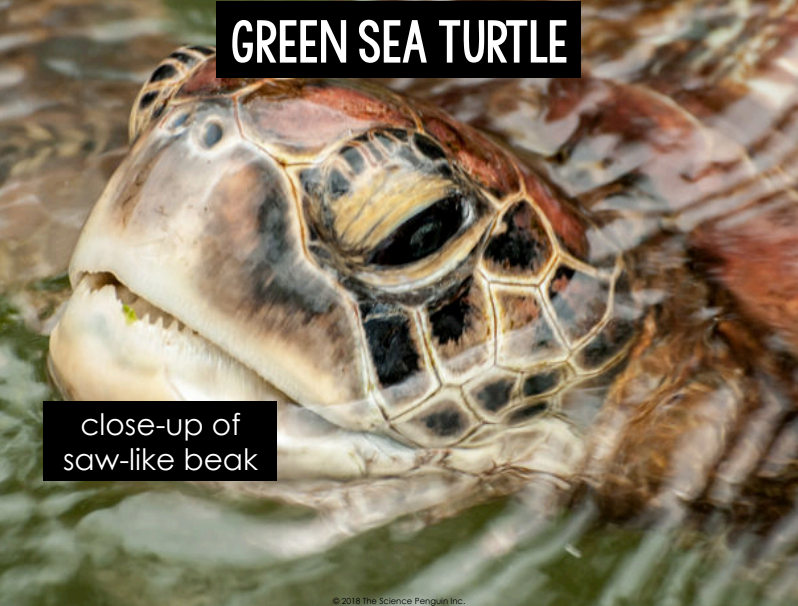
A flat shell allows for a more streamlined body for swimming quickly (green sea turtles cannot retract their heads into their shells). Paddle-like flippers function as oars to aid in movement. Turtles don’t have teeth! Instead their jaws and beaks allow them to obtain food. Adult sea turtles are herbivores. Their saw-like teeth allow them to more easily eat sea grasses.
Video: Eastern Box Turtle
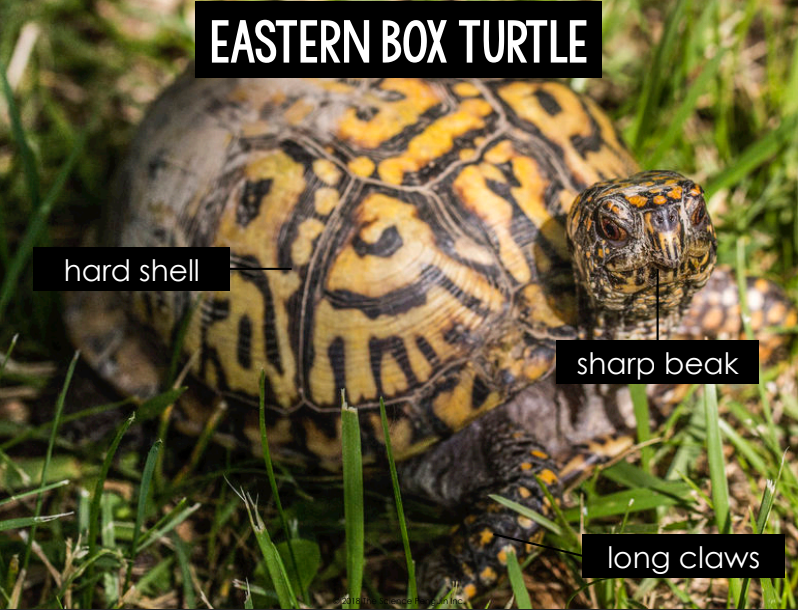
Its hard shell provides protection for its head and limbs. Long claws aid in burrowing and moving around the brushy forest floor. Its sharp beak helps it slice through vegetation for eating.
Why might a sea turtle not be able to retract its head into its shell?
Why might a sea turtle not be able to retract its head into its shell?
What structures does a sea turtle have for protection if it cannot use its shell to hide?
What structures does a sea turtle have for protection if it cannot use its shell to hide?
Why might it be difficult for an Eastern Box Turtle to survive in the ocean?
Why might it be difficult for an Eastern Box Turtle to survive in the ocean?