Adaptations: Turtles
star
star
star
star
star
Last updated 7 months ago
10 questions
Video: Green Sea Turtle
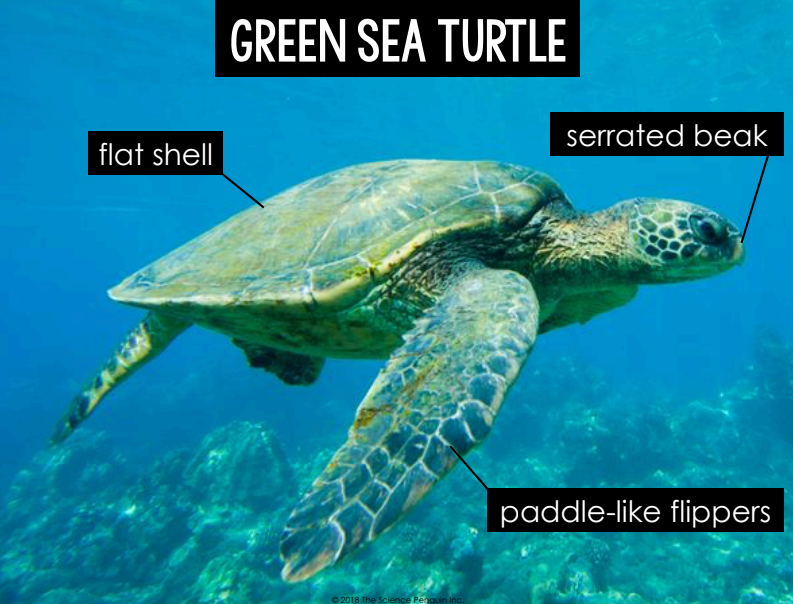
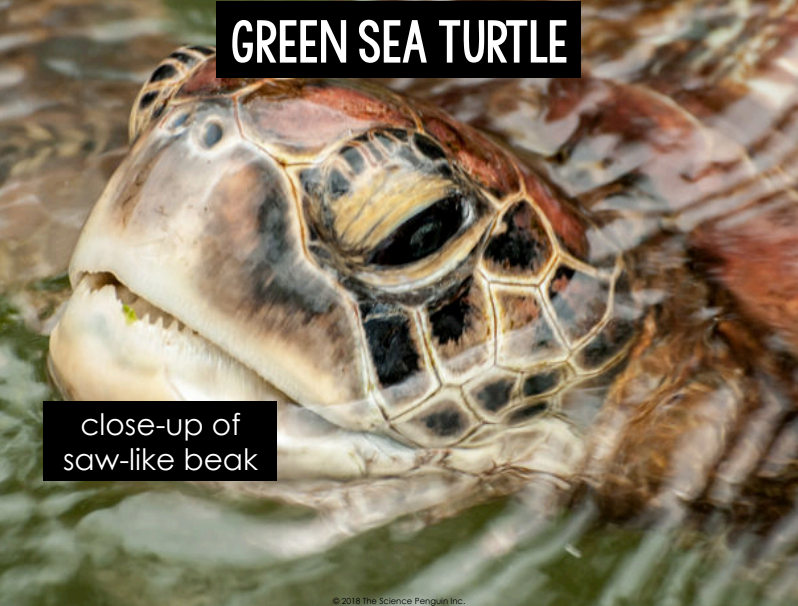
A flat shell allows for a more streamlined body for swimming quickly (green sea turtles cannot retract their heads into their shells). Paddle-like flippers function as oars to aid in movement. Turtles don’t have teeth! Instead their jaws and beaks allow them to obtain food. Adult sea turtles are herbivores. Their saw-like teeth allow them to more easily eat sea grasses.
Video: Eastern Box Turtle
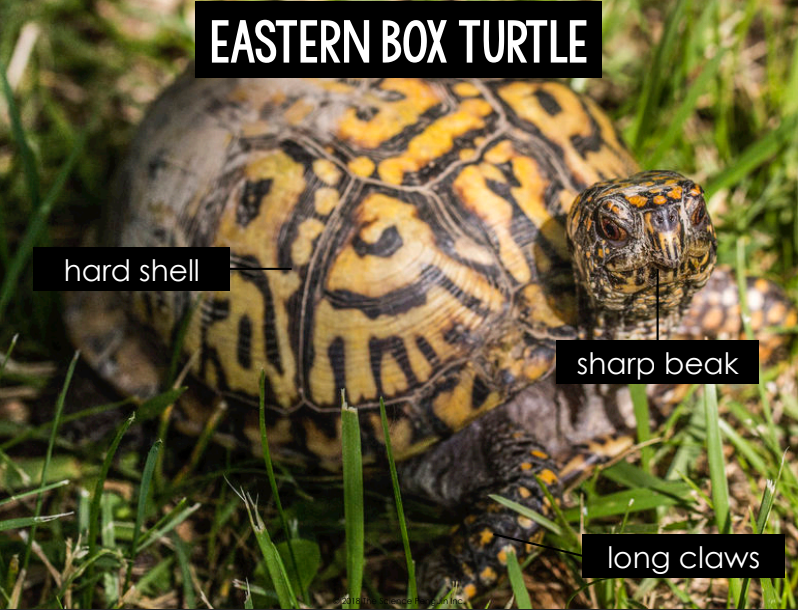
Its hard shell provides protection for its head and limbs. Long claws aid in burrowing and moving around the brushy forest floor. Its sharp beak helps it slice through vegetation for eating.
1
Why might a sea turtle not be able to retract its head into its shell?
1
What structures does a sea turtle have for protection if it cannot use its shell to hide?
1
Why might it be difficult for an Eastern Box Turtle to survive in the ocean?
1
Green Sea Turtles live in the ocean, spends most of its time underwater, are herbivores, and must migrate long distances in the ocean for feeding and nesting.
Drag each function below to the correct structure of the turtle.
Green Sea Turtles live in the ocean, spends most of its time underwater, are herbivores, and must migrate long distances in the ocean for feeding and nesting.
Drag each function below to the correct structure of the turtle.
- sawing and chewing seagrass
- streamline swimming and protection from predators
- swimming and moving to feeding or nesting grounds
- flat shell
- paddle-like flippers
- serrated beak
1
Eastern Box Turtles live in underbrush of the forest, prefer to eat green plants, hibernates during winter, and are known to burrow just beneath the surface.
Drag each function below to the correct structure of the turtle.
Eastern Box Turtles live in underbrush of the forest, prefer to eat green plants, hibernates during winter, and are known to burrow just beneath the surface.
Drag each function below to the correct structure of the turtle.
- protection from predators
- allow for easier digging and traversing their environment better
- tearing food into smaller, bite-sized, pieces
- hard shell
- long claws
- sharp beak
Types of Turtles and Their Adaptations
Turtles are fascinating reptiles that have been around for millions of years. They can be found in various environments, from oceans to freshwater rivers and even deserts. Let's explore some different types of turtles and how they have adapted to their habitats.
1. Sea Turtles
Sea turtles, like the Green Sea Turtle and the Loggerhead, spend most of their lives in the ocean. They have streamlined shells and flippers that make them excellent swimmers. Their adaptations include:
- Flippers: These help them swim long distances.
- Salt Glands: Located near their eyes, these glands help them excrete excess salt from seawater.
- Camouflage: Their shells often blend with the ocean floor, protecting them from predators.
2. Freshwater Turtles
Freshwater turtles, such as the Red-Eared Slider and the Painted Turtle, live in ponds, rivers, and lakes. Their adaptations include:
- Webbed Feet: These help them swim efficiently in water.
- Strong Legs: Useful for crawling on land and digging nests.
- Basking Behavior: They often bask in the sun to regulate their body temperature.
3. Box Turtles
Box turtles are primarily terrestrial and are known for their domed shells. Examples include the Eastern Box Turtle. Their adaptations include:
- Hinged Shell: They can close their shells completely to protect themselves from predators.
- Omnivorous Diet: They eat a variety of foods, including insects, plants, and fruits.
- Camouflage: Their shells often have patterns that blend with the forest floor.
4. Desert Tortoises
Desert tortoises, like the Gopher Tortoise, live in arid environments. Their adaptations include:
- Burrowing: They dig burrows to escape the extreme heat and cold.
- Water Conservation: They can survive long periods without water by storing it in their bladders.
- Thick Skin: Helps reduce water loss.
5. Snapping Turtles
Snapping turtles, such as the Common Snapping Turtle, are known for their powerful jaws. Their adaptations include:
- Strong Jaws: Used for catching prey and self-defense.
- Ambush Hunting: They lie in wait for prey to come close before striking.
- Long Necks: Allow them to reach out and catch prey quickly.
1
What adaptation helps sea turtles swim long distances?
1
Which type of turtle can close its shell completely to protect itself?
1
What is a key adaptation of desert tortoises?
1
How do freshwater turtles regulate their body temperature?
1
What adaptation helps snapping turtles catch their prey?