Ɛhia
0.2
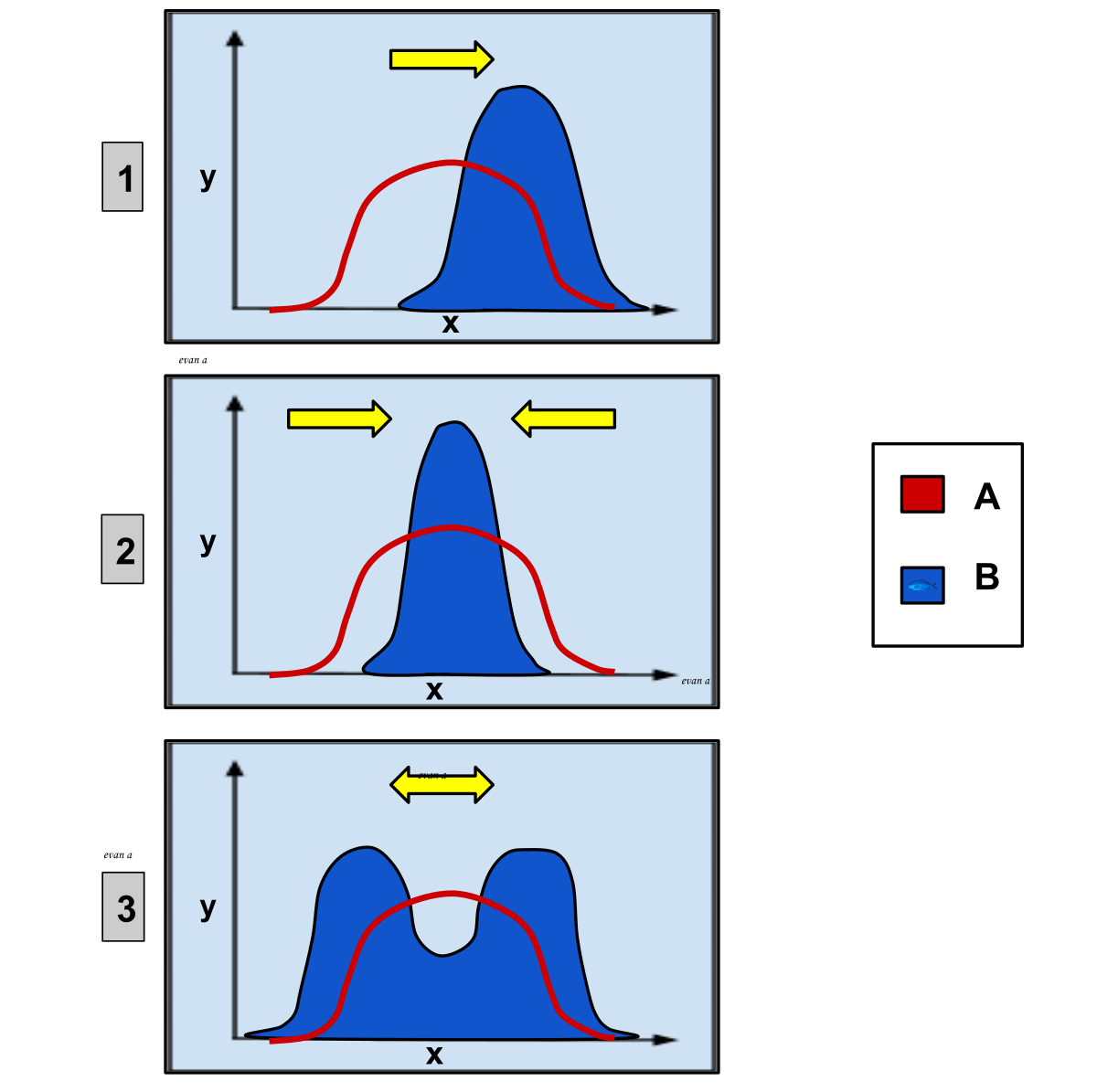
What type of selection is shown in graph 1?
What type of selection is shown in graph 1?
Ɛhia
0.2
Ɛhia
0.2
Match the term with the best description for each
| Draggable item | arrow_right_alt | Corresponding Item |
|---|---|---|
Prezygotic Barriers | arrow_right_alt | Formation of a new & distinct species |
Postzygotic Barriers | arrow_right_alt | Prevent fertilization from occurring |
Allopatric Speciation | arrow_right_alt | Prevent hybrid offspring from being viable/fertile |
Sympatric Speciation | arrow_right_alt | New species arise due to geographical isolation |
Speciation | arrow_right_alt | New species arise due to reproductive isolation |
A new river forms and splits two populations, causing ______________ speciation
The emergence of a mountain range is an event that would lead to _______________ speciation
The apple maggot fly is originally laid their eggs on hawthorn trees, but when apples were introduced to North America in the 19th century, some maggot flies began to shift to apples as their preferred host. Over time, the flies that specialized in apples and those that specialized in hawthorns began to experience reproductive isolation due to differences in the timing of fruit ripening and the specific environmental conditions of the fruit types. This led to the formation of two distinct populations of flies, despite living in the same geographical area.
What type of speciation is described above?
A flash flood carried a raft of Amazon ants away from their original population. There is enough distance between the two groups, that they will never meet in nature again.
What type of reproductive barrier is this? What type of speciation may occur as a result of this event?
The flowers of pink tulips open in the morning, while the flowers of lavender tulips open in the early afternoon. The bees that pollinate these tulips cannot carry pollen back & forth between the two types of tulips because of their flowers being closed at different times of day.
Which of the following describe(s) the situation above?
In some species of snails, the direction in which their shells spiral (right-handed or left-handed) prevents mating. A right-handed shell species and a left-handed shell species cannot mate because their reproductive organs are misaligned.
Which of the following describe(s) the situation above?
In some species of cotton (Gossypium), hybrids between different species may initially be fertile and robust, but their offspring (the second generation) are weak and sterile.
Which of the following describe(s) the situation above?
Male bowerbirds build intricate and decorative nests to attract mates. Different species of bowerbirds have unique building styles, and females are more likely to choose mates that build nests in their species-specific style. Even if two species of bowerbirds live in the same area, they will rarely mate due to this behavioral difference.
What type of selection is shown in graph 1?
In humans, babies with very low birth weights (under 5 pounds) or very high birth weights (over 10 pounds) are at higher risk for health problems, including difficulty surviving and complications during birth. Babies with a birth weight in the moderate range (around 7-8 pounds) have the highest chances of survival. Over time, natural selection favors this middle ground, leading to ___________ selection for average birth weight in human populations.
Giraffes with longer necks can reach higher branches to feed on leaves, giving them an advantage over giraffes with shorter necks, especially during dry seasons when food is scarce. Over generations, natural selection has favored giraffes with longer necks, leading to _____________ selection for increased neck length.
In some salmon populations, males exhibit two distinct mating strategies: one that involves competing for mates by being large and aggressive (dominant males) and one that involves sneaking in and fertilizing eggs without fighting (sneaky males). Intermediate-sized males, who are not big enough to compete but not small enough to sneak in, are less successful in reproductive competition.
This is ________________ selection because it favors both large and small males, but not intermediate-sized ones.
Gradualism is the idea that evolution happens slowly and steadily over long periods, with small, incremental changes accumulating over time.
Which of the following example(s) demonstrate the idea of gradualism?
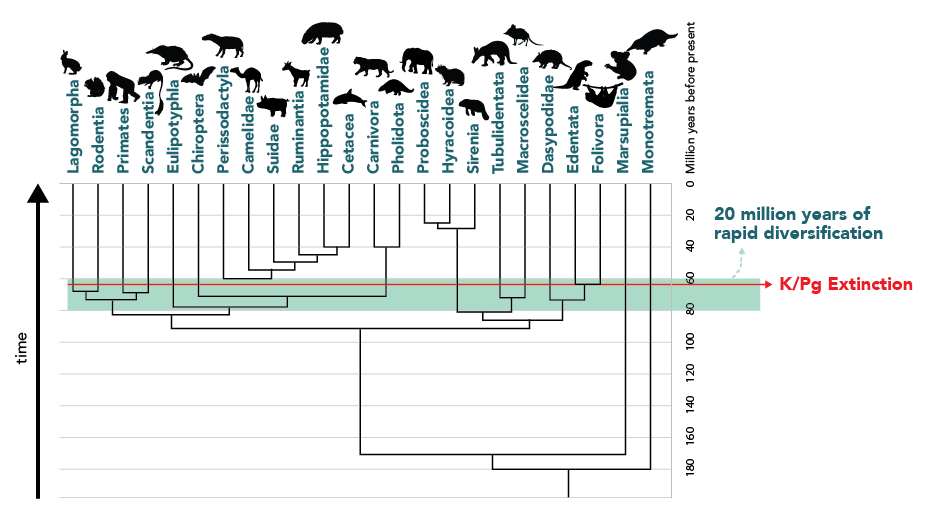
Which of the following statements are true about the adaptive radiation of mammals following the P/K extinction event?
(Select all that apply)
Phil Connors, a biologist and meteorologist, stumbles upon two populations of groundhogs living in the same geographic area. Despite having very little physical difference and not interbreeding in the wild, Connors discovers that in captivity, the groundhogs from both populations can mate and produce viable, fertile offspring (which are particularly good at predicting whether or not winter is coming).
According to the biological species concept, why should these populations not be considered separate species?
What type of selection is shown in graph 2?
What type of selection is shown in graph 3?