Log in
Sign up for FREE
arrow_back
Library

Unit 6 Quiz - Earth Systems GB

star
star
star
star
star
Last updated 3 days ago
19 questions
1
1
2
3
1
1
1
1
1
1
1
1
1
2
1
3
0
4
3
Question 1
1.

Which of the following statements best describes the relationship between Earth's systems and life on Earth?

Question 2
2.

Which of the following examples best illustrates the coevolution of Earth's systems and life on Earth?


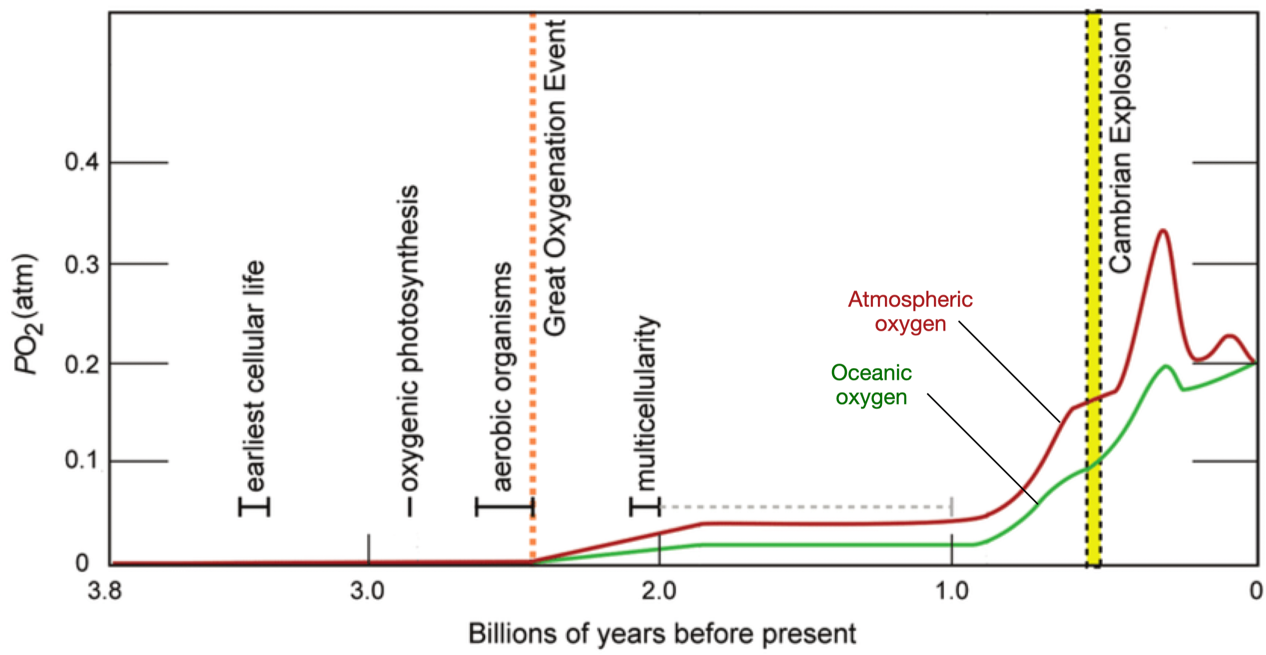
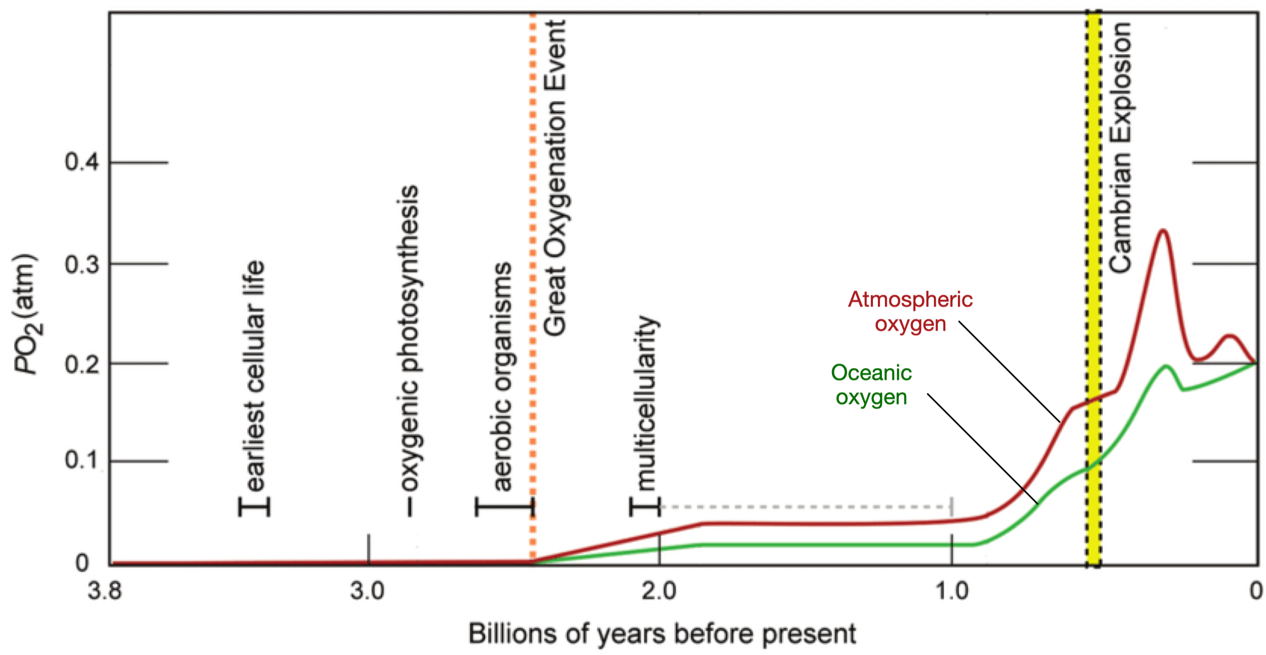
Figure 1 represents the amount of O2 build-up in the Earth's atmosphere. Red and green lines represent the range of the estimates while time is measured in billions of years ago.

  • Oxygenic photosynthesis - an organism that does this will create oxygen through the process of photosynthesis.
  • Aerobic organisms - organisms that require oxygen.
  • Multicellularity - organisms made of more than one cell.
Question 3
3.

What patterns do you notice over the last 3.8 billion years in Figure 1? Be sure to use data from the figure to support you claim.

Question 4
4.

Choose 3 events in the timeline of Earth's history that could be the causes of the levels of oxygen on the planet to go up or down.

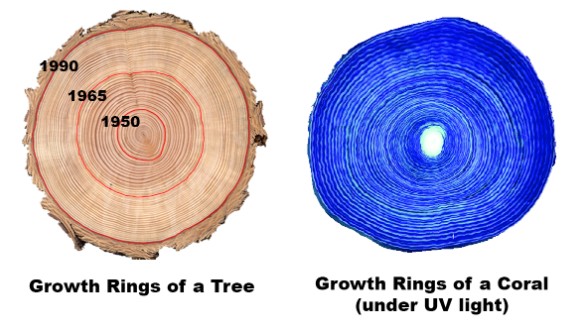
Tree rings give us useful information about the past rainfall in an area. But did you know that sea coral also displays unique growth rings? Some corals can live up to 5,000 years, making them the longest living animals on earth. Like trees, their growth is influenced by the environment. Studying coral layers can give us clues about past ocean conditions. Notice the similarities in the tree rings and coral rings shown below (image 1).


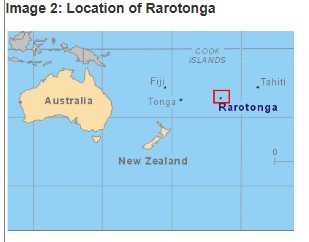
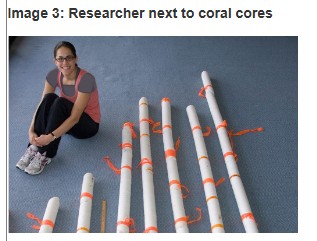
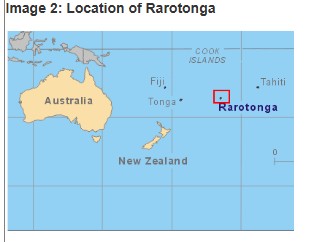
In 1997 a scientist named Brad Linsley traveled to an island in the South Pacific called Rarotonga. He carefully removed a long shaft (called a core) from a coral reef. Below you will find a map (image 2) showing the location of Rarotonga and a picture (image 3) showing the shape and size of coral cores. Dr. Linsley used only one core for his analysis.


Question 5
5.

Question: Image 1 shows tree rings and coral rings. The numbers on the tree tell us the year that layer formed. If we assume the coral model is similar to the tree model, then how would we expect the coral layers to be arranged?

Question 6
6.

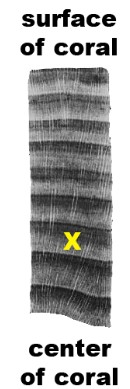
Seasonal changes lead to unique coral bands of high and low density.  In other words, summer stripes are a different color than winter stripes.

A dark band and a light band under it represent one year.

If this core (shown below) was drilled from a live coral at the end of 2020 beginning the at the surface, then what year was it when Layer X formed?


Question 7
7.

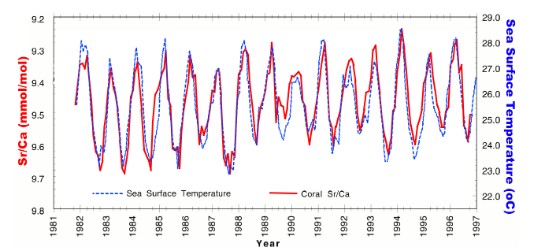
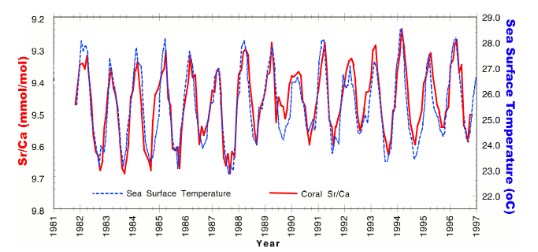
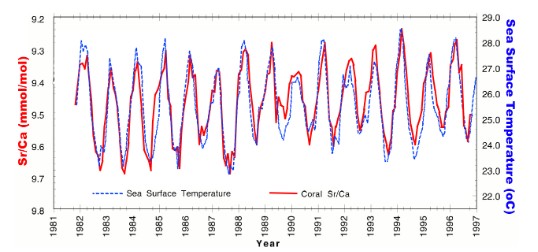
Image 4 shows the Strontium-Calcium ratio in the younger layers of coral, as well as the known ocean temperatures in that time period. Which of the following statements is supported by the data?

Blue dotted line is Sea Surface Temperature and solid red line is Strontium/Calcium density


Question 8
8.

Image 4 shows a consistent pattern of up / down / up down. What is causing these oscillations?


Question 9
9.

Dr. Linsley is analyzing a single layer of his core sample. He determines that the layer has an Sr/Ca ratio of 9.6. Use Image 4 to estimate the water temperature when that layer formed.

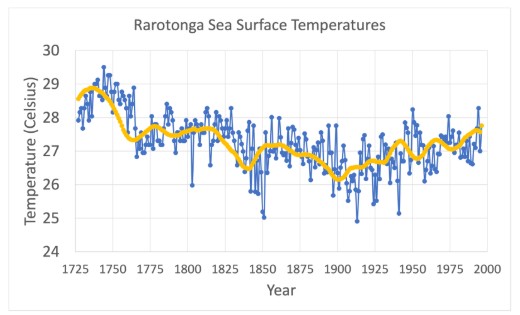
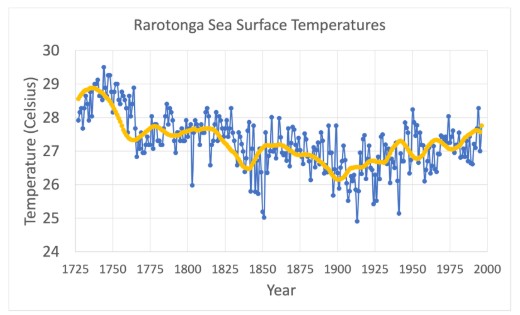
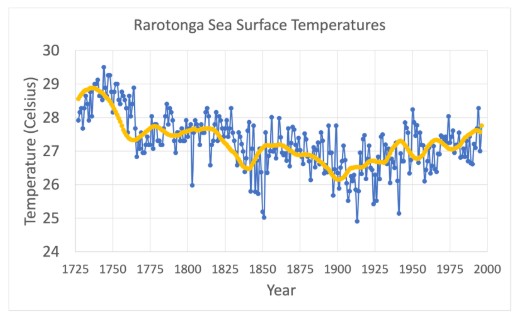
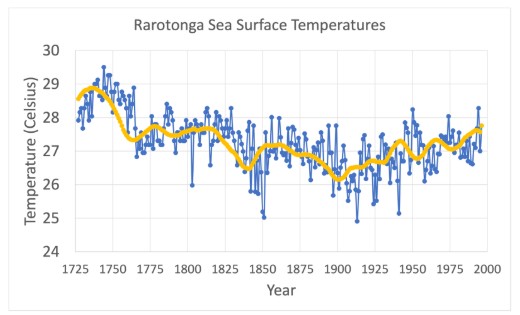
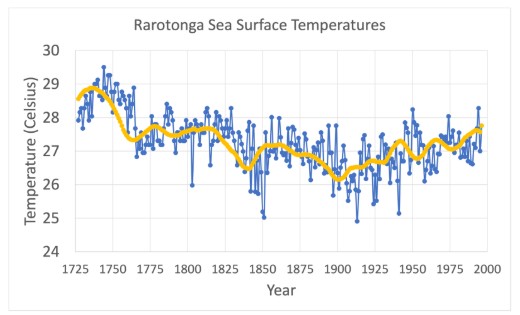
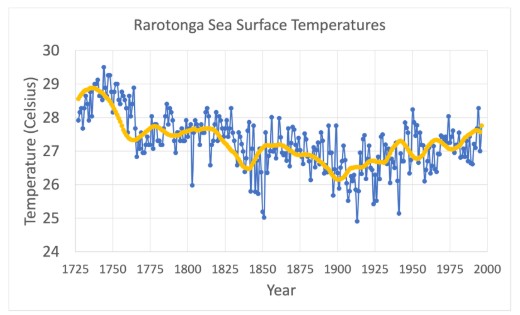
Older layers of coral in his sample dated back as far as 1727. Dr. Linsley used the correlation between Sr/Ca and temperature to estimate ocean conditions in the past. The graph below (Image 5) shows yearly data points as well as the average temperature trend.

Image 5: Using the Rarotonga Core to Estimate Past Conditions


Question 10
10.

What do the older samples (1725 - 1900) from Image 5 indicate about ocean temperatures in this time period?

Image 5: Using the Rarotonga Core to Estimate Past Conditions


Question 11
11.

What do the more recent samples (1900 - 2000) from Image 5 indicate about ocean temperature in this time period?

Image 5: Using the Rarotonga Core to Estimate Past Conditions


Question 12
12.

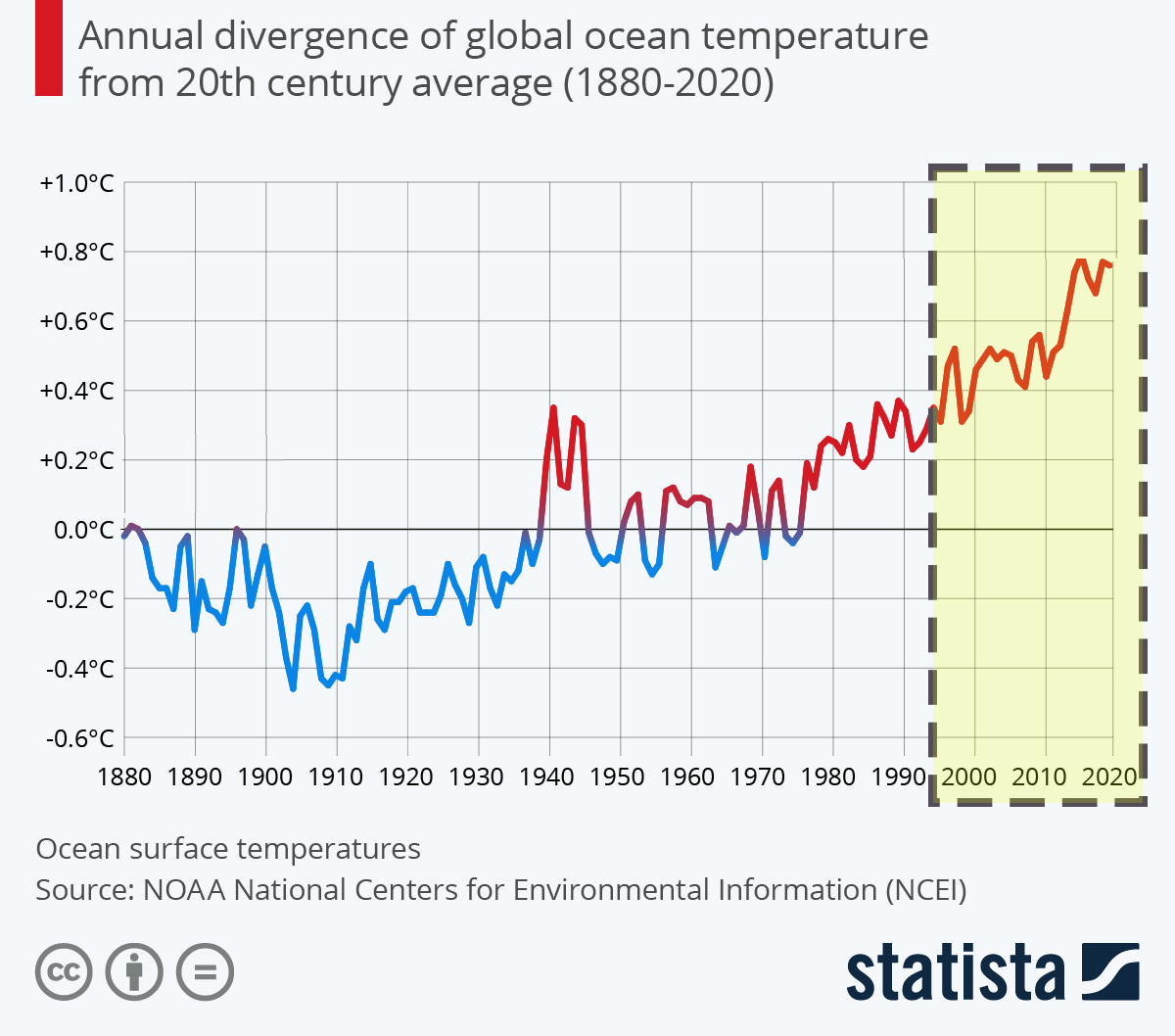
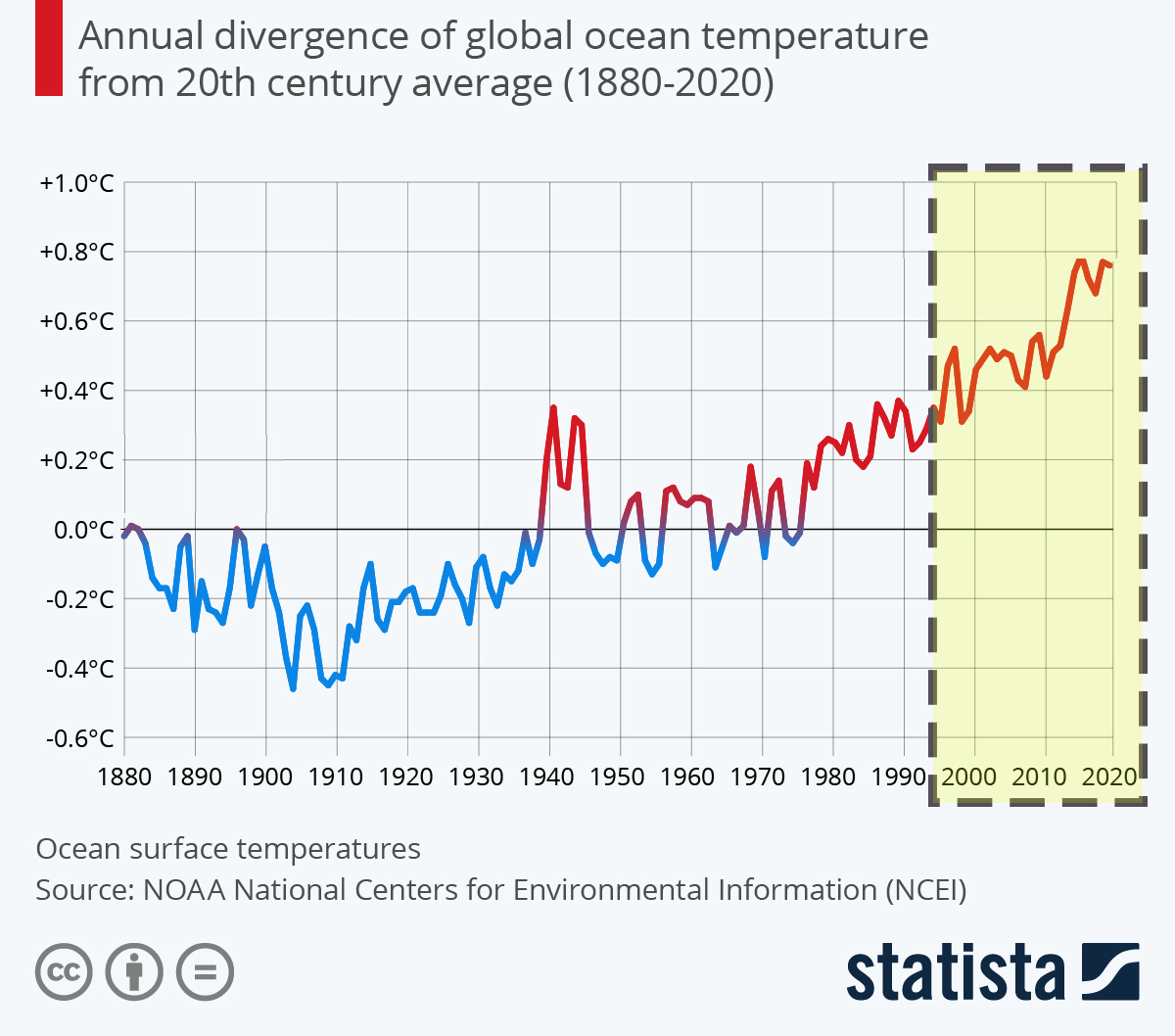
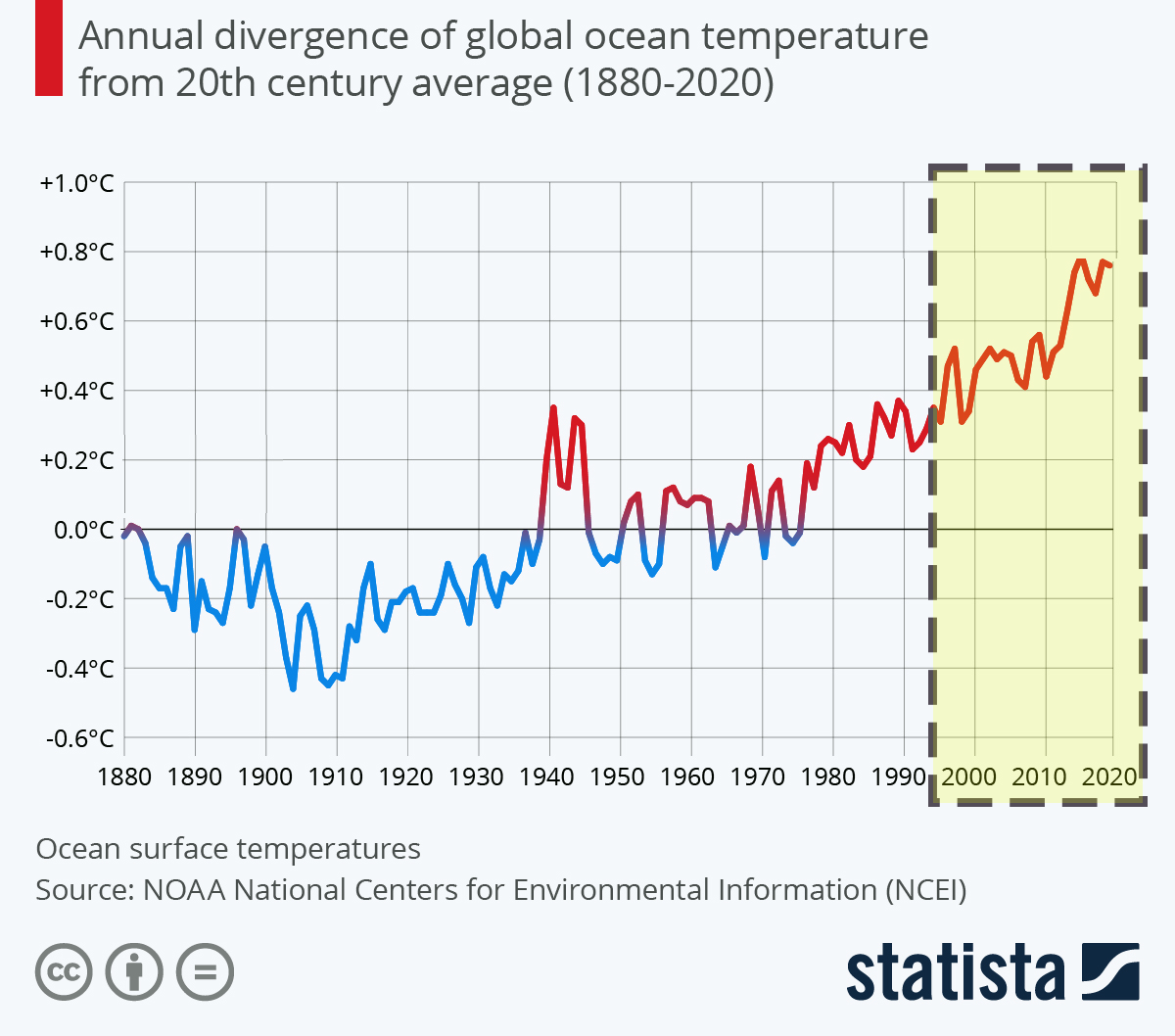
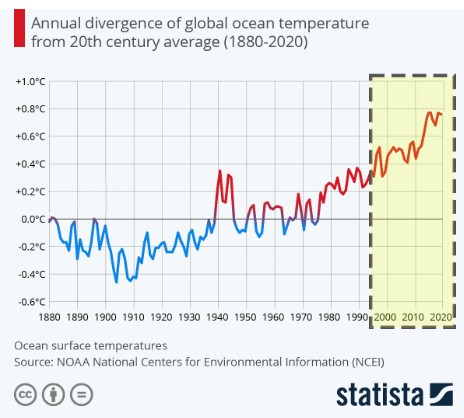
Dr. Linsley conducted his research in 1997. How does the data after 1997 (Image 6) fit in with his own data?

Image 5: Using the Rarotonga Core to Estimate Past Conditions

Image 6: Recent Ocean Temperatures

Question 13
13.

If the trends in Image 6 continue, then how far from the average will global ocean temperatures be by the year 2030?

Image 6: Recent Ocean Temperatures


Question 14
14.

Eliza (a fellow earth science student) looks at Image 6 and then makes this claim:
“Ocean temperatures are much warmer now than they have ever been before.”
Question: How might Dr. Linsley’s data (Image 5) cause Eliza to adjust her claim? Be specific with the data!

Image 5: Using the Rarotonga Core to Estimate Past Conditions


Image 6: Recent Ocean Temperatures

Question 15
15.

In 1997 a scientist named Brad Linsley traveled to an island in the South Pacific called Rarotonga. He carefully removed a long shaft (called a core) from a coral reef. Below you will find a map (image 2) showing the location of Rarotonga and a picture.


What are the limitations or weaknesses of comparing Dr. Linsley’s data (Image 5) with the final graph (Image 6)?

Image 5: Using the Rarotonga Core to Estimate Past Conditions


Image 6: Recent Ocean Temperatures

Question 16
16.
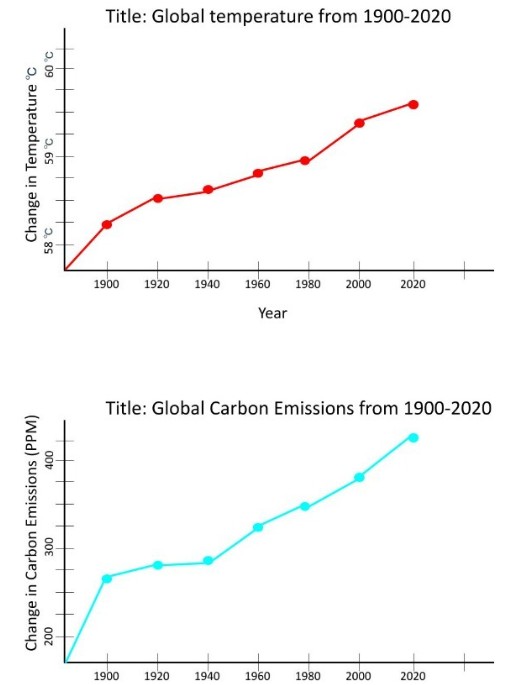
Compare and contrast the data from the graphs below to complete the following statements using the word bank.

As carbon emissions __________, global temperatures __________.
In the system, Carbon Emissions and Temperatures interact in a(n) __________ way.
Question 17
17.
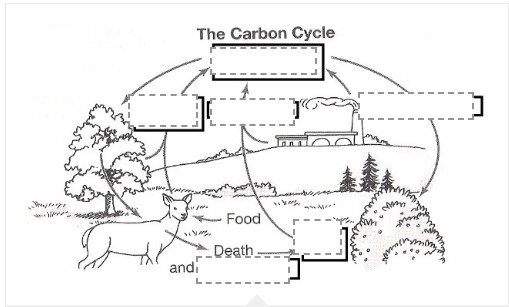
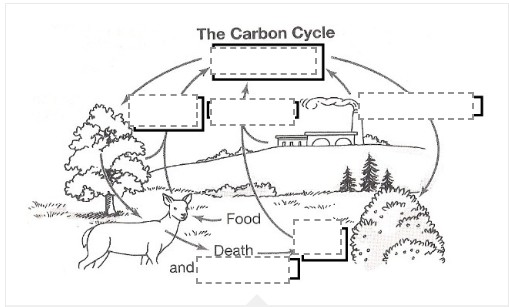
Use the words from the bank and drag and drop them to their proper locations of the model depicting Carbon Cycling.


Other Answer Choices:
CO2 in atmosphere
fossil fuels
photosynthesis
cellular respiration
decomposition
combustion
Question 18
18.
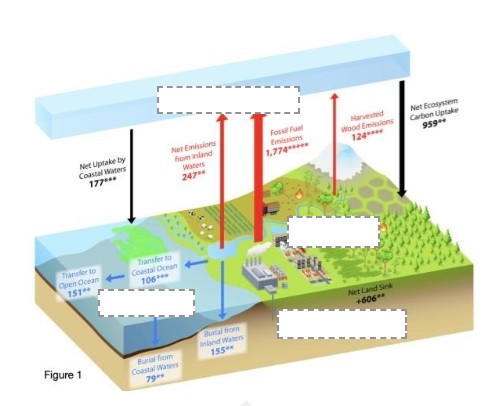
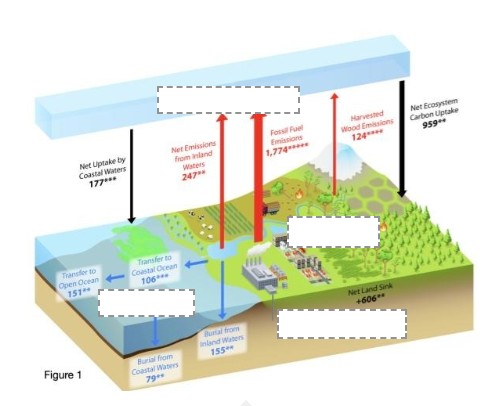
Label the following spheres on the model below:  atmosphere, biosphere, hydrosphere, and geosphere.
Other Answer Choices:
geosphere (earth)
biosphere (life)
atmosphere (gas)
hydrosphere (water)
Question 19
19.
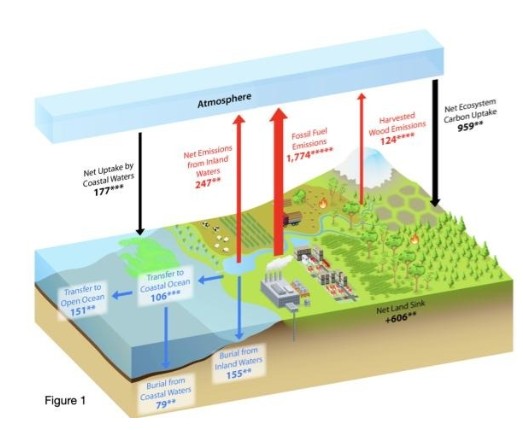
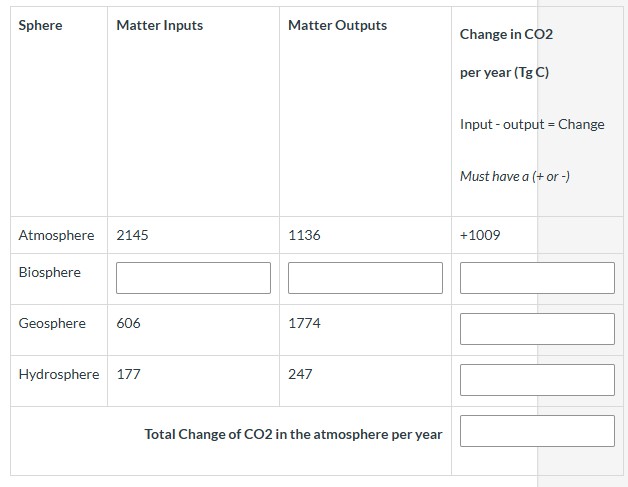
Use the graphic organizer below to model the inputs, outputs.  Use the CCIWG model from below to calculate change in CO2 per year in teragrams.  You need only to enter the correct numbers into the table.  The Change in CO2 per year must be calculated from the input/outputs.  Some are done for you as examples.

Focus only on BLACK and RED numbers.  Blue represent lateral changes within, as seen in the hydrosphere.

Other Answer Choices:
-70
-1168
+835
+606
124
959