Threats to Biodiversity

Last updated 7 months ago
9 questions
Overexploitation
One of the factors that is increasing the current rate of extinction is the overexploitation, or excessive use, of species that have economic value. Historically, overexploitation was the primary cause of species extinction. However, the number one cause of species extinction today is the loss or destruction of habitat.
The great herds of bison that once roamed the central plains of North America were hunted to the brink of extinction because their and hides could be sold commercially. Bison were also hunted for sport. At one time, the bison population was estimated at 50 million. By 1889, there were fewer than 1000 bison.
Passenger pigeons are another species that was overexploited. At one time, huge flocks of these birds darkened the skies of North America during their migration. Unfortunately, they were overhunted and forced from their habitats. By the early 1900s, passenger pigeons had become extinct.
The ocelot, found as far north as Texas and as far south as Argentina, is in danger of becoming extinct. Its declining numbers are due to loss of habitat and the commercial value of its fur.
The white rhinoceros is one of five species of rhinos, all of which are in danger of becoming extinct. They are hunted and killed for their horns, which are sold for so-called medicinal purposes.
1

The ocelot is a species greatly affected by overexploitation; they are hunted and killed for their fur at a greater rate than the species can recover.

2

Which of the following are examples of overexploitation? Select all that apply.

Habitat Loss
There are several ways that species can lose their habitat. If a habitat is destroyed or disrupted, that native species might have to relocate or they will die. For example, humans are clearing areas of tropical rain forests and replacing the native plants with crops or grazing land.
Destruction of Habitat
The clearing of tropical rain forests has a direct impact on global biodiversity. Tropical latitudes contain much of the world's biodiversity in their native populations. In fact, estimates show that more than half of all species on Earth live in the tropical rain forests. The removal of so much of the natural forest will cause many species on Earth to become extinct as a result of habitat loss.
Disruption of Habitat
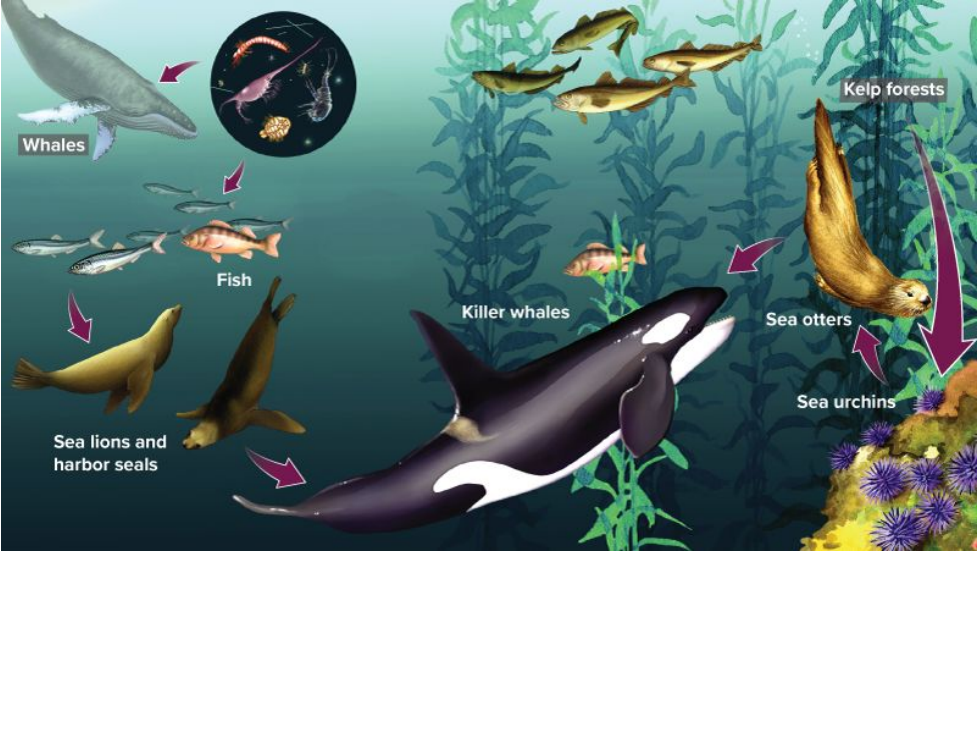
Some habitats might no be destroyed, but they can be disrupted. For example, off the coast of Alaska, the chain of events that we discussed in class started in the 1970s and demonstrates how the declining numbers of one member of a food web can affect the other members.
5
  • mountain top removal to facilitate coal mining
  • damming a river to allow for housing to be built
  • clearing rainforest for farmland
  • over fishing a species so the populations at each trophic level must shift
  • harvesting too many plants that are a food source for a population
  • Disruption
  • Destruction
1

The disruption of a habitat can affect the biodiversity of an entire ecosystem.

3

Put the events in the correct order to describe what happened off the coast Alaska in the 1970s.

  1. Orca whales begin eating Sea Otters
  2. Seal populations decrease
  3. Sea urchin populations increase
  4. Less habitat for animals that rely on Kelp forest for place to live
  5. Fish populations decrease due to overfishing
  6. Kelp population decrease because a lot is being eaten
Fragmentation of Habitat
The separation of an ecosystem into small pieces of land is called habitat fragmentation. Populations often stay within the confines of the small parcel because they are unable or unwilling to cross the human-made barriers. This causes several problems for the survival of various species.
First, the smaller the parcel of land, the fewer species it can support. Second, fragmentation reduces the opportunities for individuals in one area to reproduce with individuals from another area. For this reason, genetic diversity often decreases over time in habitat fragments. Smaller, separated, and less genetically diverse populations are less able to resist disease or respond to changing environmental conditions.
Carving a large ecosystem into small parcels increases the number of edges, creating edge effects. Edge effects are different environmental conditions that occur along the boundaries of an ecosystem. For example, edges of a forest near a road have different abiotic factors--such as temperature, wind, and humidity--than does the interior of a forest. Typically, the temperature and wind will be higher and the humidity lower on the edges in a tropical forest. Species that thrive deep in the dense forest might perish on the edges of the ecosystem. Predators and parasites also thrive on the boundaries of ecosystems, which makes the species in these areas more vulnerable to attack. Edge effects do not always create a disadvantage for all species. Some species find these conditions favorable, and they thrive.
1

Which habitat would have a greater impact from edge effects?

Pollution
Pollution changes the composition of air, soil, and water. Smog is an example of air pollution. Smog affects not only visibility, but it can also affect the respiratory systems of those who breathe it in.
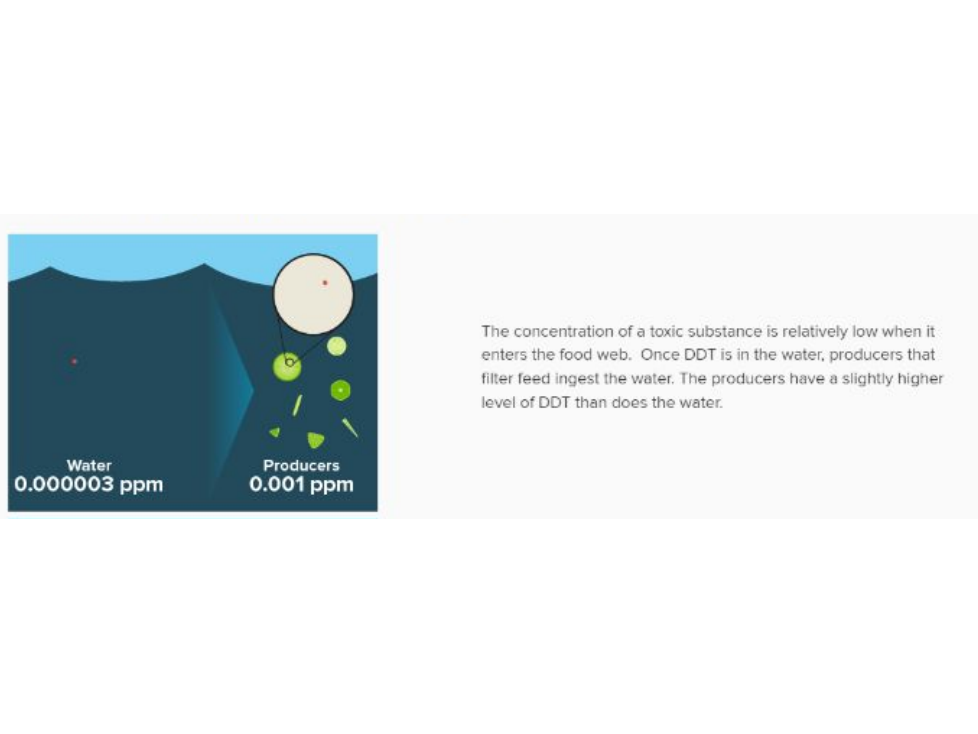
Pollution and atmospheric changes threaten biodiversity and global stability. There are many types of pollution. Substances--including many human-made chemicals that are not found in nature-- are released into the environment. Pesticides (such as DDT), industrial chemicals (such as PCBs), are examples of substances that are found in food webs. These substances are ingested by organisms when they drink water or eat other organisms that contain the toxic substances. Some substances are metabolized by an organism and excreted with other waste products. However, some substances, such as DDT and PCBs, accumulate in the tissues of organisms.
Carnivores at the higher trophic levels seem to be most affected by the accumulation of toxic substances because of a process called biological magnification (the increasing concentration of toxic substances in organisms as trophic levels increase in a food chain or food web).
Acid Precipitation
Another pollutant that affects biodiversity is acid precipitation. When fossil fuels are burned, sulfur dioxide is released into the atmosphere. In addition, the burning of fossil fuels in automobile engines releases nitrogen oxides into the atmosphere. These compounds react with water and other substances in the air to form sulfuric acid and nitric acid. These acids eventually fall to the surface of Earth in rain, sleet, snow, or fog.
Eutrophication
Another form of water pollution, called eutrophication, destroys underwater habitats for fish and other species. Eutrophication occurs when fertilizers, animal waste, sewage, or other substances rich in nitrogen or phosphorus flow into waterways, causing extensive algae growth. The algae use up the oxygen supply during their rapid growth and after their death, during the decaying process. Other organisms in the water suffocate. In some cases, algae also give off toxins that poison the water supply for other organisms. Eutrophication is a natural process, but human activities often accelerate the rate at which it occurs.
1
Runoff carrying excess animal wastes, sewage, and fertilizers into a lake causes a form of pollution known as __________.
1

Biological magnification is the increase in toxins in organisms at higher trophic levels.

Invasive Species
Invasive species, such as Asian Carp, are a threat to the native species. They can affect biodiversity by decreasing the native species in the ecosystem.

Introduced species are either intentionally or unintentionally transported to a new habitat. Species that can significantly modify or disrupt that habitat are known as invasive species. These species are not a threat to biodiversity in their native habitats. Predators, parasites, and competition between species keep the native ecosystem in balance. However, when these species are introduced into a new area, these controlling factors are not in place. Introduced species often reproduce in large numbers because of lack of predators, and they become invasive species in their new habitat.
Introduced species are a worldwide environmental problem. An estimated 40% of the extinctions that have occurred since 1750 are a result of invasive species, and billions of dollars are spent every year in an effort to clean up or control the damage caused by introduced species.
Asian Carp: They were used in the South in the 1970s to filter pond water on fish farms in Arkansas. Due to flooding, Asian carp escaped the ponds and were established in the wild in the early 1980s. Asian carp are aggressive, fast-growing fish that outcompete native species for resources.
Fire Ants: Ships from South America accidently introduced the imported fire ant to the US through the port of Mobile, Alabama in the 1920s. The species has since spread throughout the southern and southwestern US.
Garlic Mustard: It's a biennial that is native to Europe & Asia. It was purposely brought to the US in the 1860s as a culinary herb. Garlic Mustard, which can produce thousands of seeds per plant, emits toxic chemicals from its roots, killing off surrounding plants.
Emerald Ash Borer: It's native to Eastern Asia and more than likely came to the US in wood packing material. It was found near Detroit, Michigan in 2002. The larvae are the most damaging because they feed on the inner bark of ash trees. Millions of ash trees have been killed due to emerald ash borer infestations.
Zebra Mussels: They're native to Eastern Europe and Western Russia. The mussels are very small and attach to solid surfaces in water. Zebra mussels were accidently introduced to the Great Lakes in the ballast water of ships and were discovered in 1988. Zebra mussels affect local ecosystems because they can produce hundreds of thousands of eggs each year.
2

Which of the following are characteristics of invasive species?