Using the energy pyramid at what level do herbivores exist?
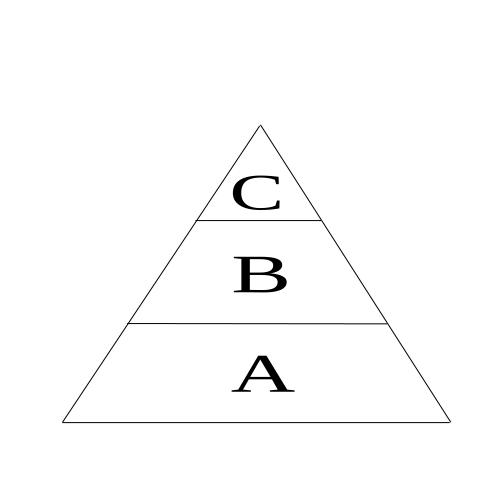
Using the energy pyramid at what level do herbivores exist?
What type of energy is passed from producers to primary consumers?
What type of energy is passed from producers to tertiary consumers?
What is the level that eats the producers called?
An animal that eats only meat is called what?
The law of __________________________________________ states that matter is not created nor destroyed.
What is the percentage of energy that is passed from one trophic level to next is?
Decomposers break down which type of organism?
Using the energy pyramid at what level do herbivores exist?
Decomposers breakdown living organisms
Match the following
| Draggable item | arrow_right_alt | Corresponding Item |
|---|---|---|
Decomposers | arrow_right_alt | Second trophic level |
Primary Consumer | arrow_right_alt | First trophic level |
Producer | arrow_right_alt | Not on the energy pyramid, breaks things down |
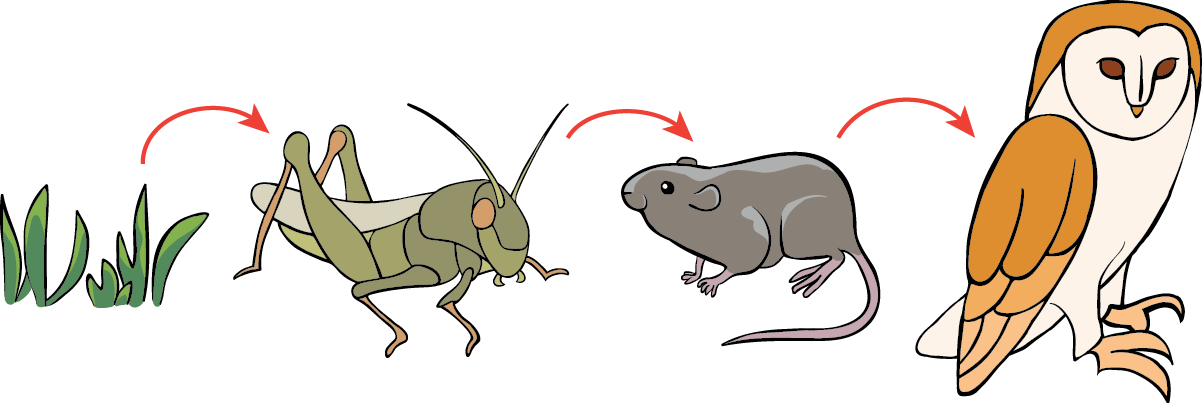
Which of the following is true about this food chain?
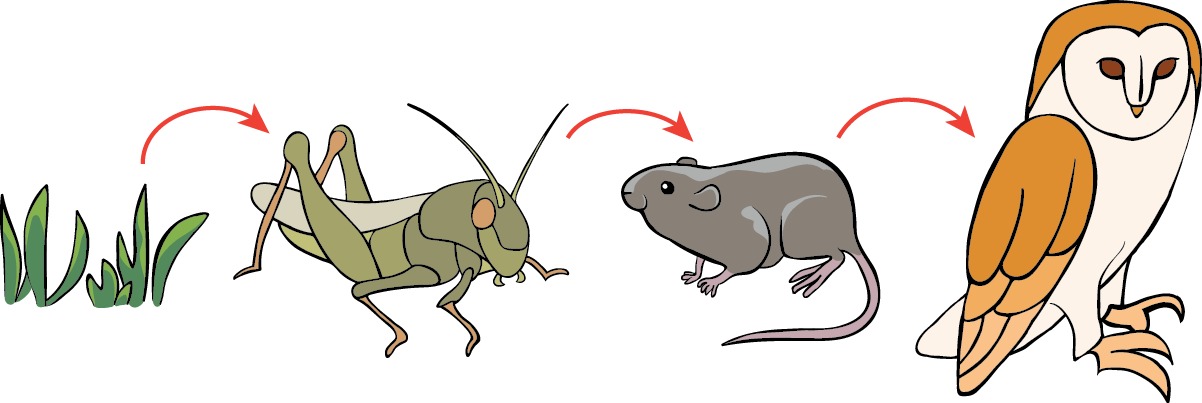
The grass indirectly gives energy to the owl
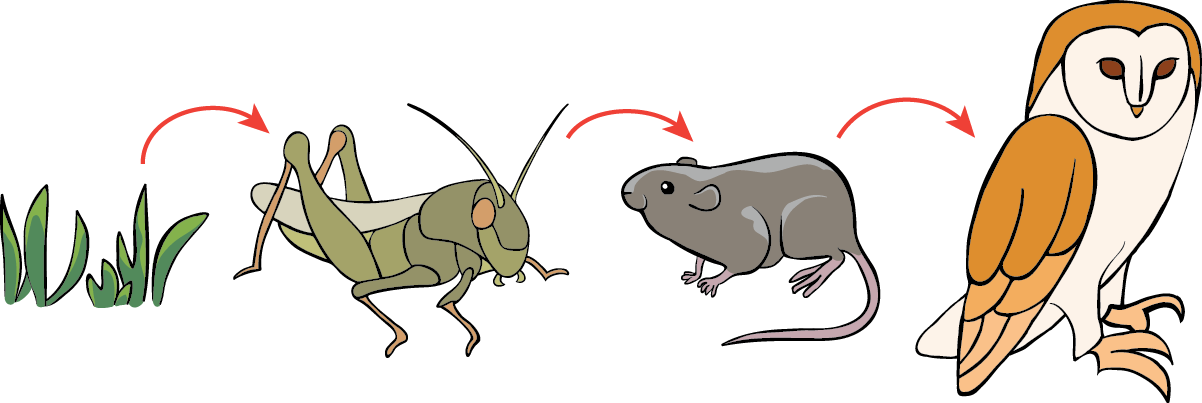
Based on the image above, the mouse is a secondary consumer not a primary consumer.
What gives producers their energy?
Which of the following are in the correct order?
What do the arrows in a food chain represent?
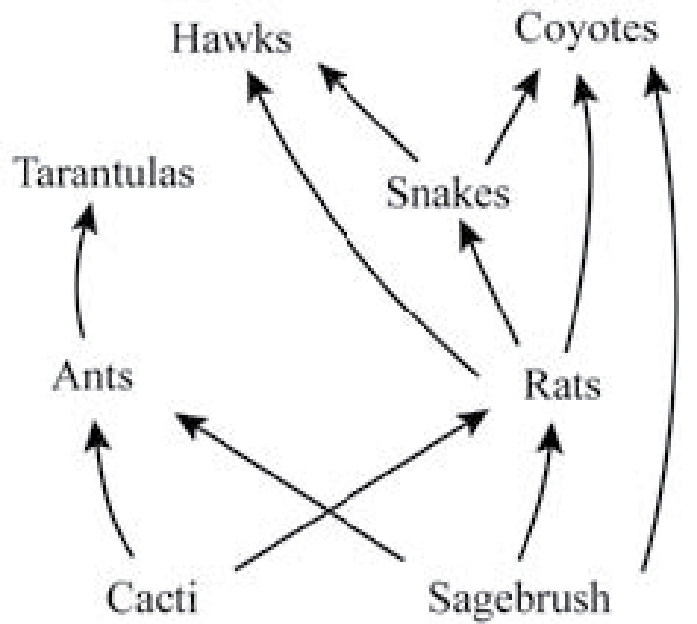
Using the food web above, What are the producers?
Using the food web from Question 17, Which one is NOT a primary consumers?
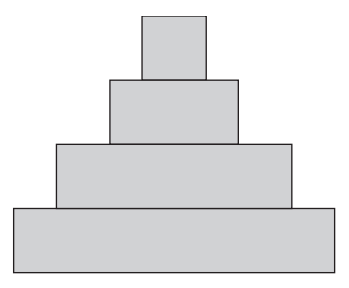
Which level contains the most amount of energy?
Using the image from question 19, at what level do you find herbivores?
Plants convert sun light into ___________ through the process of _____________________.
Photosynthesis is the process that plants use to convert carbon dioxide, dihydrogen oxide, and solar radiation to produce ________________________.
Which of the following are decomposers?
Which of the following is a secondary consumer?
As you go up the energy pyramid the amount of energy______________________.