Which concepts explains why we perceive the door in this picture is moving?
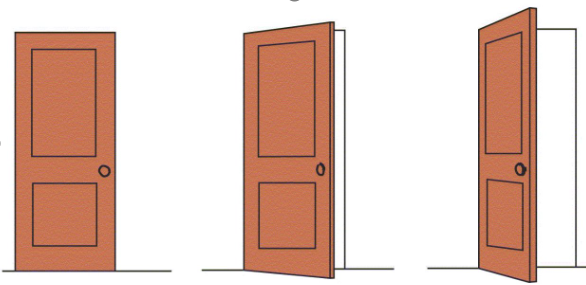
Which concepts explains why we perceive the door in this picture is moving?
Which part of the retina translates color and fine detail?
The way we perceive objects is determined by
The lens of the eye is responsible for
Rods in the retina allow us to recognize
drag the term and line it up with the defintion
| Draggable item | arrow_right_alt | Corresponding Item |
|---|---|---|
closure | arrow_right_alt | idea that people prefer to see smooth patterns rather than disrupted oned |
law of continuity | arrow_right_alt | nearness of objects or figures to each other |
law of similarity | arrow_right_alt | tendency to perceive a complete figure even if gaps exist |
proximity | arrow_right_alt | idea that people like to group similar items together |
Which part of the eye controls light entry?
What term describes the minimum detectable stimulus intensity?
What is the term for how we gather information from our senses?
Which process interprets sensory information to give it meaning?
What is the difference between sensation and perception?
How does bottom-up processing influence perception?
Which structure gives the eye its color?
What part of the ear collects sound waves?
What is the function of the cochlea?
What does Gestalt theory primarily focus on in perception?
Which term is commonly associated with Gestalt psychology?
Place the following steps to the vision process in order.
light passes through the cornea
axons send messages from the ganglion cells to the optic nerve
optic nerve carries signals to the brain
light is focused by the lens onto the retina
photoreceptor cells (rods and cones) convert light into neural impulses and send them to ganglion cells
light passes through the pupil
visual cortex in the occipital lobe interprets signals
Group the following parts of the ear into the appropriate categories:
pinnae
tympanic membrane (ear drum)
cochlea
ossicles
auditory nerve
semi-circular canals
auditory canal
Outer Ear
Middle Ear
Inner Ear
Sort the following theories into the appropriate categories:
place theory
trichromatic theory
Volley theory
frequency theory
opponent process theory
Vision Theory
Hearing Theory
Place the following steps of hearing into the correct order.
hair cells (auditory receptor cells) are stimulated
hair cells transmit neural impulses to auditory nerve
impulses end up in the auditory cortext of the temporal lobe
ossicles (stapes) press against the cochlea
the pinnae collects sound waves
sound waves vibrate the ear drum
vibrations cause the ossicles to vibrate
sound waves travel down the auditory canal
vibrations are passed through the fluid in the cochlea
Sort the concepts below into the correct categories.
texture gradient
clarity
relative height
convergence
retinal disparity
relative size
monocular clues
binocular clues
According to Weber's Law, which of the following is true?
There is a fan that is constantly running in Melinda's room. Most days, however, she forgets that it's on, even though it is noisy. Which idea explains why Melinda doesn't hear her fan?
Which concepts explains why we perceive the door in this picture is moving?