Log in
Sign up for FREE
arrow_back
Library

Day 7 SURVIVOR Warm Up

star
star
star
star
star
Last updated 4 months ago
7 questions
Required
1
Required
1
Required
3
Required
2
Required
1
Required
1
Question 1
1.

Question 2
2.

Tomato plants usually have hairy stems. Hairless stems are present in tomato plants that are homozygous recessive for the trait. If the stem characteristics are determined by a single gene, what is the expected percent chance of having hairy stems if crossing two tomato plants that are heterozygous for hairy stems?

Question 3
3.

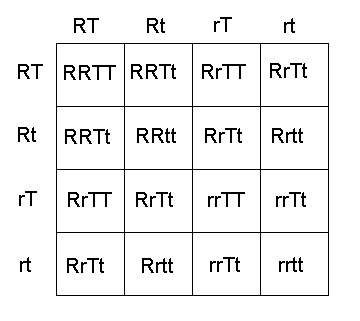
The dominant trait for height in pea plants is for the plant to be tall, and the dominant shape for the peas is round instead of wrinkled. Select all the options below that would indicate offspring that is short and round.
Question 4
4.
In Mendel’s pea plants, plant height is controlled by a single gene in which the tall allele is dominant to the short allele. Complete parental genotypes that would produce 75% tall pea plants and 25% short pea plants? For example: tt x tt would produce 100% short pea plants

T_______ x T_______
Required
1
Question 6
6.

Question 7
7.

Crossing over between non-sister chromatids during meiosis is significant in heredity. This process most likely leads to an increase in which of the following?
the number of gametes
the expression of dominant traits
the occurrence of polyploidy
genetic variation
Question 5
5.

Scientists claim that DNA is a universal genetic code that is common to all organisms. Which of the following statements supports this claim?
DNA is helical in structure and can be found in the nucleus.
All living things use the same 4 nitrogen bases to code for traits.
DNA is made of proteins that can be transferred from prokaryotes to eukaryotes.
All living things pass down their genetic code to their offspring.
Speciation can occur when populations of the same species become isolated from one another.
True
False
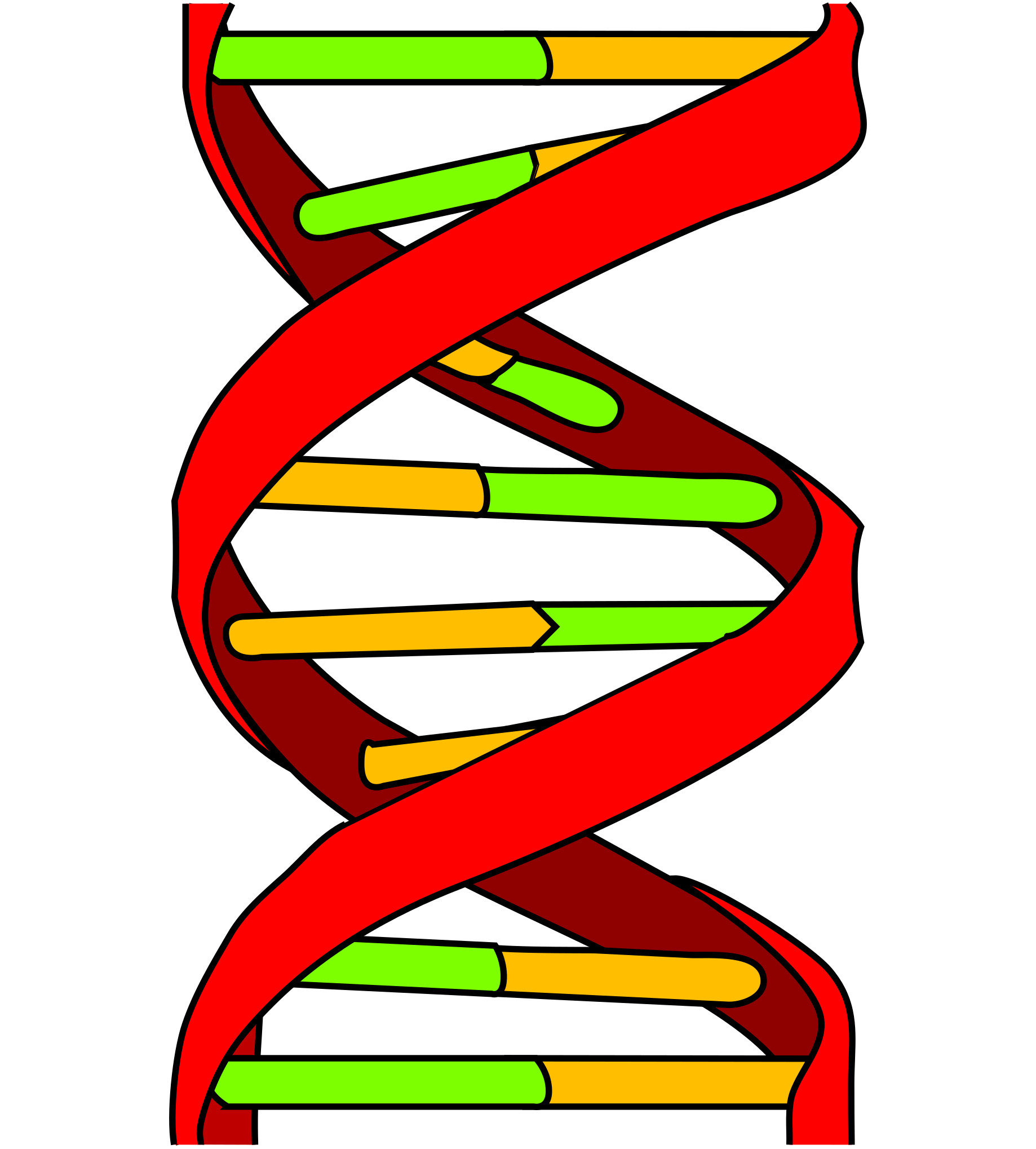
A segment of DNA is represented in the illustration. How is information for a specific protein carried on the DNA molecule?
In the double-helix shape of the condensed chromosome
As a pattern of phosphates and sugars
In the ratio of adenines to thymines
As a sequence of nucleotides