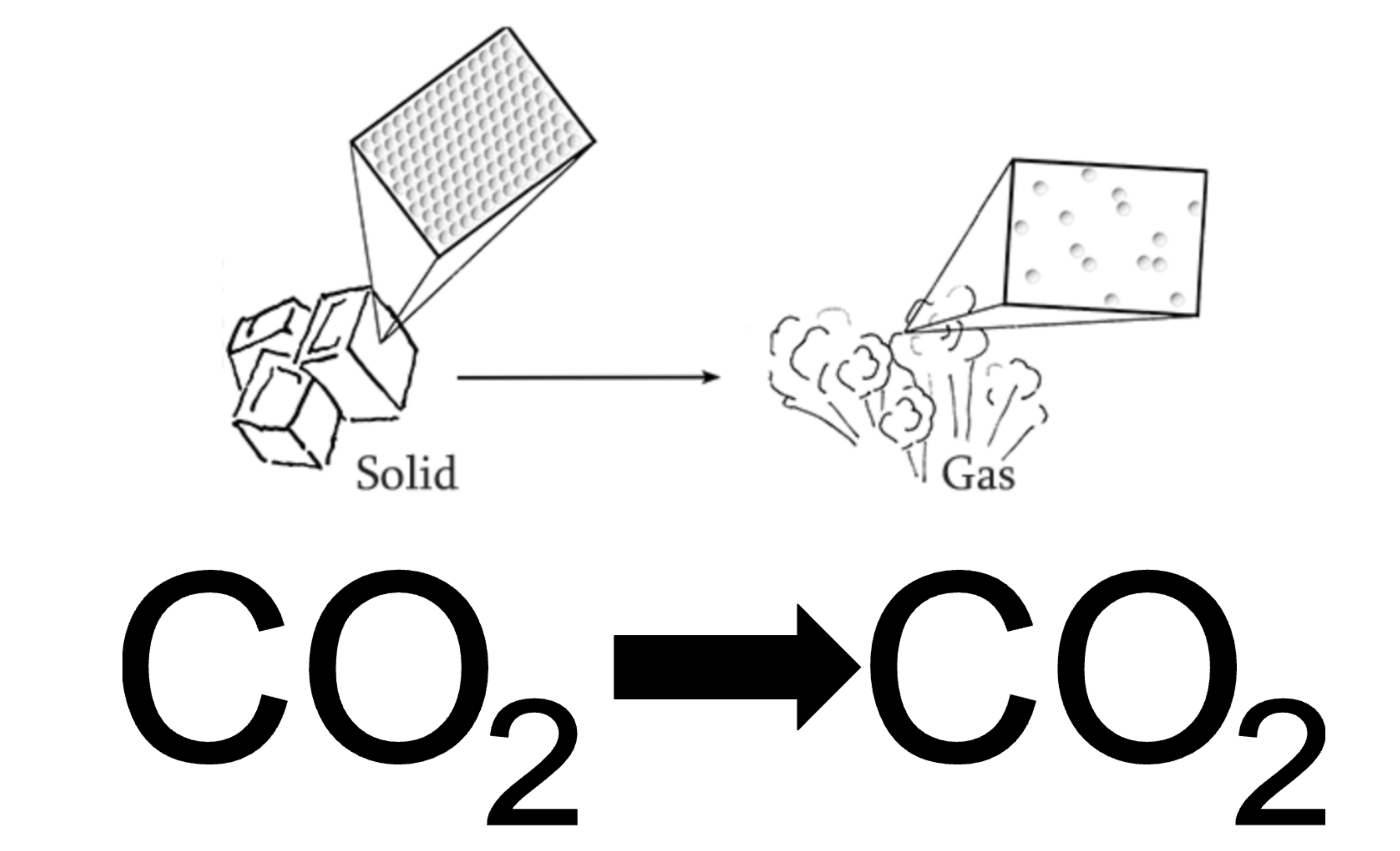
Does this show a chemical change?
Does this show a chemical change?
Paper is flammable.
Paper is crushed or crumpled.
Baking soda will react with vinegar.
Paper changes from white to black when burned.
Baking soda and vinegar bubble up as a new gas forms when they come in contact with one another.
Baking soda is a powdery solid.
Paper is cut in pieces.
Paper is white.
PHYSICAL PROPERTY
CHEMICAL PROPERTY
PHYSICAL CHANGE
CHEMICAL CHANGE
Which of the following ALWAYS happens in EVERY chemical change?
Does this show a chemical change?

Does this show a chemical change?
In this GIF of two liquids being poured into a flask, Liquid A is on your left and is transparent and yellow. Liquid B is on your right and is transparent and colorless. What is a PHYSICAL property of LIQUID A?
Physical Property:
Chemical Property:

In this GIF of two liquids being poured into a flask, Liquid A is on your left and is transparent and yellow. Liquid B is on your right and is transparent and colorless.
Does this show a PHYSICAL CHANGE or a CHEMICAL CHANGE, and how do you know?
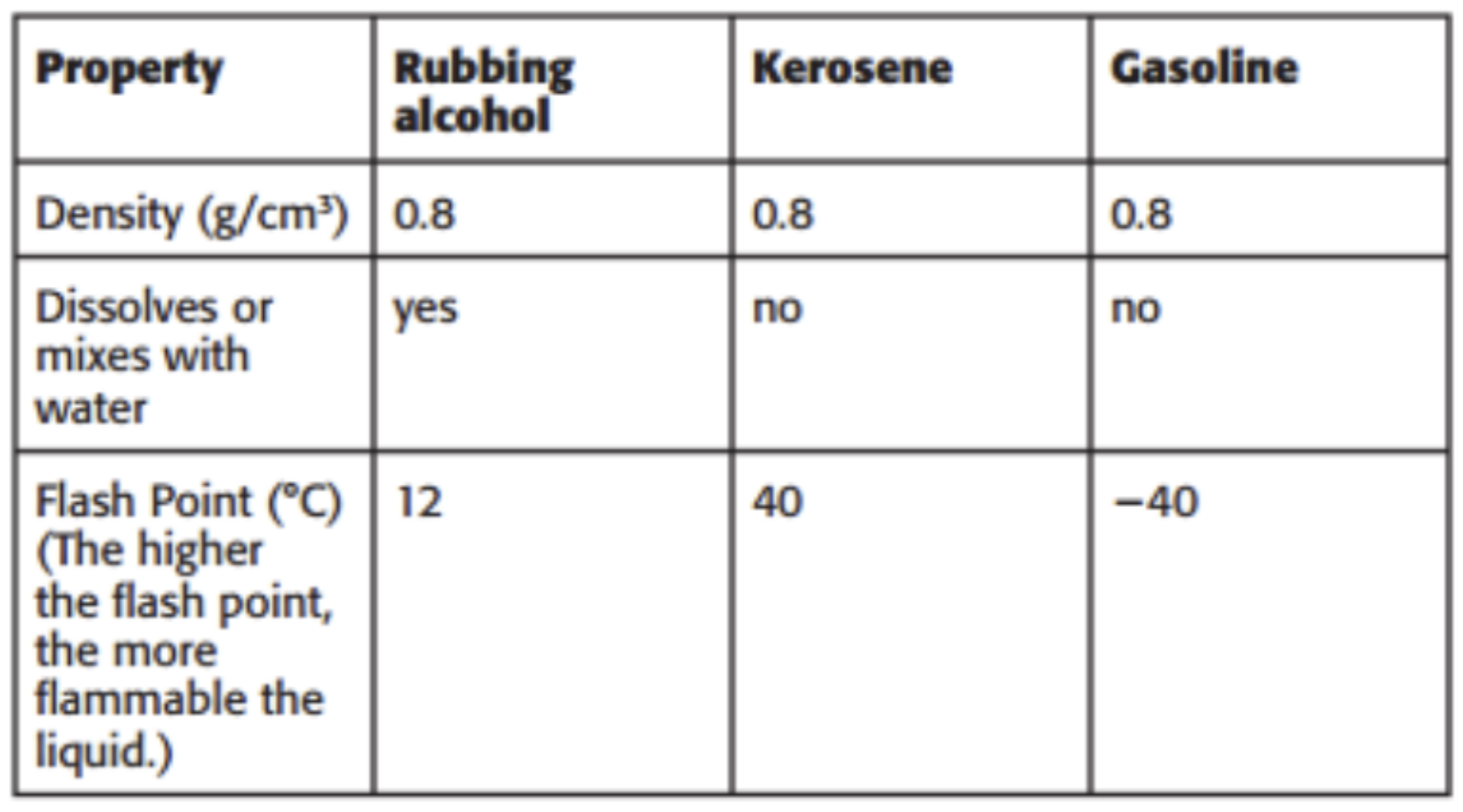
An unknown liquid dissolves in water and has a flash point of 12 degrees Celsius (°C). What substance from the chart is it?
A sample of hydrogen gas and oxygen gas interact and undergo a change. Water is created.
The Sample Properties Table shows the properties before and after the change.
In the equation, REACTANTS are on the left of the arrow. The PRODUCT is on the right,
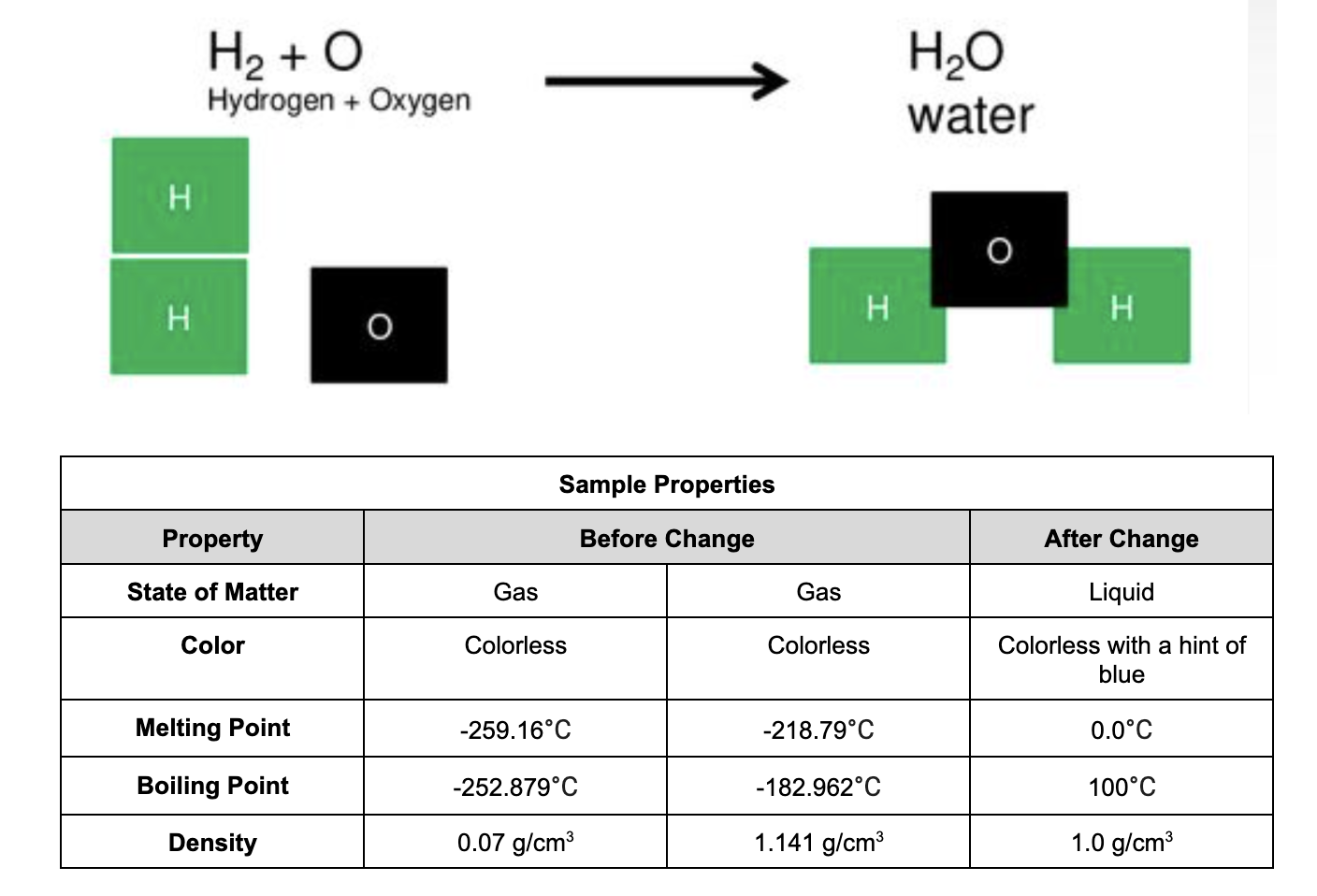
Click on the first blank box to indicate whether the samples underwent a physical or chemical change. Then, click on the second blank box and select evidence to support your choice.
A change has occurred because
Give an example of a physical change and a chemical change.
YOU CAN USE EXAMPLES FROM THIS FORMATIVE!!!
Physical Change:
Chemical Change:
This chart can be used to help identify an unknown substance because it provides information about the__________ of different substances.