NYSTP Grade 4 ELA
star
star
star
star
star
Last updated 7 months ago
23 questions
Directions: Read this article. Then answer questions 1 through 6.
In ancient Egypt, pyramids were built as royal tombs. A tomb is a place for burying the dead.
Excerpt from The Great Pyramid: Egypt's Tomb for All Time
by Jeanette Leardi
1 In the sun's blazing heat, a group of Egyptians arrived at a desert along the banks of the Nile River. They had traveled hundreds of miles by boat. They were scared, but excited. Never before had they left their tiny villages.
2 As the Egyptians stepped off the boat, they saw 20,000 workers. Many were cutting giant blocks of limestone. Others were pulling huge stones up the slanted sides of a building. All had come at the command of their king, Khufu (KOO-foo). They were doing the most important work of their lives. They were building Khufu's tomb—the Great Pyramid.
Who Were the Pharaohs?
3 Who was the king who could order such a mighty task? He was an ancient Egyptian ruler, called a pharaoh. Yet to the Egyptian people, their king was not just a powerful man. He was the sky god Horus (HOR-us), who had come down to Earth.
4 The pharaoh was all-powerful. Many Egyptians used crops or animals to pay taxes. They also paid by working for the ruler. They built his palaces —and his tomb.
A Towering Tomb
5 Like other pharaohs before him, Khufu ordered workers to build him a tomb. It would hold his body and his treasures. So he wanted the building to be strong enough to last forever. Yet Khufu wanted something more. He wanted his tomb to be the tallest one ever built—and it was. Khufu's pyramid stood 481 feet (147 m) tall.
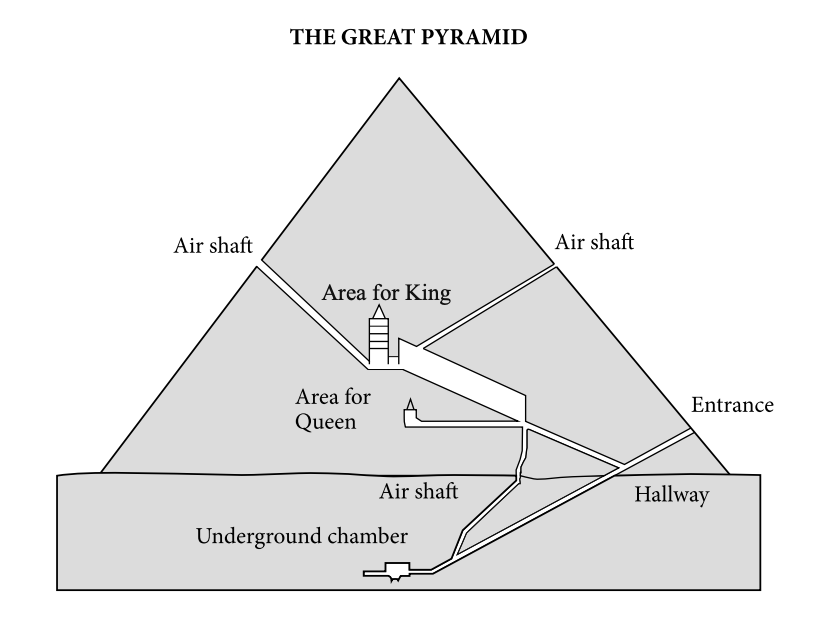
6 Building the Great Pyramid took lots of planning. The tomb would
need tightly closed rooms to keep out robbers. It would also need air shafts. These airways may have been built to help Khufu's spirit travel to the heavens.
How Did They Do It?
7 Once it was decided where the pyramid's walls would lie, the building could begin. Workers cut huge stones from rock quarries. They did this using simple hand tools. Some stones were sent to Giza by boat on the Nile River. Others were dragged to the site using ropes and wooden sleds.
8 No one knows how the workers got the stones to the top of the pyramid. Most stones weighed about 2.5 tons (2.3 metric tons). The builders may have used one big ramp. Or they may have built a ramp that wrapped around the pyramid. In all, it took more than two million stones to complete the pyramid.
Who Built the Great Pyramid?
9 Workers came to Giza from every part of Egypt to help build Khufu's tomb. About 5,000 skilled workers stayed there throughout the year. Many were artists and stonecutters. About 20,000 others worked for three to four months each year. They did the hard tasks of dragging the stones.
Required
1
What does the word “banks” mean as it is used in paragraph 1?
Required
1
What does the word “task” mean as it is used in paragraph 3?
Required
1
Which sentence best explains what happens in the section “A Towering Tomb”?
Required
1
How does the illustration help the reader understand the information in paragraph 6?
Required
1
Which sentence from the article best supports the idea that people came from all over the country to work for the pharaoh?
Required
1
What is a main idea of the article?
Directions: Read this story. Then answer questions 7 through 13.
Excerpt from Abigail Iris: The Pet Project
by Lisa Glatt and Suzanne Greenberg
1 We are almost at the end of the market where the cat-rescue people always set up on Sunday, and I hope shes in the mood not to resist some more.
2 "I think a pet would make a very appropriate half-birthday present," I say to my mother. We pull our bags up our arms a little so we can hold hands, and I lead her past the flower stands to the cats. They are my number three favorite thing about the farmers' market. They are already above the popcorn I always get when were done shopping, and they would move right up to number one, past the samples, if I ever got to take a kitten home.
3 "A pet is a very big responsibility, Abigail Iris" she says. "We can look, but half birthday or not, you know we can't bring a cat home. We've been over this before."
4 "I know," I say, but I don't know for sure....
5 "My mother would like to hold the big fat gray one"" I say to the cat-rescue lady in charge today, picking out the fattest, laziest-looking cat. The cat lady puts down the book she's reading and reaches into a cage and hands my mother the cat I picked for her...
6 Now that my mother is all set up, I peek in another cage. All I see in there is a big stuffed teddy bear, and I'm thinking the cat-rescue lady might need to wear better glasses when she goes out to do her rescuing.
7 "He likes to hide behind it, especially when he's sleeping," she says.
8 And then I see what she's talking about, two white paws and a little black tail curled up around the back side of the teddy bear.
9 "He's about three months old, we think," the cat lady says to me. "Someone found him in the Albertson's parking lot behind the trash bin. Isn't he cute?"
10 I peek behind the teddy bear and see him, a black kitty. Of course he's cute, I'm thinking. Is there anything cuter? But I don't say a word because sometimes it's better to play it cool when you really want something, as my brother Eddie always tells me. Hes a teenager, and although I don't prefer to admit it, he knows more things about the world than I do. ...
11 "Can I hold him?" I ask.
12 "Well, I don't know," she says, smiling. "You have to be very gentle." ...
13 She reaches in and picks up the kitten for me. I see a bright orange spot on his nose, and I think right away that this kitten must be named Spot even though it's a dog's name, and I hope he won't mind. She hands him to me, and I try my hardest to hold Spot gently without letting him wiggle out of my arms. He crawls up on my chest and buries his nose with the orange spot on it into my neck, and then he's very still, and I can feel his heart beating...
14 "He likes you," the cat lady says. "See, hes not even trying to get away."
15 My mother is handing the fat gray cat back to the cat lady and telling me it's time to go. "What a baby," she says about my kitten.
16 "Can we keep him, Mom, please, please, please?" I say, not being cool at all now. "A kitten is like half a cat and that would be the present I would most prefer in the whole world for my half birthday."
17 "He's very sweet," my mother says.
18 I'm waiting for her to say but, but I don't hear it right away, so I speak quickly before she can get it out. "He likes me," I say. "He's not even trying to get away. I would take care of him. I would feed him and change his litter box and buy him little toys with my allowance." ...
19 "Maybe we'll bring up the idea to your dad tonight," she says to me as we pick up our bags and walk back toward the popcorn man. "See what he thinks about a cat now that you all are older. Maybe it's time."
Required
1
The phrase “play it cool” in paragraph 10 suggests that Abigail Iris
Required
1
Which detail would be most important to include in a summary of the story?
Required
1
Which detail from the story shows how Abigail Iris’s mother feels about her daughter’s request to have a pet?
Required
1
What does the lady at the cat rescue most likely believe about Abigail Iris?
Required
1
Some people believe that pets can encourage responsibility. How do Abigail Iris’s actions in the story support this belief?
Required
2
This question is worth 2 credits.
How do the details in paragraphs 18 and 19 of “Excerpt from Abigail Iris: The Pet Project” support a central idea of the story? Use two details from the story to support your response.
This question is worth 2 credits.
How do the details in paragraphs 18 and 19 of “Excerpt from Abigail Iris: The Pet Project” support a central idea of the story? Use two details from the story to support your response.
Required
2
This question is worth 2 credits.
How do Mom’s feelings about Abigail Iris having a pet change? Use two details from the story to support your response.
This question is worth 2 credits.
How do Mom’s feelings about Abigail Iris having a pet change? Use two details from the story to support your response.
Directions: Read this article. Then answer questions 14 through 19.
This article first appeared in Time for Kids, a magazine for children. The magazine is called TFK below.
Sweet Solutions
by Shay Maunz
1 Last year, Americans spent more than $22 billion on chocolate. But the tasty treat comes at a far greater cost than this...
Trouble for Cocoa
2 Chocolate comes mainly from the Cocoa Belt, a narrow strip of land along the equator. It is also where much of the world's tropical rainforest is located. In the Cocoa Belt, it is hot, humid, and rainy. Conditions are perfect for growing cacao.
3 But in recent years, climate change has affected the weather in the Cocoa Belt. As a result, cacao trees produce fewer pods. Each pod has fewer beans. The cocoa they make is of lower quality. You need more of it to make chocolate taste, well, chocolatey. Climate change has also led to the spread of disease and pests that harm trees.
4 In 2013, researchers studied the changing conditions in the Cocoa Belt. They said that by 2050, it will be harder to grow cacao in 90% of places where it is now planted.
5 But Christian Bunn, of the International Center for Tropical Agriculture, says chocolate won't disappear anytime soon. Plans to protect it are already taking shape.
Saving Chocolate
6 One solution to the problem is cross-breeding. Scientists are combining two breeds of cacao trees to develop new trees that stand up to drought and disease. Some even produce more cacao.
7 Weather stations will also help. Groups are building them in Africa. Around 70% of cacao is grown there. Information from the stations will help farmers know when to plant and fertilize trees. "Years back, farmers would follow farming rules that go with the seasons," Bunn told TFK. "Those rules don't always apply anymore."
8 An app called CocoaLink also helps. Released in 2011 by the World Cocoa Foundation (WCF), it sends tips to farmers in Ghana.
9 These fixes could help farmers grow more cacao on less land. That could help end the push to clear rainforest. That's good for chocolate, and a sweet deal for the planet. "Everything has an impact," WCF's Ethan Budiansky told TFK. "We have to be smarter about our food, going into the future."
Making Candy
10 Where does chocolate come from? To answer that question, we'll walk you through the making of a candy bar.
11 But first, let's talk about two words were using throughout this story: cocoa and cacao.
12 The powder used to make chocolate is called cocoa. The seed pods that are ground up to create that powder are called cacao. It's also the word used for the trees that grow the pods. They're called cacao trees.
13 (1.) Cacao is grown on trees. Cacao pods grow on a cacao tree, usually somewhere in the Cocoa Belt. When the pods are ripe, they're picked by a farmer.
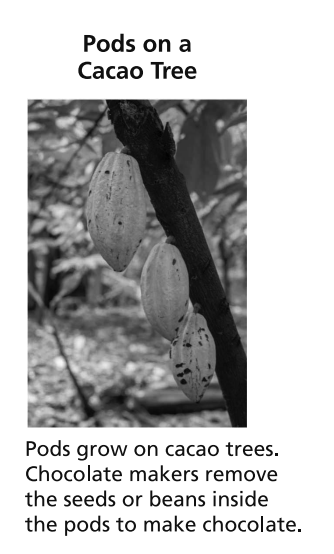
14 (2.) The beans are separated from the pods. Most cacao is farmed by small producers in remote parts of the world. Machines can damage cacao trees. Most of the work is done by hand.
15 (3.) The beans are fermented. Now the beans undergo a chemical process called fermentation. This brings out their chocolatey flavor.
16 (4.) The beans are dried. Often, farmers simply spread the beans on large trays. They dry in the sun. Once dry, the beans are packed into bags and shipped to chocolate manufacturers.
17 (5.) Chocolate is made. In manufacturing facilities, cocoa beans are roasted, heated, melted, and blended with sugar and milk. This takes away their naturally bitter flavor. Then the liquid chocolate is poured into molds and prepared for sale.
18 (6.) Enjoy! This is the moment you've been waiting for. Take a bite!
Required
1
What is a central idea of paragraphs 2 through 4?
Required
1
According to paragraphs 7 and 8, how are weather stations helping to save chocolate?
Required
1
What does the phrase “a sweet deal” mean as used in paragraph 9?
Required
1
How is the section “Making Candy” organized?
Required
1
How does the photograph after paragraph 14 best support an idea developed in the article?
Required
1
Many people enjoy eating chocolate. Which quote best supports this idea?
Directions: Read this article. Then answer questions 20 through 21.
Excerpt from Inside Anthills
by Henry Abbott
1 Ants are very social bugs. They live and work together in large colonies. Ant colonies are highly organized communities. Each ant helps the community survive.

2 The biggest ant colonies have millions of members. Ants have to build a home that's big enough for everyone. Often, the place with the most space is under the ground. Ant homes look simple from the outside, but there's more to them than meets the eye.
Ant Nest
3 Ant homes are called nests. You may hear people call them "anthills."
That's because the outside of a nest can look like a hill of dirt. The dirt comes from all the digging ants must do to build their nest.
4 Many ant nests are under the ground. Some kinds of ants build nests in trees. Ant nests can also be found under rocks and piles of leaves. Tiny ants can make nests inside acorns! No matter where it is, an ant nest has one job to do: to house the colony.
Tunnels and Chambers
5 Let's go inside an ant nest that's been built under the ground. The opening in the anthill is called the entrance. Ants use this as a doorway to get in and out of their home.
6 The inside of an ant nest is an organized network of tunnels and chambers. The tunnels are like hallways ants use to travel to different areas inside their nest. The tunnels empty into chambers. Chambers are much like the different rooms in a house.
Ant Architects
7 Ants are some of nature's greatest builders. It takes a lot of skill to plan such an organized home. They build their home by biting and digging.
8 Ants have two pairs of jaws. One pair helps them bite and carry. They bite off tiny bits of soil and carry them out of the nest. Over days and weeks, this creates a network of tunnels and chambers. Ants learn how to travel around their nest by following scent trails left by other ants....
Staying Safe
9 Ant nests give ants somewhere to live, store food, and grow their colony. They have one more important job-keeping ants safe.
10 Ants are food for many animals, such as anteaters. Anteaters use their sharp claws to tear apart nests. Then they use their long tongue to scoop up ants. An anteater's tongue may be long enough to reach 2 feet (0.6 m) inside the nest. Ants keep their queen, her eggs, and their food supplies safe by building those chambers deeper than predators can reach.

11 Ants protect their nest by attacking predators. All ants can bite, and some can sting. Some ants even spray chemicals to fight their enemies.
Required
2
This question is worth 2 credits.
In paragraph 2 of “Excerpt from Inside Anthills,” what does the phrase “more to them than meets the eye” mean? Use two details from the article to support your response.
This question is worth 2 credits.
In paragraph 2 of “Excerpt from Inside Anthills,” what does the phrase “more to them than meets the eye” mean? Use two details from the article to support your response.
Required
2
This question is worth 2 credits.
In “Excerpt from Inside Anthills,” what is a central idea of the section “Staying Safe”? Use two details from the article to support your response.
This question is worth 2 credits.
In “Excerpt from Inside Anthills,” what is a central idea of the section “Staying Safe”? Use two details from the article to support your response.
Directions: Read this poem. Then answer questions 22 through 23.
The Ants
by Joyce Sidman
The ants, the ants,
on tips of plants,
on sticks, on stones,
on ice cream cones;
beneath the ground
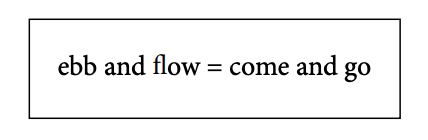
they ebb and flow,
precisely know,
who's friend, who's foe.
They dig, they climb,
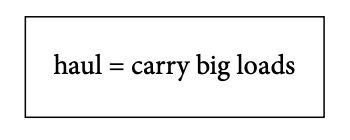
they drag, they haul,
(they never seem
to play at all).
At obstacles
thrown in their path
they laugh! (Well, really,
ants don't laugh:
they just speed up
their antlike flow
and find a different
way to go.)
But when a gang
attacks their nest?
They beat their legs
against their chests,
they snap their
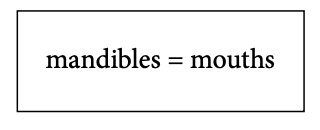
giant mandibles,
and drive them out
with great success.
And then, after
the fight has quit,
they go back home
to baby-sit.
Required
2
This question is worth 2 credits.
How does the structure of the poem “The Ants” help the reader understand the way the ants move? Use two details from the poem to support your response.
This question is worth 2 credits.
How does the structure of the poem “The Ants” help the reader understand the way the ants move? Use two details from the poem to support your response.
Required
4
This question is worth 4 credits.
In the article “Excerpt from Inside Anthills” and the poem “The Ants,” both the author and the poet describe ants. How are their descriptions of the ants similar? How are their descriptions of the ants different? Use details from both the article and the poem to support your response.
In your response, be sure to
- explain how the author’s and the poet’s descriptions of the ants are similar
- explain how the author’s and the poet’s descriptions of the ants are different
- use details from both the article and the poem to support your response
This question is worth 4 credits.
In the article “Excerpt from Inside Anthills” and the poem “The Ants,” both the author and the poet describe ants. How are their descriptions of the ants similar? How are their descriptions of the ants different? Use details from both the article and the poem to support your response.
In your response, be sure to
- explain how the author’s and the poet’s descriptions of the ants are similar
- explain how the author’s and the poet’s descriptions of the ants are different
- use details from both the article and the poem to support your response