1
Categorize each item below as either a solid, liquid, or gas.
Categorize each item below as either a solid, liquid, or gas.
flour
plastic cube
alcohol
sugar cube
helium
carbon dioxide
honey
dish soap
oxygen
Solid
Liquid
Gas
5.5.A
Categorize each item below as either a solid, liquid, or gas.
flour
plastic cube
alcohol
sugar cube
helium
carbon dioxide
honey
dish soap
oxygen
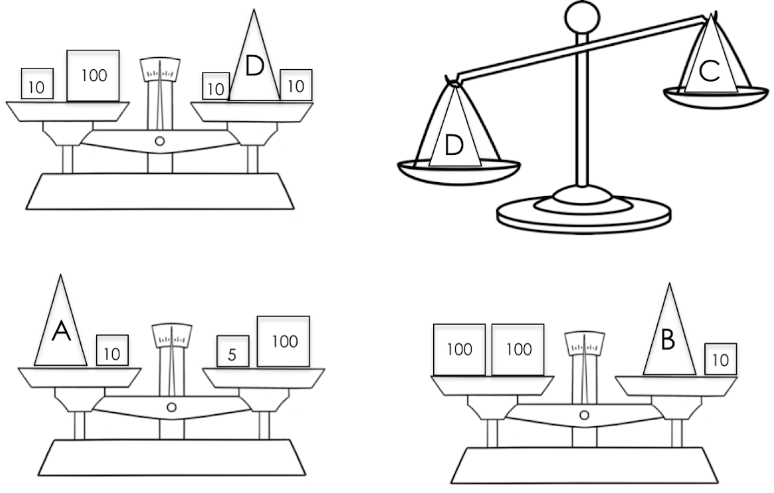
Objects are represented by letters A, B, C, & D. Put the objects in order from least to greatest mass (least on top). All amounts are shown in grams.
B
A
D
C
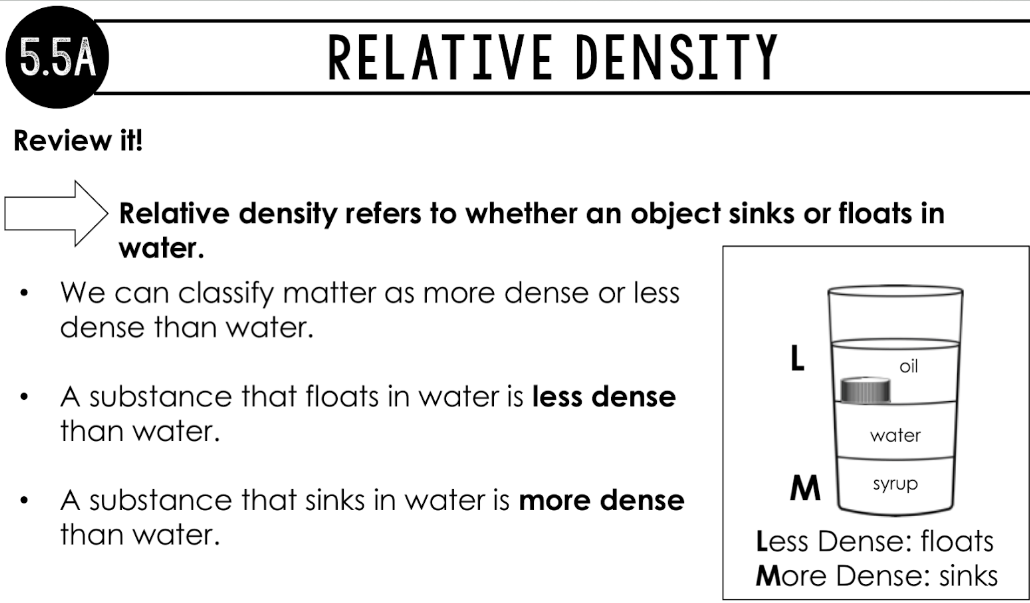
Categorize each item below as either less dense than water or more dense than water.
soap bubble
aluminum bolt
sand
syrup
brass key
plastic ball
wood chip
vegetable oil
Less Dense than Water
More Dense than Water
Categorize each item below as either Insoluble in Water or Soluble in Water.
vegetable oil
honey
glass lens
sand
feather
lemon juice
baking soda
drink mix
Insoluble in Water
Soluble in Water
Categorize each item below as either a Good Electrical Conductor (poor electrical insulator) or Poor Electrical Conductor (good electrical insulator).
brass key
cotton ball
aluminum washer
copper wire
cork
cardboard
iron needle
rubber ball
Good Electrical Conductor (poor electrical insulator)
Poor Electrical Conductor (good electrical insulator)
Categorize each item below as either a Good Thermal Conductor (poor thermal insulator) or Poor Thermal Conductor (good thermal insulator).
copper sheet
newspaper
steel spoon
nickel rod
wood lumber
air
cotton fabric
iron rod
Good Thermal Conductor (poor thermal insulator)
Poor Thermal Conductor (good thermal insulator)
Categorize each item below as either a Magnetic or Non-Magnetic.
copper
glass
steel
nickel
cobalt
iron
aluminum
cotton
Magnetic
Non-Magnetic
Complete the table using the substances in the bank below.
Students set up four beakers of water. They conducted an investigation in which they added a different substance to each of the four beakers and stirred for 2 minutes.

Complete the table using the objects from the term bank.

Complete the table using the headings from the term bank.


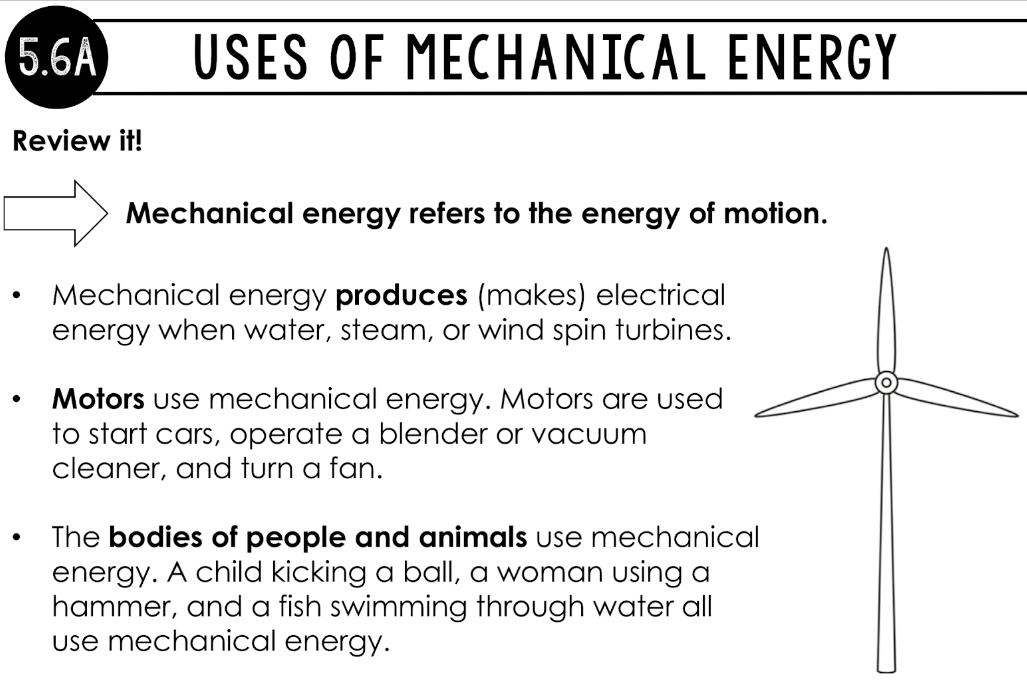
Decide if each item below uses mechanical energy or does NOT use mechanical energy.
An iron is moved across a shirt
A baseball player throws a ball
A wind turbine spins
A family paddles a kayak in the lake
Turbines in a hydroelectric dam spin as water flows through
A teacher charges his cell phone
A child pours milk into his glass
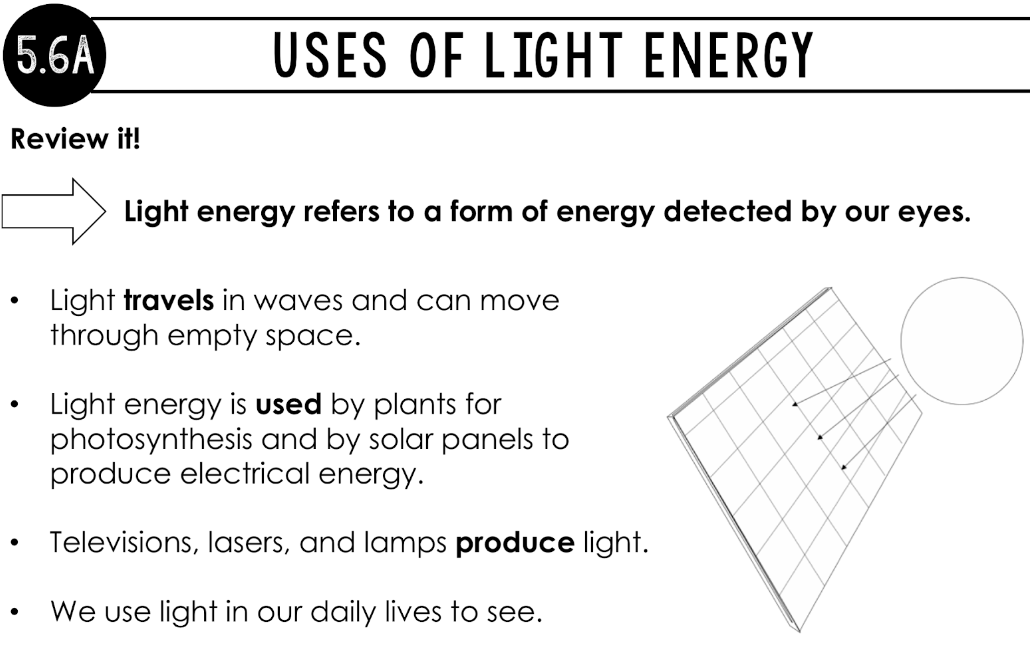
Solar panels absorb light from the sun
Fire melts a candle's wax
Uses Mechanical Energy
Does NOT use Mechanical Energy
Decide if each item below uses light energy or does NOT use light energy.
Solar panels absorb light from the sun
A siren alerts people that an ambulance is nearby
A child uses a small lamp to read a book
A laptop is plugged in to the wall
A teacher charges their cell phone
A traffic light signals when to stop and go
Fire melts a candle's wax
The motor in a hairdryer turns
A radish plant makes its food during photosynthesis
Uses Light Energy
Does NOT use Light Energy
Decide if each item below uses thermal energy or does NOT use thermal energy.
A woman boils some water to make tea
A teenager bakes cookies in the oven
Fire melts a candle's wax
The motor in a hairdryer turns
A traffic light tells us when to stop and go
A man uses an iron to straighten the wrinkles in his shirt
Heating gasoline powers a car
A campfire keeps campers warm
A laptop is plugged in
Uses Thermal Energy
Does NOT use Thermal Energy
Decide if each item below uses electrical energy or does NOT use electrical energy.
We plug the toaster into the wall
A campfire keeps campers warm
A laptop is plugged in
A student uses headphones to listen to music
A wind turbine spins
A man uses an iron to straighten the wrinkles in his shirt
The wheels of a bicycle turn
A teacher charges his cell phone
Fire melts a candle's wax
Uses Electrical Energy
Does NOT use Electrical Energy
Decide if each item below uses sound energy or does NOT use sound energy.
A bat uses echolocation as it flies to find its prey
The microwave beeps to signal that it is done
A siren alerts people that an ambulance is nearby
Flashing lights alert people that a police car is nearby
A man uses an iron to straighten the wrinkles in his shirt
A student answers a question aloud.
Students listen to a marching band
A campfire keeps campers warm
Students listen to a news report on the TV
Uses Sound Energy
Does NOT use Sound Energy

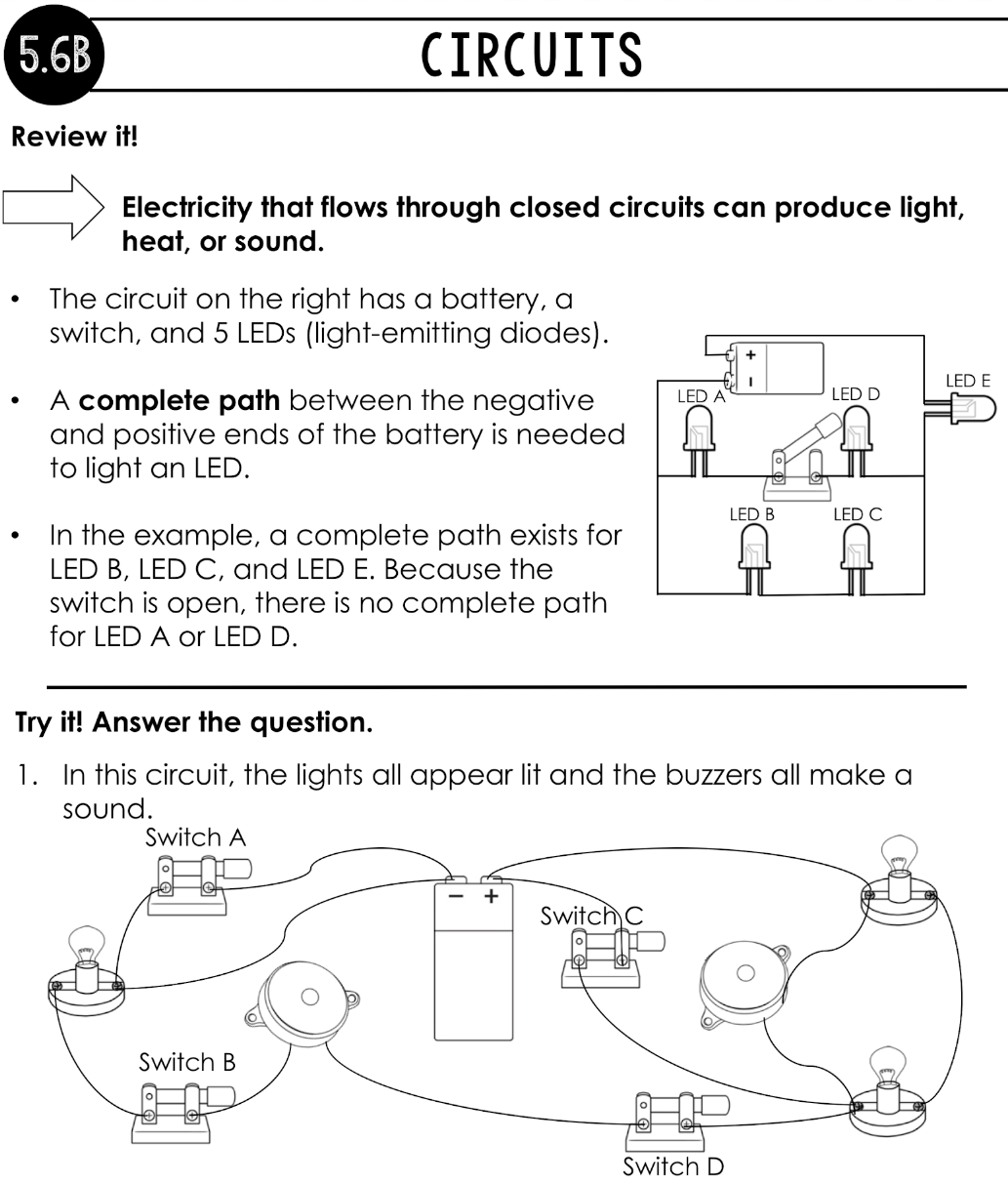
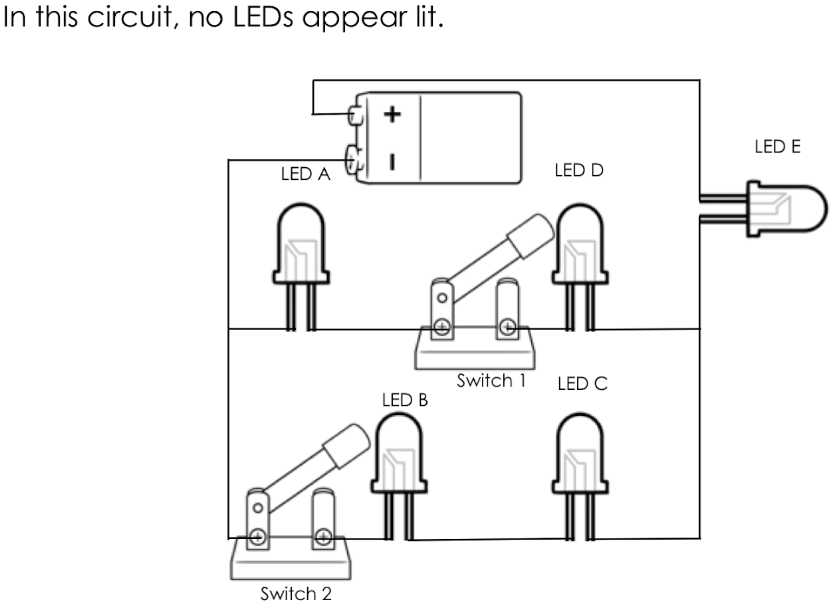
Which TWO switches can be opened and still allow all of the parts to operate?
Which LEDs would produce light if Switch 2 closed while Switch 1 remained open?
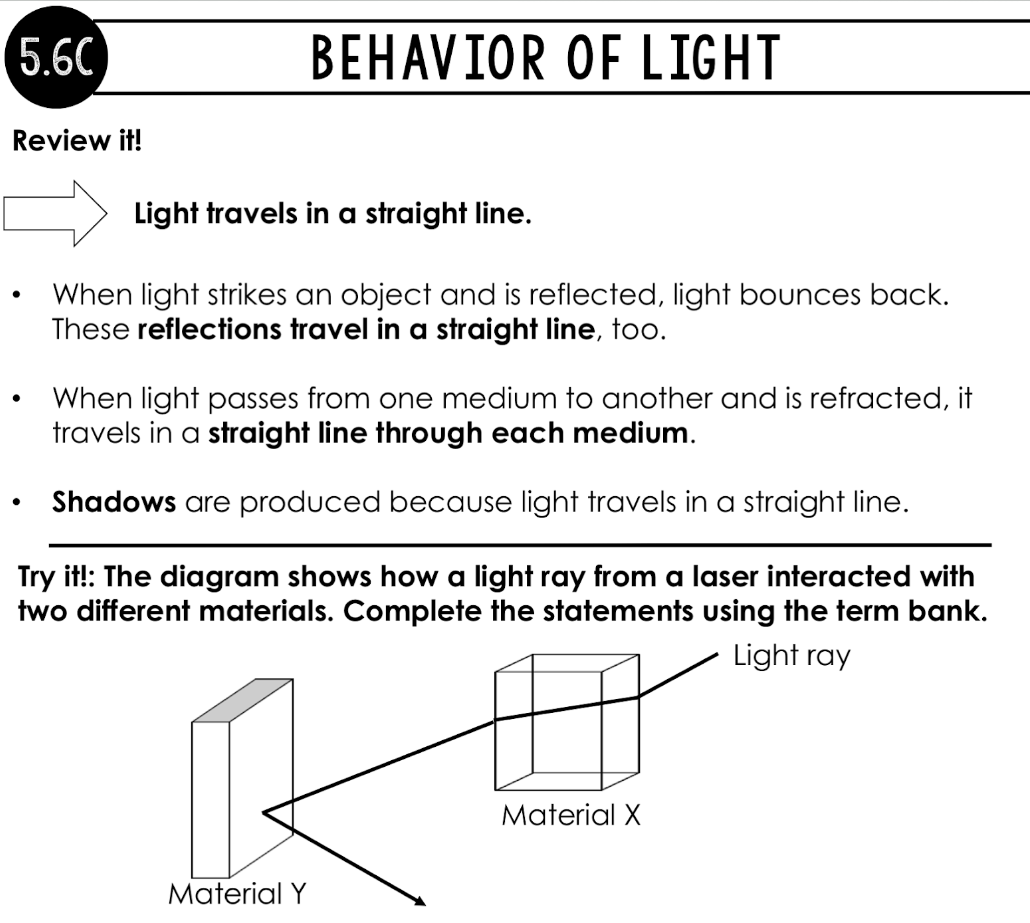
1. Material Y light as light off it.
2. Material X is . Material X light.
3. Even as the light ray reflected and refracted, light always in a line.
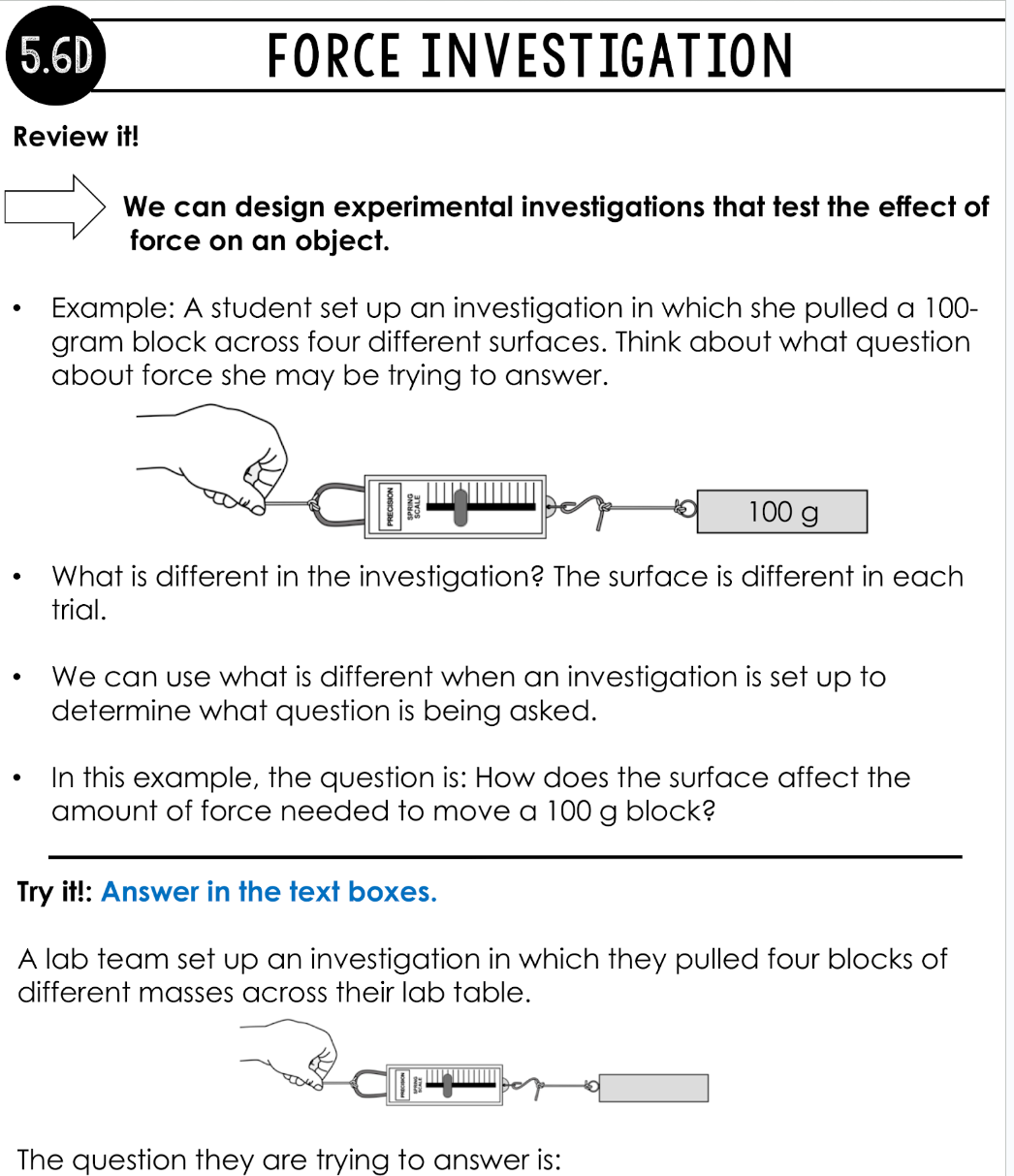
How does the affect the amount of force needed to move the block across the .

Fill in the blanks using the the Term Bank.
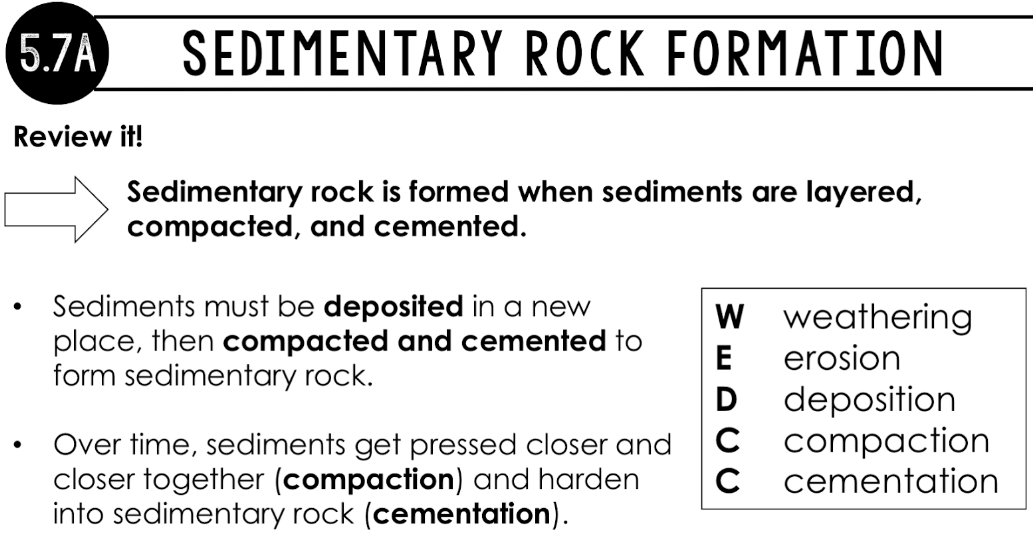
Rocks into sediments and are to a new place.
Sediments are in .
Pressure the sediments, packing the layers tight.
Sediments harden into sedimentary rock during .
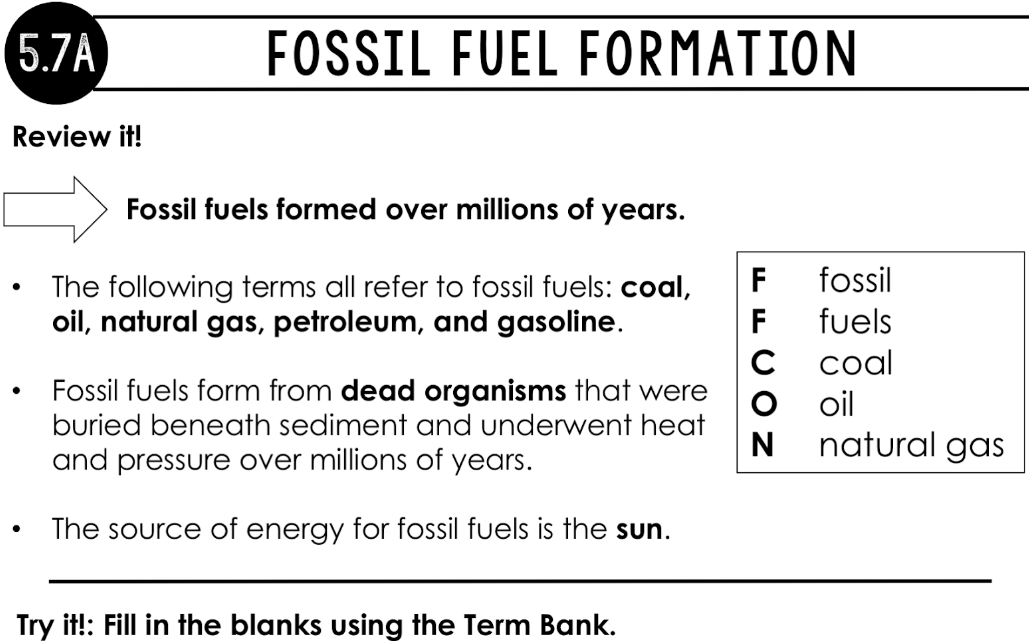
Plants received energy from the .
Plants died. plants fell to the bottom of the ocean.
The decaying organic material was buried under layers of .
Over of years, heat and changed the decaying matter into .
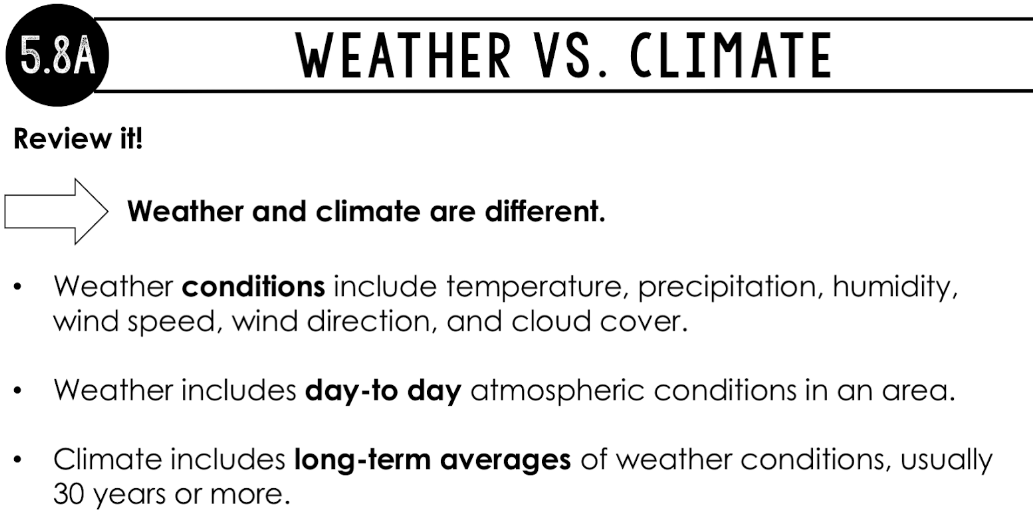
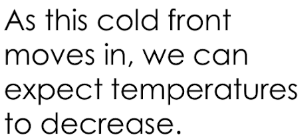
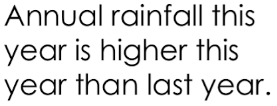
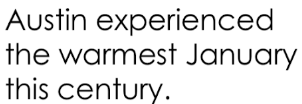
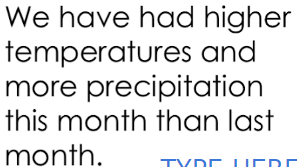
Decide if each item below is an example of climate or weather.
Climate
Weather


Which letter represents the area that the house's shadow would most likely appear at 8:00 AM?


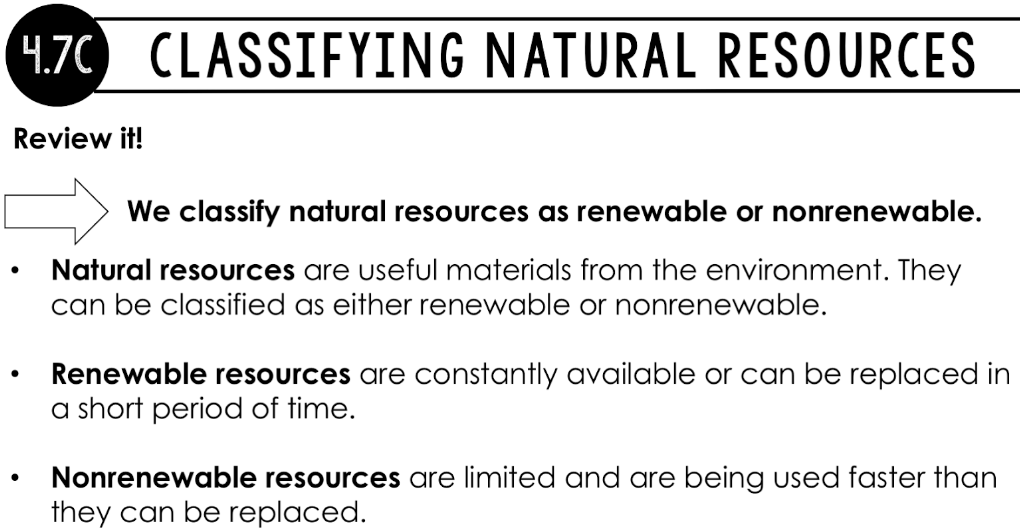
Sort the items below as either Renewable Resources or Nonrenewable Resources.
fish
wood
corn
wind
petroleum
water
coal
natural gas
minerals
gasoline
Renewable Resources
Nonrenewable Resources
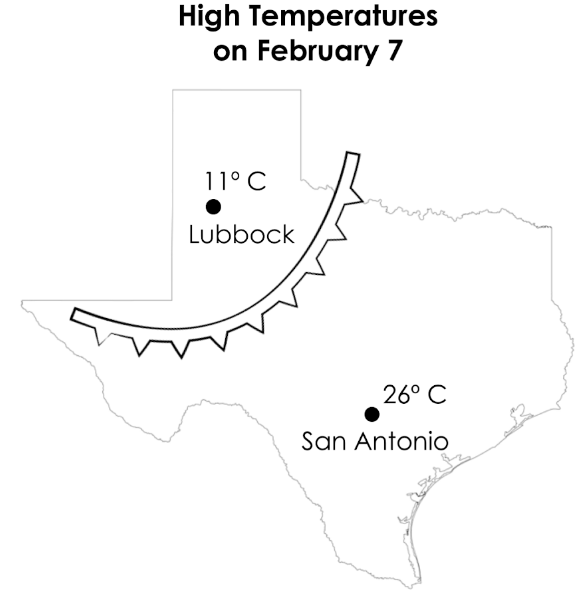
Which temperature would you most likely predict in San Antonio on February 9?

Which LEDs would produce light if Switch 1 closed while Switch 2 remained open?