Log in
Sign up for FREE
arrow_back
Library
Food Webs Vocab Task Cards
By NICHOLAS GLAESER
star
star
star
star
star
Share
share
Last updated 9 months ago
20 questions
Add this activity
1
5.12.B
1
5.12.B
1
5.12.B
1
5.12.B
1
5.12.B
1
5.12.B
1
5.12.B
1
5.12.B
1
5.12.B
1
5.12.B
1
5.12.B
1
5.12.B
1
5.12.B
1
5.12.B
1
5.12.B
1
5.12.B
1
5.12.B
1
5.12.B
1
5.12.B
1
5.12.B
Question 1
1.
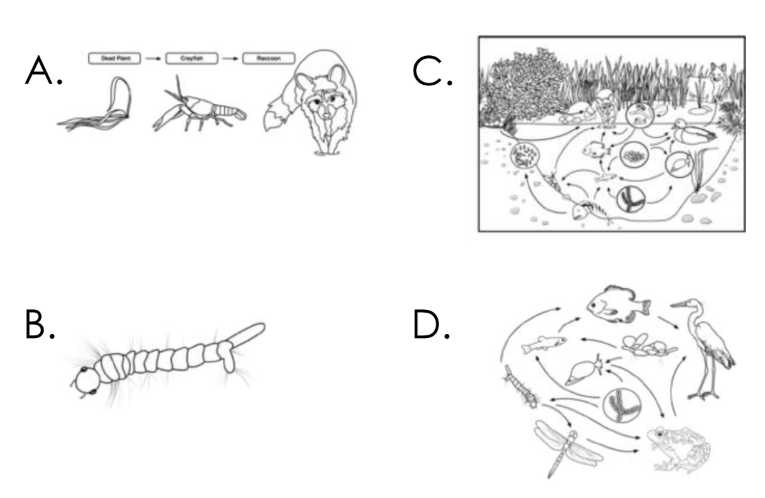
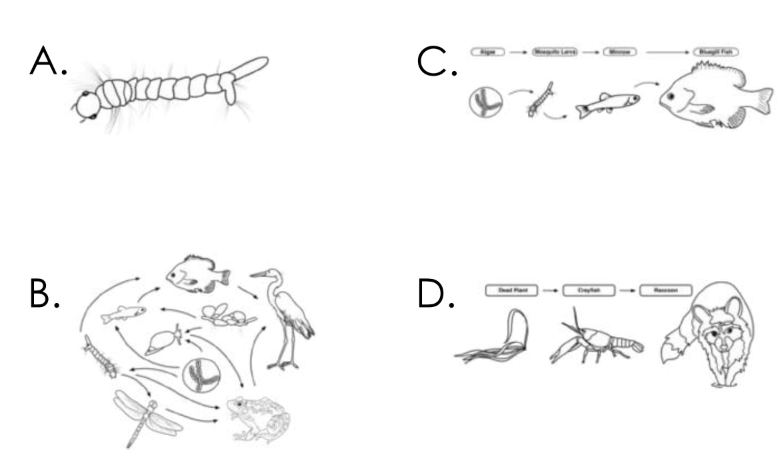
Which image best represents a food web?
Question 2
2.
Which image shows a food chain?
Question 3
3.
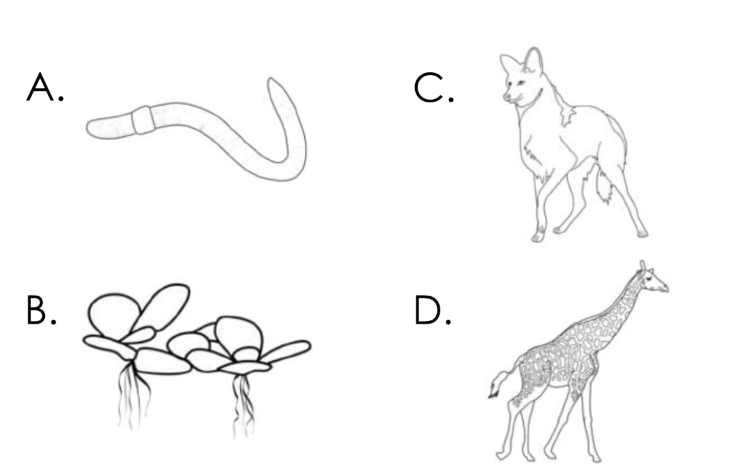
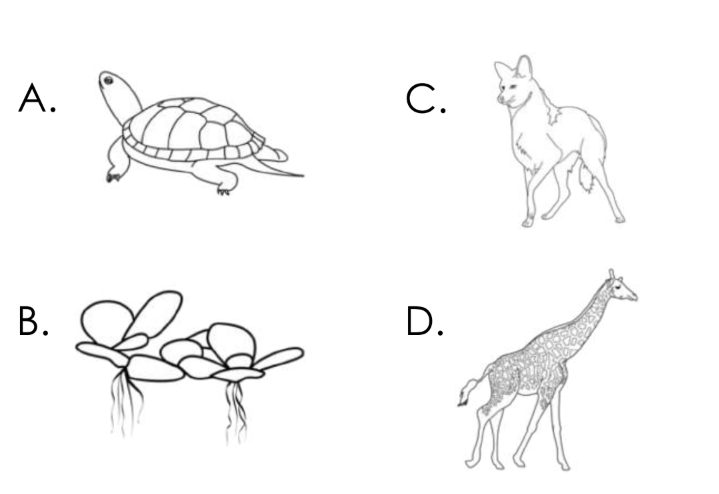
Which image shows a carnivore?
Question 4
4.
Which image shows a producer?
Question 5
5.
Which of the following is an example of an herbivore?
Earthworm
Giraffe
Oak Tree
Fox
Question 6
6.
Which of the following is an example of a decomposer?
Oak Tree
Giraffe
Earthworm
Fox
Question 7
7.
Which list includes only producers?
Soil, water, and carbon dioxide
Algae, phytoplankton, and mushrooms
Bearberry shrubs, bacteria, and grass
Mangrove trees, saguaro cacti, and phytoplankton
Question 8
8.
Which of the following do NOT break down decaying organisms and returns nutrients to the soil?
Earthworms
Fungi
Bacteria
Anaconda
Question 9
9.
What is energy?
The movement of energy from one place to another
The ability to do work or cause change
All the living and nonliving things that interact in an area
The process used by plants to make their own energy
Question 10
10.
What is photosynthesis?
The process used by plants to make their own energy
The movement of energy from one place to another
All the living and nonliving things that interact in an area
The ability to do work or cause change
Question 11
11.
What is a transfer within a food web?
The ability to do work or cause change
The process used by plants to make their own energy
The movement of energy from one living thing to another
All the living and nonliving things that interact in an area
Question 12
12.
What is an ecosystem?
The movement of energy from one place to another
All the living and nonliving things that interact in an area
The ability to do work or cause change
The process used by plants to make their own energy
Question 13
13.
What is the difference between a predator and a scavenger?
All predators are omnivores while scavengers are not.
Predators kill their own food while scavengers consume animals that have already died.
Scavengers kill their own food while predators consume animals that have already died.
All scavengers are omnivores while predators are not.
Question 14
14.
What is the difference between an omnivore and a carnivore?
An omnivore eats only meat while a carnivore eats both meat and plants.
An omnivore hunts prey while a carnivore animals that have already died.
A carnivore eats only meat while an omnivore eats both meat and plants.
A carnivore hunts prey while an omnivore eats animals that have already died.
Question 15
15.
How are omnivores and carnivores similar?
Both are producers.
Both are consumers.
Both are scavengers.
Both are decomposers.
Question 16
16.
Carnivores, omnivores, and herbivores are all types of –
food chains.
decomposers.
producers.
consumers.
Question 17
17.
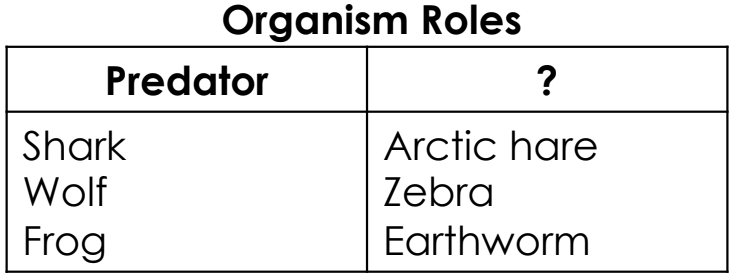
Which term belongs in the blank?
Omnivores
Carnivores
Prey
Producers
Question 18
18.
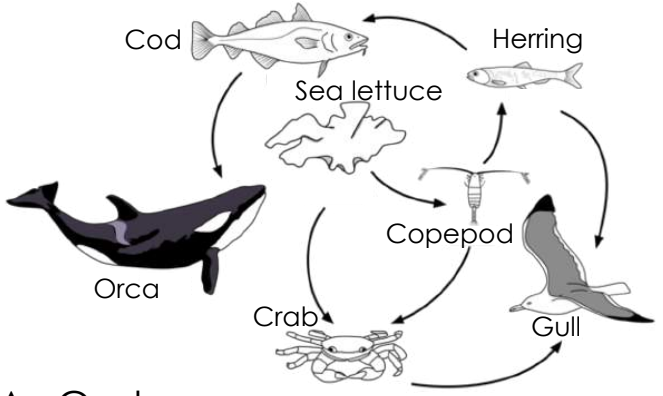
Which of the following is a producer in this food web?
Orca
Copepod
Cod
Sea lettuce
Question 19
19.
Which of the following lists common decomposers?
Wolf, shark, lion
Squirrel, chipmunk, raccoon
Mushrooms, earthworms, mold
Dragonfly, mosquito, ladybug
Question 20
20.
Which of the following is an omnivore in this food web?
Sea lettuce
Herring
Crab
Gull