Digital Inquiry - How does humans’ use and disposal of plastic Impact ocean Life?
star
star
star
star
star
Last updated 7 months ago
9 questions
ARTICLE: KIDS VS. PLASTICS
Plastic Pollution
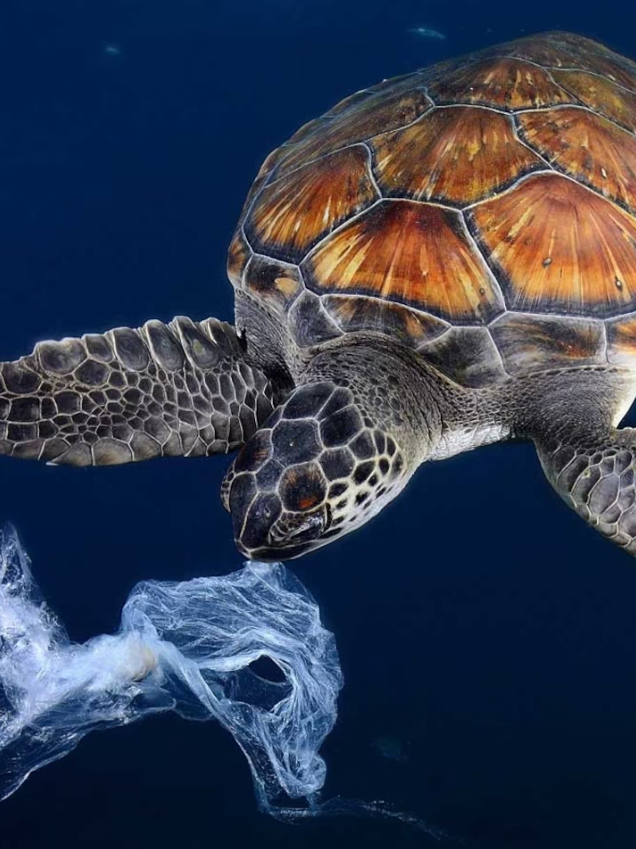
A sea turtle swims through the water and spots a white blob floating near the surface. “Yum!” it thinks. “A jellyfish!” Chasing after its dinner, the turtle swallows the item. But the floating blob isn’t a jelly—it’s a plastic bag that could make the sea turtle sick.
This sea creature isn’t alone: Over 700 species of marine animals have been reported to have eaten or been entangled in plastic. Scientists think that the amount of plastic in the ocean might triple by 2050—and that would mean seriously bad news for the ocean and the creatures that live there. But by understanding the issue and taking action, you can help stop that from happening.
What's the problem with plastic?
First, let’s get real: Not all plastic is bad. Bike helmets, car airbags, and many medical supplies made with plastic save lives. Plastic water bottles can bring clean drinking water to people who don’t have it, and plastic straws can help people with disabilities drink.
The problem is that most of us use and then toss way more plastic than we need: things like grocery bags, drink bottles, straws, food wrappers, and plastic packaging around toys. This kind of plastic that’s used only once before being thrown away is called single-use plastic, and it makes up more than 40 percent of all plastic trash.
Where does the plastic go?
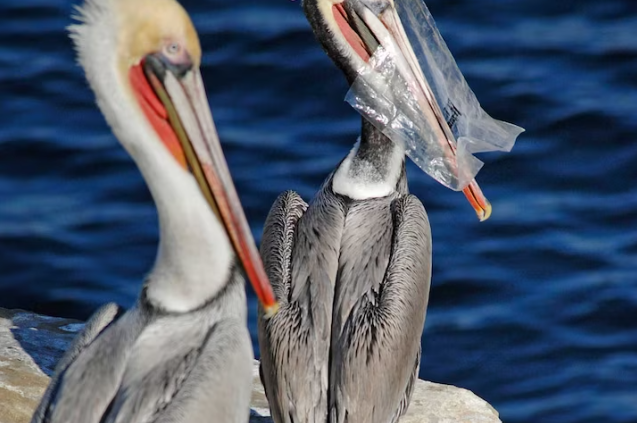
That’s a lot of trash. Scientists think that 8.8 million tons of plastic winds up in the ocean every year—that’s as if you stacked up five plastic grocery bags full of trash on top of each other on every foot of coastline in the world.
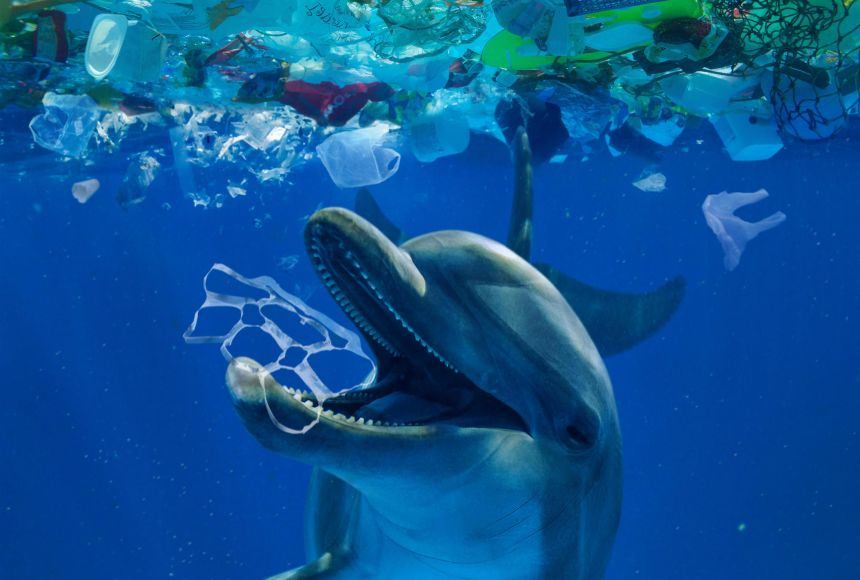
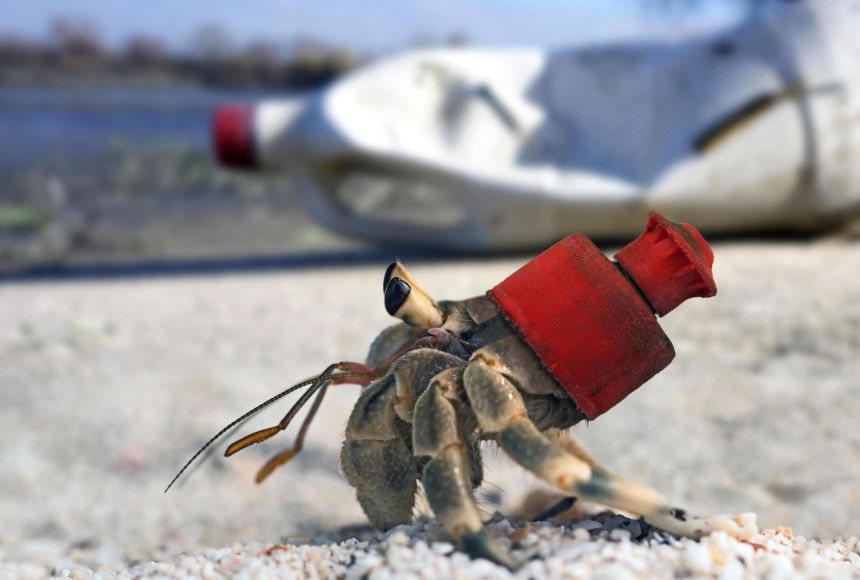
How does it get into the sea? Plastic left on the ground as litter often blows into creeks and rivers, eventually ending up in the ocean. And because plastic trash is different from other types of waste—it doesn’t decompose back into nature like an apple core or a piece of paper—it stays in the ocean forever. That means discarded fishing nets and six-pack rings can entangle animals; harmful straws and grocery bags can be mistaken as food.
What can we do about it?
You can do so much to help keep Earth clean! You can look at how much single-use plastic your family uses by filling out a plastic journal for a week—then talking about what you can do to use less.
1
What is the term for plastic that is only used once before it is thrown away?
1
How do some ocean animals interact with plastic?
VIDEO:
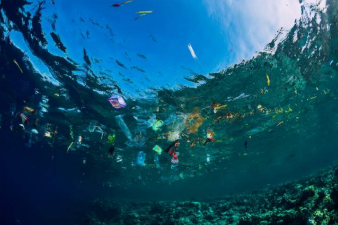
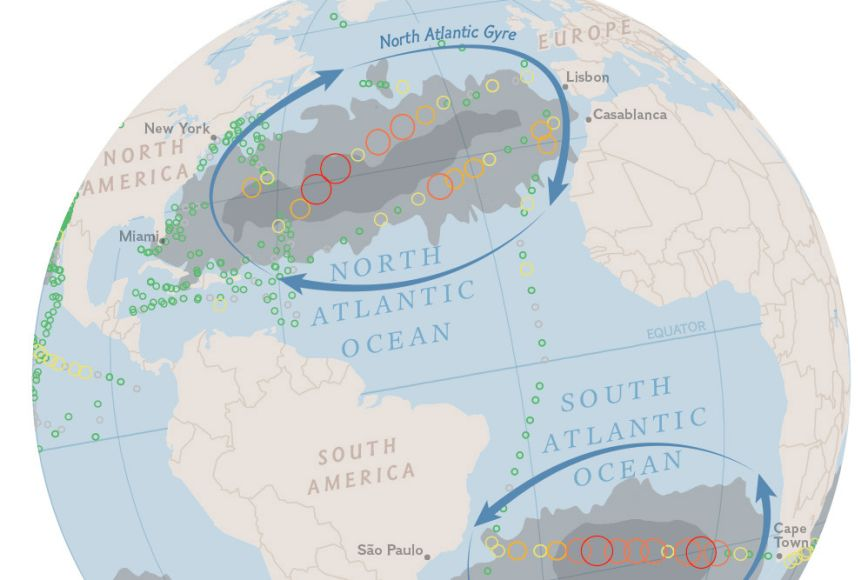
While people have a choice about swimming in an ocean, marine animals don't. When an area of the ocean acquires a lot of trash, animals in that habitat can become injured or die. Marine debris can also harm habitats, people, and even the economy.
1
How does plastic affect some animals?
1
How does plastic affect coral reefs?
TEXT: THE GREAT PACIFIC GARBAGE PATCH
READ
The Great Pacific Garbage Patch is a huge collection of waste, much of it plastic, out in the Pacific Ocean. Ocean creatures can be hurt or killed by becoming tangled in the waste. A plastic bag can look very much like a jellyfish. When creatures eat plastic, it fills the space in their stomachs that should be for food. Plastic doesn’t decompose. It stays forever. People are trying to create ways to remove the waste from the ocean to protect marine life.
Some waste plastic is a small problem – in fact, very tiny. Microplastics, sand-grain sized pieces, are a real problem for marine life. The toxic chemicals in the tiny bits of plastic can poison fish. Some microplastic is used in industry and skin scrubs. Large plastics can break down into these tiny particles. Imagine the whole Great Pacific Garbage Patch turned into microplastics! Scientists are searching for ways to prevent further harm to ocean creatures and humans who eat them.
1
What are microplastics?
1
How do microplastics affect animals?
VIDEO: THE REALITY OF PLASTICS
Click the link to watch a video about environmental issues related to plastics and how people are trying to solve them.
This video and the accompanying activities were produced by KQED as part of the Engineering for Good unit. This unit was designed to help teachers integrate engineering into their science classroom with a fun meaningful hands-on project. The unit provides support for teachers to guide students through the engineering design process to develop solutions to a real-world problem. Engineering for Good is focused on developing solutions for impacts of plastics on the environment, though the specific problem the students tackle is defined by them.
1
What are 3 effects of non-recycled plastics on the ocean?
ARTICLE: OCEAN TRASH
Ocean Trash: 5.25 Trillion Pieces and Counting, but Big Questions Remain
Big questions remain. The numbers add up to trouble for the oceans, wildlife, and us, but scientists are struggling to understand how. The numbers are staggering: There are 5.25 trillion pieces of plastic debris in the ocean. Of that mass, 269,000 tons float on the surface, while some four billion plastic microfibers per square kilometer litter the deep sea.
The ocean is filling up with plastic garbage. Some is floating on the ocean's surface. The rest is underwater.
Marcus Eriksen is an ocean scientist. He calculated that there are 5.25 trillion pieces of plastic floating on the sea surface. It all adds up to 269,000 tons. That is heavier than 11 Statues of Liberty. Many scientists think there is even more than that.
Birds and sea animals are getting caught in plastic rings and nets. Fish are swallowing small pieces. Plastics are full of poisons.
Things are not good underwater either. Eriksen said plastic gathers together in big clumps on top of the water. Then, it slowly breaks down. As it breaks apart, tiny pieces fall into deeper water. These pieces are called microplastics. Many are so small they can't be seen without a microscope. Water currents carry them all across the planet.
Sort Out The Rubbish
Why does so much plastic end up in the ocean? Most of the world's plastic is quickly thrown away. Around a third is thrown away after being used just once.
Scientist Peter Ryan knows the problem is very serious. Still, he believes it can be solved. We just have to get better at handling our garbage, he said.
Ryan has been tracking plastic garbage for 30 years. He began by studying seabirds. "The birds were eating floating plastic pellets. At the time, the little plastic balls were found often in ocean water. Since then, things have gotten better. Today, ships are much more careful about not spilling the pellets. If you go to the beach today, it's hard to find even one pellet," Ryan said.
So, some things have gotten better. Yet, other things have gotten worse. There are now many more microplastics in the ocean. Scientists are worried about this. They are not sure what these plastics are doing to fish and other sea animals. They don't know how harmful the poisons in plastic are.
Emily Penn sails a boat called the Sea Dragon. It is used by scientists to track ocean garbage. Penn is still shocked by how much they find. "The ocean looks like it is clear blue water," she said. Then, the scientists drop a net into the water. When they pull it up, Penn said, thousands of pieces of plastic come with it.
1
What did the scientist observe seabirds doing with plastic pellets? How has that changed over time?
7
Humans use plastic to produce many things. Plastics that are _______________ like water bottles and food wrappers make up about 40% of all plastic trash. Single-use plastics can be recycled or put in landfills, but sometimes they end up in the __________.
Unlike like paper and food scraps, plastic does not ______________. It remains in the ocean unless someone removes it.
Ocean life is impacted by plastic. Marine species can get ____________ in plastic and ____________ plastics they mistake for food. Sea turtles mistake plastic bags for ______________and accidentally eat them. Small, grain-sized pieces of plastic called __________________ contain poisons that can be harmful to animals.
Humans are engineering alternatives to traditional plastic materials.
Other Answer Choices:
jellyfish
single-use
decompose
tangled
microplastics
ocean
consume