Mutual Funds
Pros and Cons of Investing in Mutual Funds - Smart Asset
What are Mutual Funds and How to Invest in Them? - Investopedia
Index Funds:
What Is An Index Fund And How Does It Work? - Rocket HQ
Investing in Index Funds: What You Need to Know - Investopedia
ETF's
ETFs vs. mutual funds: Cost comparison - Fidelity
Exchange-Traded Funds - The Balance
Exchange-Traded Fund (ETF): How to Invest and What It Is - Investopedia
TDF's
Target-Date Funds - Nerdwallet
What Is a Target-Date Fund (TDF)? - Investopedia
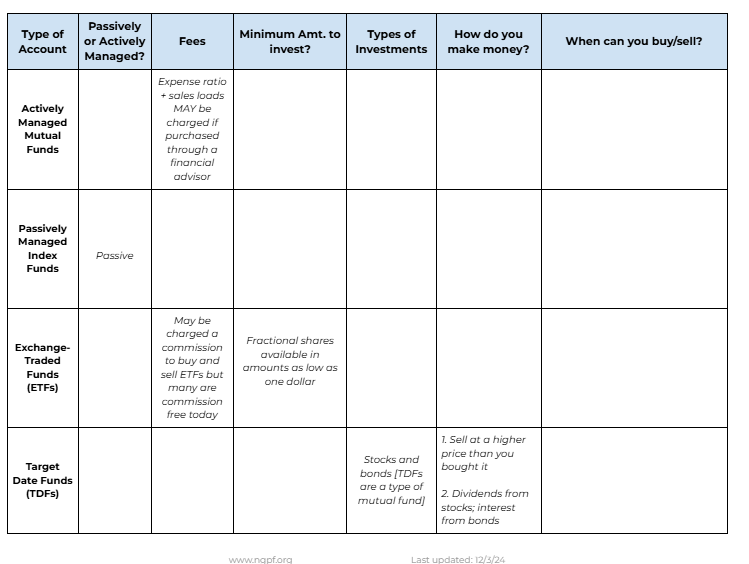
Part II: Which Investment Am I?
Match each description with its investment fund from the word bank below.
Part II: Which Investment Am I?
Match each description with its investment fund from the word bank below.
| Draggable item | arrow_right_alt | Corresponding Item |
|---|---|---|
TDF | arrow_right_alt | I am actively managed and usually come with higher fees. |
Mutual Fund | arrow_right_alt | I am passively managed and usually come with lower fees. |
Index Fund | arrow_right_alt | I can be bought and sold throughout the day. |
ETF | arrow_right_alt | I am best for beginner investors who want to build their retirement fund. I don't require a lot of work as an investor and am often referred to as a set-it-and-forget-it fund. |