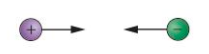
This diagram shows that opposite charges
This diagram shows that opposite charges
The number of electrons on the surface of an object can make it have a negative charge or a positive charge. If the surface has more electrons, the object is negatively charged (-). If the surface has fewer electrons, it has a positive charge (+). A negative charge can build up on an object when electrons move to it from another object. This build up of electric charge on an object is called ________________ ___________________ .
Which is negatively charged?
This diagram shows that opposite charges

Look! The baby's hair is standing! This is probably caused by
Explain how hair becomes charged.
Please put the sentences in the correct order.
The balloon is rubbed on hair.
Electric charge moves onto the balloon.
The hairs repel each other.
But the hairs are attracted to the balloon.
The hairs are left with the less charge than before.
Electric charge moves from the hair.
(Optional) Write a paragraph about how lightning is formed.
When a balloon is rubbed on your hair, electrons move from the hair to the balloon. Which of the following are true? Select all correct answers.
When a balloon is rubbed on your hair, electrons move from the hair to the balloon. You notice your hair stands straight up. Which of the following best explains this phenomenon?
Match the following terms with their definitions
| Draggable item | arrow_right_alt | Corresponding Item |
|---|---|---|
repel | arrow_right_alt | Electrical charge that is not moving |
static electricity | arrow_right_alt | Electrical charge that is moving |
electric current | arrow_right_alt | no charge |
attract | arrow_right_alt | smallest piece of a chemical element |
neutral | arrow_right_alt | bring together |
atom | arrow_right_alt | push away |
What are the units used to measure electric current?
Without moving the balloon what can be observed in common (equal) of the objects?
When moving the balloon without touching the shirt, what can be observed that happens?
By rubbing the balloon over the shirt, what can be seen to happen to the charges?
After rubbing the balloon on the shirt, what can be observed that happens when the balloon approaches the wall?
After rubbing the balloon on the shirt, what can be observed when the balloon is placed between the shirt and the wall?
When two objects, each have the same quantity of positive and negative charges, the objects:
What type of charges it can move from one object to another
What type of charges can NOT be moved from one object to another

Choose the best word to fill in the blank.
Choose the best word to fill in the blank.
Use the picture above the page to answer the question.
Use the picture above the page to answer the question.