P6.1 Conductors and Insulators
star
star
star
star
star
Sidst opdateret about 1 month ago
22 Spørgsmål
1
1
0
8
30
1
1
1
1
1
1
1
1
1
1
1
1
1
1
1
1
1
What is the name of the store of energy in a battery?
What subatomic particle has a negative charge?
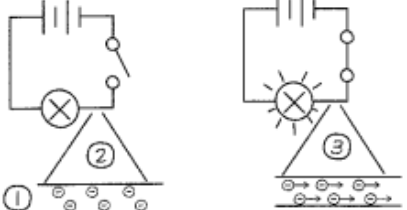
If we have a circuit with a battery and a bulb, the bulb lights up. The bulb receives energy from the battery. The circuit is designed to transfer energy from the battery to the bulb.
This is true of any electrical circuit no matter what component is involved. The fan needs energy to work, so energy is transferred from the battery to the fan through the wires.
Circuits are really useful because we can transfer energy easily between one place and another. Wires are flexible and small, and there they can be made to be really long.
A circuit without battery, or connected to the mains, cannot transfer energy - there is no energy store to take from,.
Identify which items below made the light bulb light up (conductor) and which did not (insulator).
Dog
Eraser
Paper clip
Coin
Dollar bill
Pencil
Wire
Hand
Conductor
Insulator
Pencils are made out of a graphite center (the "lead") and a wooden exterior. Think about how brightly the bulb lit up when you tested the pencil. In 3-5 complete sentences, explain what happened and what the reasoning for that could be. Answers less than 3 complete sentences will receive 0 points.
Any material that allows heat and electricity to flow through it easily
A material that transfers thermal energy or electric current poorly
Wood, plastic, rubber, air, or fabric
All are good of electricity.
Most non metals are poor of electricity. A poor electrical conductor is called an .
Conductors allow electrons to flow through them easily. is a good conductor but it is expensive to use for wires so we use in electrical wires.
s do not allow electric current through them easily.
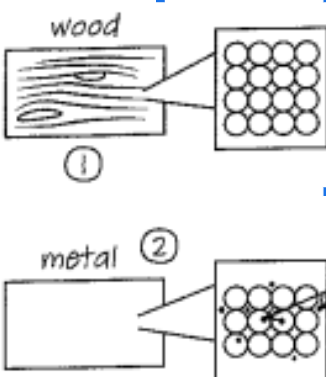
Looking inside wood and metal they are both solids, but metals have electrons aren't attached. We call them delocalised electrons. What kind of material is a metal if it allows electrons through it?
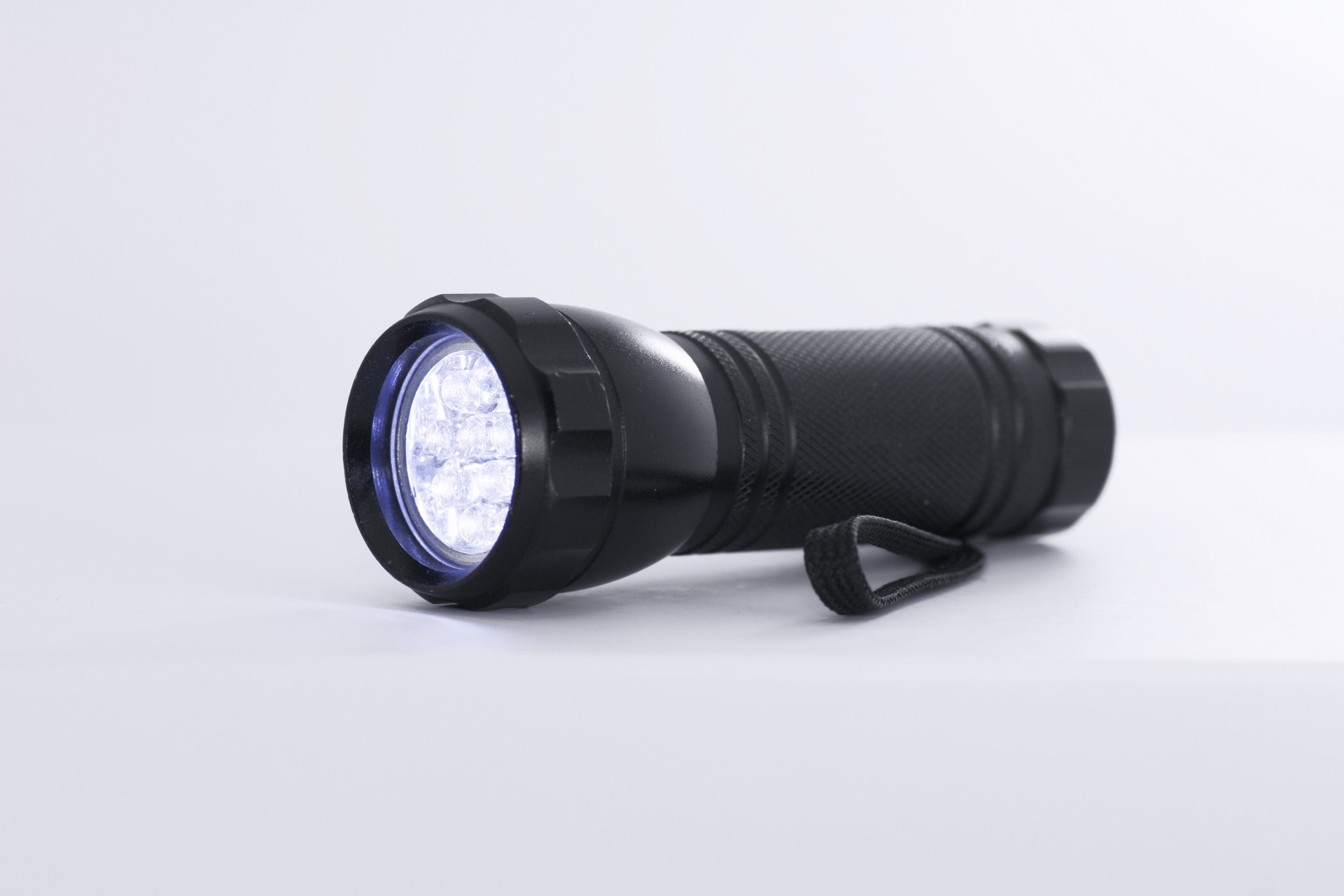
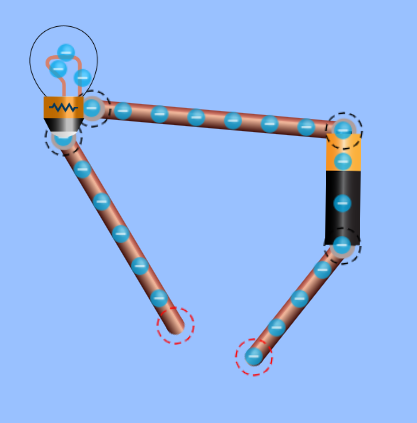
Some people say that ‘the electrons come from the battery’ but this is wrong. There are billions of electrons in a wire, far too many to count. This is true whether the circuit is small like for a torch or a giant circuit like a floodlight.
Each electron is a circuit has a property called charge. Charge is just a property that some subatomic particles have. It is hard to say what charge actually is because it is to do with things that are extremely tiny. For electrons flowing in a circuit, we measure the charge in Coulombs, which is shortened to C.
Circuits like the torch will have a charge of around 1 C passing through every second.
A circuit like the floodlight this will have a charge of around 10C passing through it every second.
Therefore we can use charge to get a sense of how many electrons have passed through. The torch has fewer electrons passing through, so less charge passes through. The floodlight has more electrons passing through, so more charge passes through.
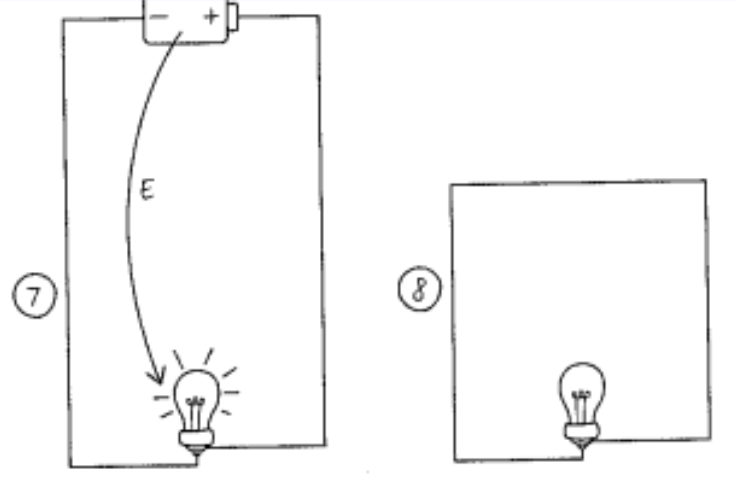
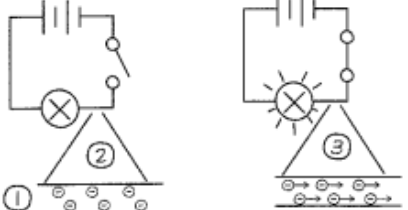
Which circuit is complete?
How many milliamps are in 2 amps? Number only, no units
What is 0.5 amps in milliamps? Number only, no units
Convert 3 amps to milliamps. Number only, no units
If you have 1.5 amps, how many milliamps is that? Number only, no units
If 30 coulombs of charge flow in 5 seconds, what is the current in amperes? Please include the name of the unit
A charge of 12 coulombs passes through a conductor in 4 seconds. What is the current? Please include the name of the unit
What is the current if 45 coulombs of charge move in 15 seconds? Please include the name of the unit
A circuit transfers 45C of charge in 38 seconds. Calculate the current in the circuit. Please include the name of the unit.
Calculate the current in a circuit that delivers 490C of charge in two minutes. Please include the name of units
What is the unit for current?
The path that electricity can move through is called a