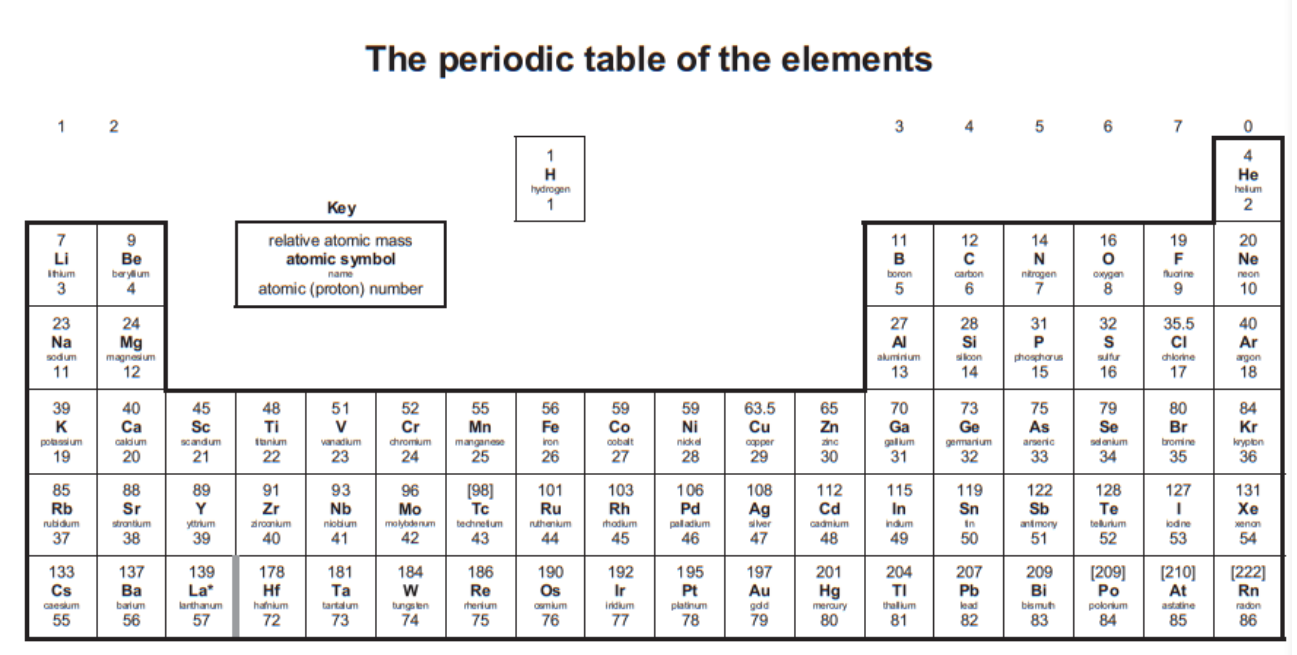
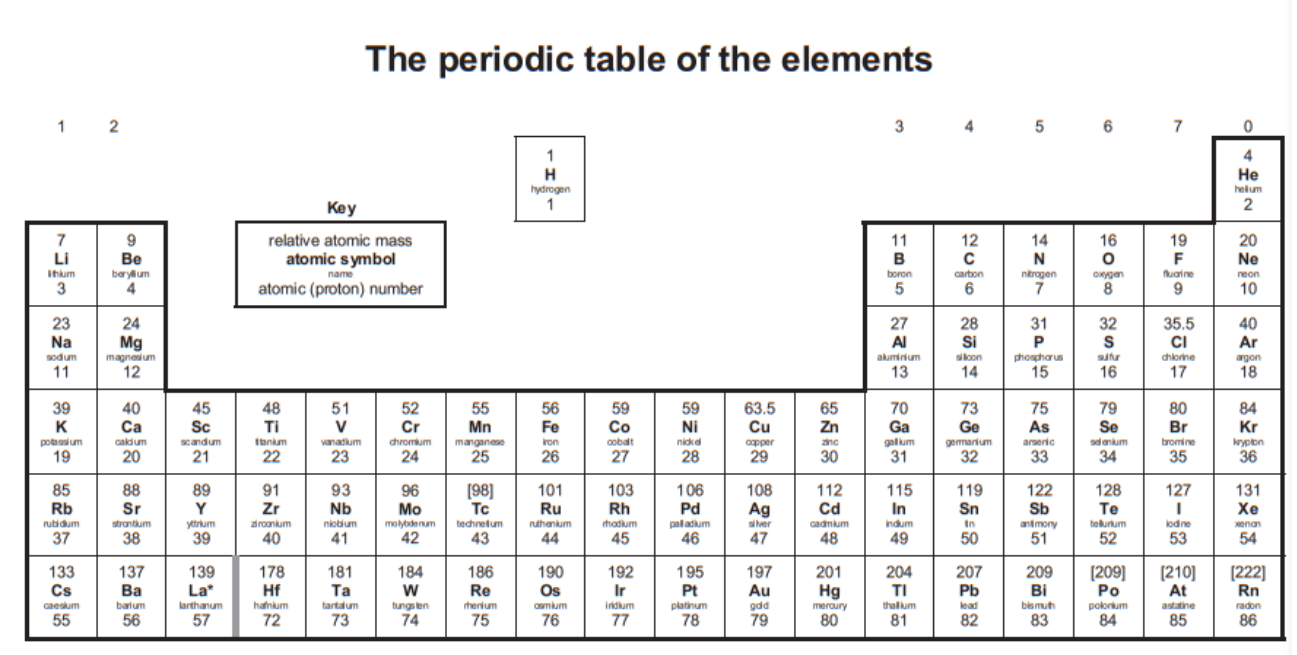
What is the symbol for the element with atomic number 8?
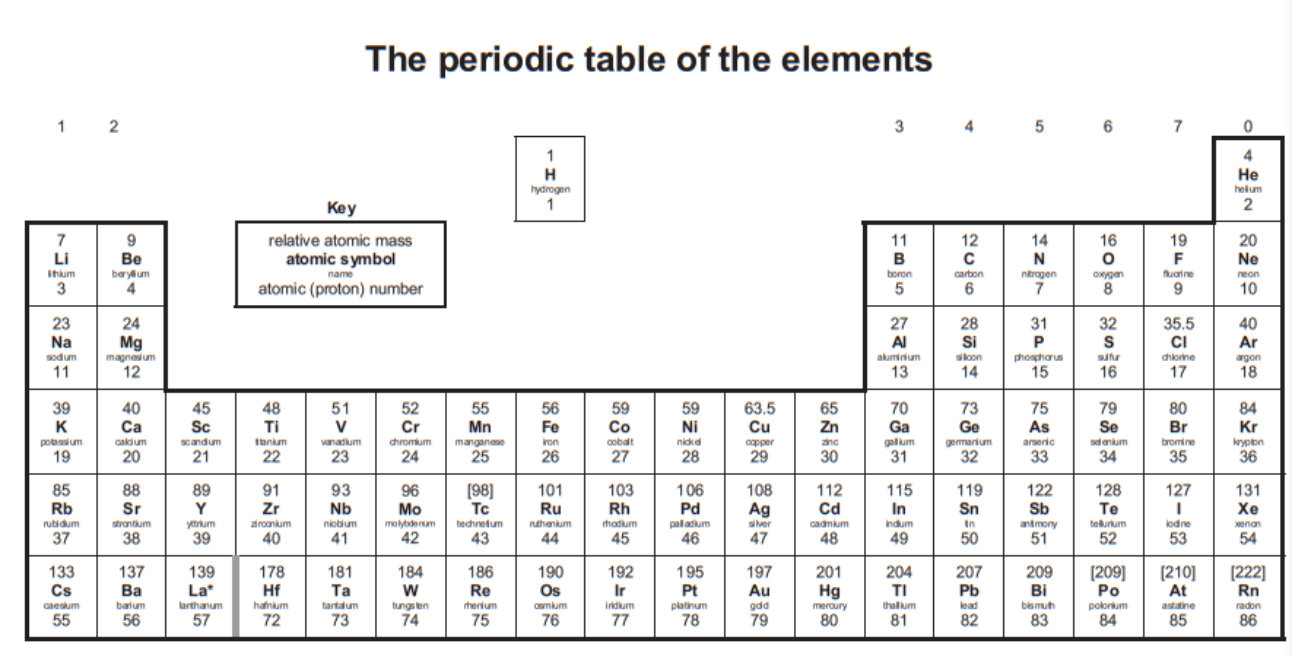
What is the symbol for the element with atomic number 8?
Which of the following statements is TRUE?
Which of these elements is a liquid at room temperature?
Which of the following is a compound?
What is the name of the compound formed when sodium (Na) and chlorine (Cl) chemically combine?
What does the prefix "di-" mean in the name of a compound molecule containing oxygen?
Imagine a beaker containing only oxygen molecules (O2). What type of substance is in the beaker?
Which of the following is the fundamental building block of all matter?
By chemical means, atoms are considered to be the:
Which of the following best describes a substance made up of only one type of atom?
How are elements primarily organized on the modern periodic table?
What do the vertical columns on the periodic table represent?
Where are the non-metal elements located on the periodic table?
In general, where are the metallic elements located on the periodic table?
What is the symbol for the element with atomic number 8?
Which of the following is the name of the element with the symbol 'Ca'?
Which of these elements is a gas at room temperature?
which element is a liquid at room temperature?
What is the chemical symbol for lead?
The "staircase" line on the periodic table primarily separates:
Which of the following is a typical property of metals?
Which of the following is a typical property of non-metals?
An element is shiny, conducts electricity well, and can be bent easily. This element is most likely a:
What is formed when two or more different elements are chemically joined together?
When iron filings and sulfur powder are heated strongly together, they:
Why can a mixture of sand and water be separated by filtration, but the hydrogen and oxygen in water cannot?
What is the name of the compound formed between magnesium (Mg) and bromine (Br)?
What is the name of the compound with the formula Na2SO4?
Following the rules for naming simple compounds, what would be the likely name for the compound K2O?
Which of the following substances exists as molecules?
Which of the following elements exists as a molecule containing two atoms joined together (diatomic)?
What is the name of the compound with the formula NO?
What is the name of the compound with the formula PCl3?
A diagram shows several separate circles of the same colour. This diagram most likely represents:
A diagram shows two different coloured circles joined together. This represents:
A diagram shows a collection of separate red circles and separate blue circles. This represents:
If you were to draw a molecule of carbon dioxide (CO2), how many oxygen atoms would be bonded to each carbon atom?
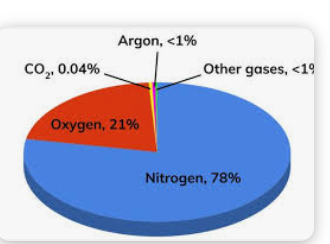
Which of the following gases is present in the smallest percentage in the Earth's atmosphere today?
Compared to pure water, a mixture of salt and water will generally have a:
If adding a solute to a solvent causes the boiling point to increase according to a given equation, what would happen to the boiling point if you added more of the same solute?
What is shown in each of these diagrams?
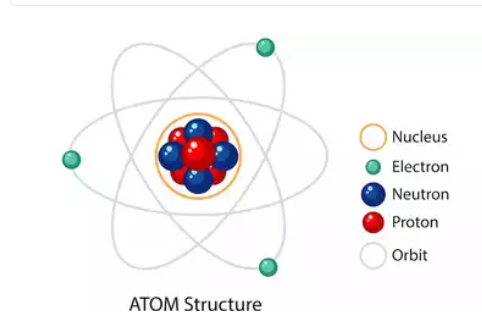
In Year 7 Physics you learnt about protons, neutrons and electrons
Which of these are used to put the elements in their order on the periodic table?
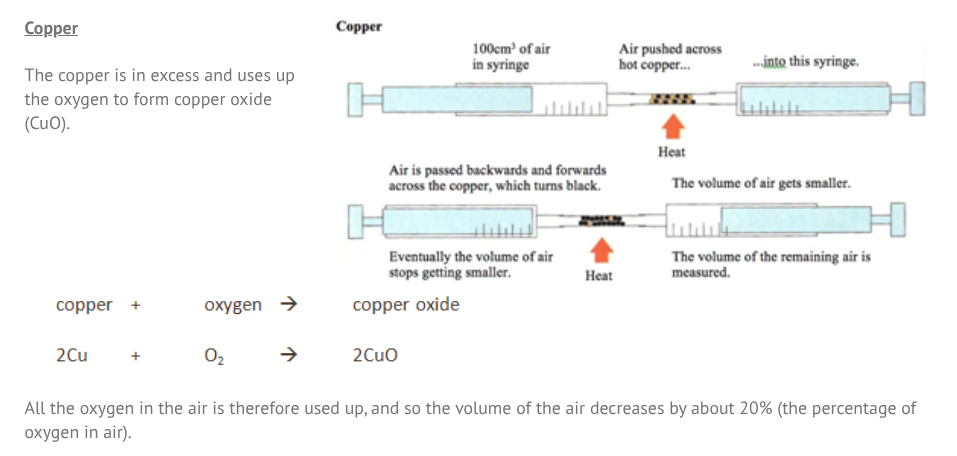
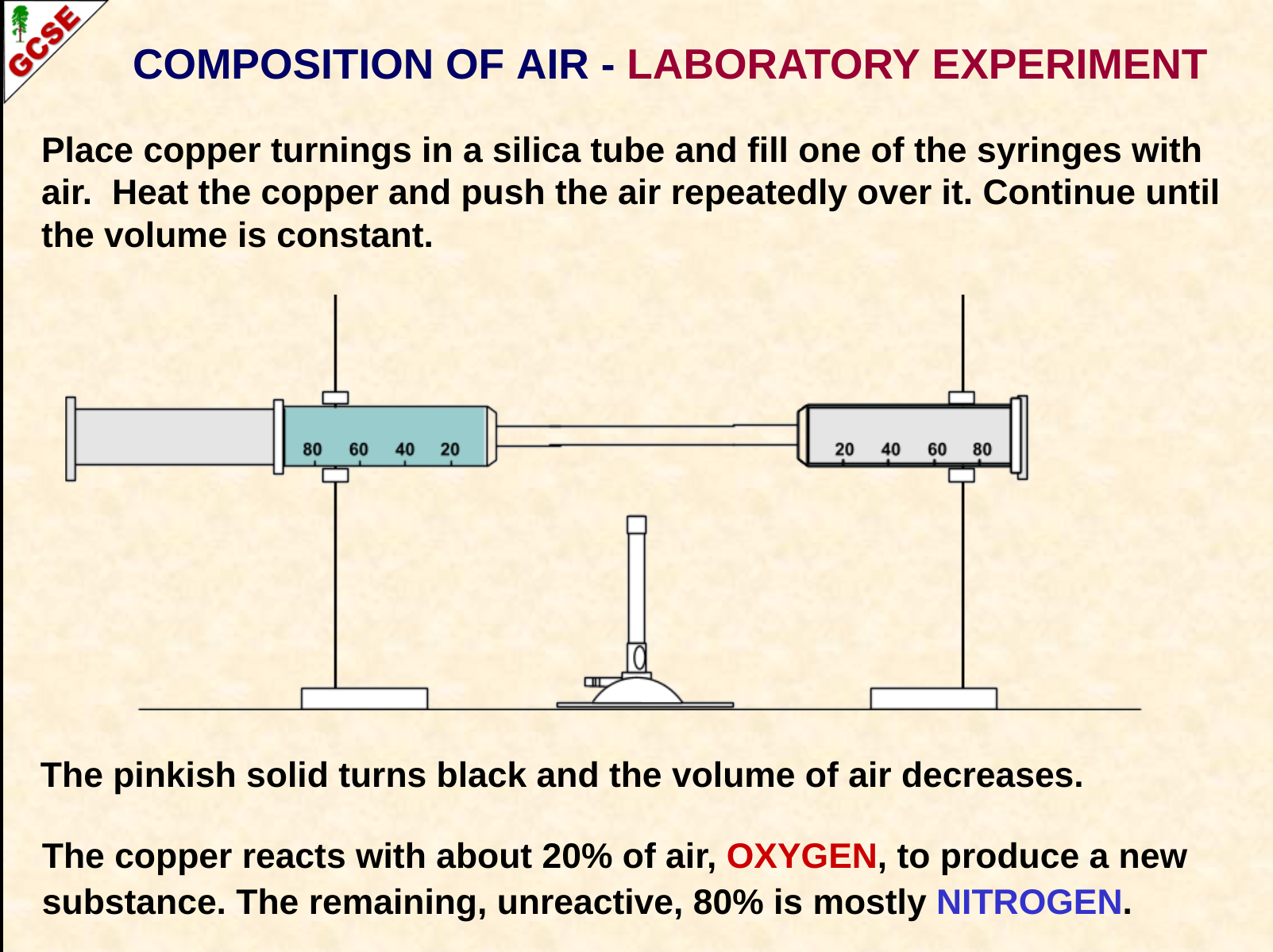
By what percentage would we expect the volume to decrease?
If we started with 100 cm3 of air what volume of nitrogen would we end up with?
If we started with 100 cm3 of air what percentage of nitrogen would we end up with?