Ɛhia
1
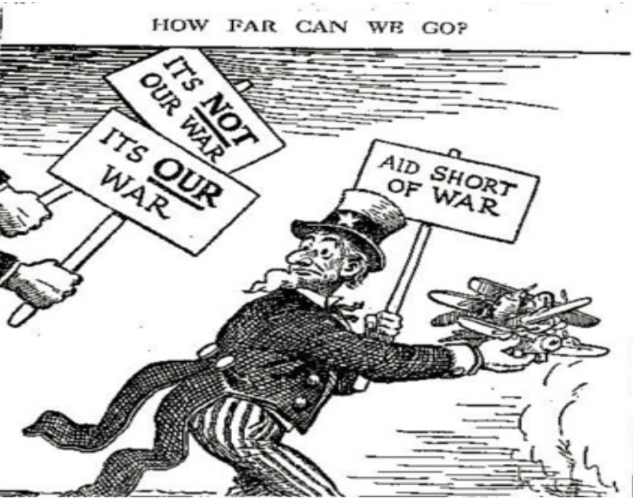
How does the political cartoon represent America’s neutrality policy prior to their entry into World War II?
How does the political cartoon represent America’s neutrality policy prior to their entry into World War II?
Ɛhia
1
39a: describe key events leading up to American involvement in World War II including the Lend-Lease Act and the bombing of Pearl Harbor.
Neutrality
Isolationist
Lend Lease
Pearl Harbor
President Roosevelt was soon faced with a new challenge: the growing conflict on the international scene. The leaders of three major countries—Germany, Italy, and Japan—had developed grand ambitions for dominating their parts of the world and had begun to take over neighboring countries.
Dictators, rulers with absolute or unrestricted power, ran all three of these countries. Each rose to power during the Great Depression by promising to improve their economies. Adolf Hitler, the Nazi dictator of Germany, believed the Germans were a superior race. He set out to “cleanse” Europe of what he called inferior people, especially Jews. His ally in conquering Europe was Benito Mussolini of Italy. Together with Japan, they formed the Axis Powers and went to war with the Allied Powers of Britain, France, and later Russia.
Nations throughout Europe and in other parts of the world took sides in what became the deadliest conflict in human history. Historians estimate that between 30 million and 60 million people were killed during World War II.
Which countries formed the Axis Powers during World War II?
When FDR was re-elected in 1936, the United States was still suffering greatly from the Depression. As conflicts grew in Europe, Americans were still too worried about their economic lives to show great concern. Hitler’s invasions were overwhelmingly successful: the Rhineland, Austria, Czechoslovakia, and Poland. As his army turned towards France and forced a French surrender, Great Britain was left alone to defeat him. FDR had promised a commitment to neutrality for the United States, but that commitment could be described as weak at best.
Few countries wanted to become part of another world war. Many Americans were isolationists, wanting the government to stay out of the affairs of other countries. Determined to keep the United States out of the conflict but eager to increase US trade to end the Depression, FDR created a series of Neutrality Acts. These laws allowed international trade with nations at war but were designed to help the Allied Powers especially. In 1939, FDR introduced a policy known as Cash and Carry. It allowed trade with other nations, especially England. This trade could include the sales of ammunition and arms to nations at war as long as the goods were not carried on American ships. The sales had to be paid in cash, because Congress had declared that the United States could make no loans to warring nations. After Hitler defeated France, FDR felt it was vital to aid Great Britain. He issued an executive order, and the United States gave England 50 World War I destroyers. In return, the British gave the United States leases to territories in Canada and the Caribbean. These could be used for American air and naval bases.
In 1941, Congress passed the Lend-Lease Act, which allowed the United States to “lend” food, oil, and military supplies to Britain and other allies. These included weapons, war planes, and ships. No payment was required until after the war had ended. In return, the United States was allowed to “lease” army and navy bases in Allied countries. The law allowed the United States to give supplies to Britain, which had run out of money, while technically remaining neutral. The United States shipped $50 billion in supplies to the Allied Powers so they could keep fighting.
FDR and the nation still hoped the Allies could defeat Hitler, and that American entrance into the war could be prevented, but the United States had become neutral in name only.
How does the political cartoon represent America’s neutrality policy prior to their entry into World War II?
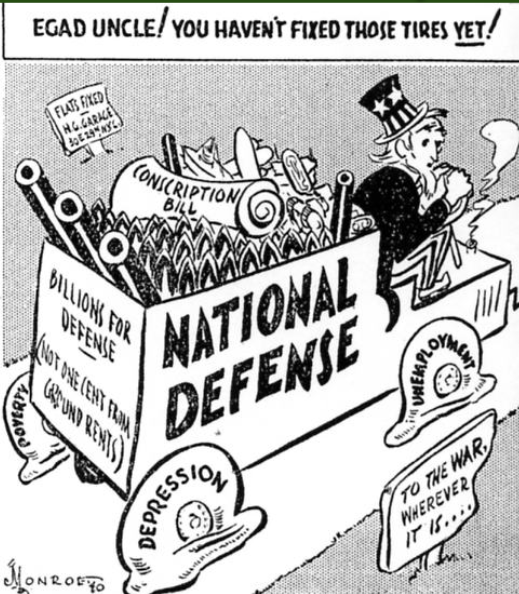
According to the title and the cartoon, what has not been fixed yet?
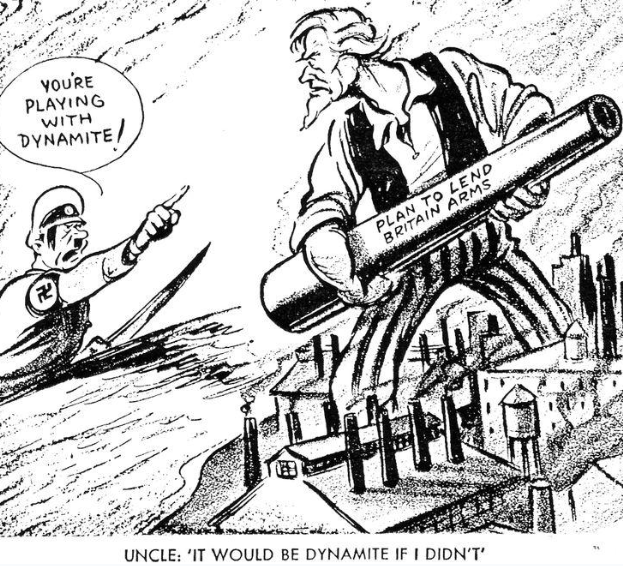
Describe what you think is the meaning of this political cartoon? Make sure to look at the caption for clues.
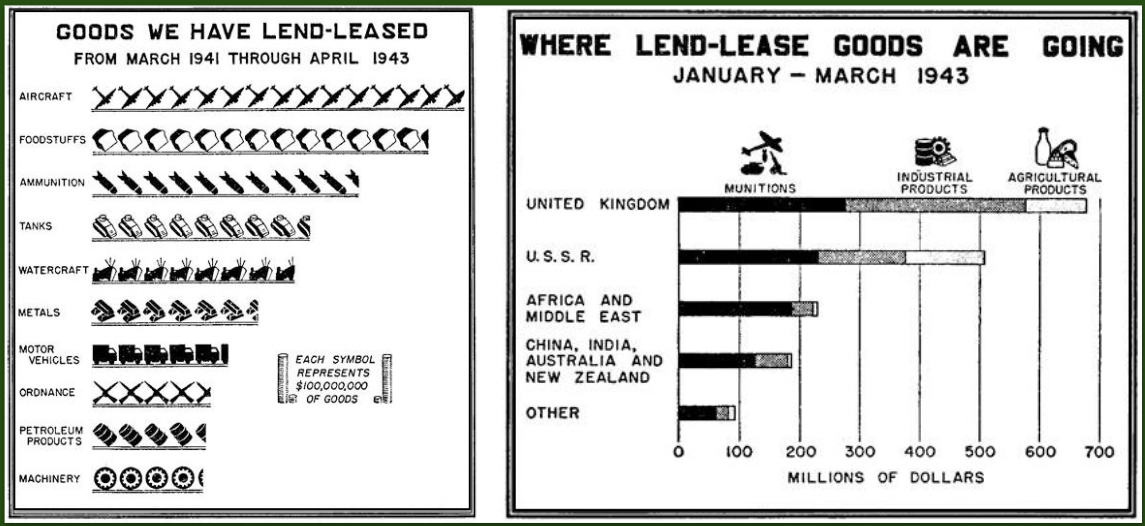
What were the top 3 most 'lend-leased' products to the Allies according to the chart?
What country received the most industrial products from the United States under the Lend-Lease program?
What country received the most food from the United States under the Lend-Lease program?
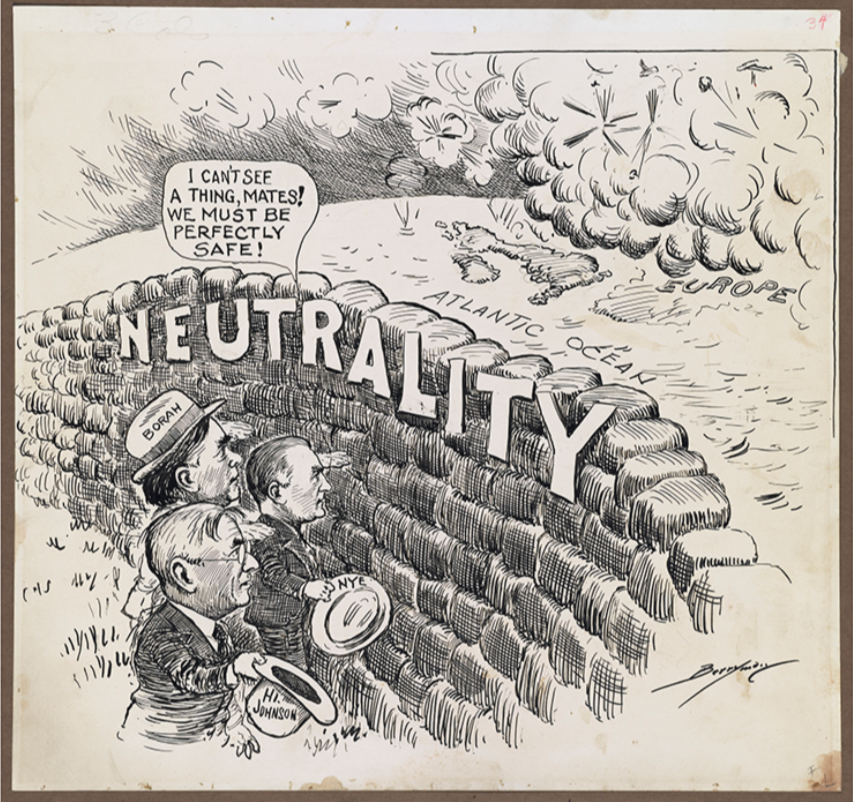
Describe what you think is the meaning of this political cartoon? Make sure to look at the text for clues.
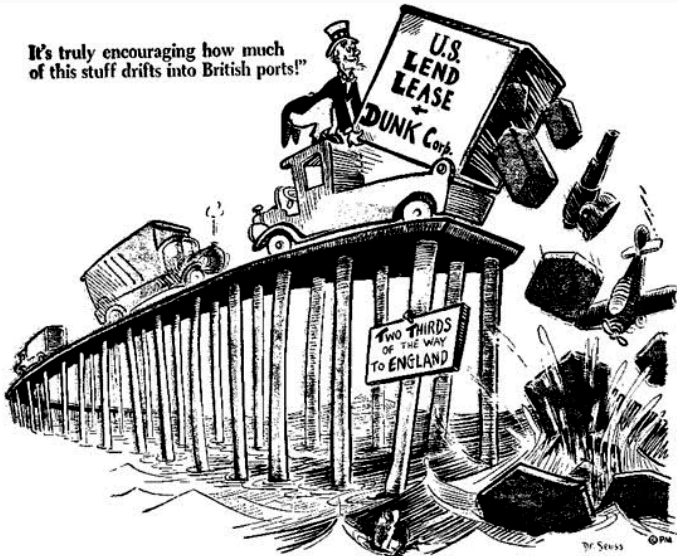
Describe what you think is the meaning of this political cartoon? Make sure to look at the text for clues.
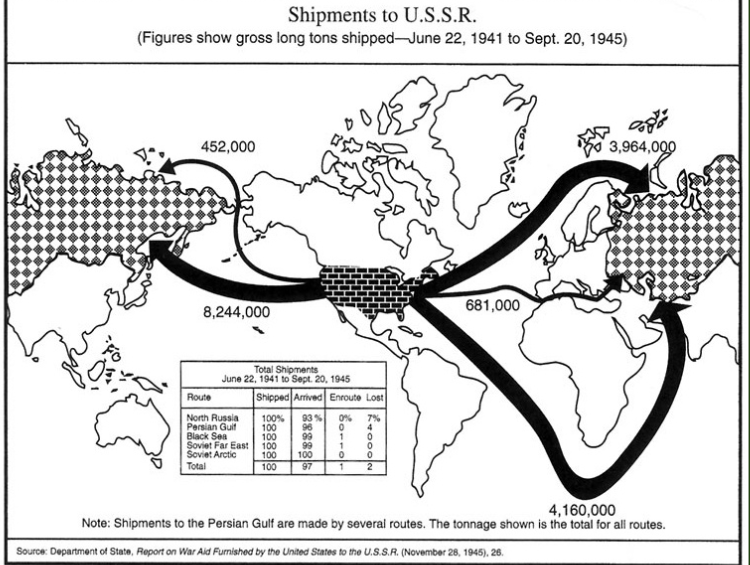
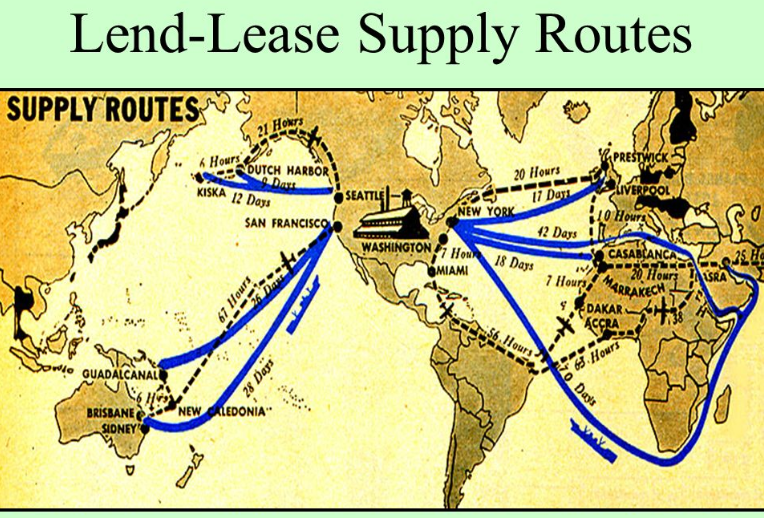
Across the globe from Europe, America was also concerned about Japanese aggressions in the Pacific. Japan had already seized large parts of Manchuria and China and was becoming a strong naval power. Many Americans felt that their holdings in the Philippines, Midway Island, and even Hawaii might be in danger of attack.
Those fears were realized on December7, 1941, when the Japanese attacked the US naval base at Pearl Harbor, Hawaii. Hundreds of Japanese bombers destroyed 18 American ships and almost 200 American planes, most of which were still on the ground. The Japanese goal was to destroy the American naval fleet in the Pacific so they could continue their dominance of the region. Over 2,400 members of the US military were killed that morning, with another 1,000 injured. Most of the ships that were bombed were badly damaged. The USS Arizona was so badly destroyed that it remains at the bottom of the harbor today. However, the damage was not complete. Most of the ships could be repaired, and US aircraft carriers, usually docked at Pearl Harbor, were not there that morning.
The bombing changed the opinions of most Americans about remaining neutral. On December 8, 1941, Depression and War President Roosevelt appeared before Congress to ask for a declaration of war against Japan. Congress granted his request. The United States also entered the war with Germany and Japan over the next few days as they declared war on the United States. The “sleeping giant” had been awakened, and the United States entered a two-front war in Europe and the Pacific.
The war sparked massive economic growth in the United States. Congress increased the income tax, and poured most of that money into the war effort, creating jobs in the armed forces and in factories that manufactured supplies. This boost brought the Great Depression to an end.
Which statement BEST describes the involvement of the United States in World War II before the bombing of Pearl Harbor?
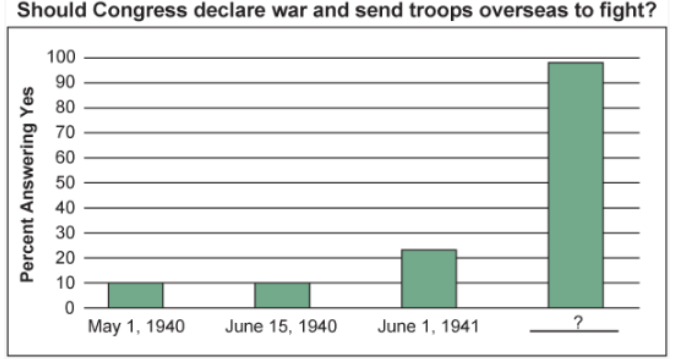
What caused the dramatic shift in the American public’s opinion regarding military intervention overseas, as represented in the graph?
How did the United States initially respond to the outbreak of World War I?
What did the Neutrality Acts aim to do?
What was the main concern of Americans during this time?
What ideology did many Americans hold during this period?
According to the video, what prompted the signing of the Lend-Lease Act?
Which act allowed the U.S. to sell arms to other countries on a cash basis?
Who was one of the critics of the Lend-Lease Act? (1:12)
What was a concern of isolationists regarding the Lend-Lease Act?
5. When was the Lend-Lease Act signed? (2:30)
What was the purpose of the Lend-Lease Act?
What type of supplies did the Lend-Lease Act provide?
Which country primarily benefited from the Lend-Lease Act?
Did the U.S. require payment during the war?
What did the U.S. "lease" in exchange for supplies?
Why is the cartoon titled, "How Far Can We Go"?
How does the political cartoon represent the American public's opinion about sending supplies to the Allies prior to their entry into World War II?
Why did the Japanese government bomb the United States naval base at Pearl Harbor?
How many Imperial Japanese aircraft were involved in the attack?
What was the main objective of the attack on Pearl Harbor?
How long did the attack on Pearl Harbor last?
What was the American public's reaction to the attack?
When did the United States Congress declare war on Japan?