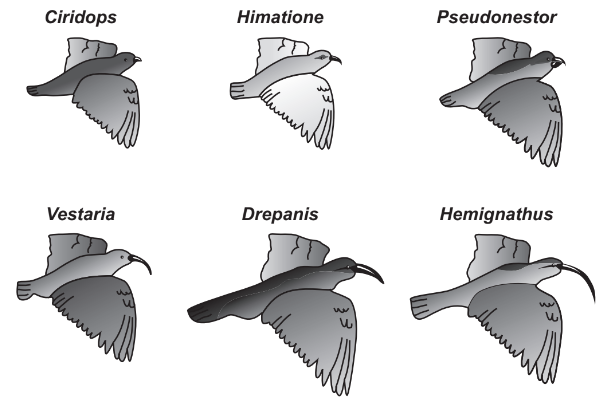
From 1831 to 1836, Darwin traveled around the world, observing animals on different continents and islands. On the Galapagos Islands, Darwin observed several species of finches with unique beak shapes. He observed these finches closely resembled another finch species on the mainland of South America and that the group of species in the Galápagos formed a graded series of beak sizes and shapes, with very small differences between the most similar. Darwin imagined that the island species might be all species modified from one original mainland species.
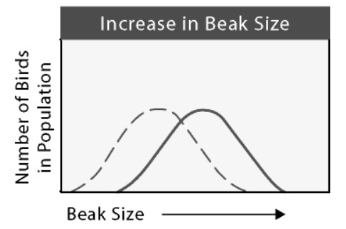
Years later, scientists still study differences in the finches on the island. Data was collected on body size and beak size from 1970 to 2000. As shown in the data tables below, there were two droughts. During each drought, the decrease in rainfall led to a decrease in the number of berries available for the finch diet. The finches only had hard seeds as a primary food source.
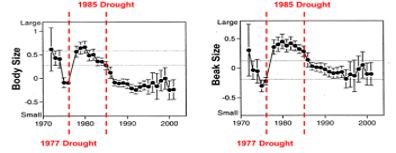
*click graph to enlarge