Ɛhia
1
RI.4.7
Ɛhia
1
RI.4.8
Ɛhia
1
RI.4.4
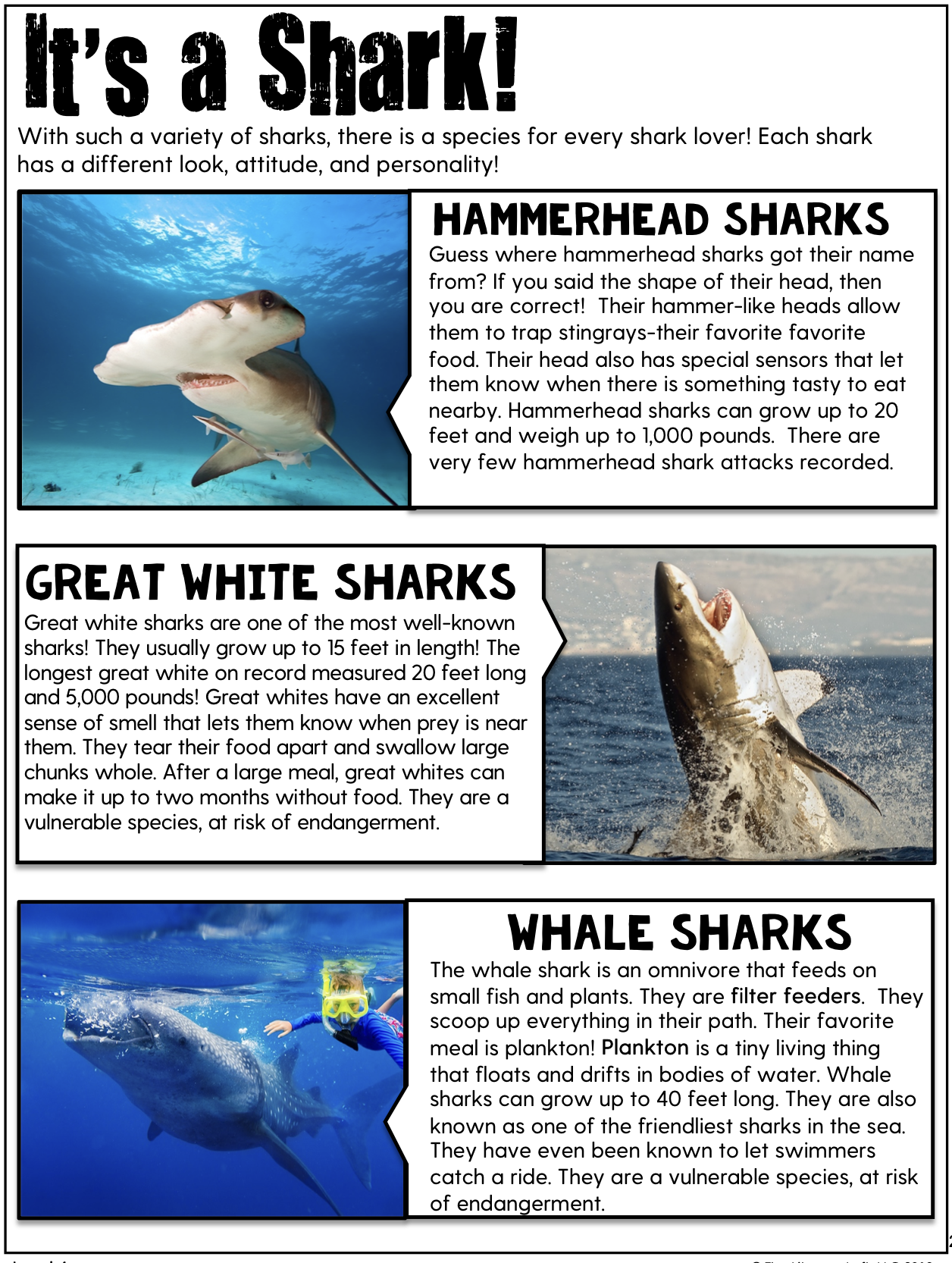
How does the author present information about different shark species?
Directions: Complete the chart by drawing Xs in the boxes next to the statements that describe information in “Sharks!,” “Sharks and the Sea,” or both texts.
Sharks! | Sharks and the Sea | Both Texts | |
|---|---|---|---|
Sharks get an endless supply of teeth. | |||
Explains why we need sharks. | |||
They are an important part of our ecosystem. | |||
The main topic is sharks. | |||
Gives reasons for why some sharks are endangered or at risk. | |||
The Megalodon shark species was the largest shark in history. |
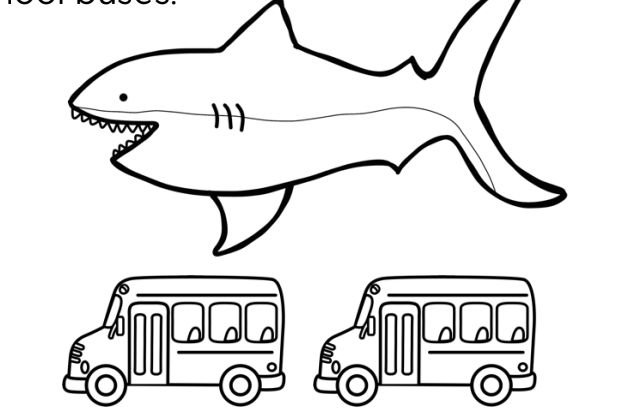
What does the illustration on the right side of the page help the reader understand?
With which statement would the author most likely agree?
What is an omnivore?
According to the text, It's a Shark! what does the word vulnerable mean in the section: "Great White Sharks"?
How does the author support the point that sharks keep the ocean ecosystem balanced? RI.4.8
What type of text structure does the author use in the section "Save the Sharks"? RI.4.5
Draw lines to match the words with the correct definitions based on information from all three texts.
| Draggable item | arrow_right_alt | Corresponding Item |
|---|---|---|
Venture | arrow_right_alt | a living thing that floats and drifts in the ocean |
Overpopulate | arrow_right_alt | a journey |
Apex Predator | arrow_right_alt | when the population becomes so big it causes environmental problems |
Plankton | arrow_right_alt | an animal that has no natural predators |