End-of-Course (EOC) Biology

Last updated 6 months ago
50 questions
Required
1

How is a DNA molecule arranged?

Required
1

A group of students completed two experiments. Their notes are below:

Experiment 1:
  • Hydrogen peroxide was poured on a slice of raw potato.
  • The peroxide bubbled vigorously.
  • The peroxide was broken down into water and oxygen.
Experiment 2:
  • A slice of raw potato was heated and then hydrogen peroxide was poured on it.
  • There was no visible reaction.

Which statement explains the results of these experiments?

Required
1

Hummingbirds thrive in warm, moist climates, and their primary source of food is nectar from flowering plants. A three-year drought is expected in an ecosystem. How will this most likely affect the hummingbird population in that ecosystem?

Required
1

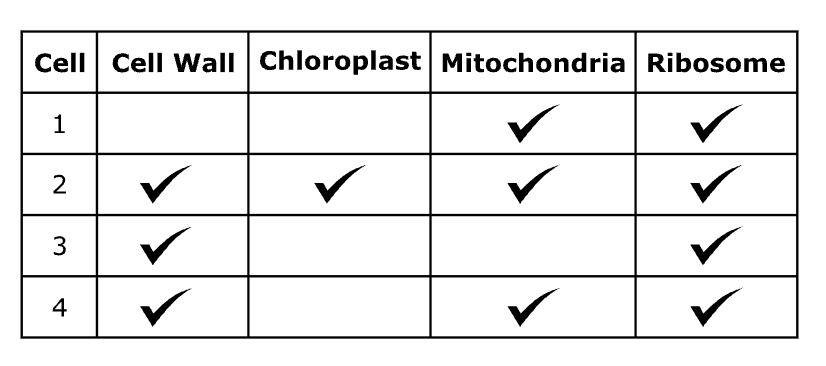
This chart shows characteristics of four different cells observed under a microscope.


Which is most likely a prokaryotic cell?

Required
1

What is the significance of three consecutive nucleotides in DNA?

Required
1

A cell experiences an error during the cell cycle, causing it to go through cytokinesis before mitosis. Which statement best describes the new cells?

Required
1

Among birds, some skin cells grow feathers when they mature, while other skin cells grow scales at maturity. Which statement best explains this difference?

Required
1

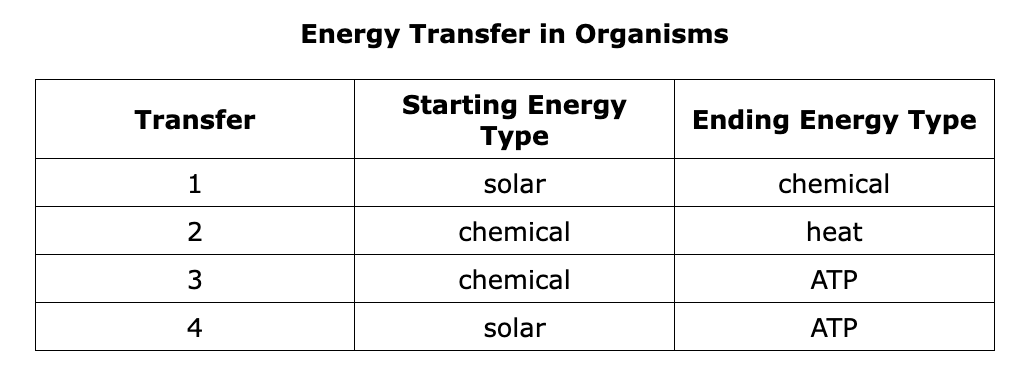
The table below describes several different types of energy transfer processes.


Which transfer represents photosynthesis?

Required
1

Which substance must be present to release energy from glucose?

Required
1

Which is an example of the cycling of carbon?

Questions 11–15 are part of an item set. Use the following information to answer the questions.

The Brackish Life

Finger mullets are small fish that play a critical role in North Carolina’s estuary ecosystems. Estuaries are ecosystems of change, and life is not always easy for finger mullets there.

An estuary is a brackish water environment. Salinity changes in response to tidal changes. At high tide, the estuary is filled with more ocean water, and the salinity increases. The salinity decreases at low tide, when the ocean waters recede and fresh water from the mouth of the river is allowed in. Organisms that live in this environment are specially adapted for constantly changing salinity levels. When the salinity of the water changes, the cells of the organisms that live there must adjust by either taking in water or releasing it. The diagram below, Figure 1, represents a cell from the gill tissue of a finger mullet in a high-salinity environment.
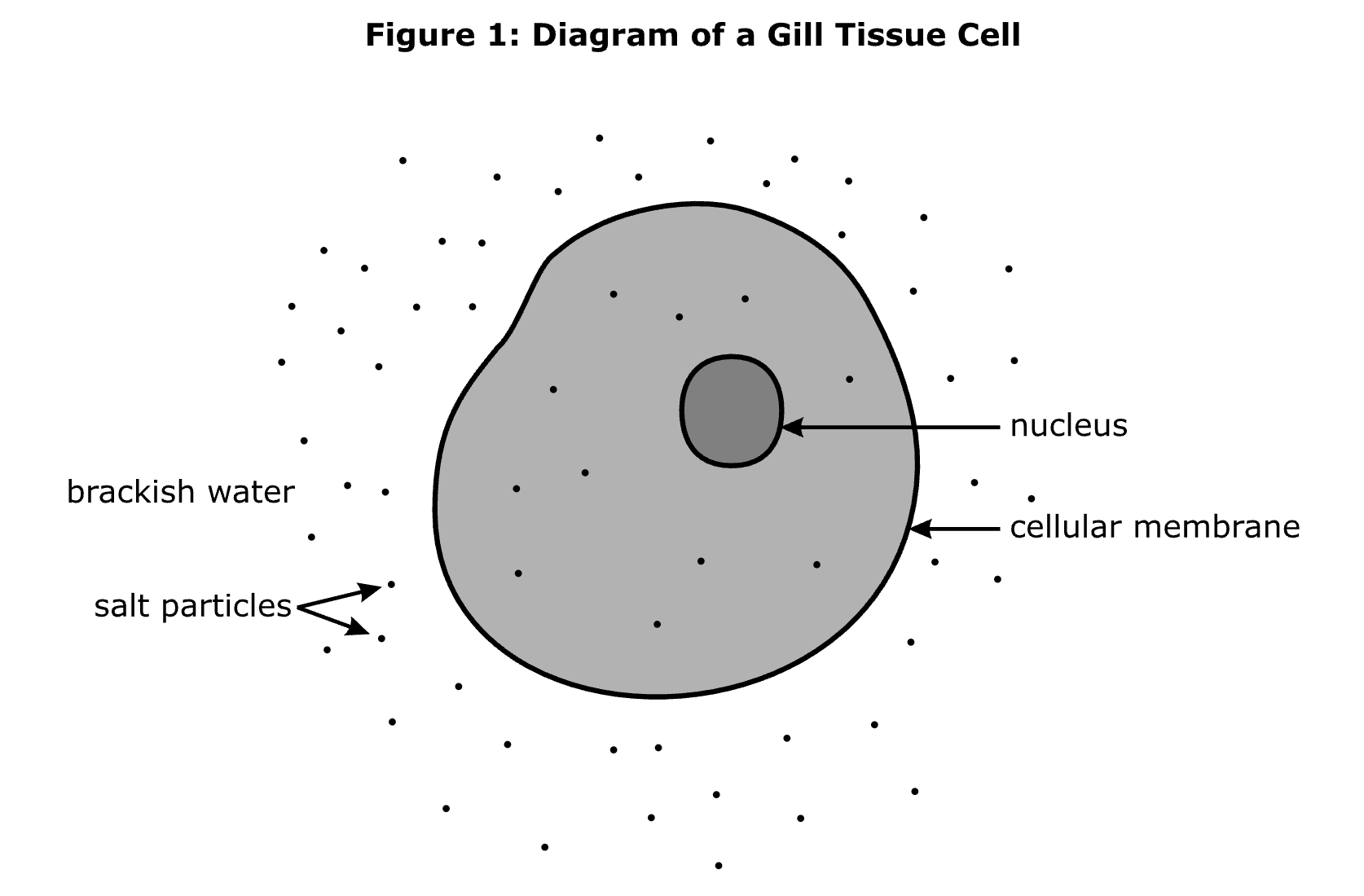

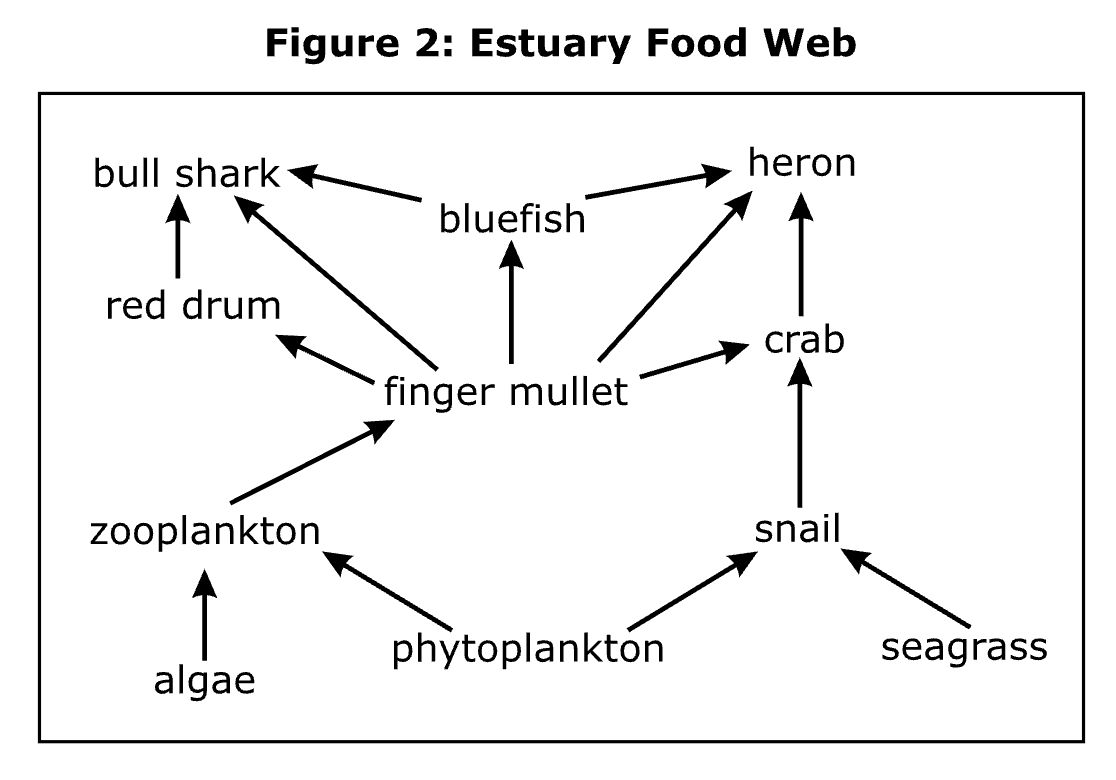
Along with salt and other nutrients, the tides also sweep organisms into and out of the estuaries. Small invertebrates and fish are carried with the currents, and predators often enter estuary areas as they follow the food. This food web represents some of the complicated relationships among estuary organisms, with the finger mullet at its center.
Required
1

How does the cellular membrane of the finger mullet’s cell contribute to homeostasis within the cell?

Required
1
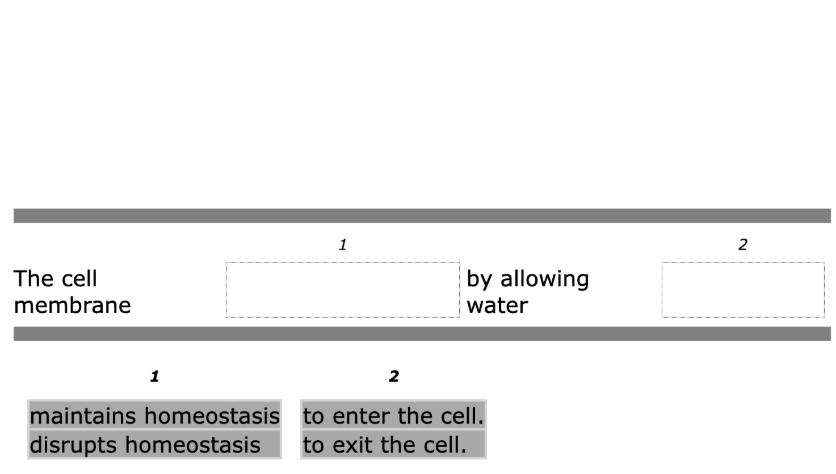
Place (click and drag) the phrases to correctly complete the statement, so that it explains how the cellular membrane shown in Figure 1 helps support the finger mullet in a high-salinity environment. Fill in all of the cells.
Other Answer Choices:
maintains homeostasis
disrupts homeostasis
to enter the cell.
to exit the cell.
Required
1

A researcher hypothesizes that water will move out of the cell more quickly when the concentration of salt in the water outside the cell is greater. Which experiment would best test this hypothesis?

Required
1

Based on the food web (Figure 2), what effect will a decrease in the algae population have on the finger mullet population in the estuary?

Required
1

Based on the food web (Figure 2), which statements are true? Select (click) three true statements.

Required
1

Which model represents energy transfer within a food web in a stable ecosystem?

Required
1

What would most likely occur if a new insect species were introduced into North Carolina’s ecosystems?

Required
1

Which human action could best reduce global climate change?

Required
1

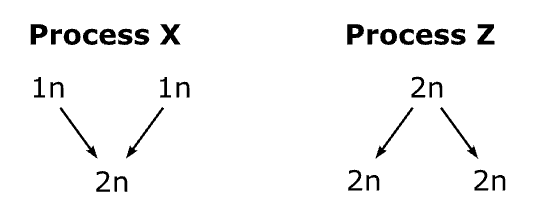
These diagrams illustrate two reproductive processes.


Which statement best explains the processes?

Required
1

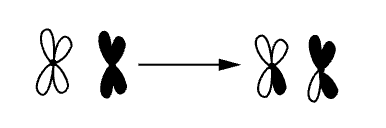
This diagram shows homologous chromosomes.


Which choice best describes the source of genetic variation?

Required
1

A student crosses two plants.
  • Plant 1 has red petals (RR).
  • Plant 2 has white petals (WW).
  • All of the offspring plants have pink petals (RW).
Which type of inheritance do these plants exhibit?

Required
1

Nicolette conducted a study of neck length in giraffes. Neck length for the giraffes ranged from 5.9 feet to 7.9 feet. What can most likely be inferred from the study?

Required
1

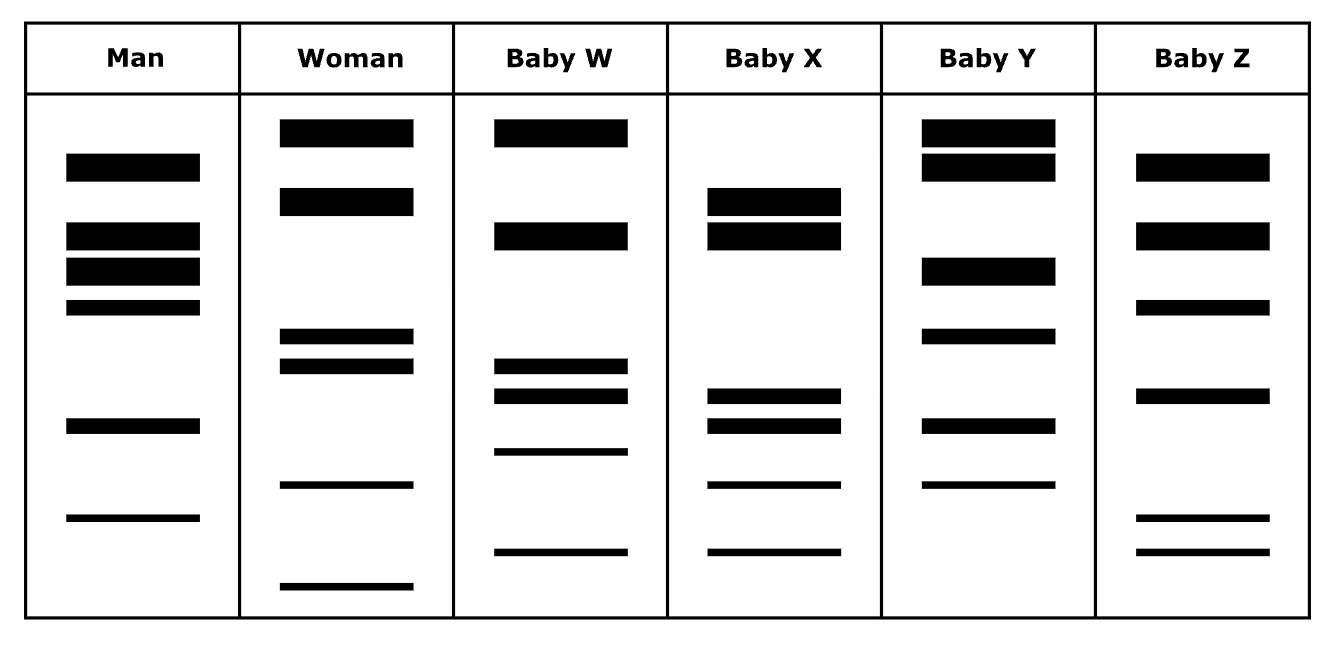
This diagram represents the DNA fingerprint for a man, a woman, and four different babies, one of which is the man and woman’s baby.


Based on the DNA fingerprints, which is most likely the man and woman’s baby?

Required
1

A farmer reads this information:
  • A bacterium has a gene that allows it to create pesticide.
  • The gene has been transferred into a corn plant, allowing the corn plant to produce pesticide.
Why might a farmer choose to plant genetically engineered corn?

Required
1

A patient takes medication to treat strep throat caused by the bacteria Streptococcus pyogenes. Which statement best describes the reproductive success of the bacteria after the patient has taken the medication for a period of time?

Required
1

Which information provides the most reliable evidence of common ancestry for four species of mammals?

Required
1

A marine biology program has monitored a population of sharks in the southern Atlantic Ocean for over 100 years. The population has been very successful over this period of time. The biologists hypothesize that natural selection has been acting on the population, increasing its ability to thrive. Select the three observations that best support the hypothesis.

Required
1

A population of rabbits lives in a forest. Some of the rabbits have a mutation that results in extra-powerful hind legs. What will most likely happen to the population of rabbits if a population of wolves is introduced to the forest?

Required
1

An enzyme has an optimal temperature of 25°C. During an experiment, which action would most likely increase the rate of the reaction?

Required
1
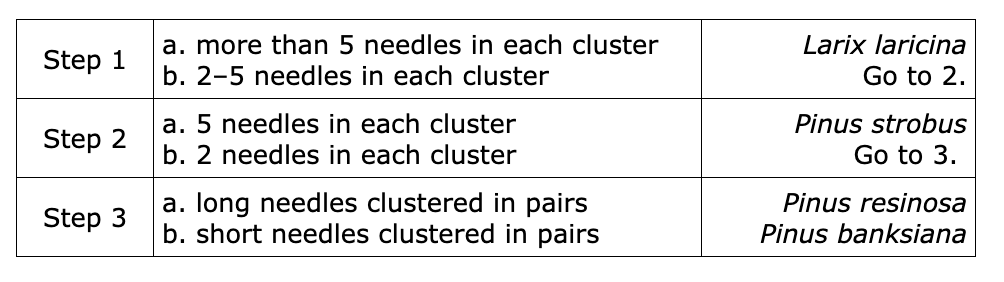
This is a dichotomous key used to identify coniferous tree species.


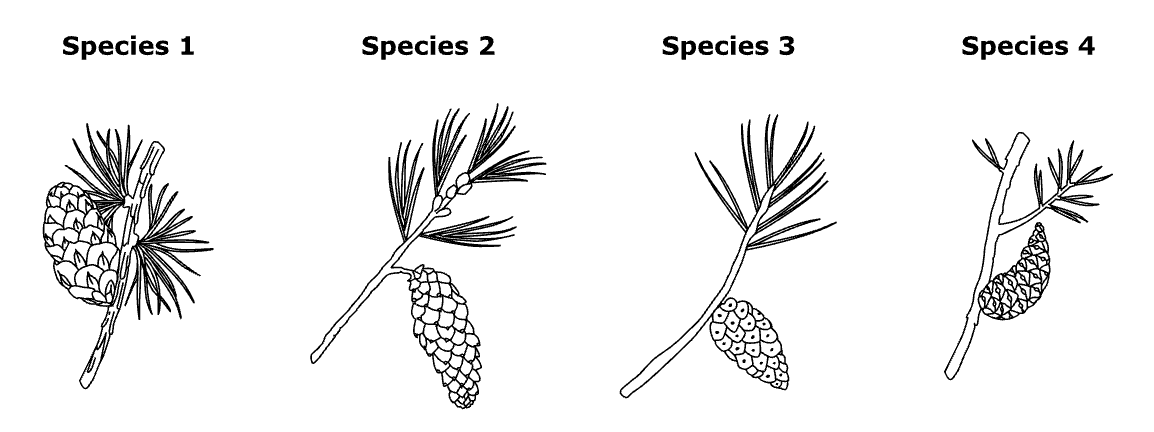
These diagrams show four different species of coniferous tree.


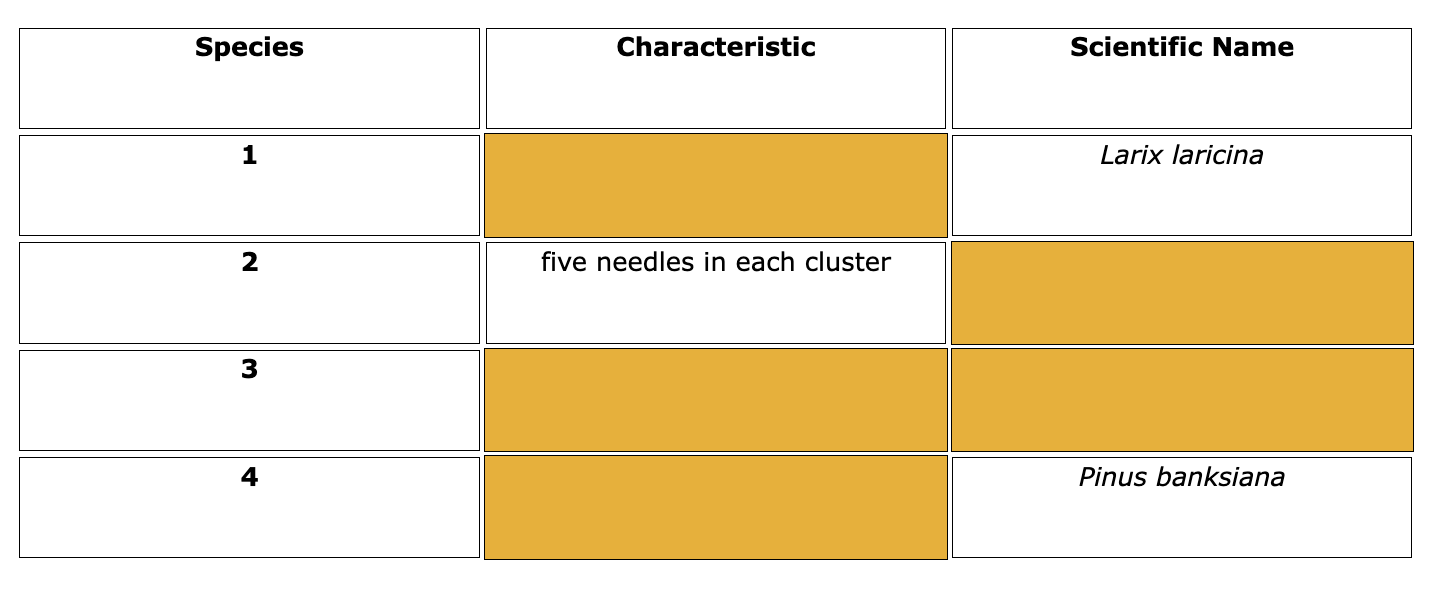
Using the dichotomous key and the tree images, place (click and drag) the characteristics of each species in the correct box. Then, place (click and drag) the scientific names that identify each species. Fill in all of the cells.
Other Answer Choices:
long needles clustered in pairs
more than 5 needles in each cluster
short needles clustered in pairs
Pinus resinosa
Pinus strobus
Required
1

A nuclear membrane with pores surrounds a cell’s nucleus. How would a nucleus that lacks pores affect its function in the cell?

Required
1

Which action takes place on a ribosome, resulting in synthesis of a protein?

Required
1

The plants in an ecosystem complete both photosynthesis and cellular respiration. How do the two processes differ from one another in terms of energy?

Required
1

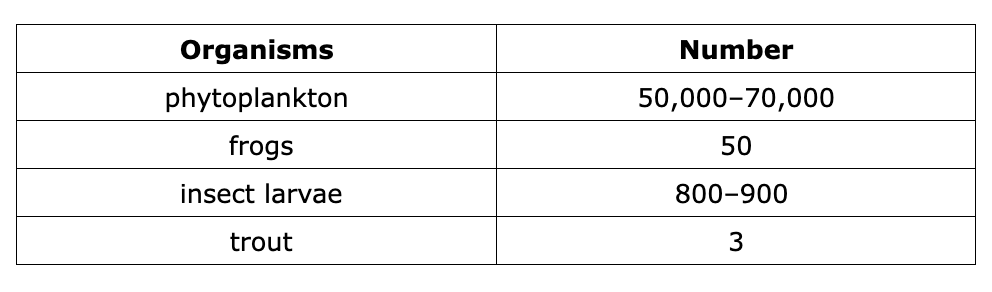
A biologist analyzed a sample of pond water and recorded the different organisms in the sample. This table shows the number of each organism in the pond sample.


Why does the sample contain more phytoplankton than trout?

Required
1

How would a longer snow season most likely affect the populations of red and white foxes living in the same forest ecosystem?

Questions 36–40 are part of an item set. Use the following information to answer the questions.

Do You Play Basketball?


“Wow! You are tall. Do you play basketball?” Judd gets asked this question at least once a day. At 6'7" he is very tall. Judd’s dad is tall (6'3"), and Judd’s mom is above average height for women (5'9"). How can it be that Judd is taller than both of his parents?

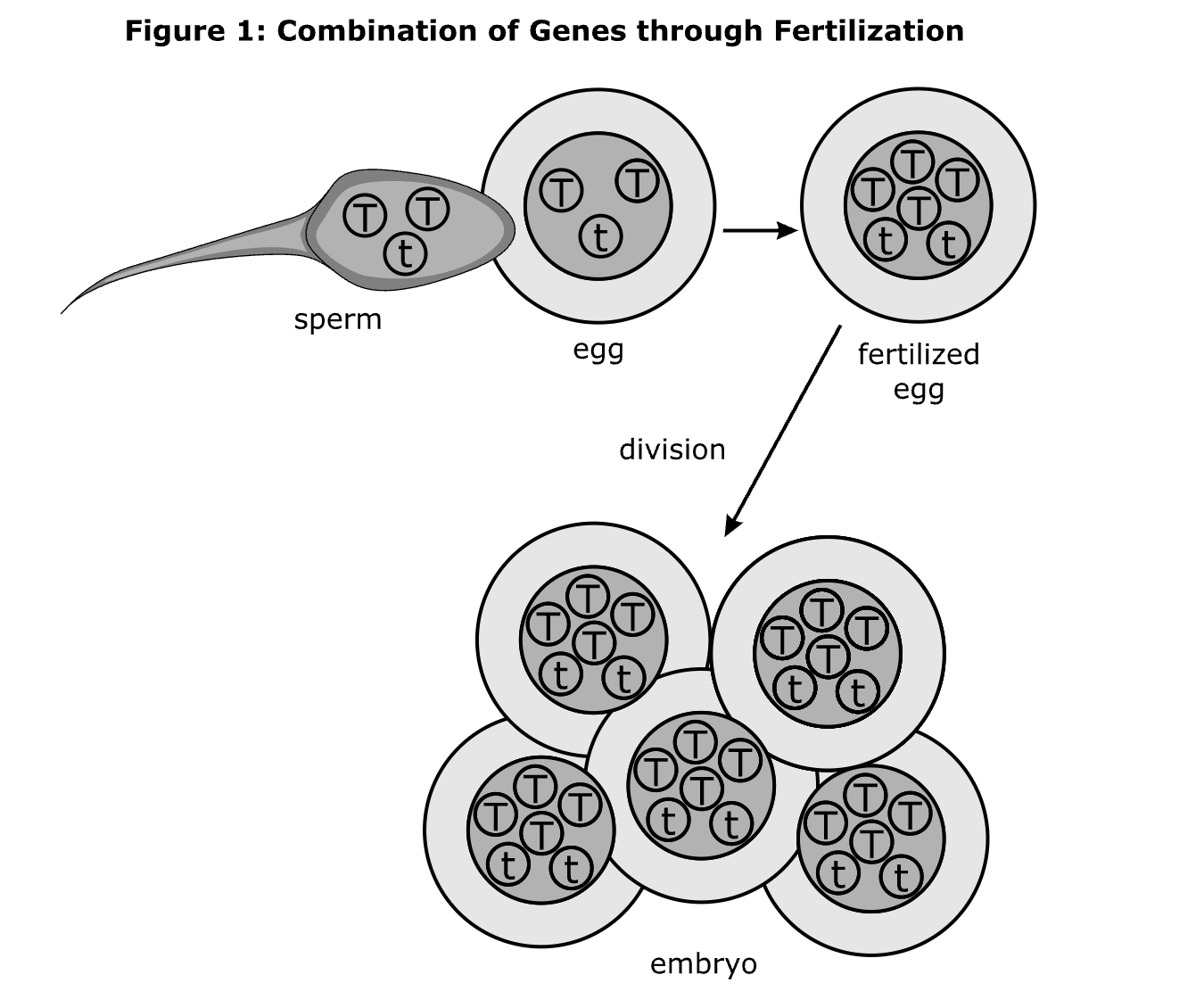
Human height is controlled by at least three genes, each with two alleles: dominant (T) and recessive (t), where T is expressed as tall height. The diagram below (Figure 1) shows how Judd's parents' genes for height might have resulted in Judd's genotype for height.


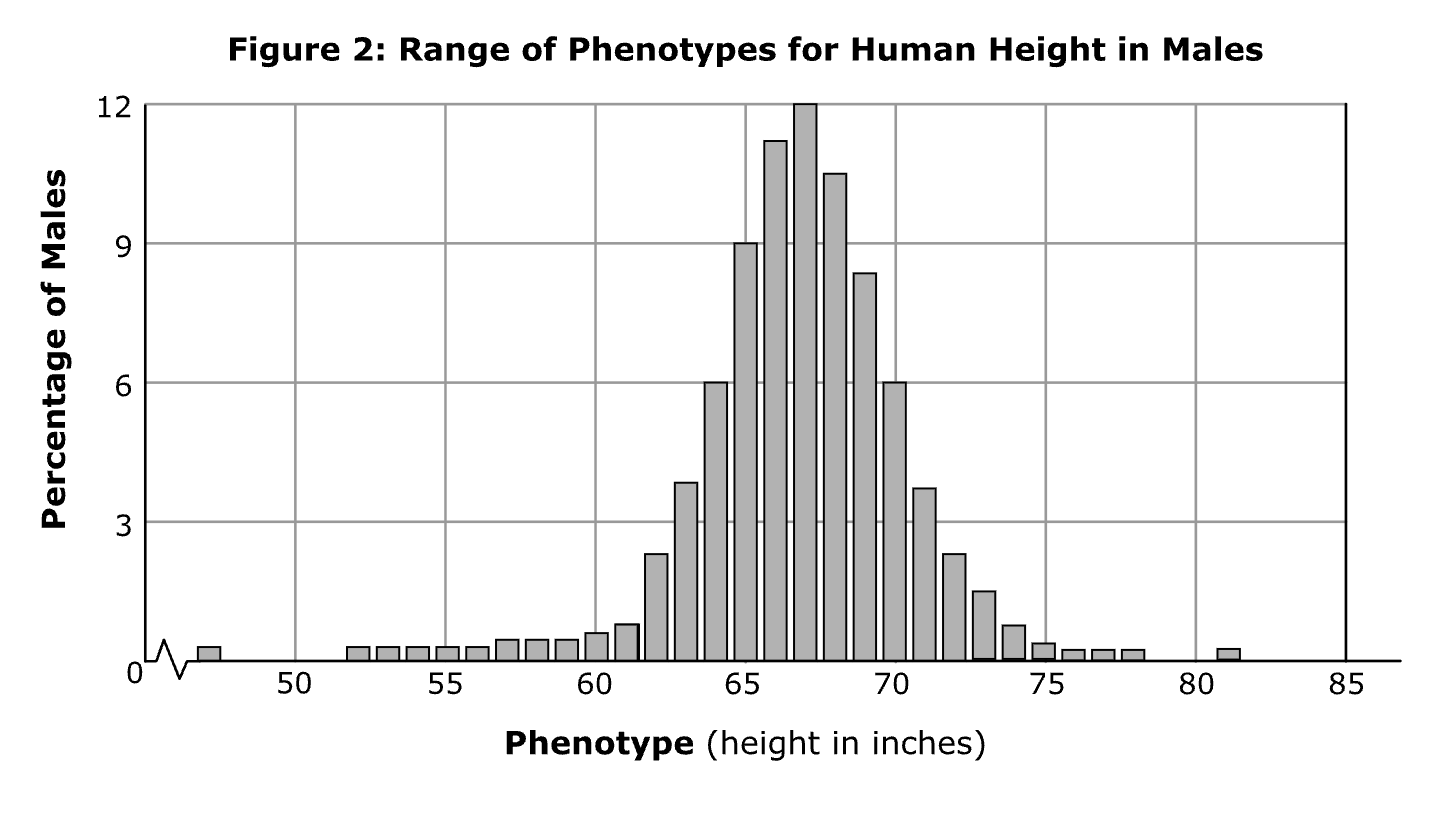
Multiple genotypes for human height are possible, so there are many possible variations in phenotypes. The range of phenotypes for human height in males is shown in Figure 2.

Required
1
Select (click and drag) the choices that best complete the statement. Fill in all of the cells.

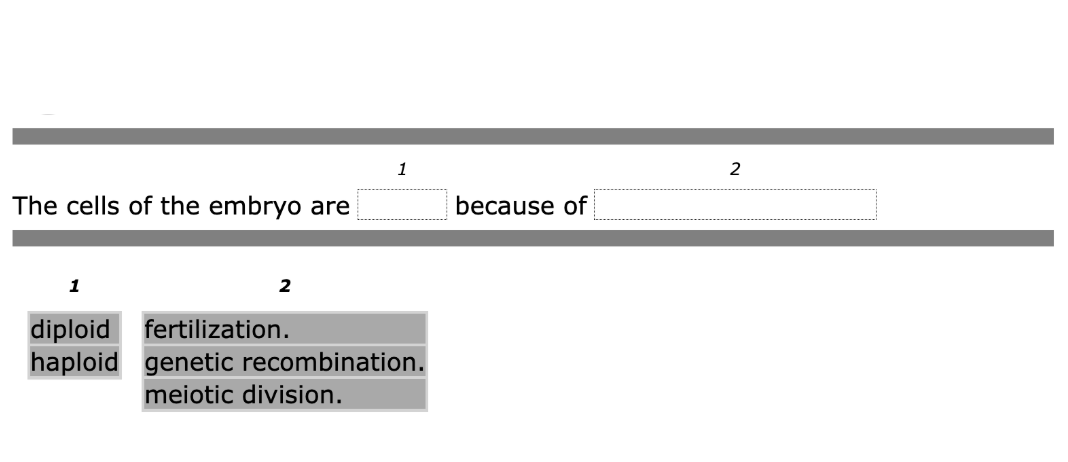
The cells of the embryo arebecause of
Other Answer Choices:
haploid
diploid
meiotic division.
genetic recombination.
fertilization.
Required
1

Judd has a 20-year-old sister. Her height is 5’4”. Which statement best explains why his sister is shorter than him and their parents?

Required
1

Which statement best describes the trait for height, based on Figure 2?

Required
1

Some of the phenotypes for male height are identified by two distinct ranges.
  • Range 1: 50-55 inches
  • Range 2: 75-80 inches
Which choice best describes how these height ranges are represented in Figure 2?

Required
1

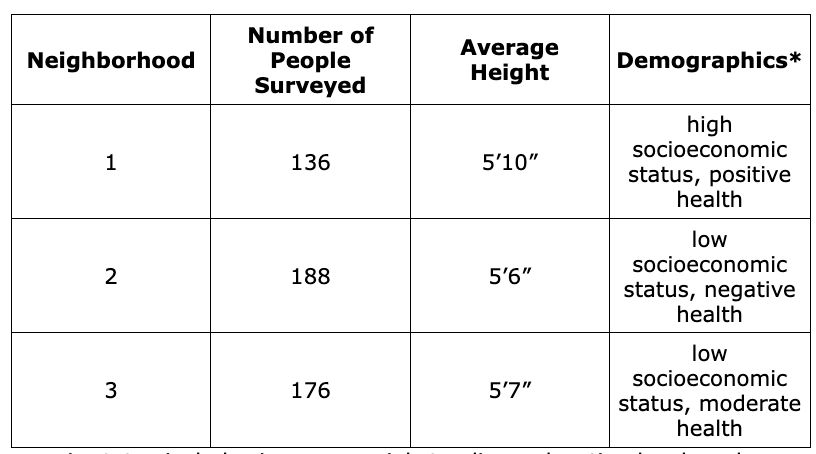
Judd visits an exhibit at a local museum. A display there describes a recent research study where people from several distinct neighborhoods in a large U.S. city were surveyed for height. The display features the data table below.

*Evaluation of socioeconomic status includes income, social standing, education level, and occupation. Evaluation of health includes factors such as frequency of illness, nutritional status, and access to health care.

What can most likely be inferred from the research data?

Required
1

The bacterium Yersinia pestis is responsible for causing bubonic plague in the 1300s. Survivors of plague showed an increased frequency of a mutation for a cell receptor protein which prevented infection from the bacterium.

Which statement best explains the genetic change in Europe’s population after the bubonic plague outbreak?

Required
1

Modern dairy cows are different from their ancestors. They produce larger volumes of milk with higher protein and fat content. Which statement best explains this?

Required
1

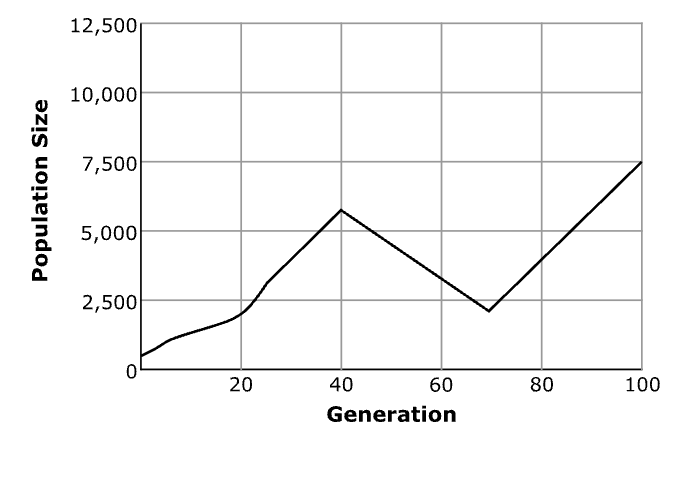
The graph below represents the size of a bacteria population.


A scientist introduces an antibiotic to the population at Generation 40. Which statement best explains the population increase after Generation 70?

Required
1

How could a scientist best determine whether a fungus is a new species?

Required
1

How might mutations contribute to natural selection?

Required
1

An animal was cloned in a lab, producing five genetically identical offspring. The offspring were then sent to five different zoos. After five years, scientists collected data on these animals and found a variation in their heights. What is the most likely explanation for the data?

Required
1

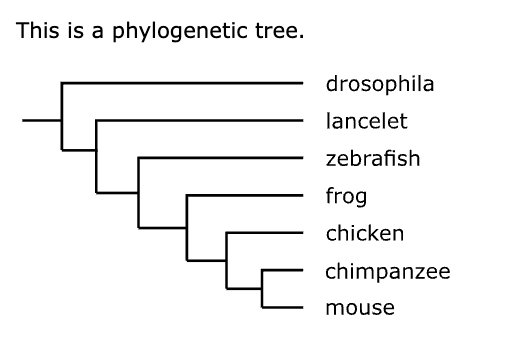
This is a phylogenetic tree.


Based on the phylogenetic tree, which two organisms share the most recent common ancestor?

Required
1

Which statement best explains the relationship between glucose, cellular respiration, and photosynthesis?

Required
1

Kudzu was brought into the southeastern United States in the late 1800s and was encouraged for use in controlling erosion. However, in 1972 the USDA declared kudzu to be a weed. Which statement best explains this change in thought?

Required
1

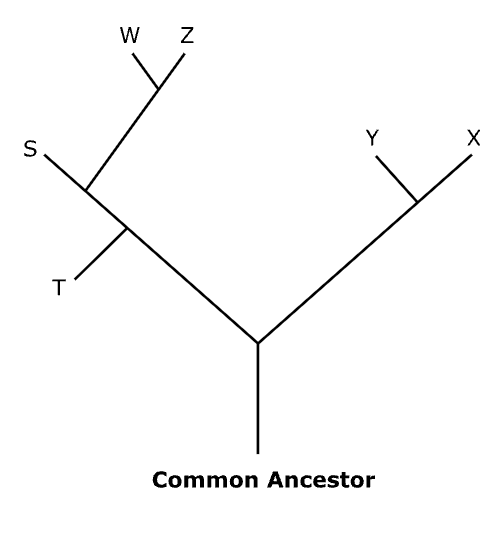
Fossils were discovered by scientists for each of the organisms in this phylogenetic tree.


Which organism is most likely the oldest?