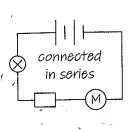
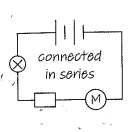
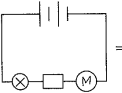
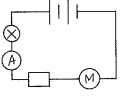
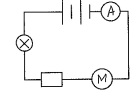
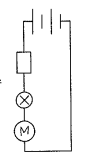
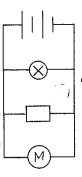
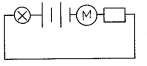
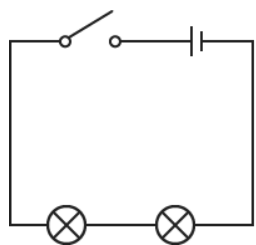
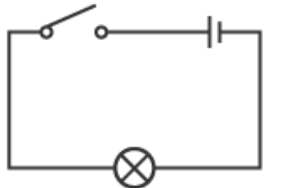
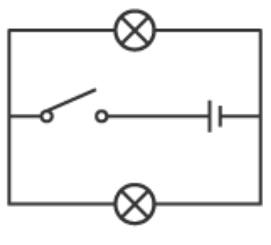
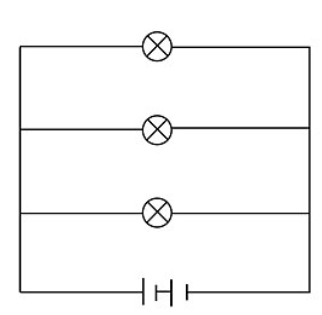
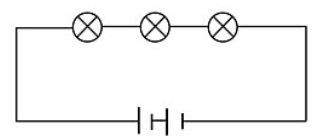
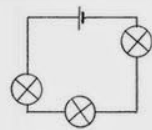
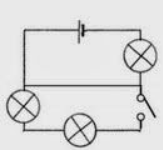
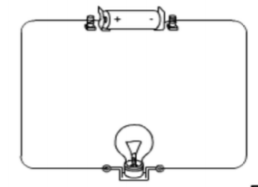
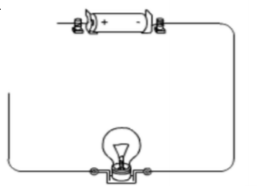
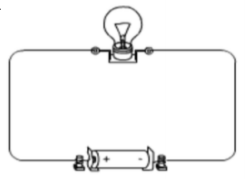
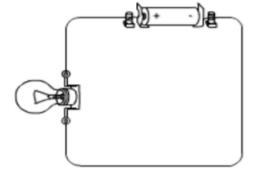
When components are all connected into a loop, we call this a series circuit. It does not matter where the components are as long as they are connected in a single loop.
What moves in inside the wires of a circuit?
What does a power supply do in a circuit?
When components are all connected into a loop, we call this a series circuit. It does not matter where the components are as long as they are connected in a single loop.
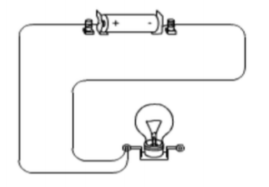
Which of these pictures matches the given circuit?
The same
Different
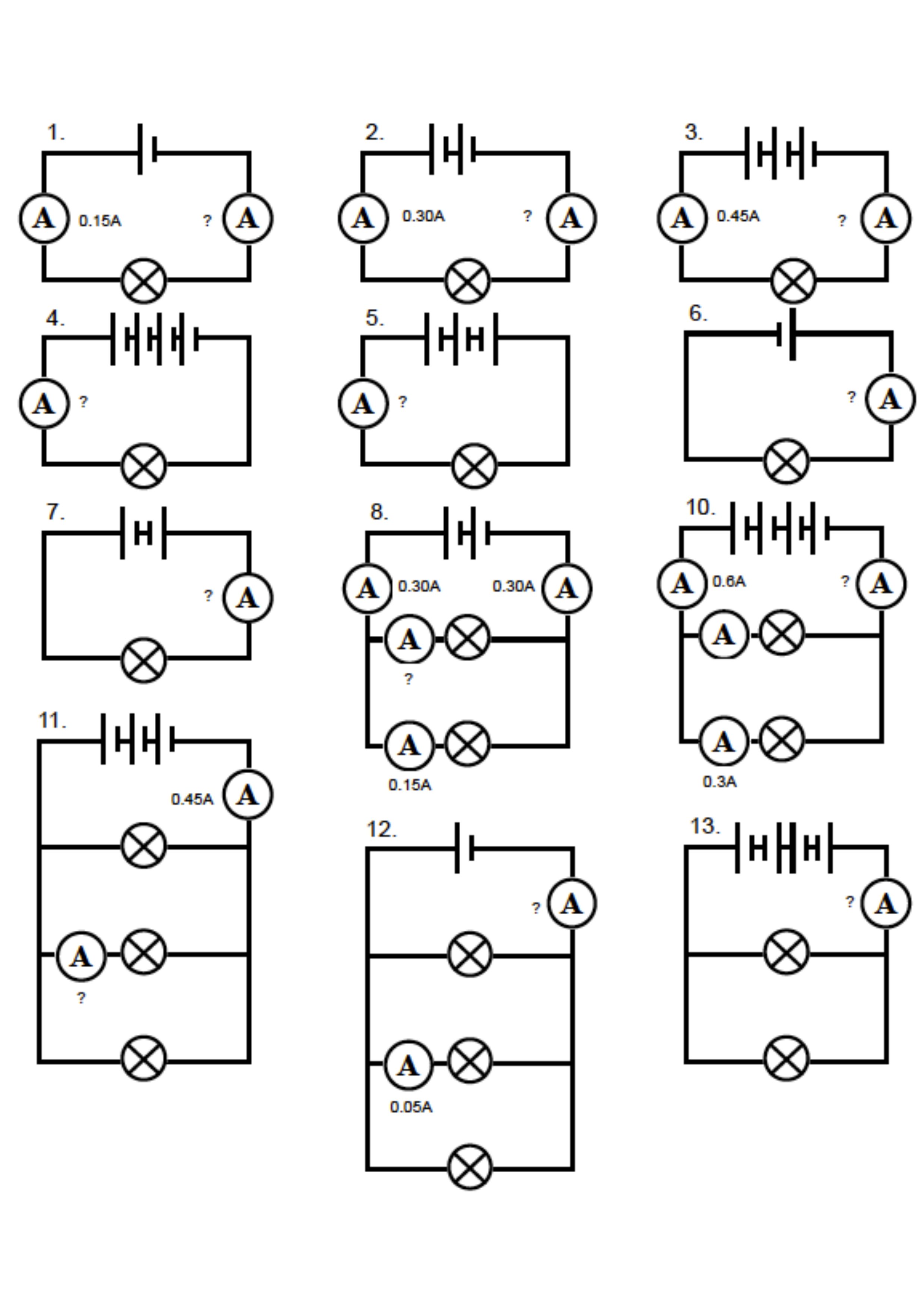
How are ammeters connected?
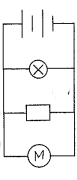
We do not have to connect thins in the same loop. Instead, we can connect things in their own loops.
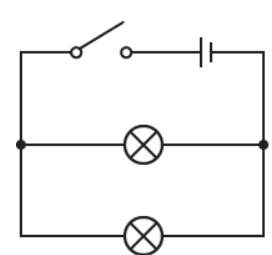
Here the bulb, resistor, and motor are all connected in different loops, so they are not in series. If they are not in the same loop, we say they are connected in parallel.
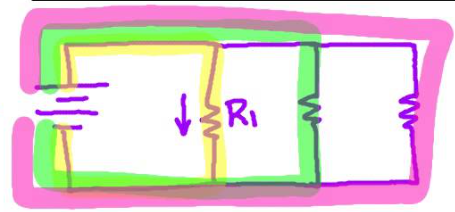
Here are three components connected in parallel. It is like 3 loops being laid on top of each other.
Sort these circuits into series and parallel circuits
Series
Parallel
Now we will look at potential difference in series and parallel circuits.
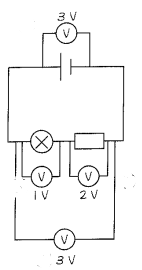
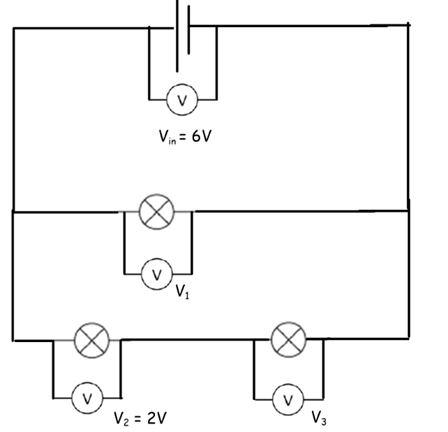
Here is a series circuit. The voltmeters are wired in parallel over the components, but it is still considered a series circuit,
The cell provides 3 V and in total, the bulb using 1V and the resistor using 2V, they use 3 V.
This
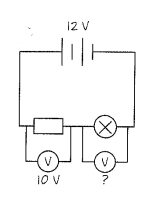
This battery provides 12 V to the components. How much does the bulb use?
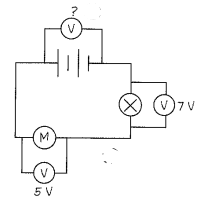
The bulb uses 7V and the motor uses 5V. What potential difference does the battery provide?
Select which set of items could be used to build a complete circuit.
Find the missing potential difference
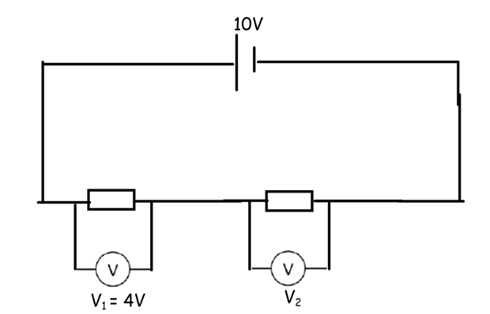
Find the missing potential difference
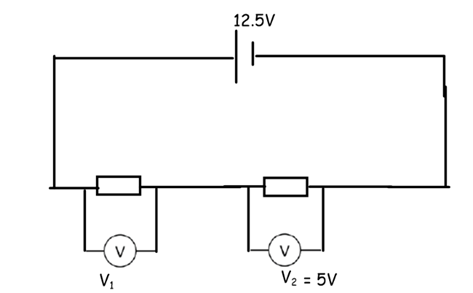
Find the missing potential difference
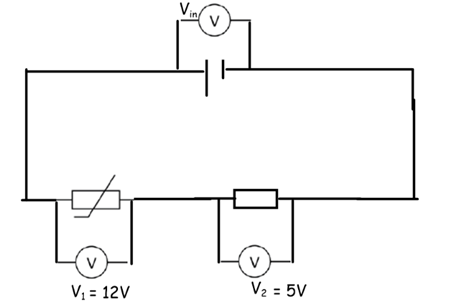
Find the missing potential difference for V3
Find the missing potential difference for V1
Material that blocks the flow of electric current
Resistance is a property of components or materials, which tells us how difficult it is for electrons to move through a material. It is measured in Ohms which has this symbol Ω.
Resistance can be calculated this way:
Resistance = Potential Difference / Current
For example, a potential difference of 10V and a current of 2A
Resistance = 10V / 2A
Resistance = 5 Ω
A circuit has a potential difference of 12 volts and a current of 3 amps. What is the resistance?
If a device runs on 24 volts and uses 6 amps, calculate the resistance in the circuit.
Determine the resistance when a potential difference of 10 volts is supplied and the current is 2 amps.
A light bulb connected to a 9-volt battery draws a current of 1.5 amps. What is its resistance?
A light bulb operates at 120 volts and draws 0.5 amps. What is its resistance?
A motor runs on 240 V and consumes 2 A. Calculate the motor's resistance.