KELSO HIGH Modeling Stream Erosion and Deposition

Last updated 9 months ago
11 questions
Water plays an important role in creating the landforms found on Earth's surface. Moving water can remove and transport, or erode, pieces of rock, or sediments from their original location. These eroded sediments are pushed by the moving water, sometimes for only a few millimeters. Where the sediments end up coming to rest, or deposited, depends on the size of the sediments and the force of the flowing water. Sediments are deposited in those location where the force of the flow becomes too low to push the sediments any further. A delta is a depositional area near the mouth of a river, where the flowing river enters a non-flowing body of water such as a lake or ocean.
Materials:
  • 2 textbooks
  • 1 Rainmaker (small container with holes in the bottom)
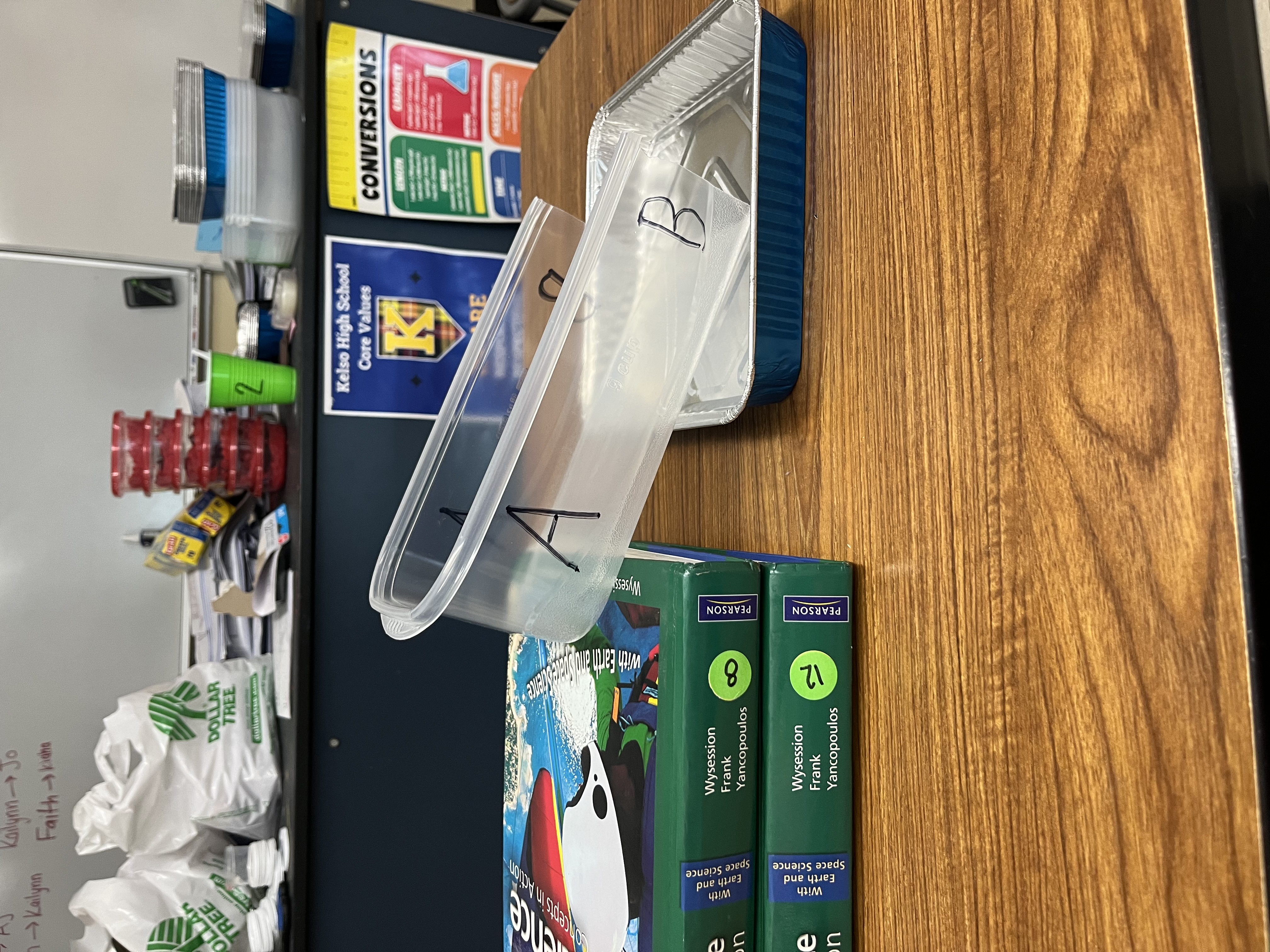
  • 1 Stream Table (Tupperware with 1 end removed)
  • 1 Catch Basin (solid container)
  • 1 large cup of water
  • 1 30mL cup
  • 1 large binder clip
  • container of dampened sand
  • paper towels
Procedures:
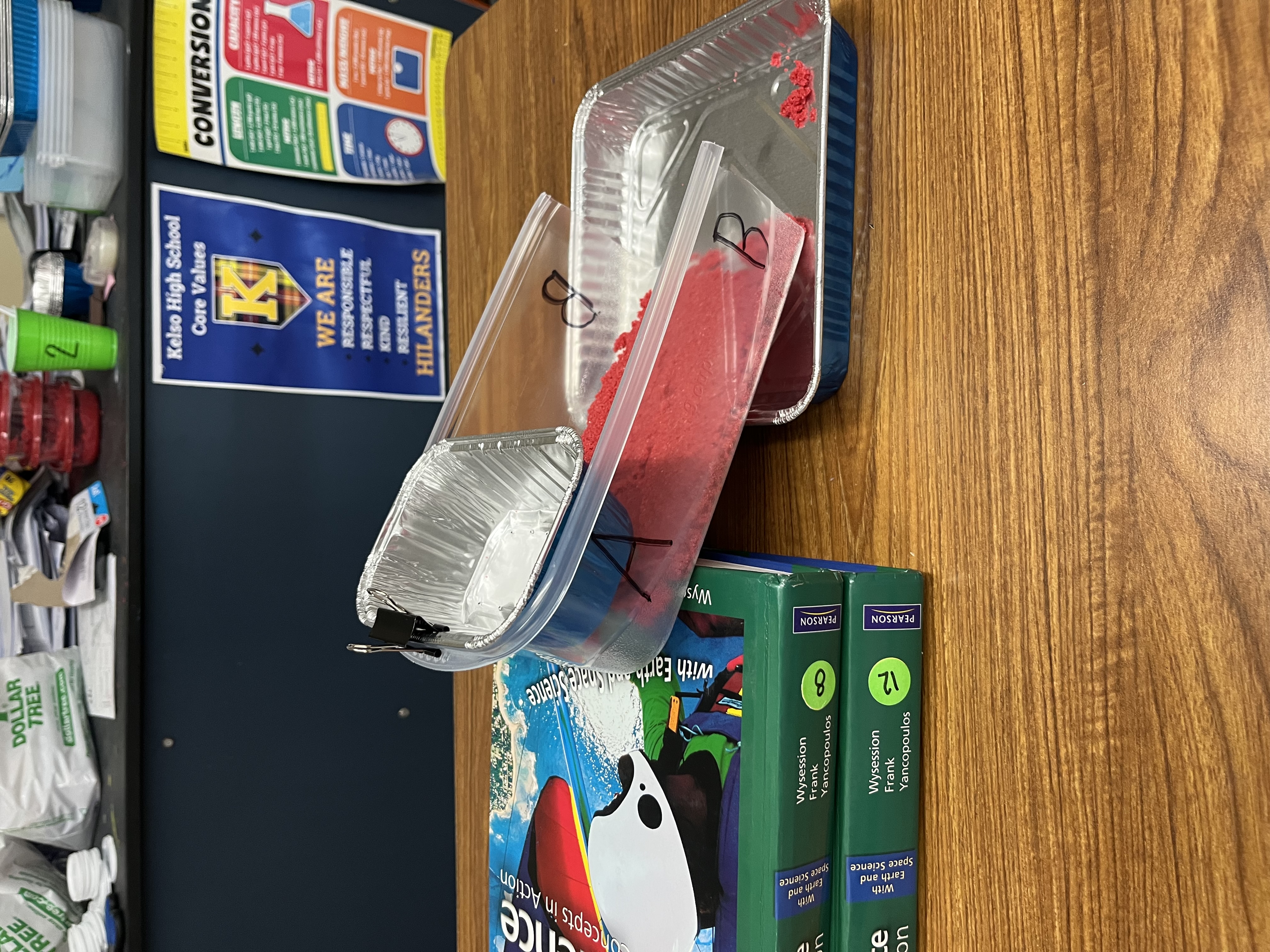
  1. Set up your stream table like the image to the right.
  2. Add four (4) small cupful (use the 30mL cup) of dampened sand to the middle of the stream bed. Use your fingers to gently pack the sand into an even layer that covers the stream bead from points A to point B.
  3. Place the Rainmaker over point A on the Stream Table and secure with a large binder clip. See second image to the right.
  4. Add 1 30mL cup of water to the Rainmaker and observe. NOTE: If you have difficulty getting the "rain" to fall from the rainmaker, gently tap the side of the rainmaker or run a fingernail along the bottom of it.
2

Use the space below to sketch the patterns produced by the flowing water.

Procedure:
5. Add another 30mL of water to the Rainmaker and observe.
2

Use the space below to sketch the patterns produced by the flowing water after adding the 2nd 30mL of water.

Procedure:
6. Add a third 30mL of water to the Rainmaker and observe.
2

Use the space below to sketch the patterns produced by the flowing water after adding the 3rd 30mL of water.

1

Describe the major changes that occurred each time 30mL of rain fell on to the stream bed.

1

Where did the greatest amount of erosion occur?

1

Explain why more erosion takes place in the location you chose as your answer to #5 than in the other options.

1

Where did the greatest amount of deposition occur?

1

Explain why more deposition takes place in the location you chose as your answer to #7 than in the other options.

1

In the real world, there are places where both erosion and deposition can occur. Describe this type of location. Explain why both erosion and deposition can occur in this type of location.

1

Explain why it is important for people to understand and determine where erosion and deposition are occurring today.

1

Explain why it is important for people to understand and determine where erosion and deposition have occurred in the past.