Log in
Sign up for FREE
arrow_back
Library

TEST_ U5: Learning, Memory, Problem Solving

star
star
star
star
star
Last updated 9 months ago
32 questions
Required
4
SSPBC1.c
Required
1
SSPBC1.c
Required
1
SSPBC1.c
Required
1
SSPBC1.c
Required
1
SSPBC2.a
Required
1
SSPBC2.a
Required
1
SSPBC2.a
Required
1
SSPBC2.a
Required
1
SSPBC2.a
Required
1
SSPBC2.a
Required
1
SSPBC2.b
Required
1
SSPBC2.a
Required
1
SSPBC1.a
Required
1
SSPBC1.b
Required
1
SSPBC1.d
Required
1
SSPBC1.d
Required
6
SSPBC2.a
Required
6
SSPBC2.b
Required
1
SSPBC1.c
Required
1
SSPBC2.b
Required
1
SSPBC2.c
Required
1
SSPBC2.c
Required
1
SSPBC2.c
Required
1
SSPBC2.d
Required
1
SSPBC2.d
Required
1
SSPBC2.d
Required
1
SSPBC1.d
Required
4
SSPBC2.c
Required
1
SSPBC2.c
Required
1
SSPBC2.c
Required
1
SSPBC2.d
Required
2
SSPBC2.b
Question 1
1.

Draggable itemarrow_right_altCorresponding Item
arrow_right_alt
arrow_right_alt
arrow_right_alt
arrow_right_alt
Question 2
2.

Question 3
3.

Question 4
4.

Question 5
5.

Question 6
6.

Question 7
7.

Question 8
8.

Question 9
9.

Question 10
10.

Question 11
11.

Question 12
12.

Question 13
13.

Question 14
14.

Question 15
15.

Question 16
16.

Question 17
17.
Drag and drop the correct terms into their place in this diagram about memory.
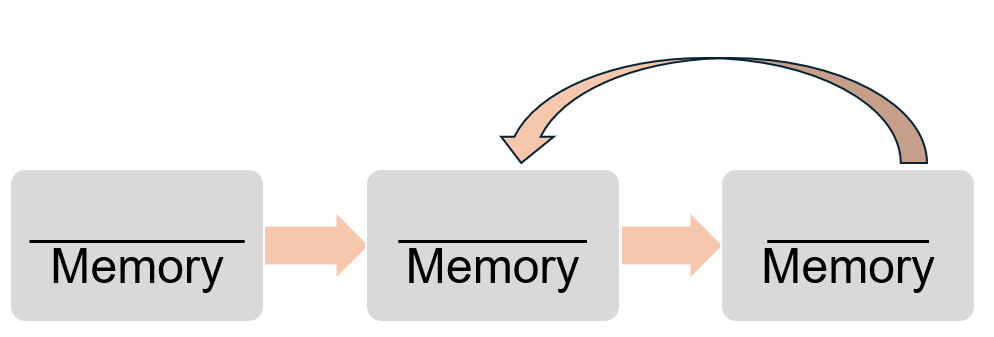
Other Answer Choices:
Sensory
Short-term
Long-term
Attention
Encoding
Retrieval
Question 18
18.

Draggable itemarrow_right_altCorresponding Item
arrow_right_alt
arrow_right_alt
arrow_right_alt
arrow_right_alt
arrow_right_alt
arrow_right_alt
Question 19
19.

Question 20
20.

Question 21
21.

Question 22
22.

Question 23
23.

Question 24
24.

Question 25
25.

Question 26
26.

Question 27
27.

Question 28
28.
Draggable itemarrow_right_altCorresponding Item
arrow_right_alt
arrow_right_alt
arrow_right_alt
arrow_right_alt
Question 29
29.

Question 30
30.

Question 31
31.

Question 32
32.

Match the reinforcement/punishment to its example
Negative Punishment
A child throws a fit in a store because they want a toy. The parent gets the child the toy to get them to behave
Positive Punishment
The radio in your car will not turn on until you buckle your seat belt. So, you buckle your seat belt, now you can get your tunes on
Positive Reinforcement
You cussed in practice, the rule is you have 25 push-ups now... Every time you swear its 25 push-ups
Negative Reinforcement
You came home late (past curfew) your parents take away your car for a week
The process by which a stimulus increases the chances of a preceding behavior occurring again is called
systematic desensitization
extinction.
reinforcement.
punishment
Ivan Pavlov's experiments with dogs yielded information about
counterconditioning.
observational learning
classical conditioning.
operant conditioning.
A conditioned response occurs
anytime learning occurs.
automatically
as a result of pairing an unconditioned stimulus with a conditioned stimulus.
after extinction.
The process of getting information into memory is called
registering.
priming.
encoding.
chunking.
Which type of memory has an essentially unlimited capacity?
short-term memory
long-term memory
iconic memory
echoic memory
The process of retrieval refers to
the organization of information into manageable units.
the persistence of learning over time.
getting information out of memory storage.
conscious repetition of information to be remembered.
Every day as she walks to school, Susana passes a mural painted on the side of a building. However, when asked, she says she does not remember ever seeing it. Which of the following is the best explanation for this occurrence?
Susana has not paid attention to the incoming information so it was not encoded into long-term memory.
Because of the time span between being exposed to the mural, the spacing effect has interrupted memory formation.
The memory of the mural has decayed over time.
Such implicit memory is stored in the cerebellum, thus Susana must have experienced damage to that brain region.
While your Mom is lecturing you about cleaning your room, you lose concentration. Then, suddenly you hear the significant words, “no car keys.” When she asks, “Are you listening to me?” you are able to repeat the last few things she said before mentioning car keys. Which of the following best explains this phenomenon?
Words stored in echoic memory will last for 3 to 4 seconds, so you can still recall her words.
Because you have heard the same lecture many times, rehearsal has caused it to be stored in
long-term memory.
Hearing the words “car keys” leads to the priming of specific memories.
What your Mom said at the beginning and end of her lecture will be recalled because of the serial position effect.
“The magical number seven, plus or minus two” refers to the storage capacity of ________ memory.
implicit
explicit
short-term
sensory
A mnemonic device is a
test or measure of memory.
sensory memory.
technique for automatic processing.
memory aid.
The increase in synaptic firing potential that contributes to memory formation is known as
chunking.
proactive interference.
long-term potentiation.
automatic processing.
What is learning primarily based on?
Following instructions from teachers only.
Repetition of unconnected facts.
Natural ability without practice.
Experience and interaction with the environment.
What is a primary concept of the behavioral approach?
Learning through cognitive processes.
Understanding emotions in learning.
Learning through reinforcement and punishment.
Developing fixed personality traits.
What is the main concept of social learning theory?
Learning is biological and innate.
Learning through observing others' behaviors and outcomes.
Learning through direct experience only.
Learning requires formal education.
Sally goes to a cultural event with her friend Kajal. She is unsure about how to behave in this setting, so she watches Kajal and copies her interactions and mannerisms. In this instance, Sally learned how to behave through what type of learning?
operant conditioning
classical conditioning
social learning
latent learning
Match the memory technique to the correct description.
Acronym
breaking information into smaller parts to make it easier to remember
Maintenance Rehearsal
intentionally making connections between new and old information while reviewing to create deeper encoding
Visualization
repeating the information over and over to keep it in short-term memory longer (like repeating a phone number until you dial it)
Spacing Review
Using the first letter of a list of items to create one word to help keep information in short-term memory
Chunking
creating mental images of things in a list or steps in a procedure to help encode information into long-term
Elaborate Rehearsal
Reviewing material in shorter but more frequent bursts (like 10 minutes each night) in order to improve long-term memory
Which of the following best describes the DIFFERENCE between classical and operant conditioning?
Classical conditioning involves involuntary behaviors, while operant conditioning involves voluntary behaviors.
Classical conditioning can only be done on animals, while operant conditioning can be used on humans.
Behaviors learned from classical conditioning can experience extinction while behaviors learned from operant conditioning last forever.
Classical conditioning is a type of associative learning and operant conditioning is not.
According to the levels of processing theory, which of the following will result in a memory with the strongest recall? (i.e. the strongest, most easily remembered)
Writing it down once in your notebook with your favorite pen.
Repeating your friend's birthday over and over to yourself (i.e. "April 16, April 16, April 16...")
Having to listen to her lecture you after forgetting her birthday to encourage you to not do it again.
Thinking about the date and making connections to other information. (i.e. "April 16th is the day after tax day. 16 is my sister's age. April is when all the pollen comes. My aunt's name is April..."
On the telephone, Dominic rattles off a list of 10 grocery items for Kyoko to bring home from the store. Immediately after hearing the list, Kyoko attempts to write down the items. She is most likely to forget the items
at the beginning and in the middle of the list.
at the beginning of the list.
in the middle of the list.
at the end of the list.
Walking into your bedroom you think, “I need to get my backpack in the kitchen.” When you reach the kitchen, you forget what you came there for. As you return to your bedroom, you suddenly remember, “Backpack!” This sudden recall is best explained as
the misinformation effect.
a context-dependent memory
source amnesia.
memory decay.
Professor Sharapova has so many memories of former students that she has difficulty remembering the names of new students. The professor's difficulty best illustrates
retroactive interference.
mood-congruent memory.
proactive interference.
the spacing effect.
What is a mental set in problem solving?
A method for decision-making.
A heuristic used in algorithms.
A fixed approach to solving similar problems.
A bias toward new solutions.
Heuristics are primarily used for what purpose?
To ensure optimal solutions always.
To create complex algorithms.
To simplify decision-making and problem solving.
To avoid all biases during decisions.
Which of the following describes an algorithm?
An emotional decision-making tool.
A step-by-step procedure for solving a problem.
A shortcut to quick decisions.
A way to guess solutions easily.
How can biases affect decision making?
They have no effect at all.
They lead to systematic errors in judgment.
They always result in correct outcomes.
They enhance logical reasoning skills.
anterograde amnesia
inability to remember events that take place BEFORE a trauma/illness
infantile amnesia
inability to remember events that take place AFTER a trauma/illness
retrograde amnesia
inability to correctly remember WHERE we learned something
source amnesia
inability to remember things from the first few years of life
What is an example of encoding failure?
Forgetting your friend's birthday.
Misplacing your keys often.
Not paying attention during a lecture.
Recalling a number after writing it down.
Decay theory suggests forgetting occurs when?
Information is not reviewed over time.
Memories are too old to access.
New knowledge is learned quickly.
Emotions disrupt memory processes.
Which is NOT a method used for solving problems?
insight
heuristics
schema
algorithms
Which of the following memory techniques might help keep a memory in LONG-TERM memory?
testing effect (self-testing)
elaborative rehearsal
maintenance rehearsal
mental set