Log in
Sign up for FREE
arrow_back
Library

Unit 7 Test - Disease HB

star
star
star
star
star
Last updated about 3 hours ago
38 questions
1
HS-LS1-1
1
HS-LS1-1
1
HS-LS1-1
1
HS-LS1-4
1
HS-LS1-3
1
HS-LS1-3
1
HS-LS1-4
1
HS-LS1-1
1
HS-LS1-1
1
HS-LS1-4
1
HS-LS1-1
2
HS-LS1-1
1
HS-LS1-4
1
HS-LS1-4
1
HS-LS1-4
1
HS-LS1-4
1
HS-LS1-4
1
HS-LS1-4
1
HS-LS1-4
2
HS-LS1-3
3
HS-LS1-3
1
HS-LS1-4
1
HS-LS1-4
1
HS-LS1-4
1
HS-LS1-4
1
HS-LS1-4
1
HS-LS1-4
1
HS-LS1-4
1
HS-LS1-3
1
HS-LS1-3
1
HS-LS3-2
1
HS-LS3-2
1
HS-LS3-2
1
1
1
1
1
The p53 gene is a gene that is used to create a protein that helps control the cell cycle. It is a tumor suppressor gene because it can halt the cell cycle at a particular checkpoint if the cell is not ready, or damaged in any way, before going on to the next stage that eventually leads to the creation of two daughter cells.
Different forms of ovarian cancer can be caused by mutations in the p53 gene. Below you will find the normal p53 gene found on chromosome 17.
Question 1
1.

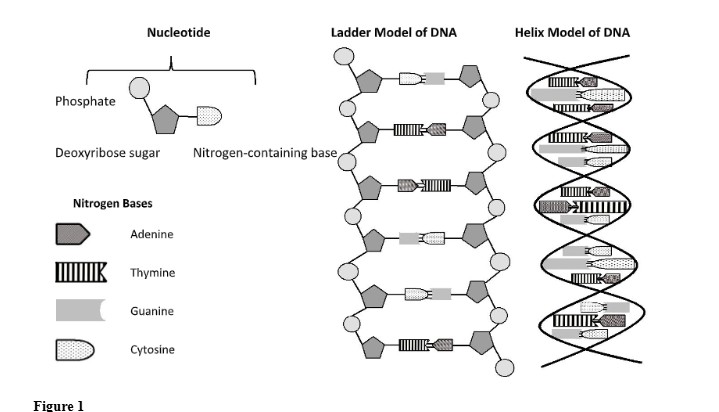
What are the rungs (center) of the DNA ladder made out of?

Question 2
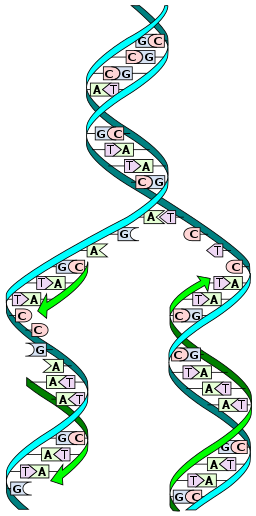
2.

Use Figure 1 to determine what nitrogen base pairs with Cytosine in the DNA structure?

Question 3
3.

According to Chargaff’s base pairing rule, if there is 40% Adenine in a DNA structure, how much Cytosine must there be?

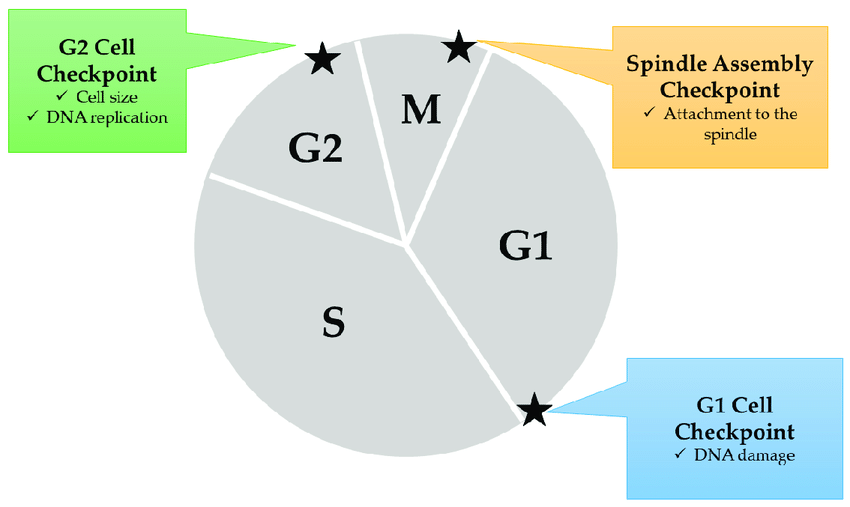
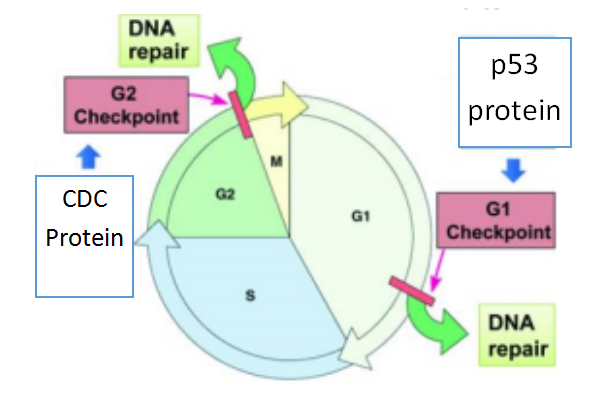
The diagram below displays different genetic checkpoints that the cell uses. The p53 protein is a tumor suppressor protein. The CDC protein is a proto-oncogene. Answer the following questions about checkpoints and the cell cycle using this diagram.

Question 4
4.

When it comes to the p53 gene being affected by mutation, which of the checkpoints would be interrupted?

Question 5
5.

If p53 was affected by a mutation after the G1 checkpoint during the S phase, how might the cell be safeguarded from becoming cancerous?

Question 6
6.

The cell cycle represented above is from a healthy cell. How would the cell cycle differ if it was a cancer cell?

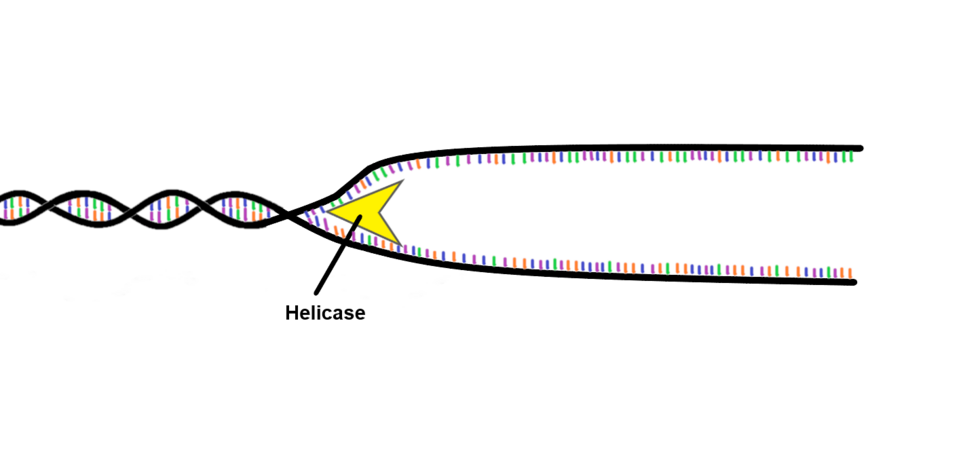
The following diagram shows the S phase in more detail. Answer the questions below about p53 and its activity during the S phase.
Figure 2
Question 7
7.

Using the Figure 2 above, which claim best explains the role of helicase during DNA replication?

Chargaff's Rule is a fundamental principle in the study of DNA structure that was established by biochemist Erwin Chargaff in the 1950s. This rule states that in any given DNA molecule, the amount of adenine (A) is equal to the amount of thymine (T), and the amount of cytosine (C) is equal to the amount of guanine (G). This complementary pairing is crucial for DNA replication and ensures the accurate transmission of genetic information during cell division. Chargaff’s findings laid the groundwork for understanding the double helix structure of DNA, which was later elucidated by Watson and Crick.
Question 8
8.

If A = 40%, what percent of DNA is T?

Question 9
9.

Using the numbers from the previous question, what would be the percentage of G?

Question 10
10.

What is the product of the process shown in the diagram below?

Question 11
11.

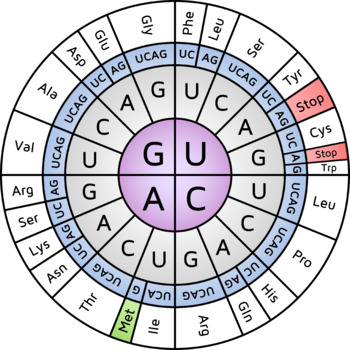
Scenario: Below is a short, hypothetical segment of the template strand of the human TP53 gene. This gene encodes the p53 protein, which prevents cells with damaged DNA from dividing.

DNA Template Strand: T A C A C C T T G G C G A C G A C T

Write the complementary mRNA sequence that would be synthesized from this DNA template.

Question 12
12.
Type the abbreviated name of the amino acid sequence from the mRNA sequence you just made in the previous question.

_______ - _______ - _______ - _______ - _______ - _______


Question 13
13.

What is the main role of the p53 protein in the cell?

Question 14
14.

How does p53 respond to DNA damage?

Question 15
15.

In what type of cellular process is p53 involved?

Question 16
16.

What happens if the p53 gene is mutated?

Question 17
17.

What can trigger the activation of p53?

Question 18
18.

How does p53 influence apoptosis?

Question 19
19.

Why is p53 often termed the "guardian of the genome"?

P53 has checked out the ovarian cells’ DNA and found a mutation.

Figure 5


Question 20
20.

In the G2 cell checkpoint, if the cell fails to catch a mistake made in the DNA sequence, then what could happen?

Changes to checkpoint enzymes can result in the loss of apoptosis during cell cycle checkpoints and lead to cancer. The p53 tumor suppressor gene regulates the cell cycle and is the most widely mutated gene in humans (Wang and Harris, 1997). This is supported by the fact that it is mutated in over 50% of all human cancers. p53 can activate DNA repair proteins when DNA has sustained damage, can hold the cell cycle at the G1/S regulation point if it spots a mutation, and can begin apoptosis if the DNA damage proves to be unfixable (Pietenpol and Stewart, 2002). Formations of cancer tumors can occur if this system no longer works. If the p53 gene is damaged, then tumor suppression is severely reduced. The p53 gene can be damaged by radiation, various chemicals, and viruses such as the Human papillomavirus (HPV). People who inherit only one functional copy of this gene will most likely develop tumors in early adulthood (Varley et al., 1997; Gu et al., 2001).
Question 21
21.

Explain how p53 helps us avoid developing cancer in a healthy cell but increases the risk of cancer when it doesn’t function properly.

Use 2 pieces of evidence from the text above as a supporting detail.

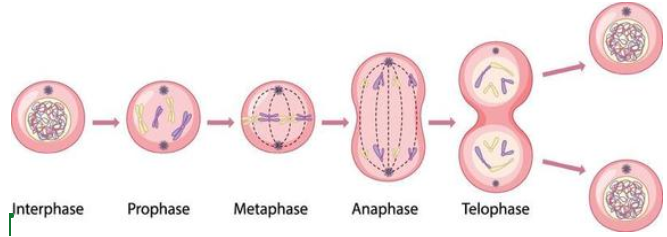
When a cancerous cell enters cell division, it divides without cell cycle regulation. Answer the following questions about cell division.
figure 3
Question 22
22.

What process is being shown in the diagram above?

Match the names of the phases of Mitosis with their description USING FIGURE 3 ABOVE
Question 23
23.

Prophase

Question 24
24.

Metaphase

Question 25
25.

Anaphase

Question 26
26.

Telophase

Question 27
27.

After mitosis and cytokinesis, the final result will be:

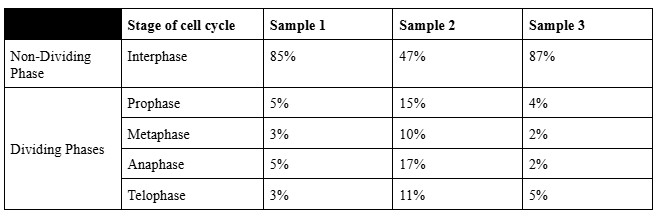
Analyze the following data chart. For each sample, the percentage of cells found in that stage of the cell cycle are recorded.
Question 28
28.

Based on the data above, which sample is most likely cancerous? (1pt)

Question 29
29.

If the scientists where studying cancer causes and exposed a cell sample to the chemical found in cigarette smoke, what would they be testing?

Question 30
30.

If the scientists exposed a cell sample to sunlight’s UV rays, what would they be testing?

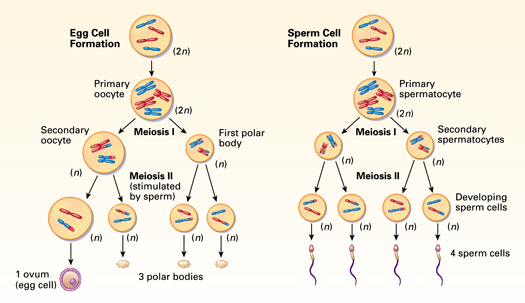
Using the following diagram for questions #21-23, contrast the process of meiosis with the formation of cells during mitosis.
Figure 6

Question 31
31.

The types of cells are formed by meiosis?

Question 32
32.

To increase genetic variety, the chromosomes perform crossing over. In what stage shown above, does crossing over occur?

Question 33
33.

Which of the following statements is a correct comparison between mitosis and meiosis? (1pt)

Question 34
34.

What is shown in the image above?

Question 35
35.

Chromosomes form tetrads during

Question 36
36.

If a eukaryotic cell has 20 chromosomes and it undergoes meiosis, how many cells will result, and how many chromosomes will they contain?

Question 37
37.

Cells that are ________ possess a single set of chromosomes

Question 38
38.

From the list below, which choice represents a correct difference between sperm production and egg production?

An mRNA molecule
Two unique haploid cells
Two unique/different DNA molecules
DNA Replication
Cell Cycle
Protein Synthesis
Sperm are produced by meiosis; eggs are produced by mitosis.
Four mature sperm are produced from one cell; one large egg is produced from one cell.
Eight mature sperm are produced from one cell; two eggs are produced from one cell
Sperm are produced by somatic (body) cells; eggs are produced by gametes