Unit 3 Assessment: Waterfalls
star
star
star
star
star
Last updated 8 months ago
8 questions
Note from the author:
Waterfalls Assessment addresses earth science standards on how water affects the land. It includes an informational reading, comprehension questions, and vocabulary
A roaring waterfall is an amazing sight to see. Waterfalls are not only beautiful; they also help scientists understand Earth’s history. By studying how waterfalls are made, scientists can learn important information about the formation of landforms on Earth.
Scientists have known for a long time that waterfalls are made by different natural forces, depending on their location and characteristics. For example, when glaciers melt, they leave behind deep valleys with steep walls. Rivers can flow over these walls, creating waterfalls. A waterfall can also form when different types of rocks meet, or where rock has uplifted.
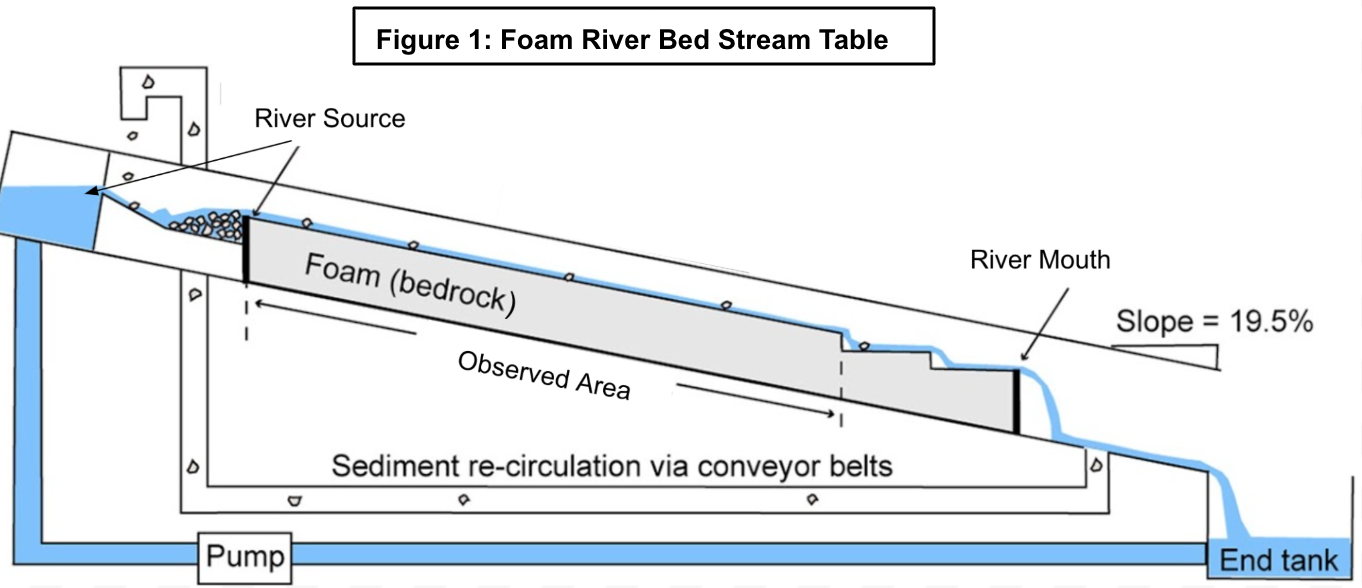
To learn how waterfalls form, a group of researchers built a small model of a river (Figure 1). This model was eight meters long and one meter deep, and they tilted it at an angle. They filled the river with a smooth layer of polyurethane foam. This foam is used in the experiment because it acts like bedrock, which is the solid rock under the ground.
Joel Scheingross, a professor in geological sciences at the University of Nevada, is one of the authors of the study.
The researchers ran a constant stream of water over the foam. The water broke off small pieces of the foam. Some areas eroded quickly, and other more slowly by chance. This process created a cycle where certain areas wore away faster than others. The places that eroded quickly became deeper more quickly because water and sediment rushed into these deepening spots. This cycle led to the formation of slides and pools in the foam. When the pools got deep enough, the strong force of the water couldn’t move the sediment from the bottom anymore, so the sediment became trapped in the pools. That’s when waterfalls began to form.
As Scheingross explains, “You get waterfalls when one pool fills up with gravel, and that pool stops eroding. But the pool right below it doesn’t have this sediment layer yet, so it keeps getting deeper over time. This means that the height difference between the upstream pool that isn’t eroding and the downstream pool that is eroding gets bigger over time.” This makes a drop- which is enough to cause a waterfall to form.
Researchers said that the foam is an ideal material for observation because it erodes much more quickly than rock. It allows scientists to see how water and sediment can affect land and cause waterfalls. The researchers plan to use this information to help them piece together how certain waterfalls formed in the past.
Required
3
Match the phenomena in the waterfall text to the appropriate vocabulary.
| Draggable item | arrow_right_alt | Corresponding Item |
|---|---|---|
Sediments moved down the stream table | arrow_right_alt | Flow |
Sediment became trapped in pools | arrow_right_alt | Erosion |
Water moved down the table due to gravity | arrow_right_alt | Deposition |
Required
4
Real Waterfalls Vs. The Experimental Stream Table. Match the features by clicking the circle in the correct column. Scroll to the right to see the second column.
Feature of natural waterfalls | Feature of the experimental stream table | |
|---|---|---|
Can be formed due to rock uplift | ||
Made of foam to simulate bedrock in a riverbed | ||
Sediment recirculation from a conveyor belt | ||
Can be formed due to glaciers melting |
Required
3
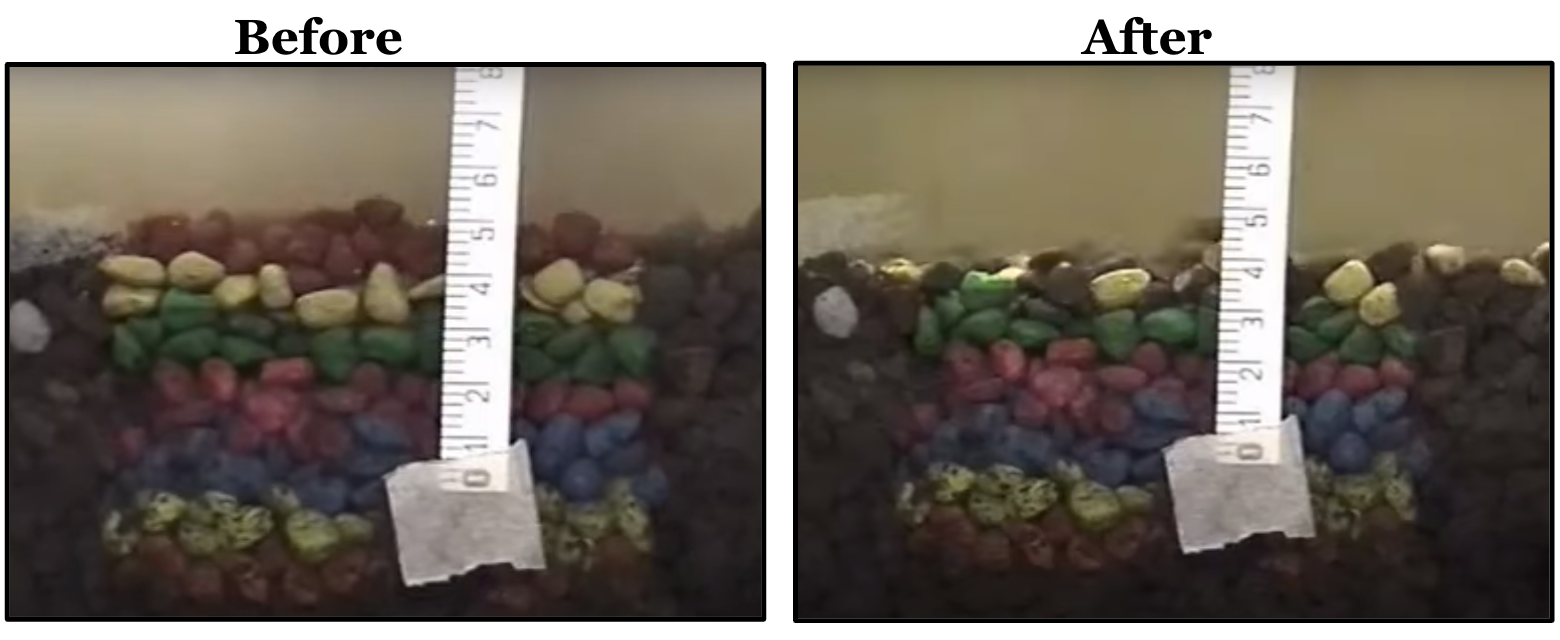
In the "pebble tank" video we watched in class, several layers of pebbles were removed due to erosion. Some were replaced by other pebbles. Drag and drop the correct labels in the image below.

Other Answer Choices:
Pebbles that deposited
Pebbles that will be moved downstream
trapped sediment
Required
4
In what ways is the "pebble tank" experiment video similar to the waterfall experiment in the passage? Check ALL THAT APPLY.
Required
3
Figure 1 shows a sediment re-circulator and water pump. What is the purpose of these devices in the stream table set-up?
Required
3
The passage states that sediment becomes trapped in pools. In the natural world when this happens, that sediment can become buried. The pressure of the layers of rock above it make that sediment become __________.
Required
4
What are two limitations of the foam river bed stream table used to model the creation of some waterfalls?
Required
1
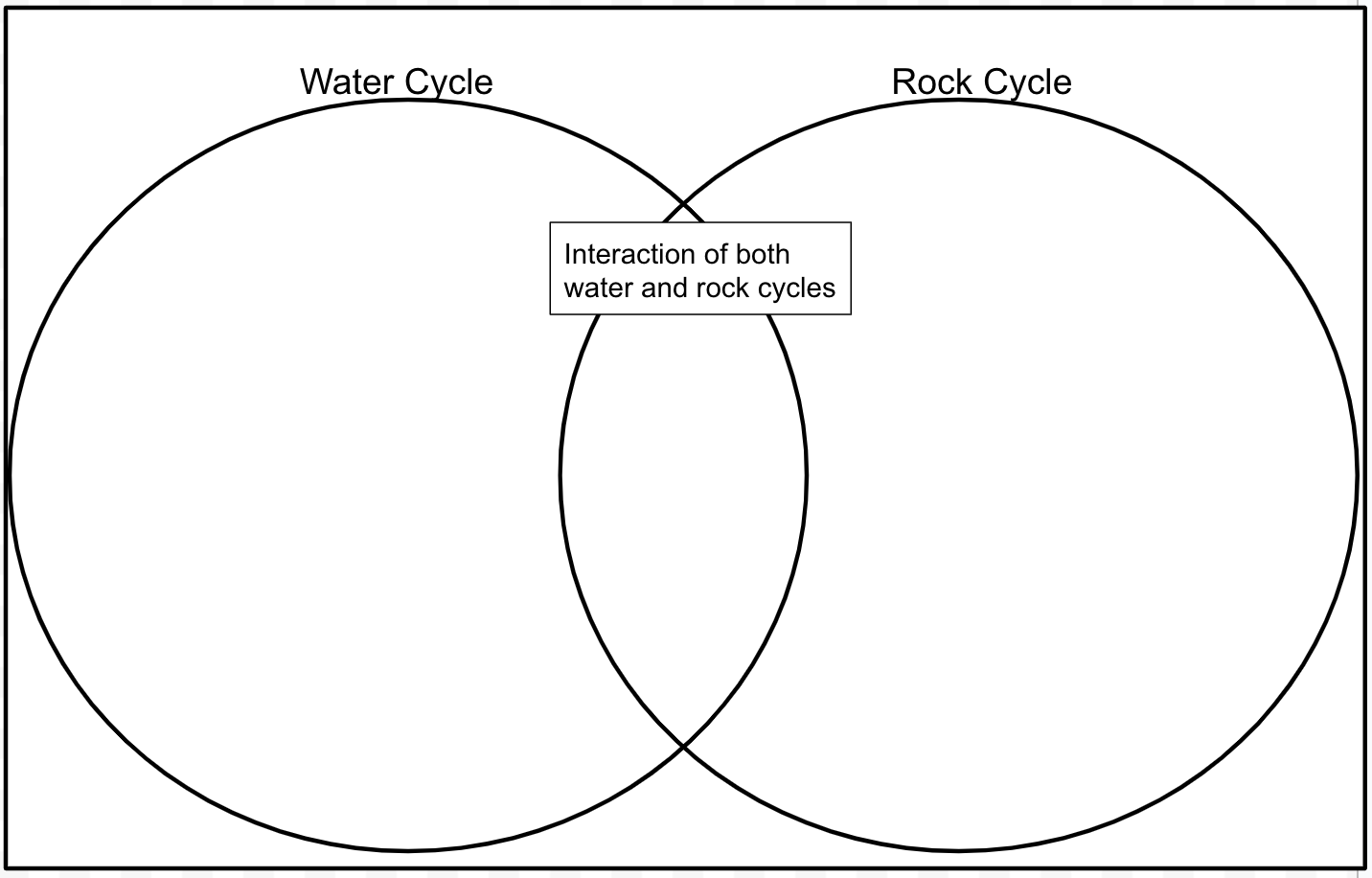
How do the rock and water cycles interact? Drag and drop the appropriate items into the venn diagram to show that it applies to the interaction of both water and rock cycle, only the water cycle, or only the rock cycle.

Other Answer Choices:
melts under layers of rock inside the earth
evaporates to form a gas
Sediments carried downstream
is a cycle where the substance changes form
the atmosphere is a resevoir
infiltration causes erosion of earth's materials
igneous, sedimentary and metamorphic rocks can change type into one another