The relative time of day can be determined by the position of the sun and the shadows created. Label each image with the relative time of day.
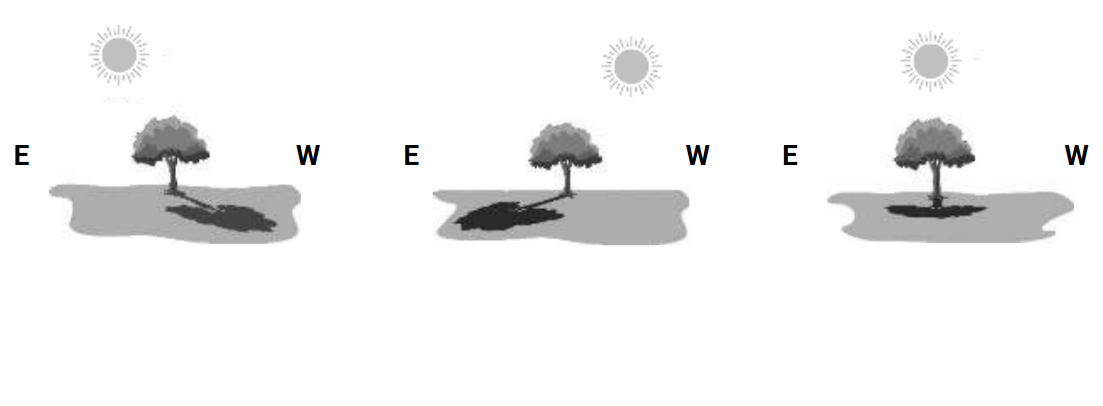
Mmuae Afoforo a Wobɛpaw:
2:00 p.m.
12:00 p.m.
10:00 a.m.
The relative time of day can be determined by the position of the sun and the shadows created. Label each image with the relative time of day.
Which of the following would provide the best evidence that Earth rotates on its axis once every 24 hours?
Select TWO correct answers.
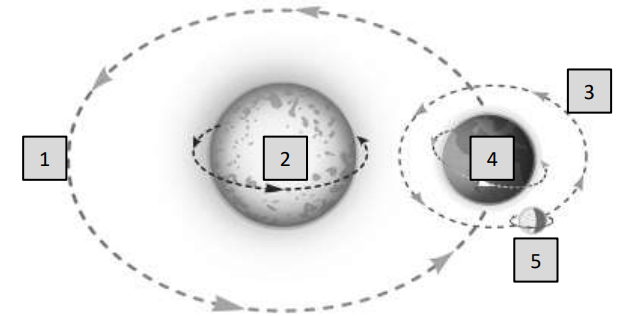
A diagram illustrating the movements of the sun, the moon, and Earth is shown.
Which motion causes the apparent movement of the sun throughout the sky each day?
What is the order of the planets from the sun? (Start with the planet closest to the sun)
Uranus
Jupiter
Venus
Earth
Neptune
Saturn
Mars
Mercury
What causes the sun to appear to move across the sky from one side to the other?
What is the difference between an object orbiting and an object rotating?
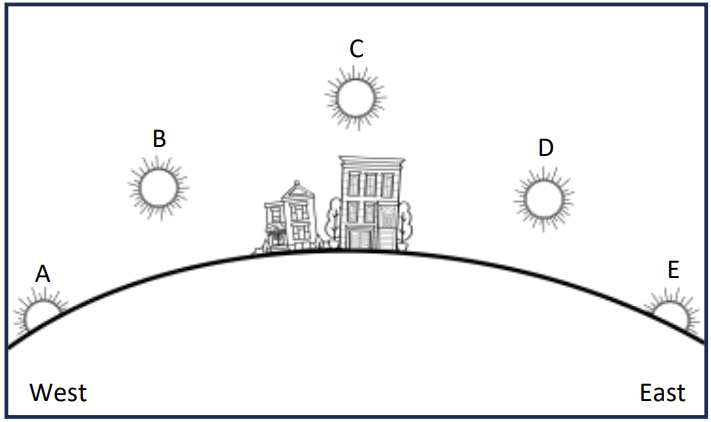
Answer the questions using the diagram.
What causes the day and night cycle to occur every 24 hours?
At which Point would the sun set?
Is it morning, noon, or evening when the sun is at Point E?
What is the relative time of day when the sun is at Point A?
Is it 12:00 p.m. or 12:00 a.m. when the sun is at Point C? Is it noon or midnight?
Select TWO answers.