Log in
Sign up for FREE
arrow_back
Library

4/11 - Science Warmup (SB-D8)

star
star
star
star
star
Last updated about 1 year ago
5 questions
1
5.10.B
1
5.10.B
1
5.10.B
1
5.10.B
1
5.10.B
Question 1
1.
Match each word to its definition.

__________________________ - A natural resource that cannot replenish at the rate it is used

_______________________ - A natural resource that can replenish within a relatively short time

________________ - A natural resource made of ancient organisms and formed over
millions of years

________ - A nonrenewable fossil fuel that was formed from ancient marine organisms that were buried by sediment for millions of years
Other Answer Choices:
Fossil fuel
Oil
Renewable resource
Nonrenewable resource
Question 2
2.

Question 3
3.
The image shows dead plants and animals covered by sediment in a body of water.
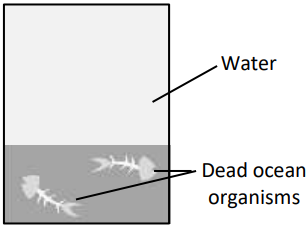


What type of fossil fuels could potentially form from this environment? __________

What other processes would need to occur to form the fossil fuels? __________
Question 4
4.

Question 5
5.

Which list shows the correct order of processes needed for sedimentary rock formation?
Deposition, erosion, compaction, cementation, and weathering
Weathering, deposition, compaction, erosion, and cementation
Erosion, weathering, compaction, cementation, and deposition
Weathering, erosion, deposition, compaction, and cementation
Which statement best describes the processes of weathering and erosion?
Weathering and erosion are directly responsible for the breakdown of any type of rock into smaller particles and the carrying away of the loose sediments.
Weathering and erosion are directly responsible for depositing loose sediments on the bottom of the ocean, forming layers of sediment.
Weathering and erosion are directly responsible for the amount of water in a river that transports sediments to the sea.
Weathering and erosion are directly responsible for the transportation, deposition, and compaction of loose sediments on the seafloor.
Which list contains only processes that must occur in order for fossil fuels to form?
Formation of faults, burial, glacier formation
Organism growth, burial, volcanic eruptions
Organism growth, burial, compaction
Erosion, burial, earthquakes