Log in
Sign up for FREE
arrow_back
Library
Week 31 SS - Natural Disasters: Who Will Pay for This?
By Sabrina Jennings
star
star
star
star
star
Share
share
Last updated 16 days ago
10 questions
Add this activity
Required
10
Required
10
Required
10
Question 1
1.
What is the most important reason to study natural disasters that have already occurred?
It teaches us about important ecosystems in our world.
It teaches us how to prepare in advance of disasters.
It helps us save property that we lost in those disasters.
It helps us pay for natural disasters.
Question 2
2.
Which of the following is
NOT
a fact about Hurricane Katrina?
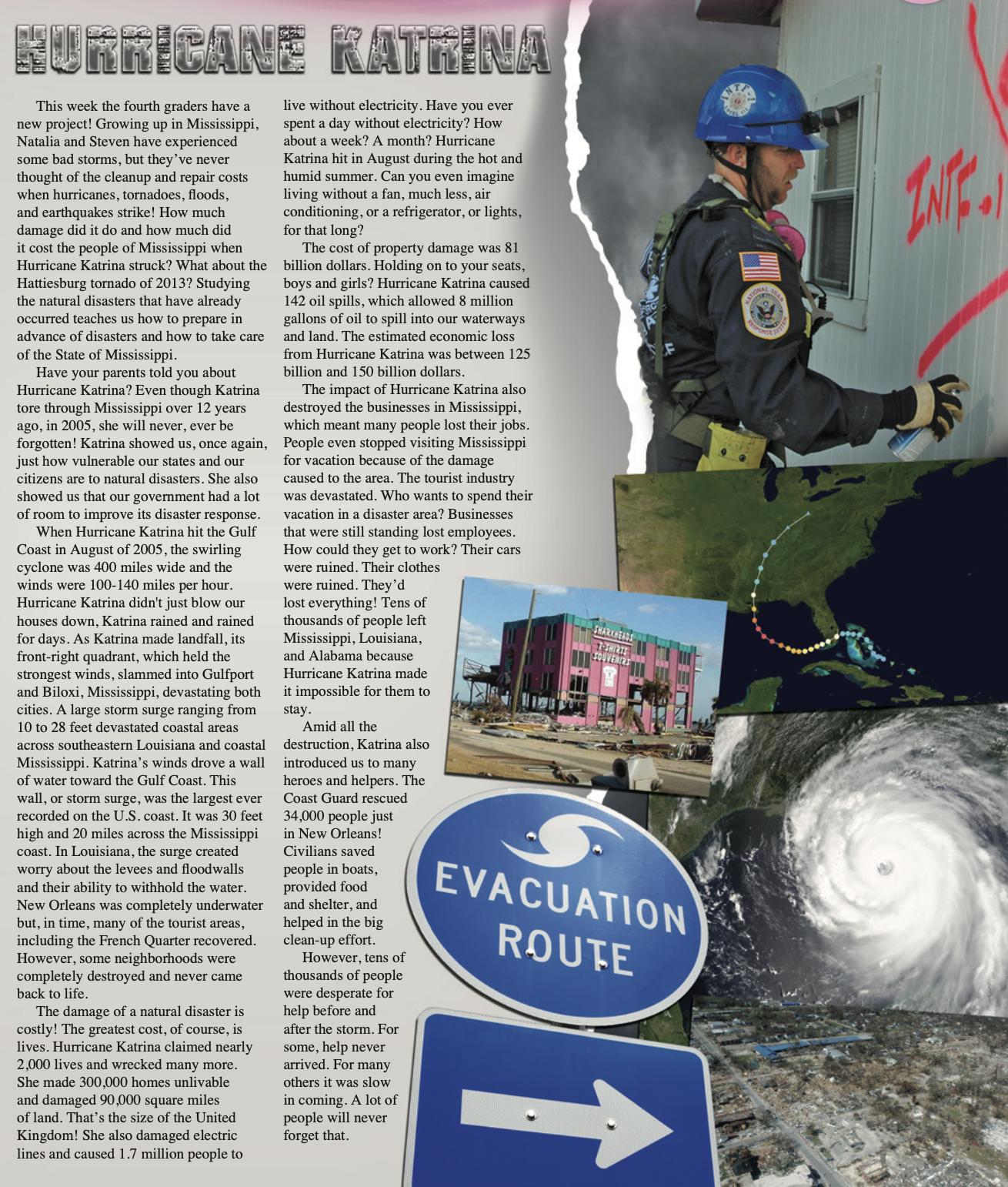
Hurricane Katrina hit the Gulf Coast in August of 2005.
The swirling cyclone was 400 miles wide.
The winds were 100-140 miles per hour.
The hurricanes back-left quadrant, which held the weakest winds, slammed into Gulfport and Biloxi.
Question 3
3.
In what way was the tourist industry affected by Hurricane Katrina?
Many more people came to Mississippi to see the devastation.
It was easier to visit because all the roads were new.
It was too expensive to visit Mississippi.
People did not want to come to a disaster area for vacation.
Required
10
Required
10
Required
10
Required
10
Required
10
Required
10
Required
10
Question 4
4.
Which of the following is
NOT
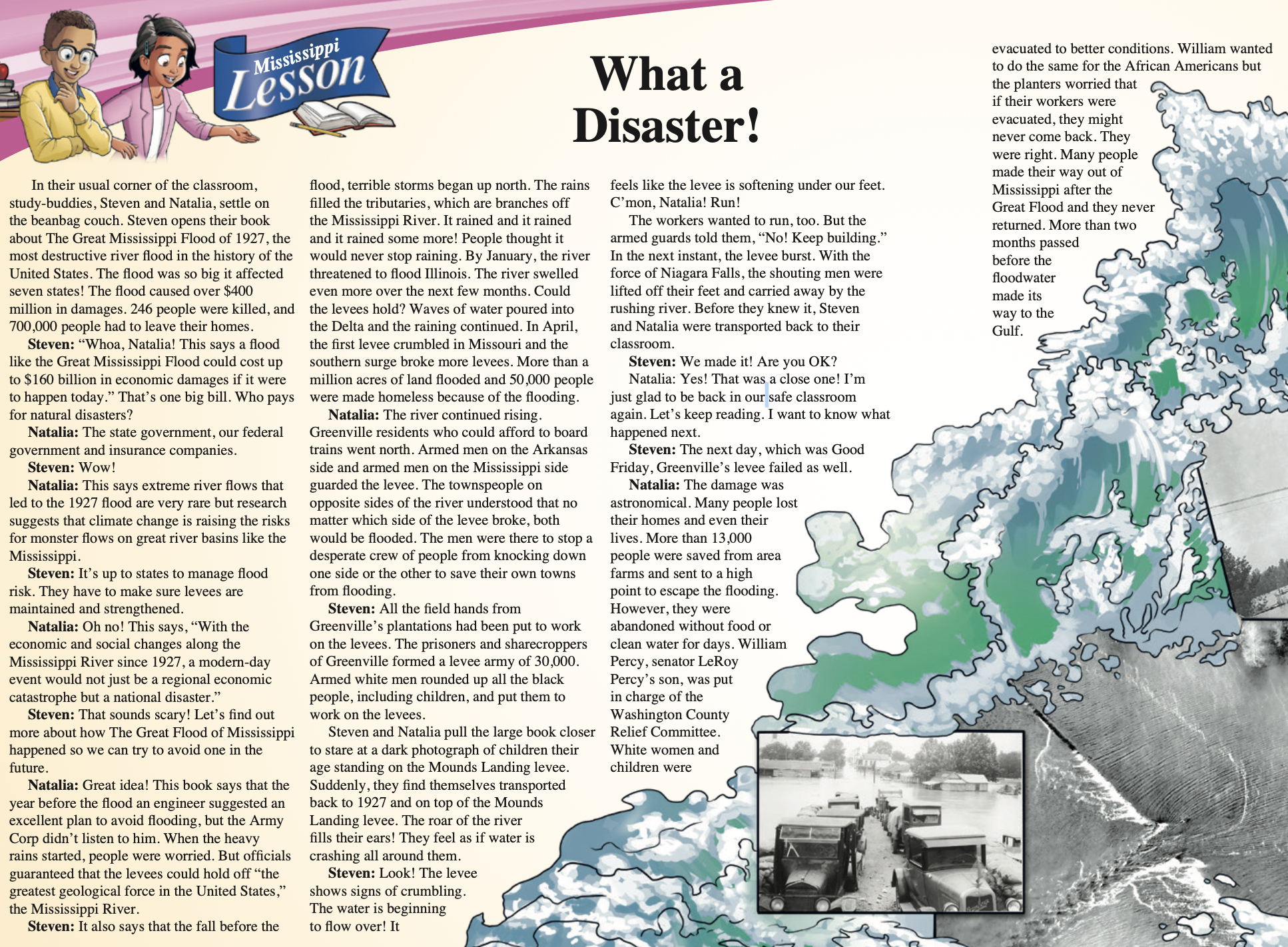
true about The Great Mississippi Flood of 1927?
This flood was so big it affected seventy states.
The flood caused over $400 million in damages.
Sadly, 246 people were killed.
700,000 people had to leave their homes.
Question 5
5.
How could the Great Mississippi Flood of 1927 have been prevented?
Workers in Mississippi could have broken the levee on the Arkansas side.
A levee army could have been formed to strengthen the levees.
Army Corps could have listened to suggestions from an engineer.
Tributaries of the Mississippi River could have been used to prevent the flooding.
Question 6
6.
Who was put in charge of the relief effort after the Great Mississippi Flood of 1927?
William Percy
the Army Corps of Engineers
Charlene Barefoot
the Coast Guard
Question 7
7.
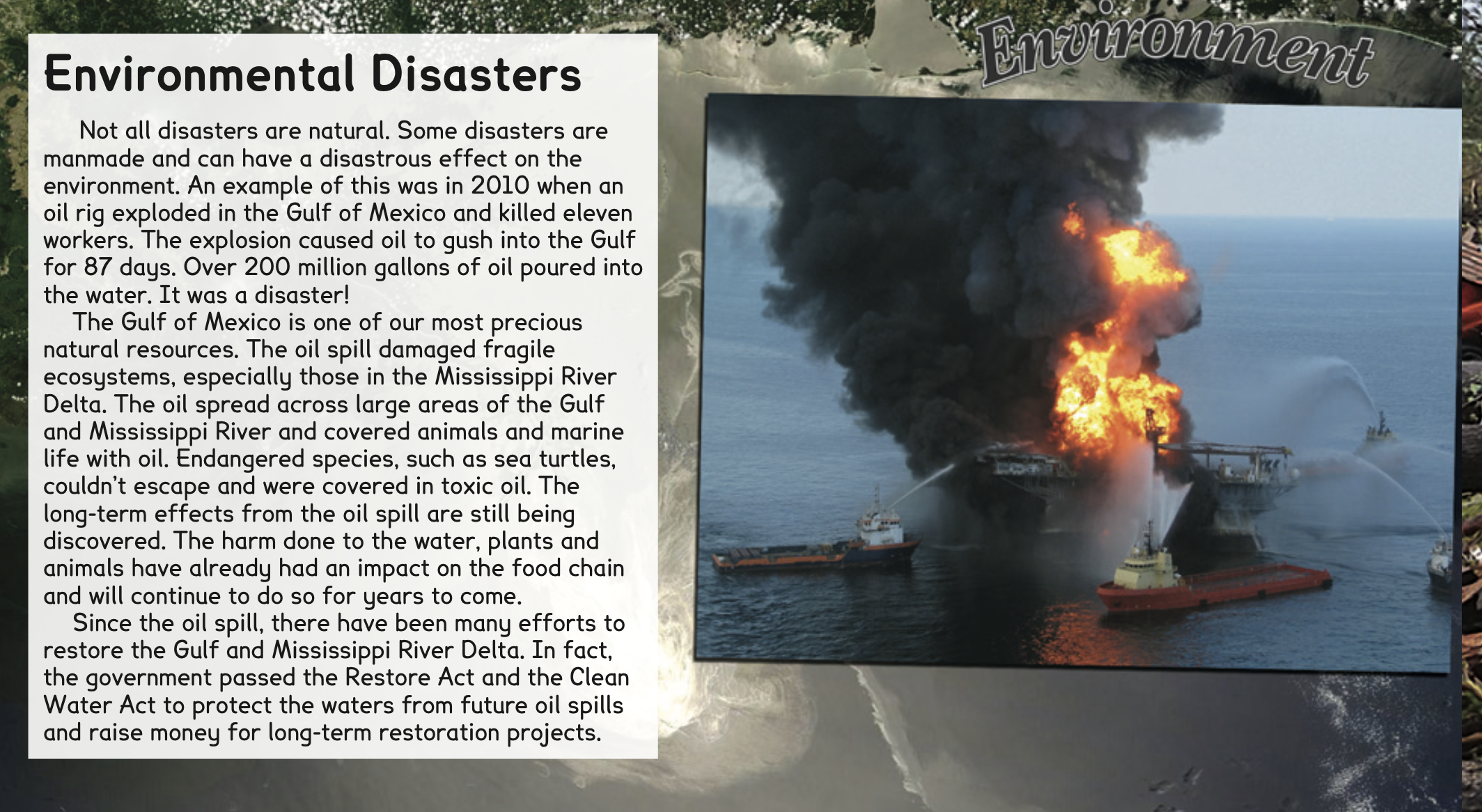
A(n) __________ is a disaster to the natural environment due to human activity.
tornado disaster
sinkhole disaster
hurricane disaster
environmental disaster
Question 8
8.
Which of the following is an example of something that was damaged by the Oil Rig Explosion of 2010?
The French Quarter
Greenville
The Mississippi River Delta ecosystem
Charlene Barefoot's truck
Question 9
9.
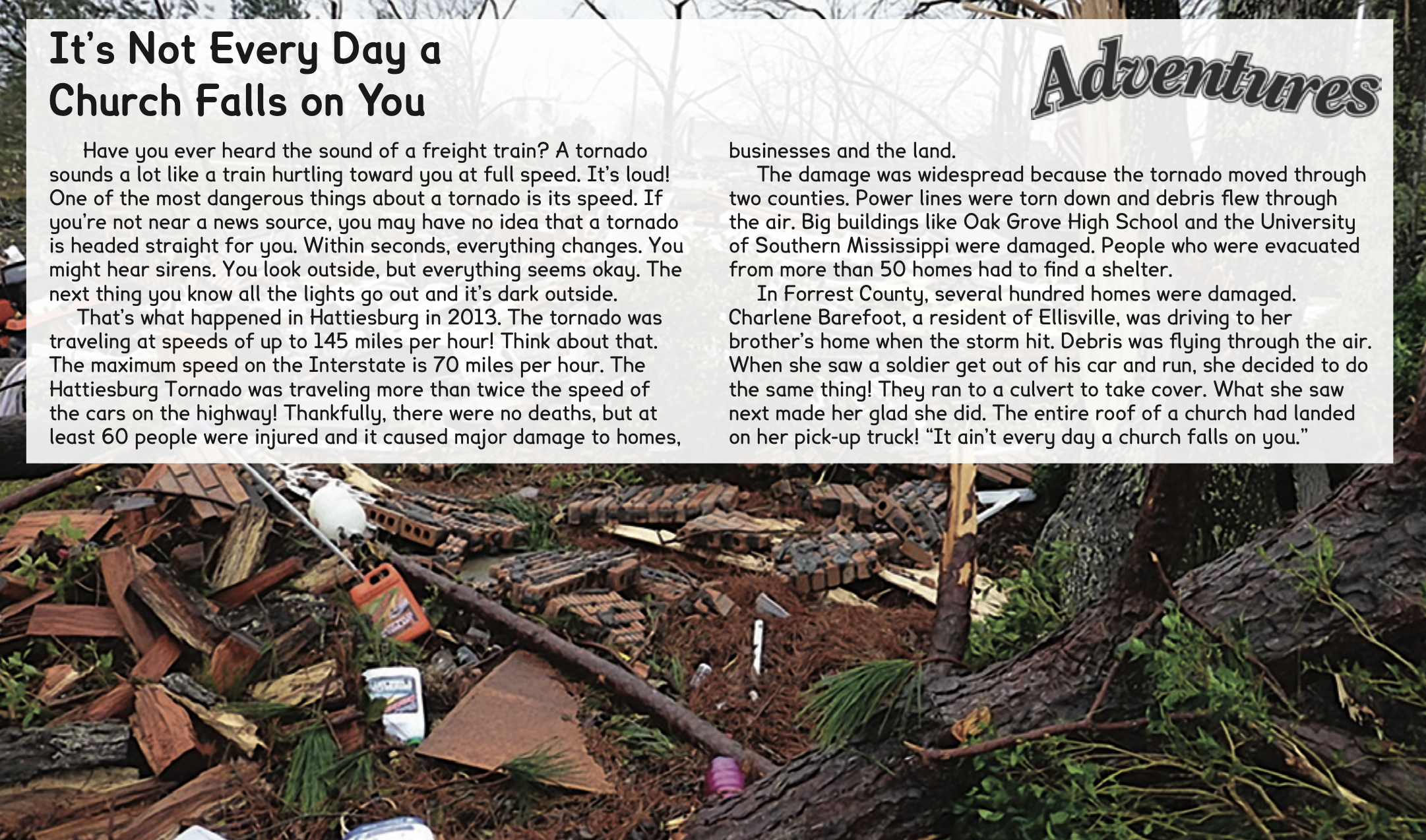
According to the text, what does a tornado sound like?
A dog howling at the moon.
A train hurtling toward you at full speed.
A car's alarm honking over and over.
A metal water bottle falling off someones desk.
Question 10
10.
How fast were the wind speeds of the Hattiesburg Tornado?
More than twice the speed of cars on the highway
60 miles per hour
245 miles per hour
Twice the speed of Hurricane Katrina