Use this image for the next question.
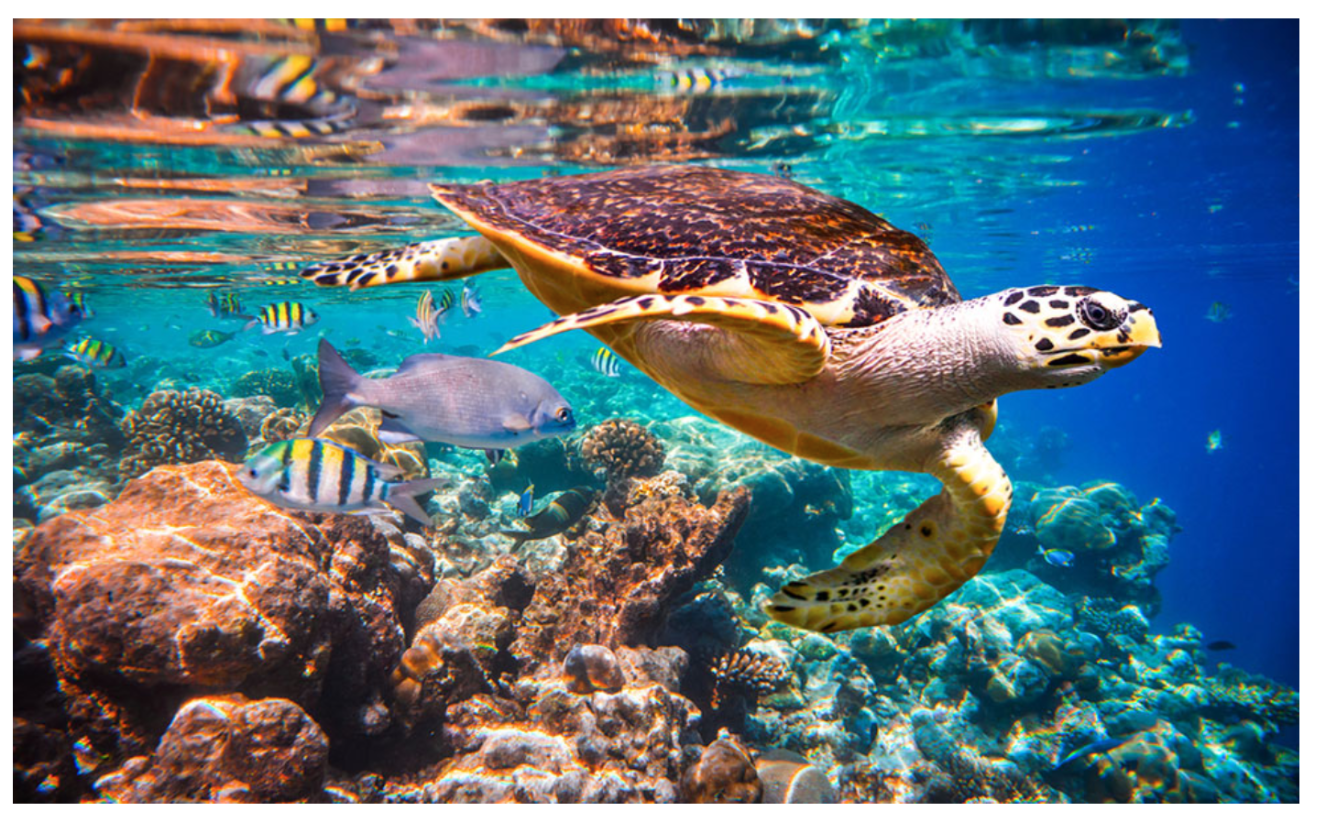
Which of the following are biotic factors (select all that apply)?
Which of the following are abiotic factors (select all that apply)?
Use this image for the next question.
Look at the above image and describe it using the terms abiotic factors, biotic factors, ecosystem, and niche. Remember, your answer will be marked wrong and then when you submit you can compare your answer to mine. For reference I wrote 6 sentences.
What ecological organization levels have both biotic and abiotic factors (select all that apply)?
What ecological organization levels have only biotic factors (select all that apply)?
What would all the alligators, frogs, plants, algae, fish, bacteria, etc. living in the St. Johns River be?
All the members of the same species living in the same area at the same time is called a ___________.
If the number of births in a population is the same as the number of deaths in a population, what will happen to the growth of the population?
If the number of births is greater than the number of deaths in a population, what will happen to the growth of the population?
What growth pattern describes a population who's growth rate slows or stops following a period of exponential growth?
Largest number of individuals of a population that the enviroment can support is known as the _____________ of that population.
For the next few questions look at this graph. Assume that there is a population of red foxes that arrive in a new, isolated area of Ohio and this is their growth over a period of 800 years.
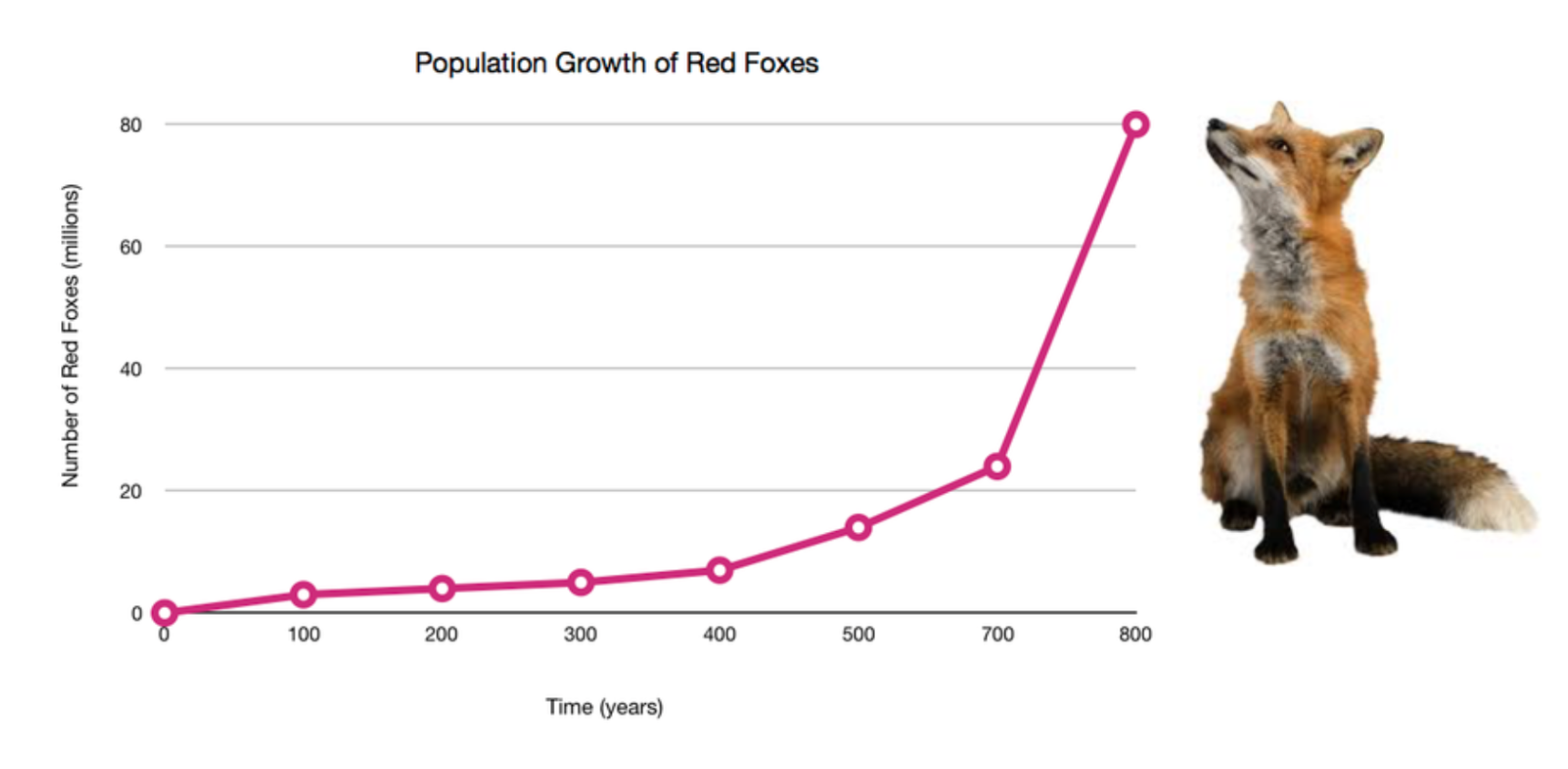
What type of growth pattern is being exhibited over the course of these 800 years?
Describe the graph using the following terms (be specific by including data - these should be relatively robust answers - I wrote 5 sentences): exponential growth, logistic growth, carrying capacity, limiting factors. Remember this will be marked wrong until you submit and then you can compare your answer to mine.
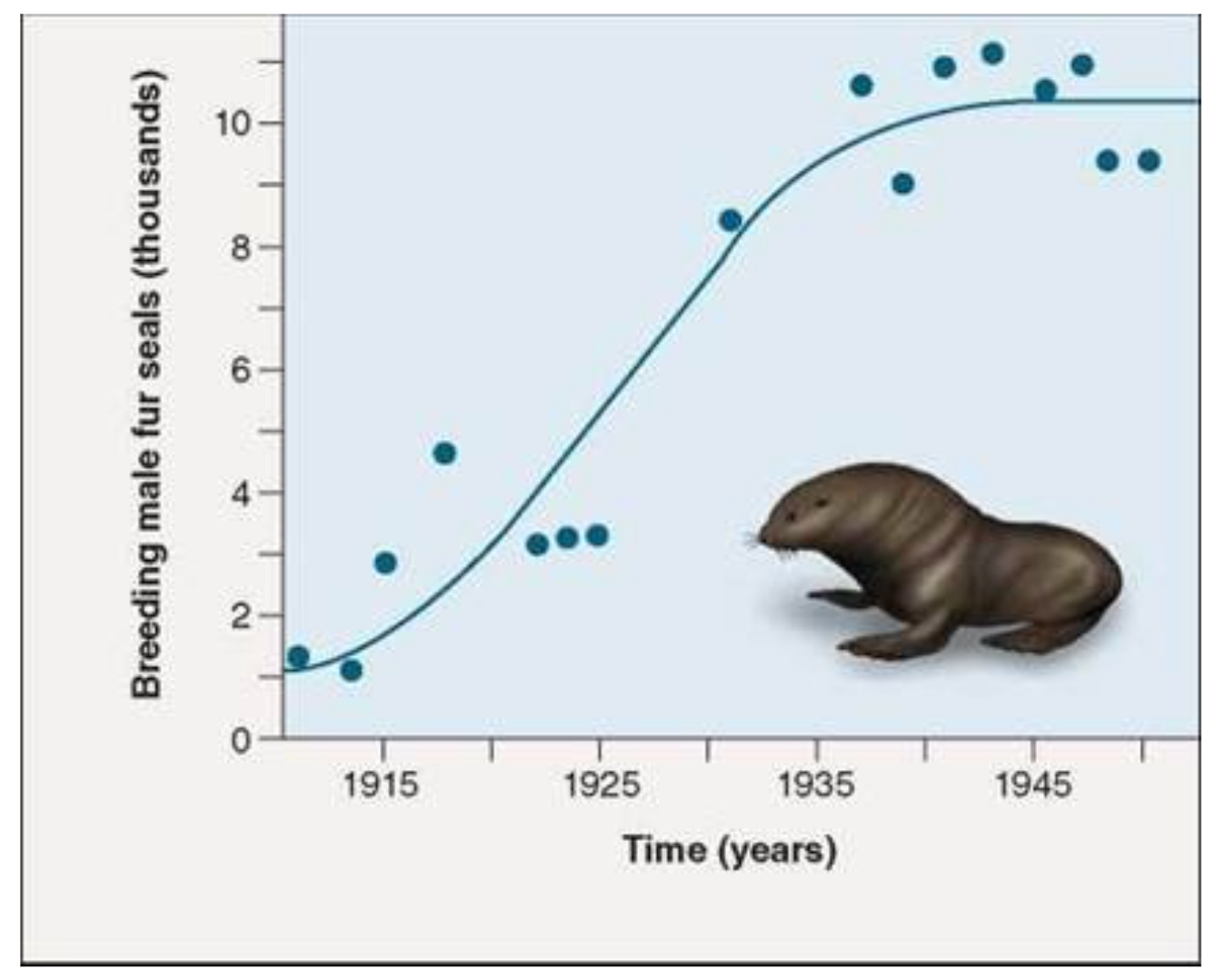
For the next few questions look at this graph. There is a population of seals that arrives on an island where there weren't seals of this species beforehand. You are measuring the population size of these seals from 1910 - 1950 and collect the following data:
What type of microevolution is occurring at the start of this scenario? (this is a throwback to the evolution unit)
If you were only looking at the seal population growth from 1910 - 1930 you would describe this type of growth as _________________ growth.
Why do you think the population starts off with this type of growth? I wrote one sentence for this.
Which of the following applies to the seals during this timeframe?
If you are looking at the population from 1910 - 1950, you would describe this overall type of growth as a ______________ growth pattern.
Look at what occurs between 1937 - 1939 (the part there the population size drops). What do we call this period?
During that time period (1937 - 1939: the part where the population size is dropping) what is occurring?
Why does this process occur? (I wrote two sentences)
What is the carrying capacity of the seals (while this is not the case, assume that I am only refering to the breeding male seals when talking about the carrying capacity)?
Here write an overall description of the graph including data using the following vocabulary: logistic growth, carrying capacity, overshoot, collapse, limiting factors. I wrote about 5 sentences.
When a population grows past the ecosystem's carrying capacity, what happens to the population?
Food, water, sunlight, shelter, and space are resources that are often examples of ________.
If there is less food than usual in an ecosystem (maybe because of a drought), then the population will most likley....
Any thing or organism that regulates the size of a population of another organism is known as ______?
In a forest ecosystem, which of the following is the best example of a limiting factor for a rabbit population?
When a population size is above the carrying capacity, what will happen to the amount of competition within a species?
Exponential growth is representative of a population in a enviroment with _______ recources.
Logisitc growth is representative of a population in an envirement with _______ recources.
There are 2000 Hydrilla verticilla species per square kilometer in a certain area of a body of water. To which population characteric does this information refer?
A small farming community in Florida covers 17 square kilometers. There are 680 individuals who live within the town limits. What is the population density of this community?
If trees are planted in rows in a grove what kind of dispersion is that?
If wolves move in packs what kind of dispersion is that?
In a population that grows, what is happening?
In a population that decreases the following is happening :
As the exponential phase of a logistic growth curve of a population starts to end which of the following occurs (select all that apply)
This number represents the number of individuals within a population per unit? Calculated by dividing the number of individuals per area.
What describes how organisms are arranged within an area?
What type of curve is logistic population growth?
What type of curve is expontential population growth?
The largest population size an environment can sustain is called?