Log in
Sign up for FREE
arrow_back
Library

4/15 - Science Warmup (SB-D10)

star
star
star
star
star
Last updated about 1 year ago
4 questions
1
5.13.A
2
5.13.A
1
5.13.A
1
5.13.A
Question 1
1.
Match each word to its definition.

___________________________ - A complete transformation throughout an organism’s life cycle; includes egg, larva, pupa, and adult

_____________ - An organism that hunts other organisms for energy

______________ - A part of an organism’s body that helps it survive

_______________ - A structure or behavior that helps an organism live and survive
in a specific environment
Other Answer Choices:
Structure
Adaptation
Predator
Complete metamorphosis
Question 2
2.
This question has two parts. First, answer Part A. Then answer Part B.

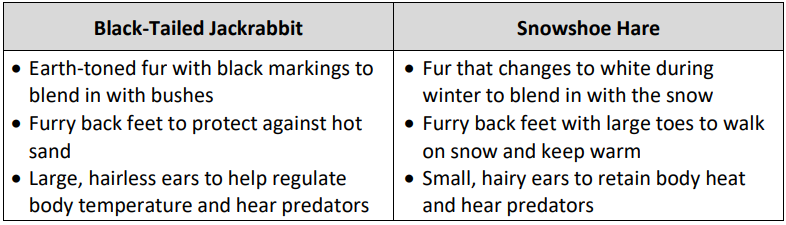
The table below lists characteristics of two types of hares.

Part A
In which environment would the snowshoe hare MOST LIKELY live? __________

Which statement supports the answer to Part A? __________
Question 3
3.

Question 4
4.

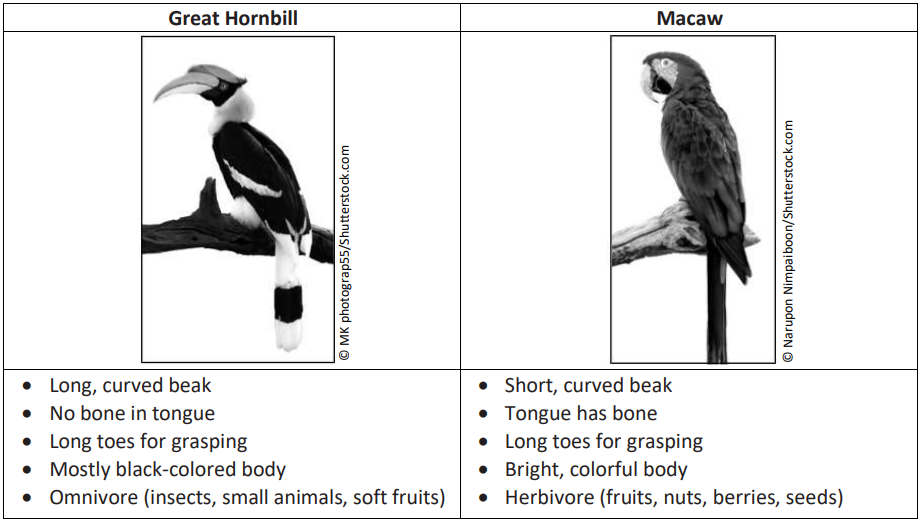
The table shows characteristics of two different types of birds that live in similar forest environments.


Which statement explains an advantage of a bone in the macaw’s tongue that the hornbill does NOT need?
It helps macaws catch and chew small mammals and crustaceans.
It helps macaws break open and eat tropical fruits and nuts.
It helps macaws make large holes in trees to reach insects to eat.
It helps macaws swallow whole prey.
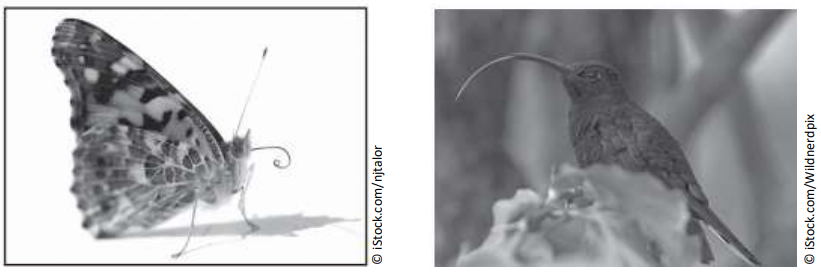
Butterflies have very long, tubelike tongues. Hummingbirds have very long tongues.


Which statement best describes why butterflies and hummingbirds both have long tongues?
Butterflies and hummingbirds both migrate.
Butterflies and hummingbirds are attracted to brightly colored flowers.
Butterflies and hummingbirds eat the same food.
Butterflies and hummingbirds have the same predators.