Twa kɔ nsɛm atitiriw so
Log in
Sign up for FREE
arrow_back
Laabri

4/15 - Science Warmup (SB-D10)

star
star
star
star
star
Last updated about 1 year ago
4 Nsɛmmisa
1
5.13.A
2
Asemmisa {{asɛmmisaAhyɛnsode}}
2.

This question has two parts. First, answer Part A. Then answer Part B.

The table below lists characteristics of two types of hares.
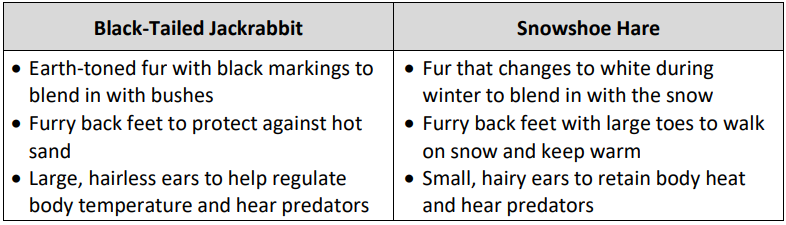
Part A

In which environment would the snowshoe hare MOST LIKELY live?

5.13.A
1
5.13.A
1
5.13.A
Asemmisa {{asɛmmisaAhyɛnsode}}
1.

Match each word to its definition.

- A complete transformation throughout an organism’s life cycle; includes egg, larva, pupa, and adult

- An organism that hunts other organisms for energy

- A part of an organism’s body that helps it survive

- A structure or behavior that helps an organism live and survive

in a specific environment

Mmuae Afoforo a Wobɛpaw:
Structure
Adaptation
Predator
Complete metamorphosis
Asemmisa {{asɛmmisaAhyɛnsode}}
3.

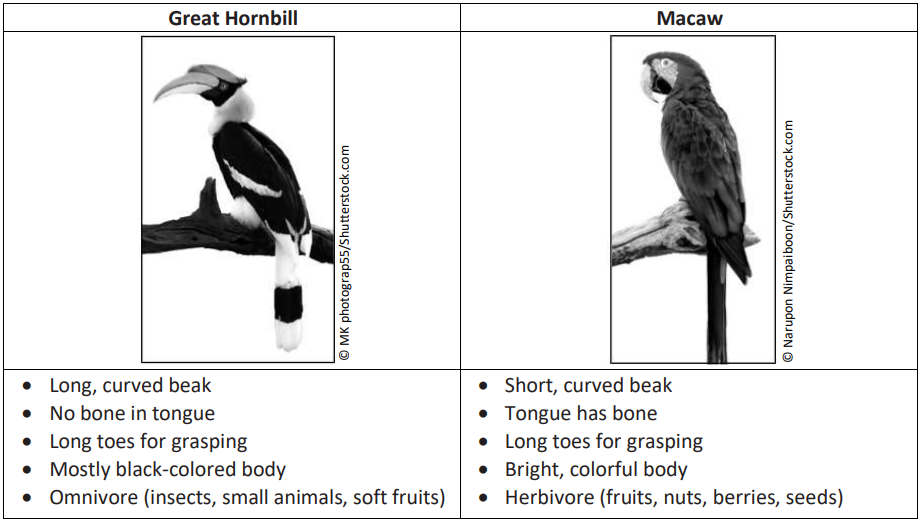
The table shows characteristics of two different types of birds that live in similar forest environments.

Which statement explains an advantage of a bone in the macaw’s tongue that the hornbill does NOT need?

Asemmisa {{asɛmmisaAhyɛnsode}}
4.

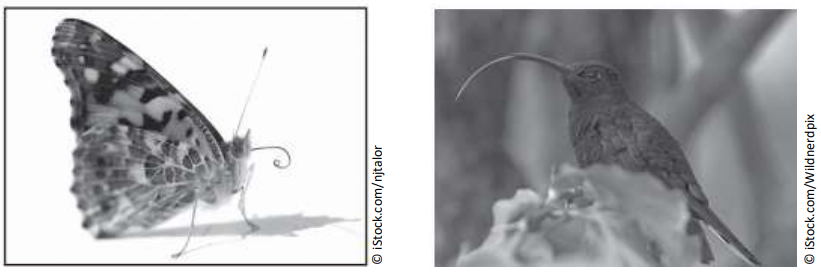
Butterflies have very long, tubelike tongues. Hummingbirds have very long tongues.

Which statement best describes why butterflies and hummingbirds both have long tongues?