Log in
Sign up for FREE
arrow_back
Library

LRHS STAAR Prep Warm Up (Cat 1/2)

star
star
star
star
star
Last updated 11 months ago
15 questions
1
1
1
1
1
1
Question 1
1.

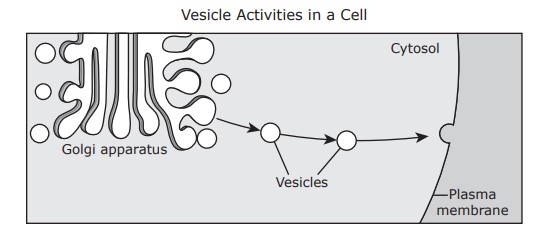
The diagram illustrates the activity of vesicles during a cellular process.

Which statement best explains the function of the vesicles?
Question 2
2.

In humans blood type is determined by the A, B, and O alleles. The A and B alleles are codominant to each other and dominant over the O allele. An individual with the AO genotype and an individual with the BO genotype can produce offspring with which of the following phenotypes?

Question 3
3.

What is the role of mRNA in expressing specialized structures?

1
Question 4
4.

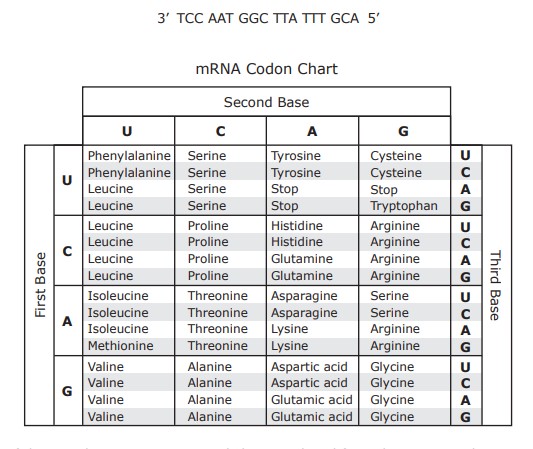
A sequence of a DNA template strand is shown.

Which of these is the correct amino acid chain produced from the DNA template strand?

Question 5
5.

An individual who participates in a long-distance run on a hot day will produce large quantities of sweat. As a result of the excessive sweating, the amount of urine produced by the kidneys will change.

How will the kidneys respond to help the individual’s body maintain homeostasis?

1
Question 6
6.

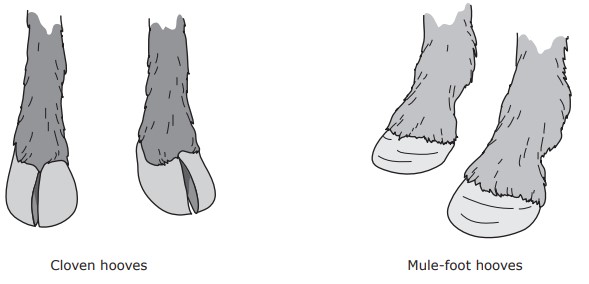
In cattle the allele for cloven hooves (H) is dominant over the allele for mule-foot hooves (h). The phenotype for each trait is shown in this picture.

What is the probability of cloven hooves in the offspring of parents that are heterozygous for the trait?

Question 7
7.

How do the circulatory system and immune system work together to respond to an injury?

1
Question 8
8.

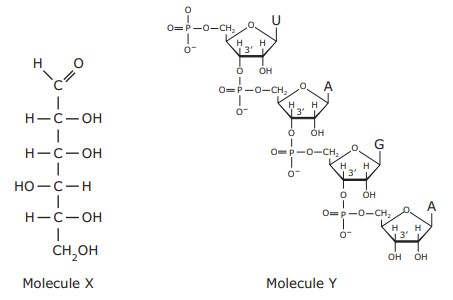
Two biomolecules are shown.

Which of the following best describes these biomolecules?

1
Question 9
9.

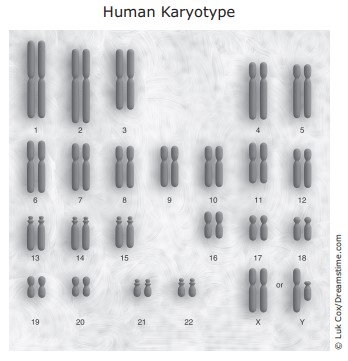
The karyotype, or chromosomal profile, for humans is shown. A karyotype can be used to investigate genetic disorders.

The chemical colchicine is used in the production of karyotypes. Colchicine prevents spindle fibers from forming during the cell cycle.

What is a result of preventing spindle fibers from forming?

1
Question 10
10.

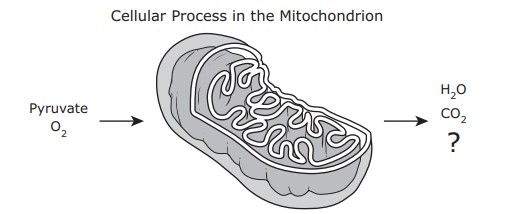
The diagram shows molecules that a mitochondrion uses and produces during a cellular process.

Which other molecule is a product of this process?

1
Question 11
11.

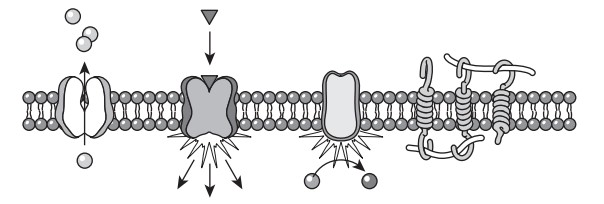
Transmembrane proteins span the width of cell membranes. Four types of transmembrane proteins are shown in a section of cell membrane.

Although these proteins have different specific functions, they all —

1
Question 12
12.

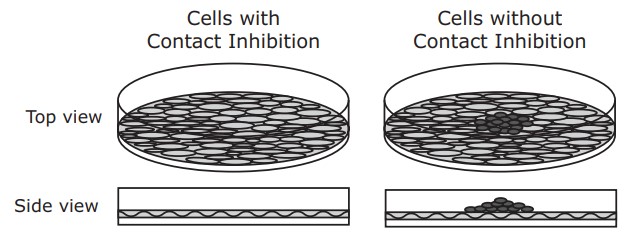
Normal cells have a contact inhibition feedback mechanism that prevents the cells from replicating when other cells are touched. A diagram of cells with contact inhibition and cells without contact inhibition is shown.

Which statement best describes what will happen to cells in an organism that lack contact inhibition?

1
Question 13
13.

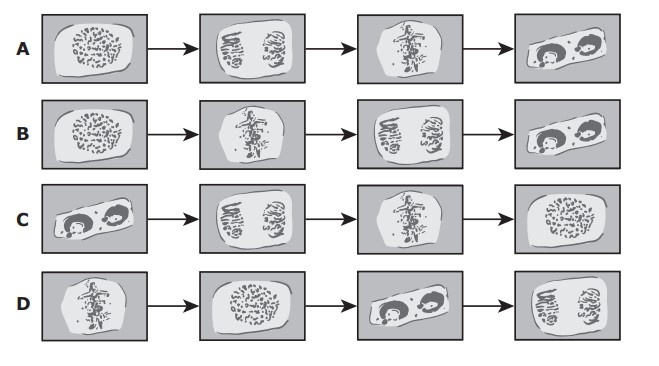
Which model accurately shows a cell progressing through mitosis?

1
Question 14
14.

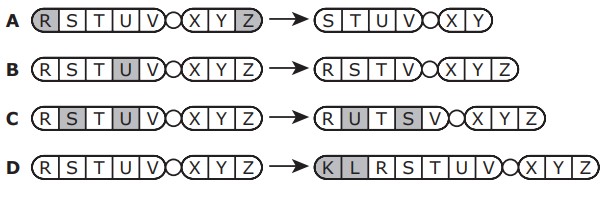
Which of these shows an example of an insertion mutation?

Question 15
15.

Which type of movement across a cell’s plasma membrane requires energy supplied by ATP?

Delivering packaged materials to the Golgi apparatus for protein synthesis
Exchanging genetic information between the Golgi apparatuses of separate cells
Extracting portions of the Golgi apparatus to be regenerated for growth within the cell
Transporting packaged molecules from the Golgi apparatus to be released out of the cell
Arginine - Leucine - Proline - Asparagine - Lysine - Arginine
Tryptophan - Phenylalanine - Leucine - Glycine - Asparagine - Phenylalanine
Serine - Leucine - Proline - Asparagine - Lysine - Arginine
Tryptophan - Phenylalanine - Leucine - Glycine - Asparagine - Serine
The kidneys will increase urine production to eliminate excess salt in the body.
25%
50%
75%
100%
Molecule X and Molecule Y are both carbohydrates.
Molecule X is a nucleic acid, and Molecule Y is a carbohydrate.
Molecule X and Molecule Y are both nucleic acids.
The cell cycle skips G0 phase and repeats G1 phase.
Mitotic division is skipped, and the cell cycle proceeds to cytokinesis.
Mitotic division stops in metaphase and cannot proceed to anaphase.
The cell cycle skips S phase and proceeds to G phase.
RNA
C6H12O6
ATP
help the cell interact with its external environment
synthesize molecules that signal other cells
stop chemical reactions within the cell
remove large waste particles from the cytoplasm of the cell
The cells will continue to grow, causing a tumor in the body.
The cells will replicate normally, replacing body cells that die.
The cells will replicate until the food supply for each cell is used, causing each cell to die.
The cells will stop replicating once one layer is produced, as other body cells will crowd them out.
B
C
D
B
C
D