Chernobyl Disaster
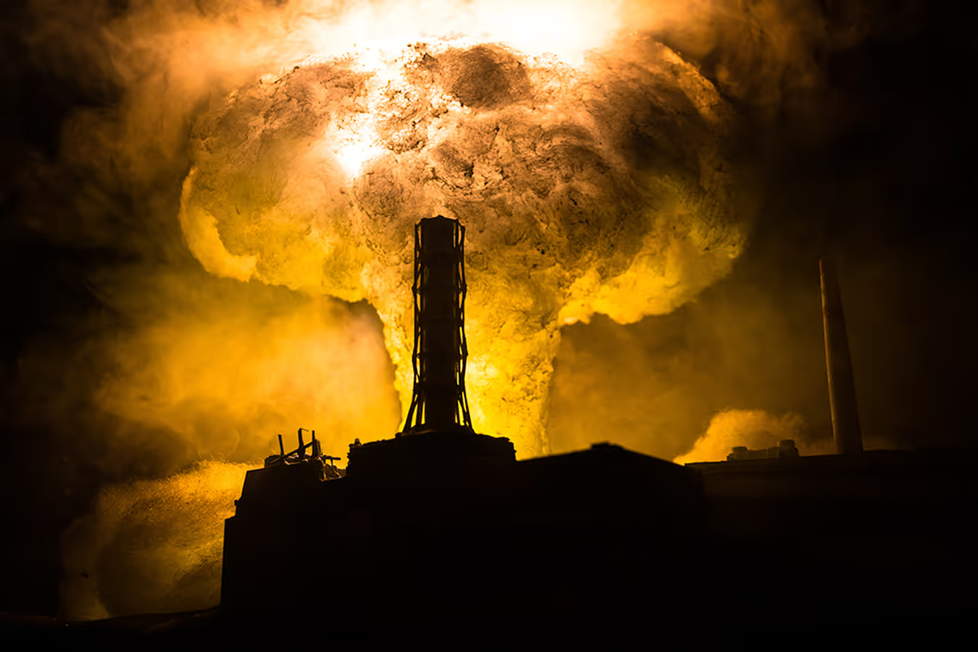
Overview: The Chernobyl disaster was the largest nuclear power plant disaster in the history of the world. The disaster took place on April 26th, 1986 at the Chernobyl Nuclear Power Plant in the Ukraine which at that time was part of the Soviet Union.
Location: The Chernobyl power plant was located near the city of Pripyat which is located along the border of Belarus and the Dnieper River. After the accident the containment area expanded into the western Soviet Union which includes the areas of the Ukraine, Belarus, and Russia.
Accident Begins: At 1:23 a.m. the power plant began an experiment to test the emergency core cooling feature. This cooling test took place during a normal shutdown procedure. As the test was taking place one of the reactors had a massive power increase which led to its explosion at the core.
Explosion: As the explosion for the nuclear reactor began large amounts of radioactive fuel and other radioactive materials burst into the atmosphere. Soon after the explosions ignited a combustible graphite moderator which led to higher levels of radiation being contained in the smoke.
Fire: Within minutes of the explosion local firefighters arrived at the scene. The firefighters first worked to put out the fires on the roof to stop the explosion from spreading. The first firefighters on the scene were led Lieutenant Volodymyr Pravik who died weeks later from acute radiation exposure. All of the firefighters who were first responders were exposed to extremely high levels of radiation and many knew what the outcome would be for them but as one firefighter said after the accident “It was our moral obligation to help. We were like kamikazes.”
Evacuation: In the surrounding city of Pripyat there was no immediate evacuation of any of the city’s residents. The order for an evacuation of the city’s 50,000 residents did not come until 24 hours later. The citizens were informed that the evacuation would only last for three days therefore citizens only brought minimal belongings with them.
Causalities: In the immediate explosion and following days 31 people died, many of whom were rescue workers and firemen. Over the following months and years thousands of residents died from radiation sickness and various cancers. It is estimated that tens to hundreds of thousands of more people will die from cancers over the following years from radiation sustained from their initial exposure to the explosion.
Recovery: Within days of the explosion the cleanup of the site began. The cleanup began with massive amounts of sandbags being placed over the reactor. Then over 250,000 construction workers built a large structure containing the entire plant with a structure called a “sarcophagus”. The construction workers all received their lifetime supply levels of radiation while working and had to work in short rotating shifts.
Resettling: It was decided to clean up and decontaminate the area as quickly as possible so citizens could resettle back in Chernobyl. Within fifteen months 75% of the residents had resettled in their homes and began re cultivating the land.
Causes/Opinions: The definitive cause of the explosion has not been determined. There are two main theories. One being that it was an operator error and the other being a design flaw. The more widely accepted opinion is that it was an operating error in that the workers did not follow test protocols or disable the reactor properly.
Plants and Animals: The pine forest that surrounded the explosion completely died and turned reddish brown earning it the name the “Red Forest”. Almost all of the wild animals in the surrounding areas either died or stopped reproducing. The fish in the surrounding rivers and lakes gained high levels of radiation and were unhealthy for human consumption. Over the following years the radiation spread from larger animals preying upon smaller animals with radiation.
Exclusion Zone: Although many of the city’s original residents were able to resettle there is still an exclusion zone around the power plant. The zone extends 19 miles in all directions around the planet. The zone is mostly uninhabited and desolate except for a few hundred residents who refuse to leave. It is estimated that the area inside the exclusion zone will not be safe for human inhabitants for 20,000 years.