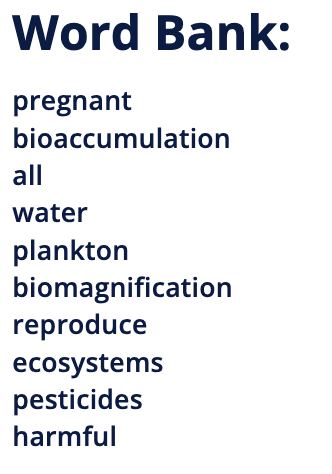
Imagine a small fish swimming in a polluted pond. Over time this fish absorbs chemicals from the water like mercury or . These chemicals are tiny but because the fish can't get rid of them they accumulate in its body this process is called .
Bioaccumulation happens slowly. With each meal or gulp of water the fish takes in a little more of these chemicals. Eventually the levels of harmful substances in its body get higher than what's in the water. This can make the fish sick or even worse affect its ability to . But it doesn't stop there. When a bigger fish eats the smaller fish it not only gets the nutrients but also inherits the chemicals that had accumulated in the smaller fish. As the big fish eats more small fish the levels of chemicals increase even more this process is called .
As chemicals move up the food chain their concentration increases. A great real life example of biomagnification is mercury in fish. Small organisms in the ocean like absorb mercury from polluted water. Small fish eat the plankton. Bigger fish eat the smaller fish and eventually we might eat that fish at a restaurant. By the time humans eat large predatory fish like tuna or swordfish, the mercury levels can be dangerously high. This is why we need to be careful about how much of these types of fish we eat, especially for women and children.
Bioaccumulation and biomagnification show us how pollution affects the entire food chain including humans. By reducing pollution and being mindful of what we eat we can help protect both and our health. We can also push for better environmental policies to limit harmful chemicals from entering our water and soil. Little changes make a big difference.