Log in
Sign up for FREE
arrow_back
Library

Maya DBQ

star
star
star
star
star
Last updated 2 months ago
38 questions
Required
1
Required
1
Required
1
Required
1
Required
1
Required
1
Required
1
Required
1
Required
1
Required
1
Required
1
Required
1
Required
1
Required
1
Required
1
Required
1
Required
1
Required
1
Required
1
Required
1
Required
1
Required
1
Required
1
Required
1
Required
1
Required
1
Required
1
Required
1
Required
1
Required
1
Required
1
Required
1
Required
1
Required
1
Required
1
Required
1
Required
4
Question 1
1.

Question 2
2.

Question 3
3.

Question 4
4.

Question 5
5.

Question 6
6.

Question 7
7.

Question 8
8.

Question 9
9.

Question 10
10.

Question 11
11.

Question 12
12.

Question 13
13.

Question 14
14.

Question 15
15.

Question 16
16.

Question 17
17.

Question 18
18.

Question 19
19.

Question 20
20.

Question 21
21.

Question 22
22.

Question 23
23.

Question 24
24.

Question 25
25.

Question 26
26.

Question 27
27.

Question 28
28.

Question 29
29.

Question 30
30.

Required
1
Question 32
32.

Question 33
33.

Question 34
34.

Question 35
35.

Question 36
36.

Question 37
37.

Question 38
38.

Choose one Maya achievement to write about. Argue why the achievement was truly remarkable as evidenced by its scale, effort, genius and/or significance. Follow the CBEE format: Claim, Background, Evidence& Explanation, Additional Evidence & Elaboration, Closing. (Citation)

The main focus of the Mini-Q about the Maya civilization is:
Which of the Maya's achievements was the most remarkable.
Which of the Maya's achievements was the hardest to make.
Which of the Maya's beliefs was the longest lasting.
In what way the Mayan people and their traditions endure.
Fill in the blank: The Maya flourished over a thousand years ago in the ____ of _____.
plains, Panama
rainforests, Mesoamerica
deserts, Mexico
mountains, the Andes
What region has been the Mayan home for 3,000 years?
the Andes
Mesoamerica
Northern Mexico
Amazon Basin
What agricultural practice did the Maya use, according to the DBQ?
crop rotation
none of the above
slash-and-burn agriculture
terrace farming
What is one of the most important rituals mentioned in the text?
Religious and political leaders offering their blood to feed the gods.
Dancing around a sacred fire to invoke rain.
Planting trees during the spring festival.
Singing hymns at dawn to welcome the sun.
What are the four criteria for judging Mayan accomplishments in the DBQ?
Scale, Genius, Effort, Significance
Size, Creativity, Labor, Value
Magnitude, Talent, Diligence, Relevance
Scale, Intelligence, Work, Importance
Which modern-day countries were part of the Mayan Empire?
Belize
Panama
Mexico
Guatemala
Where was Mayan civilization located?
the Amazon Rainforest
the islands of the Carribean
the Andes Mountains
the Yucatan Peninsula
The Maya were organized politically as:
a single kingdom
a collection of city-states
a unified empire
a tribal democracy
The Maya used various rituals to please their gods. Which of the following did they use?
Human sacrifice
All are true
Animal sacrifice
Torture
What are theories about why the Maya abandoned their cities around 900 CE?
the Spanish arrived
warfare
overuse of the land
all the people died
Mayan culture still exists as evidenced by ...
the use of horses to pull wheeled carts
the prevalence of Catholic churches in Latin America
their spoken dialects in use
millions of Maya inhabit those same lands
Mesoamerica is defined as:
the pre-conquest region and cultural area of southern Mexico and northern Central America
the post industrial region of southern Mexico and its surrounding areas
a historical period in South America
a traditional Mexican dish
Define the term: slash-and-burn agriculture
method of cultivation where forests are burned and cleared for planting
technique of growing plants without soil
type of sustainable farming that avoids deforestation
method of irrigation used in arid regions
Define the term: classic (as it is used in the Maya DBQ)
temporary phase
modern trend
innovative approach
period of highest achievement
City-states are defined as:
Small towns with limited self-governance
Large urban areas within a country
Cities that are part of a larger metropolitan area
Independent self-governing cities
Armed with their ability to read ancient ____, historians are bringing Maya history to life.
plants
papyrus
temples
glyphs
According to Doc A: From where did the Mayans get their salt? How?
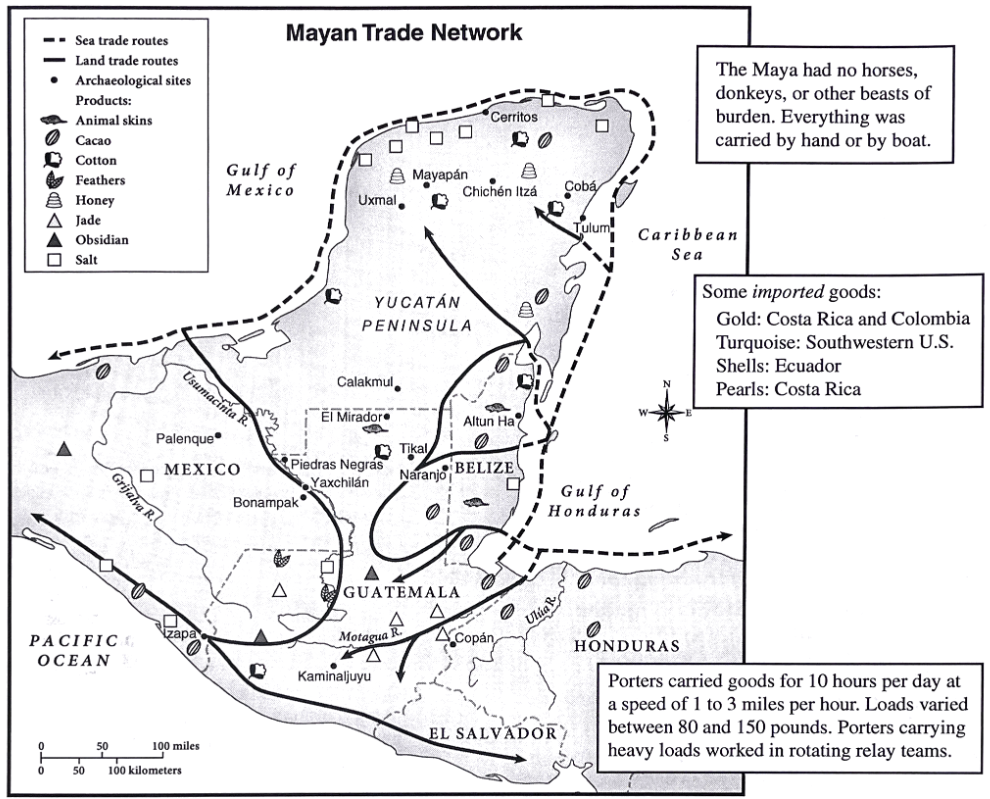
From the ocean, due to evaporation
From salt flats, due to natural deposits
From chemical factories, due to production
From salt mines, due to mining
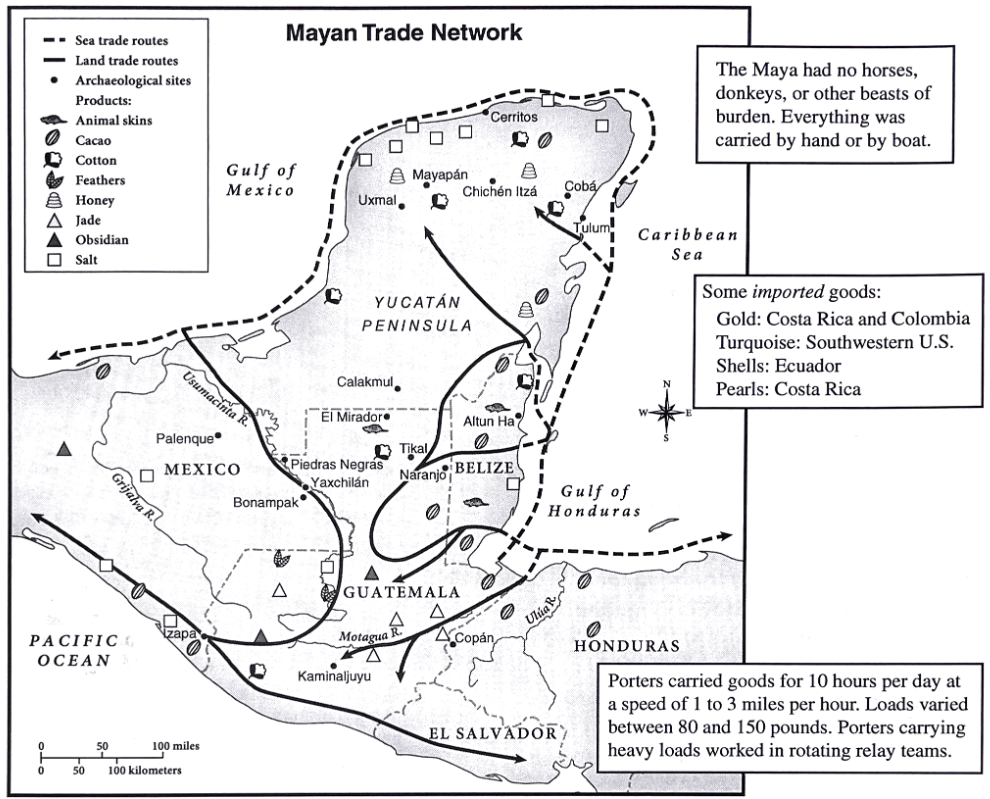
Figuring to the nearest 100 miles, how far would cotton goods have to travel to get from Tulum to Bonampak? How much of this journey would be by sea? By land?
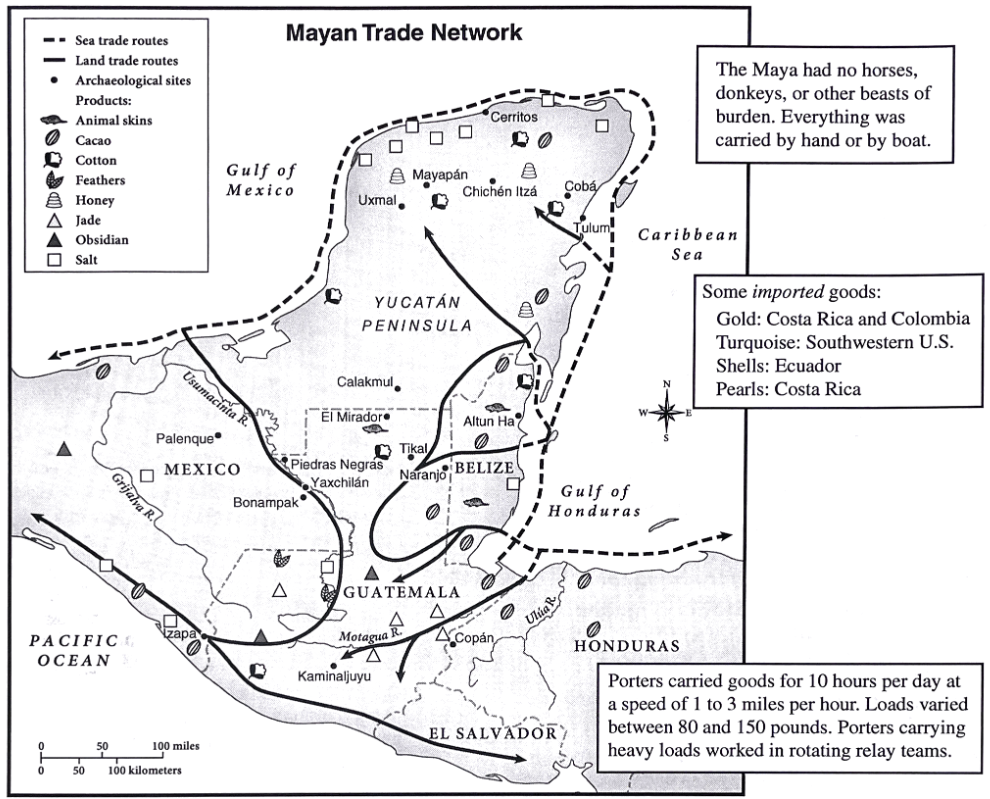
~1000 miles: 500 by land, 500 by sea
~800 miles: 600 by sea, 200 by land
~600 miles: 600 by land, 0 by sea
~1200 miles: 1000 by land, 200 by sea
What would the people of Copán trade with the people of El Mirador?
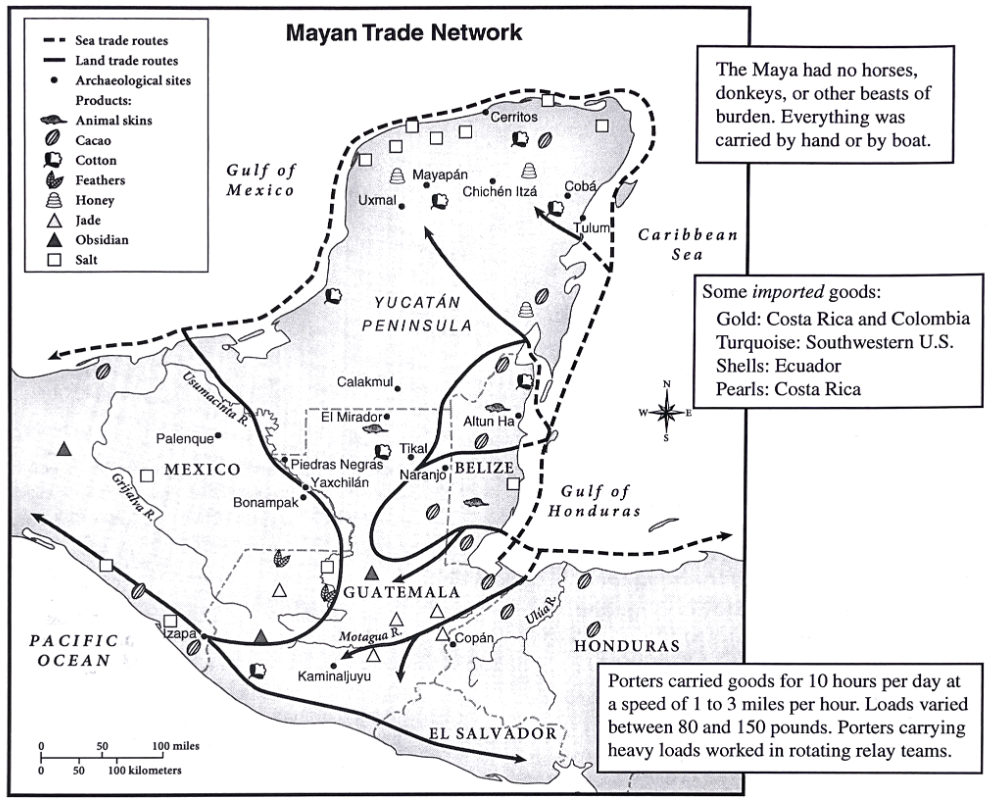
salt for honey
obsidian for salt
honey for feathers
jade for animal skins
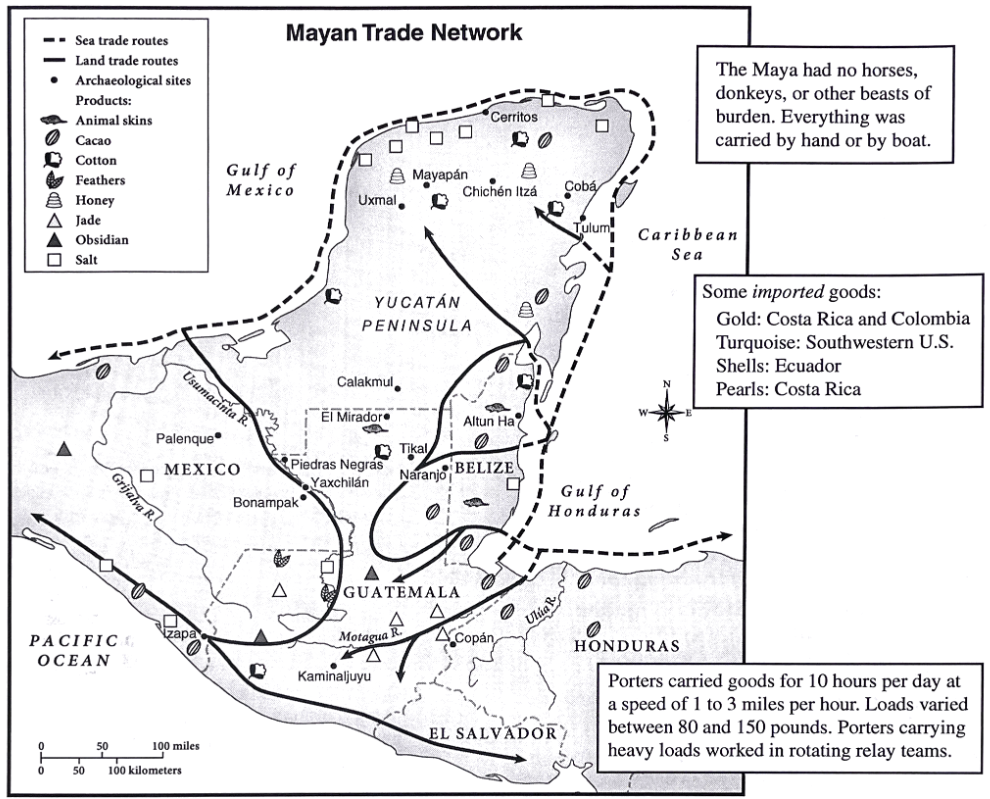
How would the trade shown on this map improve life for people across the Mayan region?
By isolating communities
By reducing cultural exchanges
By causing conflicts and wars
By increasing wealth and resources
Using two measuring sticks – scale, genius, physical effort and significance – what is remarkable about the Mayan trade network.
The Mayan trade network was remarkable for its genius and significance.
The Mayan trade network was remarkable for its genius and physical effort.
The Mayan trade network was remarkable for its scale and physical effort.
The Mayan trade network was remarkable for its scale and significance.
A pre-industrial culture is characterized by: (Pick Two)
space exploration and colonization
traditional and agrarian lifestyles
advanced technology and industrialization
culture before the use of machines and industry
What was the estimated population of ancient Copán? Of ancient Tikal?
Ancient Copán: 25,000; Ancient Tikal: 70,000
Ancient Copán: 10,000; Ancient Tikal: 100,000
Ancient Copán: 50,000; Ancient Tikal: 50,000
Ancient Copán: 30,000; Ancient Tikal: 60,000
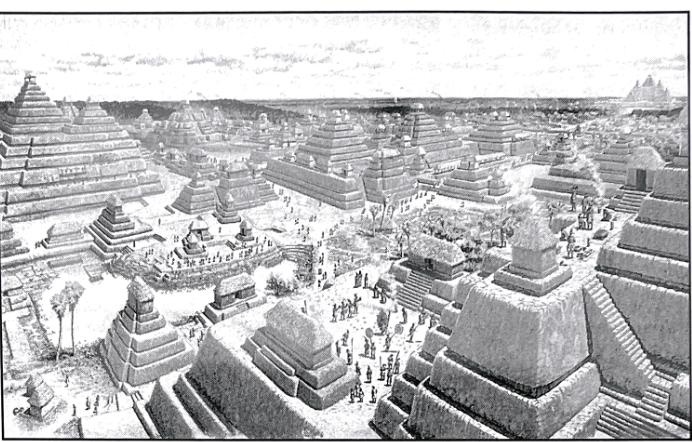
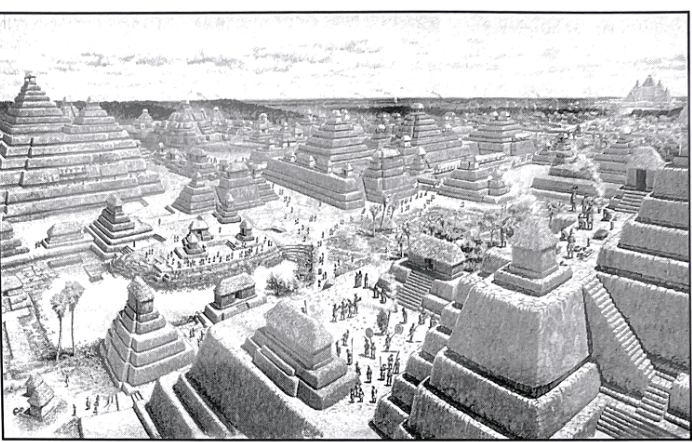
What does the ability to build great buildings out of stone tell us about Mayan political power?
it was weak and decentralized
it was dependent on foreign powers
it was non-existent
it was strong and centralized
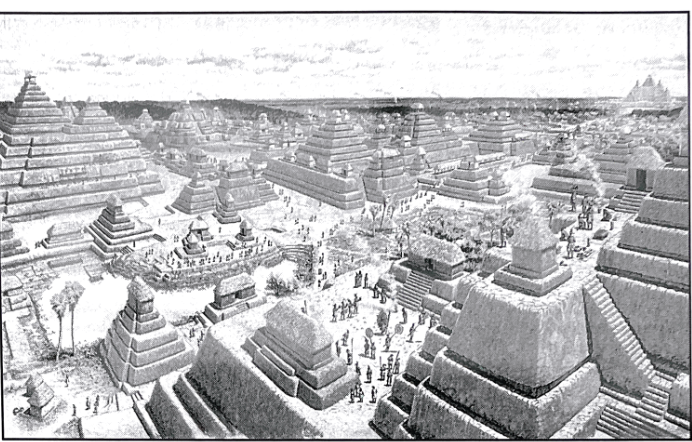
"Masonry architecture required central organization, craft specialization, and political power to command a large workforce..." This evidence best supports what idea?
The Mayans were the best builders in the Americas
The Mayans had a strong central authority to organize and manage building on a vast scale
The Mayans had to use donkeys and wheeled carts to carry heavy stone loads
The Mayans warred with each other
Judging from Document B, what was remarkable about Mayan architecture?
Significance
Scale
Genius
Effort

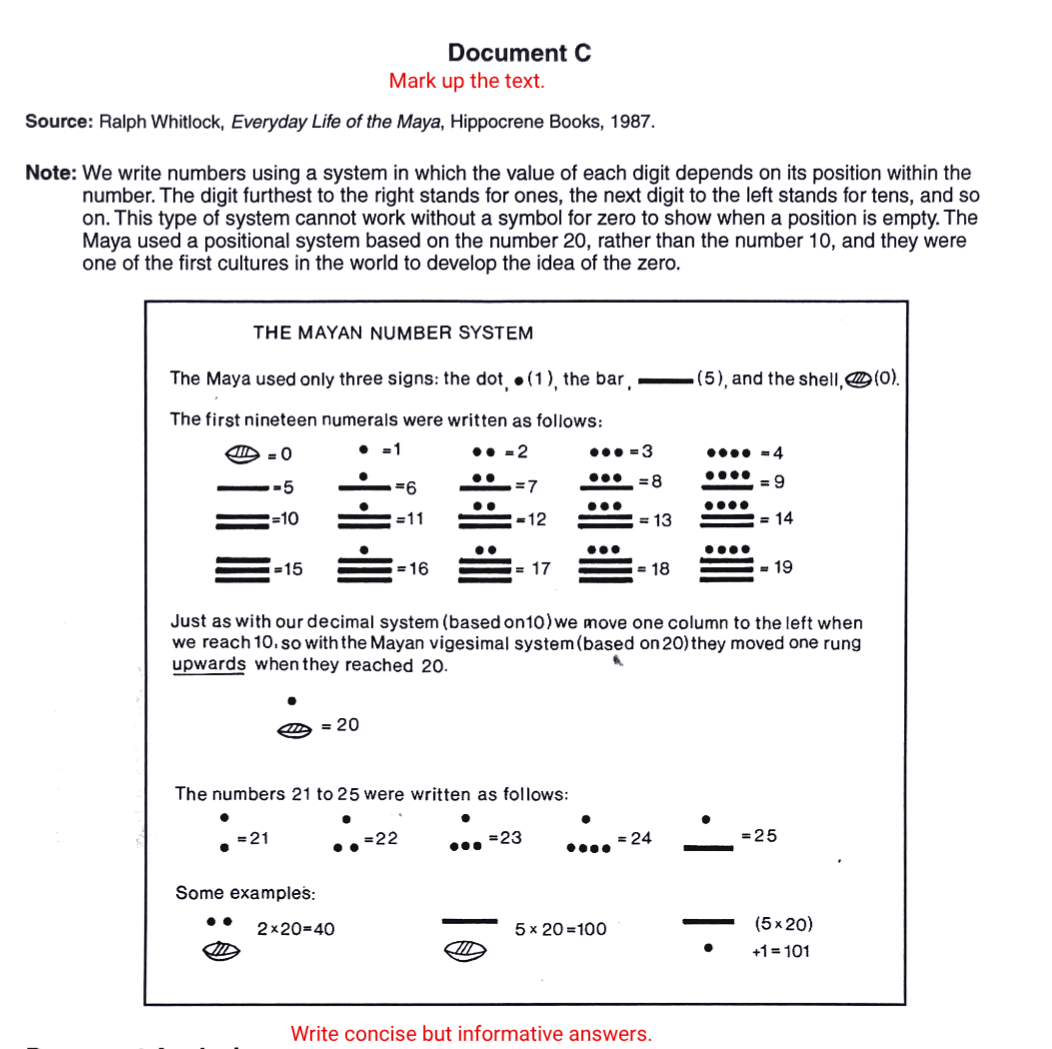
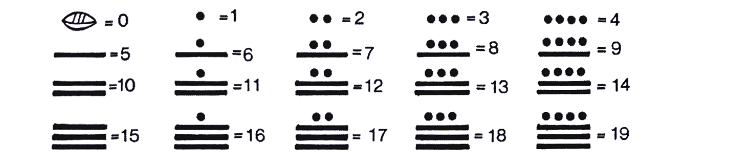
The Mayan number system was based on the number ____.
5
10
20
1

The Maya used a specific symbol for zero, and different symbols for one and five. What were these symbols?
Shell for zero, line for one, dot for five
Shell for zero, bar for one, dot for five
Shell for zero, dot for one, bar for five
Shell for zero, circle for one, square for five
Why is it important to have a symbol for zero?

To confuse students
To complicate mathematical calculations
To represent the absence of quantity
To make numbers look more interesting
Question 31
31.

What measuring sticks best justify that the Mayan number system was remarkable?
its significance - it was among the first civilizations to incorporate the concept of zero
its genius - it was advanced for its time, especially considering the Maya were largely isolated from other cultures
its scale - the system was used throughout the Americas
its effort - it was difficult to write on stone

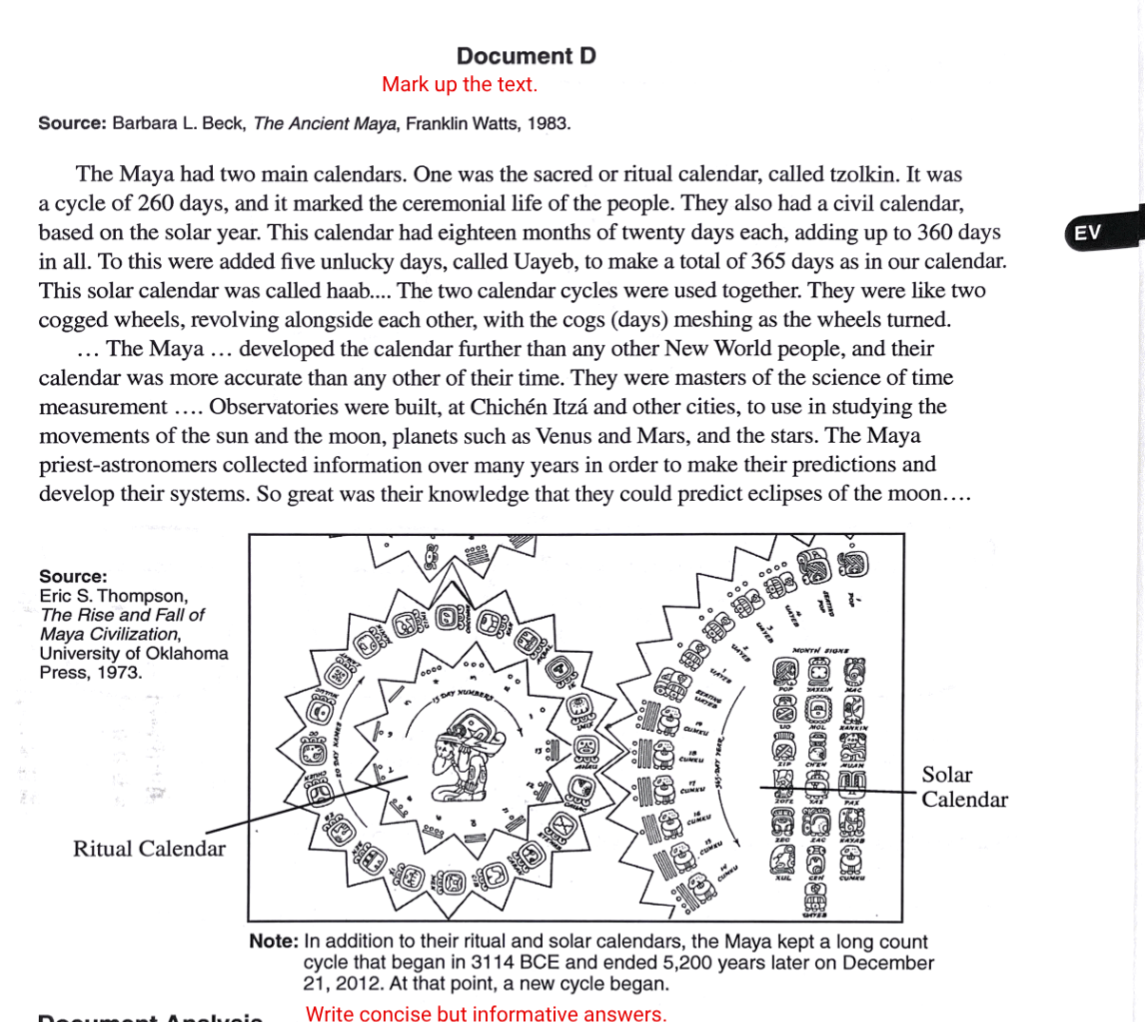
What probably explains why the Maya used 20-day segments in their ritual calendar and 20-day months in their solar calendar?
The Maya had a base-20 number system.
The Maya spoke 20 different dialects.
None of the above
The Maya's agricultural practices required 10-day periods.
The names of the three Mayan calendars were:
Haab, Tzolkin, and Long Count
Haab, Tzolkin, and Solar
Solar, Lunar, and Stellar
Gregorian, Julian, and Lunar
Which calendar was used to keep track of religious days?
the solar
the Julian
the Tzolkin
the Haab
Which calendar would have been most useful in predicting the beginning of rainy seasons?
the ritual calendar since prayers help maize grow
none are true
the lunar calendar since the tides are affected by the moon
the solar calendar since it could track seasonal events
The Maya's development of their calendar was remarkable due to its use of at least one measuring stick. Which of the following was a key aspect of their calendar?
Effort - they made up three calendars
Scale - the calendars are huge
Significance - the calendars were in widespread use across the Americas
Genius - they applied math to their calendar
What number is this?
11
none of the above
25
7