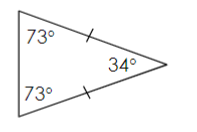
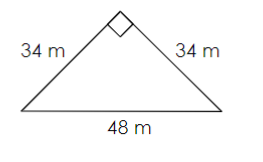
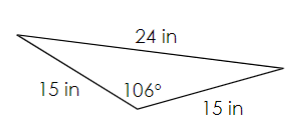
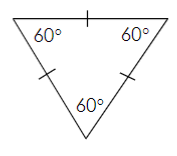
Classify this triangle by its angles and sides.
Angles:
This is a
Sides:
This is a
Essential Question: What are the basic characteristics of special triangles? Learning Target: Students will be able to classify triangles by their angles and measures and use that information to solve real-world problems. Complete the entire document for credit.
Essential Question: What are the basic characteristics of special triangles? Learning Target: Students will be able to classify triangles by their angles and measures and use that information to solve real-world problems. Complete the entire document for credit.
Essential Question: What relationships exist between the side lengths and angle measures of a triangle, and how do these relationships help us categorize them?
Learning Target: Students will be able to identify equilateral, isosceles, and scalene triangles and use their properties to find missing side lengths and angle values.
Complete the entire document and use full sentences when prompted for full credit.
Responses without work will receive no points.
Remember to upload work from paper when prompted to receive credit.
Can a triangle have two obtuse angles? Why or why not?
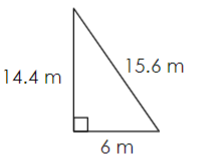
Classify this triangle by its angles and sides.
Angles:
This is a
Sides:
This is a
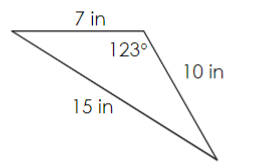
Classify this triangle by its angles and sides.
Angles:
This is a
Sides:
This is a
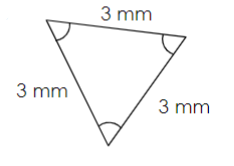
Classify this triangle by its angles and sides.
By its angles:
By its sides:
Classify this triangle by its angles and sides.
By its angles:
By its sides:
Classify this triangle by its angles and sides.
By its angles:
By its sides:
Classify this triangle by its angles and sides.
By its angles:
By its sides:
Classify this triangle by its angles and sides.
By its angles:
By its sides:
Draw an example of vertical right angles.
Select all the adjacent angles to ∠5
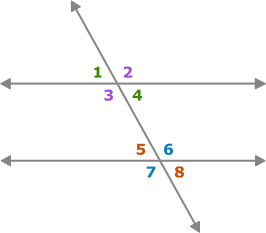
Find the measure of the indicated angle.
m∠C=
m∠A=
Solve for x.
Find the measure of the indicated angle.
x=
m∠C=
m∠B=
What is the value of z?
x=
y=
z=
Solve for x.
Find the measure of the indicated angle.
x=
m∠T=
m∠R=
A regular pentagon has five congruent sides and five 108° angles, as
shown in the figure.
Find the angle measures:
x =
y =
z =
Find the length of the indicated side.
Solve for x
x=
Find the length of the indicated side.
DE=
Solve for x
x=
Solve for x.
Find the length of the indicated side.
x=
DE=
m∠E=
Solve for x.
Find the length of the indicated side.
x=
KL=
m∠J=
If △ABC is an equilateral triangle, solve for y.
Solve for x.
Find the length of the indicated side.
x=
OM=
m∠G=
If △RST is an equilateral triangle, find x and the measure of each side
x=
Each Side Length=
If △ABC is an equilateral triangle, solve for x.
A student claims they can draw four different triangles, each meeting two specific criteria. Your job is to determine which of these triangles are possible to create and which are impossible.
In your response you may use the draw space to help you justify your response.
Triangle A: An obtuse, equilateral triangle. Is this possible? Why or Why not?
Triangle B: A right, scalene triangle. Is this possible? Why or Why not?
Triangle C: An acute, isosceles triangle. Is this possible? Why or Why not?
Triangle D: A triangle with side lengths of 4cm, 5cm, and 10cm.
Is this possible? Why or Why not?
A basketball coach is setting up a passing drill with 3 people. How can he make sure that all the players are the same distance from each other? Without measuring the distance between the players?
What kind of triangle do the players form?
Two construction teams are building triangular frames for a structure.
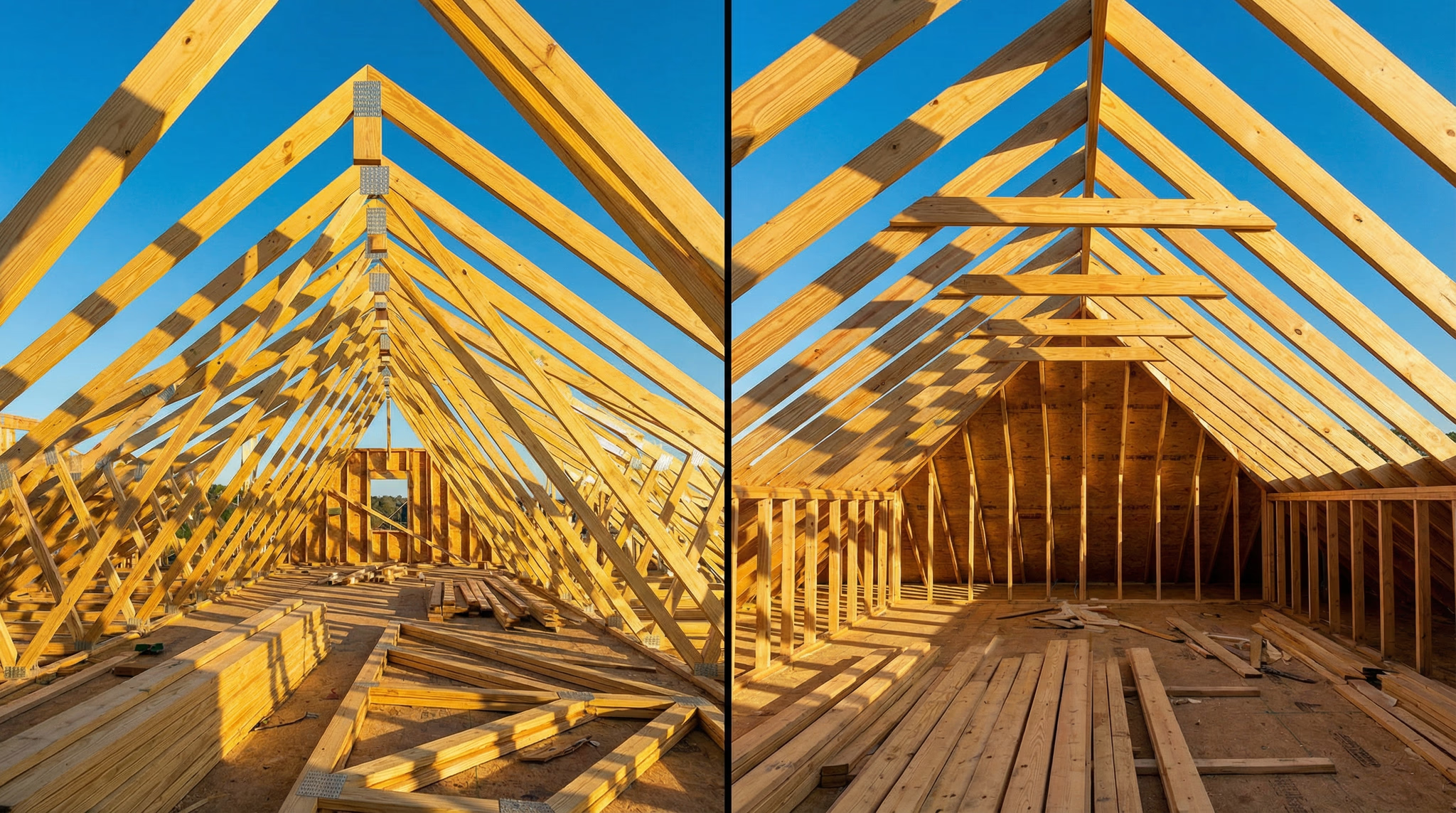
The first team builds
Frame A: sides 5ft, 5ft, 8ft
Frame B: sides 5ft, 5ft, 8ft
The second team builds
Frame C: angles 40°, 70°, 70°
Frame D : angles 40°, 70°, 70°
A worker says since they have the same measurements they must be the same shape and size.
Are Frame A and B identical?
Are frame C and D always identical?
Why or why not? Is the worker right?