Log in
Sign up for FREE
arrow_back
Library

R_Biology Sem-2 Final

star
star
star
star
star
Last updated 25 days ago
60 questions
Required
3
Required
3
Required
1
Required
1
Required
1
Required
3
Required
3
Required
1
Required
1
Required
3
Required
2
Required
3
Required
3
Required
2
Required
1
Required
1
Required
4
Required
4
Required
1
Required
1
Required
1
Required
1
Required
1
Required
1
Required
5
Required
1
Required
1
Required
1
Required
1
Required
3
Required
1
Required
1
Required
3
Required
4
Required
1
6
Required
1
Required
6
Required
1
Required
1
Required
1
Required
1
Required
1
Required
3
Required
1
Required
1
Required
2
Required
1
Required
1
Required
1
Required
1
Required
4
Required
5
Question 1
1.

Match the DNA base with its complementary partner in the DNA strand.

Draggable itemarrow_right_altCorresponding Item
Cytosine (C)
arrow_right_alt
Thymine (T)
Adenine (A)
arrow_right_alt
Cytosine (C)
Guanine (G)
arrow_right_alt
Guanine (G)
Question 2
2.

Associate the following genetic components with their correct descriptions.

Draggable itemarrow_right_altCorresponding Item
Double Helix
arrow_right_alt
Five-carbon sugar in RNA
Nucleotide
arrow_right_alt
Structure of DNA resembling a twisted ladder
Ribose
arrow_right_alt
Consists of sugar, phosphate, and a nitrogen base
Question 3
3.

Which of the following correctly distinguishes RNA from DNA?

Question 4
4.

The above diagram illustrates what DNA looks like when it is twisted into the double helix. Three parts of the molecule are labeled: The backbone (A), the "rungs" (B) and the end (C). Predict which part of the molecule you will find phosphorous.

Question 5
5.

A strand of RNA has the sequence AUUGCGGAA. Explain what caused this strand to be made.

Question 6
6.

Match the type of mutation to its description.

Draggable itemarrow_right_altCorresponding Item
Point mutation
arrow_right_alt
Change in a single nucleotide sequence.
Insertion mutation
arrow_right_alt
Addition of one or more nucleotide bases.
Deletion mutation
arrow_right_alt
Removal of one or more nucleotide bases.
Question 7
7.

Match the type of mutation to its potential effects.

Draggable itemarrow_right_altCorresponding Item
Harmful mutation
arrow_right_alt
Causes disease or reduced fitness.
Neutral mutation
arrow_right_alt
Has no significant impact on fitness.
Beneficial mutation
arrow_right_alt
Gives an advantage to the organism.
Question 8
8.

What mutation has occurred here?  T-G-A-C-C-A T-G-A-T-C-C-A

Question 9
9.

DNA molecule segment is : TTACGCAAG The mutated DNA segment is TTCGCAAG. This is an example of ___ mutation.

Question 10
10.

Luna is studying the different types of RNA that play a role in protein synthesis. Match the type of RNA to it's appropriate description.

Draggable itemarrow_right_altCorresponding Item
rRNA
arrow_right_alt
carries transcribed code for a protein
mRNA
arrow_right_alt
carries amino acids to ribosomes
tRNA
arrow_right_alt
forms subunits of ribosomes
Question 11
11.

The model below shows the structure of two molecules. Which statements about the two structures seen in the model are correct? Choose all correct answers.

Question 12
12.
A mutation that happens when a single nucleotide is replaced by a different one is a __________ mutation, also known as a substitution mutation. A mutation caused by the loss of a nucleotide in the DNA sequence is known as a(n)__________ mutation. This is a type of __________mutation because it causes a change in the reading frame of the DNA.
Question 13
13.

Categorize the descriptions to the correct label

  • makes proteins
  • occurs in the nucleus
  • occurs in the ribosome
  • makes mRNA
  • copies DNA and forms mRNA
  • decodes mRNA to amino acids
  • Transcription
  • Translation
Question 14
14.
Using the chart as reference, choose the correct response to complete the sentence.

__________ in a DNA sequence would correspond to a “stop” codon. GCC in a DNA sequence after transcription and translation would correspond to the amino acid __________.
Question 15
15.
Using the chart as reference, choose the correct response to complete the sentence.

__________ in an RNA sequence would lead to the polypeptide chain valine-methionine-phenylalanine.
Question 16
16.

What is it called when chromosomes swap DNA? During what phase of meiosis does this process happen?

Question 17
17.

Drag and drop the description to the category that it belongs to.

  • Two daughter cells with haploid number of chromosomes is formed.
  • Four daughter cells with haploid number of chromosomes is formed.
  • Homologous chromosomes align at the equator.
  • The sister chromatids of recombinant chromosomes move apart
  • Crossing over occurs here.
  • Meiosis-I
  • Meiosis-II
Question 18
18.

Match the image with the correct phase name-

Anaphase-I
Metaphase-II
Metaphase-I
Crossing Over
Question 19
19.

The number of chromosomes in muscle cells of a coyote are 40. What will be the number of chromosomes in its sperms.

Question 20
20.
Haploid gametes have __________# of chromosomes whereas Diploid cells have __________# of chromosomes
Question 21
21.

One difference between Autosomes and sex chromosomes humans is-

Question 22
22.

A type of cell division that results in four daughter cells each with half the number of chromosomes of the parent cell, as in the production of gametes

Question 23
23.

Number of daughter cells produced in meiosis

Question 24
24.

In goats, the allele for horns (H) is dominant to the allele for no Horns (h). Parents are hybrids for horns. What is the percent chance that the offspring will have horns?

Question 25
25.

Match the explanation with the vocab word.

Draggable itemarrow_right_altCorresponding Item
When the pair of alleles are same
arrow_right_alt
Allele
When the pair of alleles are different
arrow_right_alt
Genotype
The outward appearance of an organism
arrow_right_alt
Phenotype
The alternative form of a gene
arrow_right_alt
Homozygous
The genetic constitution of an organism
arrow_right_alt
Heterozygous
Question 26
26.

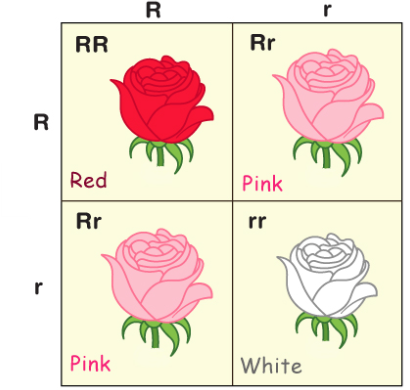
R = able to roll tongue
r = unable to roll tongue
One brother has genotype RR and the other brother has genotype Rr.
Which statement is true about these two brothers?

Question 27
27.

If a man has blood type homozygous A and his wife has blood type AB, what blood types are possible among their children?

Required
1
Question 28
28.

The image alongside is an example of-

Question 29
29.

A woman with blood type A whose father was blood type O married a man with type O blood. What will be the possible genotypes and phenotypes of their children?

Question 30
30.

A calico cat shows both the traits for orange fur and black fur. What kind of allele expression is this?

Question 31
31.

Match the example on the right as either incomplete dominance or codominance or neither.

  • Straight hair + Curly hair = Wavy hair
  • red and blue fish produces fish with blue and red

  • Tall height X Short Height ----> Intermediate height
  • more men than women are colorblind
  • black x white chickens --> Black and white speckled (Erminette)
  • purple x white --> purple flowers

  • Incomplete Dominance
  • Codominance
  • Neither
Question 32
32.

Hemophilia is a sex linked trait. A woman who is a carrier for hemophilia marries a normal man. What is the probability that their children will have hemophilia and what sex will a child/children in the family with hemophilia be?

Question 33
33.

If a Hemophilic male has children with a carrier female what is the possibility of the couple having a hemophilic child?

Question 34
34.

Match the vocab with correct description-

Draggable itemarrow_right_altCorresponding Item
different versions of a gene that exist in a population. (Ex. Blood type)
arrow_right_alt
Polygenic traits
a genetic pattern where two alleles of a gene are expressed equally, resulting in both traits in being expressed in the offspring
arrow_right_alt
Incomplete dominance
a pattern of inheritance where multiple genes work together to control a single trait
arrow_right_alt
Codominance
certain patterns of how traits are passed from parents to offspring. (dominant allele always expressed if present)
arrow_right_alt
Multiple alleles
A trait controlled by genes on X-Chromosomes
arrow_right_alt
Sex linked traits
a genetic phenomenon that occurs when two alleles for a trait are not fully expressed.
arrow_right_alt
Mendelian genetics (Complete dominance)
Question 35
35.

Match the categories with the correct description-

  • Farmers have selectively bred wheat and rice for higher yields, disease resistance, and other desirable traits
  • Giraffe necks evolving longer to reach leaves high in trees.
  • Cattle have been bred for increased milk production, meat quality, and overall size.
  • Beaks of finches adapting to different food sources.
  • Artificial Seclection
  • Natural Selection
Question 36
36.

A scientist presented the information in the illustration as part of a report on the evolution of species. How does the information support the claim of common ancestry?

Question 37
37.

Match the type of evidence to its explanation.

Draggable itemarrow_right_altCorresponding Item
Embryonic development
arrow_right_alt
Study of species distribution.
Homologous structures
arrow_right_alt
Reduced features with no current function.
Biogeography
arrow_right_alt
DNA and protein similarities in organisms.
Fossils
arrow_right_alt
Similar anatomy in different species.
Vestigial structures
arrow_right_alt
Remains of organisms from the past.
Molecular biology
arrow_right_alt
Similar stages of development in embryos.
Question 38
38.

A researcher recently discovered a new species of bacteria in the body of a tubeworm living near a hydrothermal vent. He compared the DNA of this new bacterial species to the DNA of four other species of bacteria. The DNA sequences came from the same part of the bacterial chromosome of all four species.

According to these data, the unknown bacterial species is most closely related to

Question 39
39.

Categorize the following statements as either "Scientific Theory" or "Hypothesis".

  • Explains a broad range of phenomena.
  • Based on extensive evidence.
  • Can be disproven by experiments.
  • Proposes a specific prediction.
  • Must be tested for validity
  • Recognized by scientific community
  • Scientific Theory
  • Hypothesis
Question 40
40.

What does the term 'gene pool' refer to?

Question 41
41.

Some organisms have features that have different functions, but similar structures. One example is the forelimb of humans, dogs, birds, and whales.

Question 42
42.

How do fossils support evolution?

Question 43
43.

What best describes the hind leg bones seen in the whale?

Question 44
44.

Examples of analogous structures include

Question 45
45.

Match the mechanism of evolution to its definition.

Draggable itemarrow_right_altCorresponding Item
Gene flow
arrow_right_alt
Survival and reproduction of best adapted organisms.
Genetic drift
arrow_right_alt
Movement of alleles between populations.
Natural selection
arrow_right_alt
Random changes in allele frequencies in small populations.
Question 46
46.

Individuals in a population that have a variation which gives them an advantage in their environment are more likely to ...

Question 47
47.

What mechanism of evolution is shown below-

Question 48
48.

Select the statements that are true for evolution (Check all that apply)

Question 49
49.

The model below shows a how populations of organisms can change. Which of the following concepts is best illustrated by this demonstration?

In a population of beetles, there is a variation in shell color—some are green, while others are brown. Birds, the main predators of these beetles, tend to spot and eat green beetles more easily in environments with brown soil and dry leaves. Over time, researchers have noticed that the population of brown beetles has increased, while the number of green beetles has decreased.
Required
1
Required
1
Required
1
Required
1
Question 54
54.

Carrying capacity refers to:

Question 55
55.

A rabbit population is near the carrying capacity of its ecosystem. If the population density of rabbits in an area were to increase, what direct effect would it most likely have?

Question 56
56.

A population of 2,000 deer lived on a plateau. In 1906, all hunting of the deer was banned, natural predators were exterminated, and sheep and cattle, which competed with the deer, were banned from the plateau. The graph shows the deer population in the years following this.

Which statement regarding factors affecting deer population is supported by the data in the graph?

Question 57
57.
When the fish population is well below the carrying capacity of the lake, the population would be expected to show a pattern of __________ growth, which means that the rate of population change will __________ over time. As the population approaches carrying capacity, the growth rate would be expected to show a pattern of __________ growth, which means the population would __________.
Question 58
58.

Determine if the following scenarios represent density dependent or density independent limiting factors.

  • A large number of moose die from a rare bacterial infection that spreads through the population.
  • Thrips are small insects that feed on apple blossoms. They can be a serious pest to apple growers. In recent years, a severe drought hit apple orchards in the state of New York. Because of the drought, most apple trees did not blossom. The thrip population declined sharply because their food source disappeared.
  • This year, Anne was excited about planting another tomato garden. Two weeks after planting seeds, the weather turned cold. A frost killed most of the seedlings, and Anne had to plant new ones.
  • A population of bass is growing quickly in a freshwater lake. Then a parasitic protozoa invades the lake, infecting the bass. The parasite spreads quickly to other fish.
  • Rainbow smelt fish and yellow perch fish attempt to occupy the same area in a freshwater lake. The more aggressive rainbow smelt survive, the yellow perch do not.
  • Density Dependent
  • Density Independent
Required
1
Required
1
Question 50
50.

Which of the following best explains the change in the beetle population over time?

Question 51
51.

Which of the following best explains the increase in the number of brown beetles over time?

Question 52
52.

The change in the beetle population over time is best explained by which biological concept?
A. Genetic drift B. Natural selection C. Artificial selection D. Mutation pressure

Question 53
53.

If the environment changes and the ground becomes green due to moss growth, what is the most likely outcome for the beetle population over time?

Question 59
59.

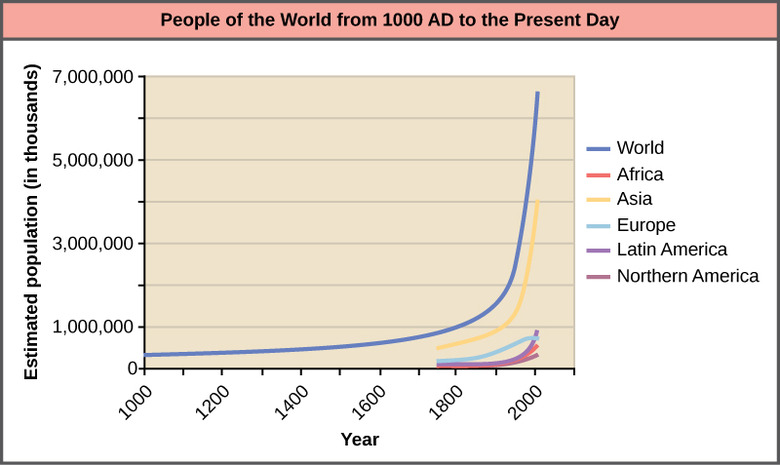
According to the graph which country is most likely exceeding its carrying capacity?

Question 60
60.

What kind of growth pattern is depicted/shown by the world in the graph along with.