Digital Inquiry - Animal Waste
star
star
star
star
star
Last updated 7 months ago
9 questions
VIDEO: HOW POOP SHAPES THE WORLD
Waste not, want not… right? Poop, in all of its various forms throughout nature, shapes the world in ways you might not imagine. One creature’s waste is another’s fuel, and all over nature these leftovers help new life spring up. Here’s how whales, birds, worms, bats, and more help the world breathe clean, thanks to their poop.
1
What are some things that happens to animal poop?
VIDEO: WHAT ARE DECOMPOSERS
We've talked about food chains and how energy moves through an ecosystem, but let's take a step back and see how everything starts... and ends. Decomposers!
1
Why do things decompose?
1
What do fungi do?
What do fungi do?
1
What do bacteria do?
INFORMATIONAL TEXT: FROM GROSS TO GOLD
READ
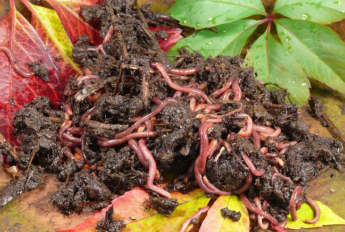
Worms love to eat gross stuff. They are decomposers that eat dead organisms and manure and turn it into rich soil additives. Some farmers use vermicomposting (using worms to break down waste) to turn manure from cows, pigs, or sheep into soil fertilizer.
The worm has no teeth, but the mouth can bite off soft, rotting material. The pharynx swallows the food, which moves through the esophagus. It is stored in the crop. The worm has microorganisms in its body that help break down the food. Since it can’t chew, the mass gets ground up by gritty sand in the gizzard.
Then the material moves into the intestine where the nutrients the worm needs are absorbed. The longest part of the worm’s digestive system is intestines. Afterwards,
the waste material, called castings, passes out of the worm’s body.
Worm castings contain many minerals and other nutrients that plants use to grow. Soil that has worm castings is such a good growing medium that some growers call it black gold.
1
What do worms do with dead organisms?
1
What are castings?
What are castings?
VIDEO: WONDERFUL WORMS
In this video segment from WILD TV, learn about 14-year-old Abigail Harden and her fascination with worms. She describes them as her first pets. She estimates there are about 50,000 worms in her local community garden. By eating organic matter, worms provide rich nutrients through their feces to help the plants grow. As they move through the soil they also provide aeration and drainage for the roots of the plants. Spreading fruit pulp around the plants to feed the worms draws them to the plants. The worms reproduce rapidly and hibernate in the winter by burrowing deep into the ground.
1
What do the garden’s worms do?
ENCYCLOPEDIA ENTRY: DECOMPOSERS
Decomposers
Decomposers play a critical role in the flow of energy through an ecosystem. They break apart dead organisms into simpler inorganic materials, making nutrients available to primary producers.
When you have an empty bottle, do you recycle it so the plastic or glass can be used again? Nature has its own recycling system: a group of organisms called decomposers.
Decomposers feed on dead things: dead plant materials such as leaf litter and wood, animal carcasses, and feces. They perform a valuable service as Earth’s cleanup crew. Without decomposers, dead leaves, dead insects, and dead animals would pile up everywhere. Imagine what the world would look like!
More importantly, decomposers make vital nutrients available to an ecosystem’s primary producers—usually plants and algae. Decomposers break apart complex organic materials into more elementary substances: water and carbon dioxide, plus simple compounds containing nitrogen, phosphorus, and calcium. All of these components are substances that plants need to grow.
Some decomposers are specialized and break down only a certain kind of dead organism. Others are generalists that feed on lots of different materials. Thanks to decomposers, nutrients get added back to the soil or water, so the producers can use them to grow and reproduce.
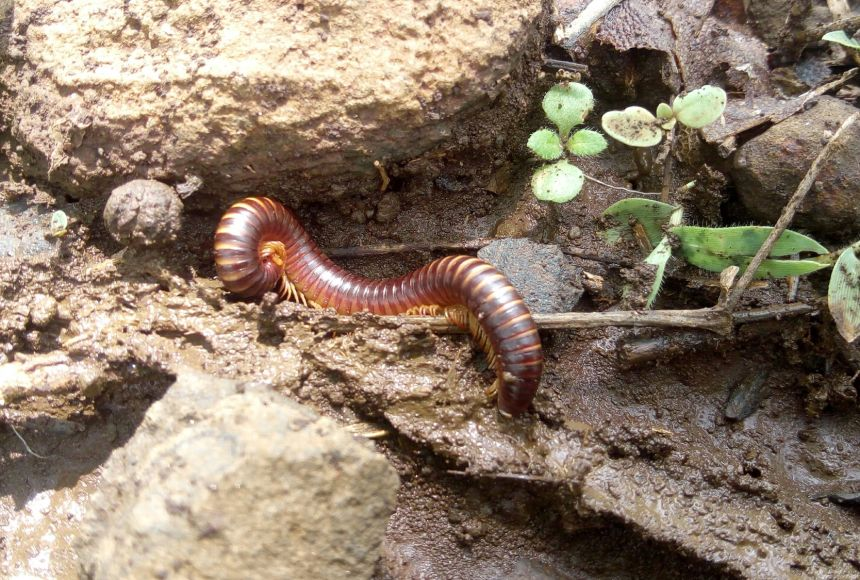
Most decomposers are microscopic organisms, including protozoa and bacteria. Other decomposers are big enough to see without a microscope. They include fungi along with invertebrate organisms sometimes called detritivores, which include earthworms, termites, and millipedes.
Fungi are important decomposers, especially in forests. Some kinds of fungi, such as mushrooms, look like plants. But fungi do not contain chlorophyll, the pigment that green plants use to make their own food with the energy of sunlight. Instead, fungi get all their nutrients from dead materials that they break down with special enzymes.
The next time you see a forest floor carpeted with dead leaves or a dead bird lying under a bush, take a moment to appreciate decomposers for the way they keep nutrients flowing through an ecosystem.
1
What do decomposers do for plants?
8
Decomposers are ______________ that break down dead plants and animals and their ___________ . Three common examples of decomposers are _____________ , __________ , and earthworms.
Decomposers feed on wastes and dead organisms. They return ______________ to the water or soil so that ______________ can use them to grow.
Farmers use worms for ____________________ . Worms can change animal wastes into _______________ for the soil.
Other Answer Choices:
producers
fertilizer
nutrients
wastes
organisms
fungi
vermicomposting
bacteria