The Water Cycle
Organisms cannot live without water. Hydrologists study water that is underground, in the atmosphere, and on Earth's surface in the form of lakes, rivers, streams, glaciers, and oceans.
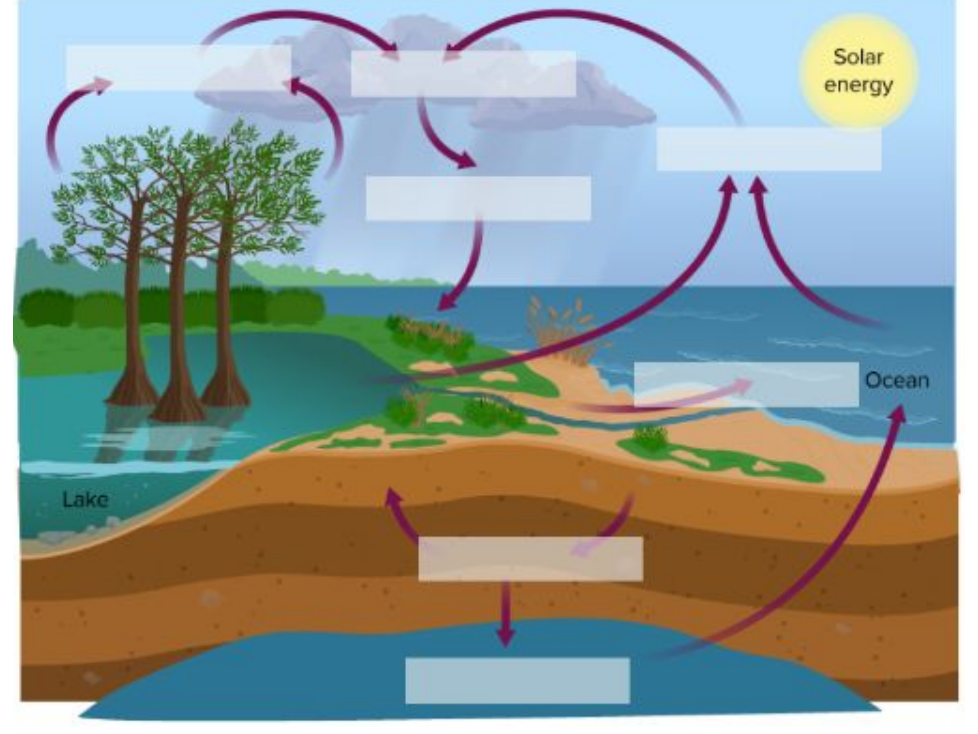
Water is constantly evaporating into the atmosphere from bodies of water, soil, and organisms. Water in the atmosphere is called water vapor. Water vapor rises and begins to cool in the atmosphere. Clouds form when the cooling water vapor condenses into droplets around dust particles in the atmosphere. Water falls from clouds as precipitation in the form of rain, sleet, snow, or hail, transferring water to the Earth's surface.
Groundwater and runoff from land surfaces flow into streams, rivers, lakes, and oceans. Here they evaporate back into the atmosphere to continue through the water cycle. Approximately 90% of water vapor evaporates from oceans, lakes, and rivers. About 10% evaporates from the surfaces of plants through a process called transpiration.
All living organisms rely on freshwater. Even ocean-dwelling organisms rely on freshwater flowing into oceans to prevent high saline content and to maintain ocean volume. Freshwater constitutes only about 3% of all water on Earth.